

Get to know the Boston Terrier! Check out the breed description, temperament, appearance, health, and tips for future owners. The perfect family dog for an apartment.
Table of Contents
- Boston Terrier – Origin and Breed History
- Appearance and Breed Standard of the Boston Terrier
- Character and Temperament of the Boston Terrier
- Boston Terrier in the Family – Children, Other Animals, and Lifestyle
- Health, Diseases, and Grooming of the Boston Terrier
- Who Is the Boston Terrier For and How to Care for One?
Boston Terrier – Origin and Breed History
The Boston Terrier is a dog breed whose origins date back to the second half of the nineteenth century in the United States, specifically in the city of Boston, from which it takes its name. The history of this unique breed is exceptionally interesting and serves as an example of American creativity, determination, and the pursuit of creating the ideal companion dog. The beginnings of the breed trace back to around the 1870s, when European immigrants brought bulldog and terrier-type dogs to New England, which were then quite popular in Great Britain. A key moment in the creation of the Boston Terrier was the crossing of the English Bulldog with the now-extinct White English Terrier, a breed highly valued at the time for its elegance and agility. Thus, Judge, the ancestor of almost all present-day Boston Terriers, was born through further carefully controlled selection.
In its early days, the Boston Terrier had noticeably different features in both appearance and temperament. Early specimens were often larger, heavier, and carried some of the fighting spirit typical of dogs used in animal fights, reflecting the trends of that era. However, determined breeders aiming for higher standards decided to refine the breed, emphasizing a gentle nature, elegant appearance, and a more compact build. Introductions of new lines, such as the French Bulldog, gave the Boston Terrier its characteristic “bat-like” ears and more rounded skull. A milestone came in 1891 when the American Bull Terrier Club was founded, which soon changed its name to the Boston Terrier Club to highlight the breed’s clear local character and distance it from dog fighting. In 1893, the Boston Terrier was the first American dog to receive official recognition by the American Kennel Club (AKC), becoming a source of national pride in the United States. During that period, the Boston Terrier became one of the most popular city dogs, thanks to its exceptional intelligence, sociability, and relatively low space requirements. In the twentieth century, the breed gained immense popularity not only in the USA but also across Europe, eventually reaching Poland, where it is now beloved by families and dog enthusiasts seeking a balanced, friendly companion. Alongside its rise in popularity, intensive breeding work has aimed to eliminate health problems and further refine the breed’s distinct traits, such as the intriguing “tuxedo” coat, large dark eyes, and cheerful, sociable disposition. Today, the Boston Terrier is the embodiment of the American lifestyle, successfully combining a sporting spirit, family warmth, and remarkable adaptability to various living conditions and lifestyles of its owners.
Appearance and Breed Standard of the Boston Terrier
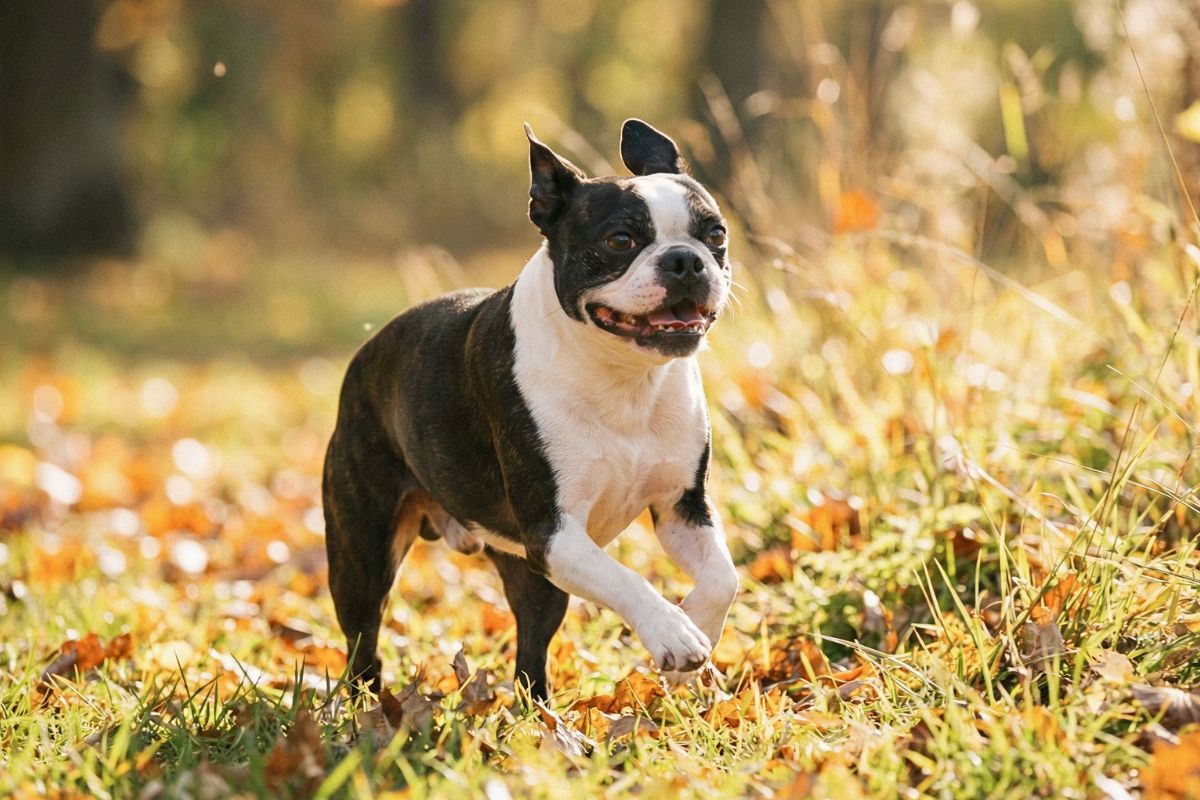
The Boston Terrier is a small yet strikingly characteristic dog in terms of appearance. The breed standard as defined by the FCI (Fédération Cynologique Internationale) requires the dog to have a harmonious, compact body, elegant look, and a sporty character. Boston Terriers belong to the companion dog group, and their size makes them ideal for city life or apartment living. Height at the withers typically ranges from 38 to 43 cm, with weight divided into three categories: light (below 6.8 kg), medium (6.9–9 kg), and heavy (9–11.3 kg). They are well-built, square-shaped dogs with a slightly elongated back and broad chest, which highlights their energetic character. The head of the Boston Terrier is one of its most recognizable features — it is square, broad, with a flat forehead and a clearly marked stop. The muzzle is short and wide but not excessively strong, with a well-defined chin. Another hallmark is the presence of large, round, widely set eyes, giving the dog an intelligent and gentle expression. The ears are set high, erect, relatively small, and triangular — the standard favors their natural, uncropped form.
The Boston Terrier’s coat is short, soft, and close-fitting, so this breed does not require complicated grooming. There are three basic accepted coat colors: brindle, seal (dark with a subtle reddish sheen), and black with specific white markings. Required white markings are found in particular areas: on the muzzle, forehead (often creating a distinct “blaze”), chest, and forelegs. More extensive white areas, like a collar or neck ring, are highly desirable, especially in conformation shows. The Boston Terrier also features a short, low-set tail, which is straight or corkscrew-shaped, but must never be docked. Its pronounced profile, muscular neck, and well-developed limbs give this dog elegance and resilience — all contributing to a harmonious animal with a distinct and unique style. The Boston Terrier’s unique look makes it unmistakable for any other breed, and its compact build ensures agility and physical fitness. The breed is also known for its movement — energetic, brisk, and springy, exuding confidence, which perfectly reflects the temperament of this breed. The overall expression should be cheerful, lively, and trustworthy, with a harmonious and graceful outline throughout. These features, combined with compact size and straightforward grooming, make the Boston Terrier not only attractive in appearance but also an exceptionally practical choice for many owners.
Character and Temperament of the Boston Terrier
The Boston Terrier is a dog who meets even the highest expectations of canine lovers, especially those seeking the perfect companion for everyday life. The breed is notable for its unparalleled gentleness toward people and other animals, making it an excellent choice for families with children, seniors, or singles searching for a loyal partner. One of the breed’s distinctive traits is its friendly and outgoing temperament. The Boston Terrier is very sociable and takes great joy in being among household members, actively joining in family playtime or relaxation. It quickly forms strong emotional bonds and can sense its owner’s moods—often becoming a true comforter in tough times. Their lively disposition and willingness to participate in family life translates into readiness for play and engagement in shared activities both indoors and outdoors. However, it’s essential to note that Boston Terriers can be sensitive – they dislike being left alone for long and can experience anxiety or even develop separation anxiety if neglected. That’s why they thrive in the presence of their loved ones, where they can display their affection and energy. Their positive attitude towards people makes them excellent dogs even for first-time owners embarking on canine adventures.
By nature, the Boston Terrier is intelligent, astute, and easy to train, especially when the owner uses positive reinforcement techniques based on rewards and praise. They are quick learners, rapidly understanding the link between behavior and the owner’s reactions, making basic training come naturally to them. At the same time, the breed may show stubbornness and characteristic self-confidence, which is why consistency, patience, and avoiding harsh methods are key in training. The Boston Terrier is also quite alert and ready to respond to noises in its environment — although not a typical watchdog, it will signal the presence of unfamiliar visitors but won’t show aggression. Its cheerful nature comes with a mischievous streak—Boston Terriers love various agility games, retrieving, and even some dog sports, provided difficulty is matched to their capacity. This breed loves to be active and eagerly joins in all sorts of social games but does not require extreme physical exertion. In apartments, they adapt well to their owners’ lifestyle and routine—able to wind down at home after active walks or play, enjoying moments of relaxation on the couch. With children, the Boston Terrier shows patience and tolerance, is non-dominant and accepting, though like all dogs, interactions should be guided, and younger children taught how to behave kindly. Their affectionate, playful, and friendly demeanor makes Boston Terriers feel comfortable among other dogs or household cats—provided they are properly socialized from puppyhood. It’s also worth mentioning their strong need for close physical contact — cuddling, petting, or even sitting in the owner’s lap means a lot and boosts their sense of security. Boston Terriers are renowned for their “sense of humor,” endearingly charming their owners with quirky expressions, comical antics, and a desire for attention. All of this means their character is a harmonious blend of intelligence, spirit, and innate joy of life, continuing to attract new fans around the world.
Boston Terrier in the Family – Children, Other Animals, and Lifestyle
The Boston Terrier is a breed created for living closely with humans, and so it excels as a family dog. From the first days at home, it forms strong bonds with its household, displaying great empathy and sensitivity to human needs. Its gentle character and natural openness make it an ideal companion for both adults and children. Particularly valued is its patience with youngsters—it tolerates children’s energy, is eager to join in play, and rarely shows any aggressive behavior. Thanks to its medium size and substantial but not overly delicate build, it’s not fragile, yet it happily withstands close contact and excitement from the youngest household members provided the children understand how to treat the dog gently. The Boston Terrier enjoys being involved in daily family activities and quickly learns the house rules. Its intelligence and desire to cooperate help it easily absorb basic commands and respond swiftly to directions, which is important in interactions with children. This breed doesn’t show dominance or conflict, so it usually avoids stressful situations or misunderstandings—however, proper socialization from puppyhood is vital for remaining balanced in adult life.
The Boston Terrier is renowned for its adaptability to a variety of living conditions, making it equally at home in an apartment block or a house with a garden. Its energy and natural zest for life do require daily activity, but not excessive amounts—a few walks per day and playtimes indoors or out will be enough to satisfy its exercise needs. Moreover, the Boston Terrier is not a noisy or troublesome neighbor, making it the perfect resident for apartment dwellers who don’t wish to disturb those nearby. The breed is also very open to other household pets — a well-socialized Boston Terrier will easily accept cats, small dogs, or other pets. Its sociable temperament makes it approach new animal friends willingly, and, with proper introduction, it doesn’t show chasing or dominance tendencies. It’s important, however, to introduce new animals gradually and monitor early interactions, especially if the other pet is unaccustomed to dogs. The Boston Terrier also adapts well to changes in its owners’ lifestyle—it can calmly wait out its owner’s absence, provided it’s rewarded with plenty of attention upon return. Despite its close ties to family, it isn’t excessively fearful or dependent on constant human contact but does badly with prolonged solitude. This is a dog that needs affection, play, and interaction, and when left alone for too long, may become sad, stressed, or develop unwanted behaviors. A good lifestyle for a Boston Terrier should thus include not only regular physical and intellectual activity but also emotional bonding and varied social stimuli, both from people and other animals. In this way, the Boston Terrier will thrive as a fully-fledged family member and devoted friend for many years.
Health, Diseases, and Grooming of the Boston Terrier
The Boston Terrier enjoys a reputation as a generally healthy and long-lived breed — its average lifespan is 11 to even 15 years. Nevertheless, like all breeds, it has specific health predispositions requiring the owner’s regular, conscious care. Due to its brachycephalic skull (flattened face, broad and short skull), Boston Terriers may experience certain problems typical for short-nosed breeds. The most common health challenge is the brachycephalic syndrome, which is expressed by snoring, breathing difficulties particularly during high temperatures or intense effort, and a tendency to overheat in summer. It is important to monitor respiratory health and, in hot weather, provide the dog with shade, cool water, and avoid walks during the hottest hours. Boston Terriers’ large, protruding eyes are prone to mechanical injuries, corneal ulcers, or infections, so their condition should be regularly checked, discharge cleaned, and eye area kept clean. The breed may also be susceptible to eyelid problems (e.g., entropion) and inherited conditions like glaucoma or cataracts, which can be especially troublesome in older dogs. Ear health is also important—erect ears help ventilation but raise the risk of minor injuries or infections. Regular checks and gentle cleaning with preventive ear solutions lower the risk of complications.
Despite their energy and liveliness, the Boston Terrier has a delicate musculoskeletal system — don’t overstrain the dog with rough play or long, intense runs that could harm the joints (especially the kneecap, which is prone to luxation). It’s important to monitor body weight and feed high-quality food, providing all necessary nutrients while avoiding obesity — as excess weight increases the risk of orthopedic and cardiovascular problems and amplifies breathing difficulties. Grooming the Boston Terrier is straightforward – its short, close-fitting coat requires little: regular brushing with a gentle brush once or twice a week is enough to keep its skin in top condition and minimize shedding. Bathe only as needed, using mild shampoos designed for sensitive dogs. Pay particular attention to cleaning the skin folds, especially around the muzzle and nose, as moisture there can cause inflammation—clean and keep folds dry. Since the breed is prone to dental problems such as tartar or periodontal disease, teeth should be brushed regularly and dental chews used for maintenance. Nail trimming, checking paw health, and regular vet check-ups (for vaccinations, deworming, and preventive health screenings) are basic responsible care. Boston Terriers require an owner’s commitment to monitoring health and reacting promptly to signs of distress — prompt intervention often prevents severe disease. Preventive care, a balanced diet, and activity tailored to capacity are the foundation of a long and comfortable life for a Boston Terrier. Proper care brings reward—a healthy, cheerful, and energetic dog who can be a family companion for many years.
Who Is the Boston Terrier For and How to Care for One?
The Boston Terrier is a breed that excels both as a family dog, a companion for singles, and an ideal friend for seniors. Its friendly, open nature and ability to form strong emotional bonds mean it meets the needs of those seeking close everyday animal companionship. Thanks to its compact size, moderate exercise requirements, and easy grooming, the Boston Terrier does well both in apartments and houses with gardens. Its calm demeanor and low tendency to bark make it a dream pet for those living in densely populated communities who want to avoid disturbing neighbors. This breed is also favored by families with children – Boston Terriers are highly patient and tolerate children’s play well. However, children must be taught respect and gentle handling, as even the patient dog should not be subjected to undue stress or mistreatment. The Boston Terrier can co-exist with other pets—both dogs and cats—if properly socialized from puppyhood. For active people who enjoy walks but lack time for hours-long outings, the Boston Terrier is ideal. It is content with regular short walks, play in a secure area, and being with its person to expend energy and stay fit. Because it dislikes solitude, this breed is not recommended for people who regularly leave their dog alone for extended hours — a companionless Boston Terrier can quickly become apathetic, bored, or develop destructive behaviors.
To ensure a Boston Terrier’s happy and healthy life, you need to meet not only basic needs but also its emotional and physical well-being. Most of all, dedicate daily time for interaction, play, and learning new things. Boston Terriers are bright and keen learners who require intellectual stimulation — incorporate puzzle toys, scent mats, or short training sessions using positive reinforcement into the routine. Consistency in education will make the Boston Terrier well-mannered and content. Daily care should include special attention to brachycephalic health issues — these dogs need protection from heat and avoidance of overexertion in high temperatures to safeguard their respiratory system. Walks should match the dog’s capabilities, and during hot days, offer shade and fresh water. Hygiene is extremely important — regular ear cleaning, wiping the eye area, checking skin folds, and teeth brushing help prevent the breed’s typical problems. Preventive veterinary care — vaccinations, deworming, and regular health checkups — allow early detection and treatment of any issues. Food should be well-balanced, rich in quality protein, and given at fixed times of day to avoid digestive problems and obesity. Choose food based on ingredients and suitability for your dog’s age and activity. The Boston Terrier’s emotional comfort is assured not only by affection but also by a varied daily schedule and consistent contact with the owner. They should not be left alone for extended periods—owners who work long hours should arrange care, such as doggy daycare or a petsitter. Proper upbringing and early socialization with people and other animals result in balanced, trouble-free adult dogs. Comprehensive care, covering emotional, health, and exercise needs, along with owner involvement, make the Boston Terrier not only a charming and devoted friend, but also a joyful family member who thrives in various conditions and meets the expectations of a wide range of future owners.
Summary
The Boston Terrier is a unique breed with an elegant look, cheerful temperament, and strong family attachment. Thanks to its small stature and friendly disposition, it fits perfectly in apartments as well as in families with children and other animals. It requires proper grooming, regular health checks, and physical activity to stay fit. By choosing a Boston Terrier, you get an intelligent, loyal, and energetic pet that will become a perfect everyday companion. It is the ideal choice for those seeking a family dog that is easy to train and care for.

