
Table of Contents
- Pointer – origin and brief history of the breed
- Appearance and distinctive features of the Pointer
- Pointer Character – the ideal family and hunting dog
- Raising and training the Pointer – tips for owners
- Care and the most common diseases in Pointers
- Who is the Pointer for? Is this breed right for you?
Pointer – origin and brief history of the breed
The Pointer – also known as the English Pointer – is one of the most recognizable and valued hunting dogs originating from Great Britain. The beginnings of this remarkable breed date back to the 17th century, though its roots may be even deeper, reaching times when dogs with clear abilities for pointing out game were imported to England for hunting. The first mentions of dogs adopting the characteristic “pointing” stance appeared during this period, when the new concept of hunting with firearms required a different type of helper than traditional hounds or retrievers. Many cynologists believe that the rise of the Pointer was influenced by imported hunting breeds from continental Europe, especially Spanish pointers, which, at the turn of the 16th and 17th centuries, began arriving on the British Isles. It was indeed setters that were the first “pointers” used by British aristocracy when hunting quail, partridge, and other game birds. Over time, to improve the breed’s working qualities and appearance, Pointers were crossed with other famous British and continental breeds, such as bloodhound, fox terrier, greyhound, and setter, to perfect both their tracking abilities and their speed and elegant build. As a result of these thoughtful crossings, a breed with exceptional predispositions was developed: characterized not only by an extremely sensitive nose but also lightness, agility, stamina, and harmonious conformation. Throughout the 18th and 19th centuries, the Pointer gained a reputation as Britain’s finest pointing dog, becoming an indispensable assistant on small game hunts and the ideal companion for the hunters of that era.
With time, the Pointer became not only a hunting dog but also an icon of British cynology. The first official breed standard was developed as early as the mid-19th century, when the popularity of hunting and dog shows was at its peak. The Pointer Club in Great Britain was founded in 1891, and since then has set breeding standards, caring for the breed’s purity and excellence. The Pointer’s unique silhouette – a slightly tapered body, long and straight legs, characteristic high-set neck, and an elongated head with a well-defined stop – has become one of the most recognizable traits among hunting dogs. Interestingly, from the start, pointers displayed a unique grace of movement and exceptional elegance, thanks to intentional crosses with pointers and greyhounds, to guarantee speed and endurance over long distances. The breed quickly gained recognition in Great Britain and internationally – by the early 20th century, pointers were exported to other parts of Europe, North America, and Australia, where they flourished as hunting, show, and family dogs. The modern Pointer is the result of many generations of selective breeding, focusing not only on hunt-related qualities but also on a stable and balanced character, ease of training, and exceptional sensitivity to human needs. Although the breed is officially classified as a hunting dog, for a long time pointers have also been appreciated as companion dogs, especially by people who value activity, intelligence, and openness to the world. Despite the decline in traditional hunting, the Pointer remains one of the most versatile and beloved hunting dogs in the world, retaining its unparalleled charm and noble history that reaches back centuries into British hunting tradition.
Appearance and distinctive features of the Pointer
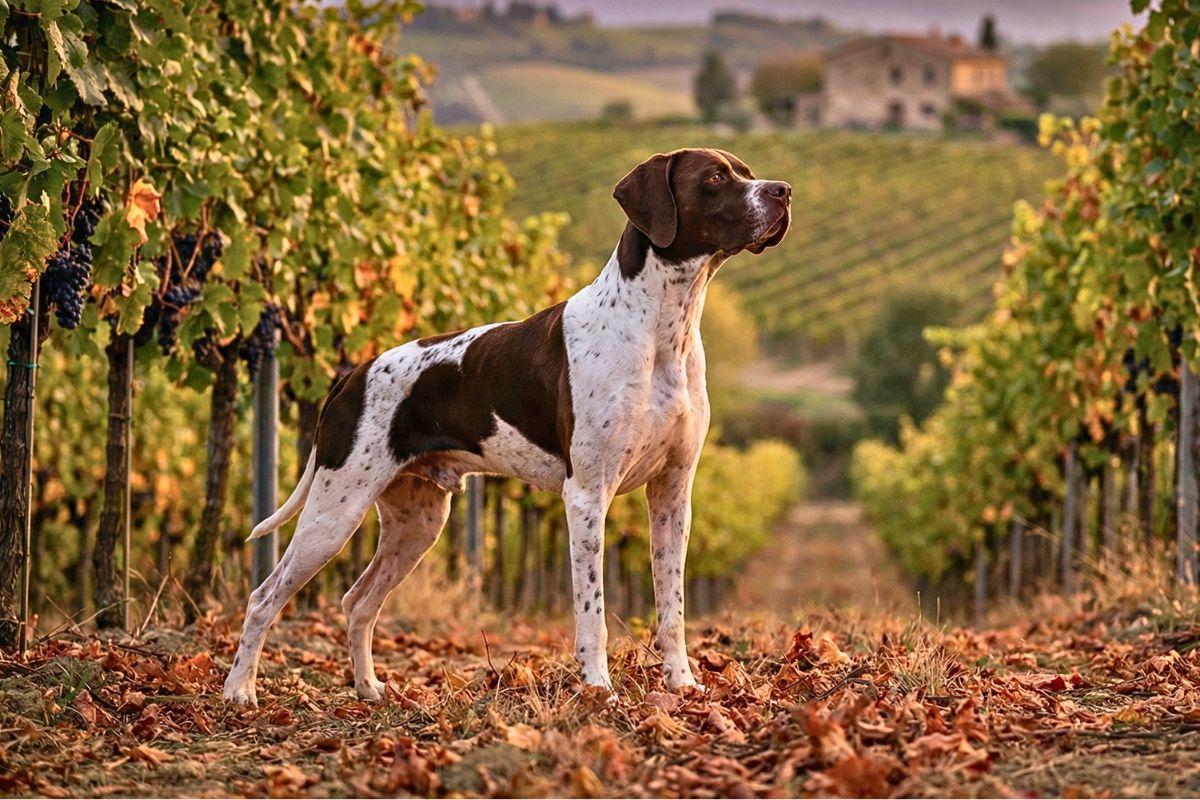
The Pointer is a medium- to large-sized dog whose appearance is instantly recognizable, even to those unfamiliar with the breed. It has an elegant, proportional silhouette that radiates athleticism and grace. A characteristic feature of the Pointer is its head – dry and long, with a gently marked stop and a straight muzzle line ending in a broad, mobile nose with wide nostrils. The Pointer’s eyes are of medium size, lively, alert, and intelligent, with a gentle expression that accurately reflects its friendly nature. The breed has rather thin, high-set ears that softly hang close to its cheeks, with rounded tips. The neck is long, slightly arched, muscular, elegantly blending into a well-built back and strong, slightly arched loin. The Pointer’s chest should be deep, broad, well-muscled with distinctly marked ribs, ensuring the dog has the right lung capacity needed for work in the field. The tail is of medium length, thick at the base, tapering to the tip, carried level with the back in motion and often slightly raised – acting as an “antenna” pointing out game while at work.
The Pointer’s coat is short, smooth, closely fitting the body, shiny, and easy to care for – a significant advantage for those who value practicality and ease in maintenance. The breed standard allows a wide range of coat colors, with the most popular being white with patches or speckles of lemon, orange, black, or brown. Solid colors and liver are also seen, but pigmentation of the nose, eyes, and pads must match the coat. Pointers are distinguished by an extremely harmonious and dynamic silhouette – their long, muscular limbs allow them to move quickly and energetically, and their springy gait is one of the breed’s most characteristic traits. Excellent physical condition and lightness of movement make the Pointer an ideal dog for active people who enjoy walking and running. In terms of temperament, the Pointer is a dog with a very friendly, gentle, and open demeanor. By nature, these are cheerful, intelligent, affectionate dogs, and are extremely devoted to their caretakers. Pointers are sensitive to the moods of people, which makes them suitable both for families with children and for seniors – they can sense the needs of their loved ones and respond accordingly. It is worth noting that despite being a hunting breed, pointers typically show moderate dominance and do not exhibit aggression towards people or animals; their hunting instinct shows mostly during fieldwork.
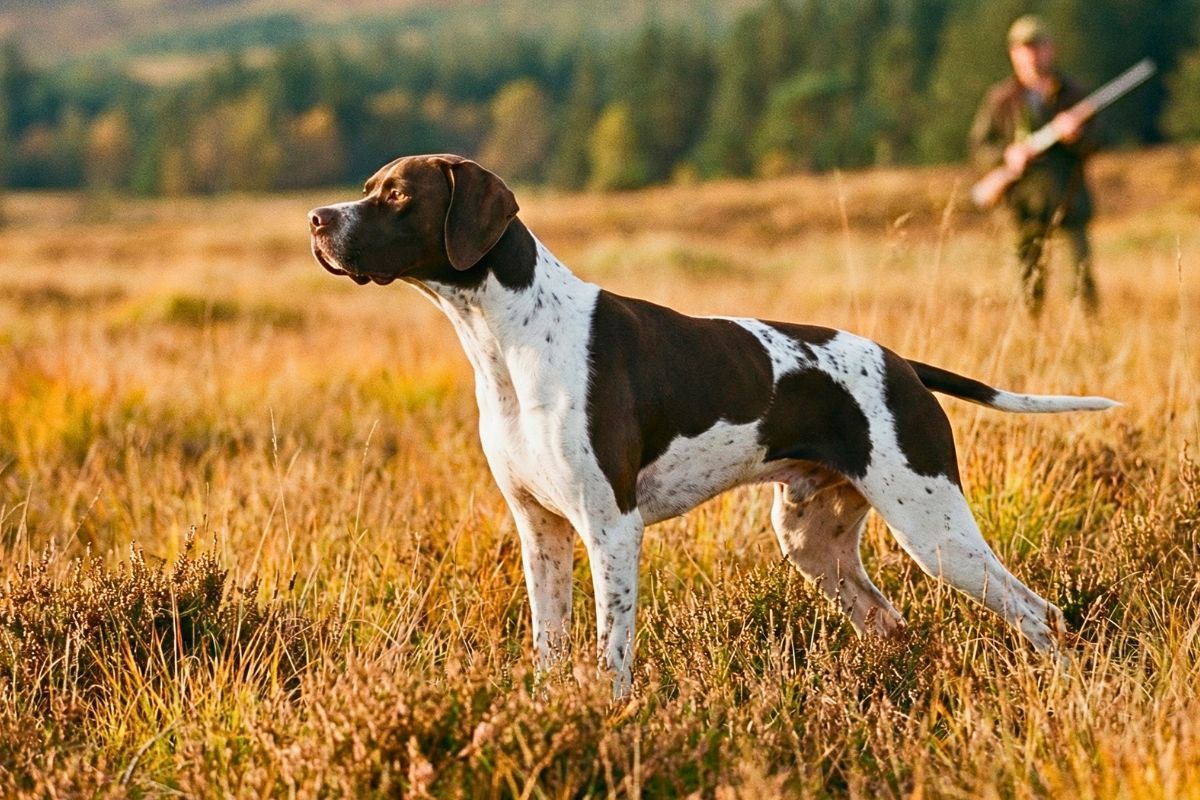
The Pointer is a dog that requires both physical activity and intellectual challenges – its natural energy and need for movement are traits every potential owner should consider before acquiring this breed. Its aptitude for fast learning and willingness to cooperate also make training a Pointer, though requiring patience and consistency, usually not particularly difficult. Dogs of this breed are known for their extraordinary memory and ability to focus, which combined with high intelligence, enables them to quickly absorb commands and carry out tasks on hunts, such as searching, marking, and retrieving game. In everyday life, pointers are balanced, friendly, and deeply attached to their family members, though sometimes a bit independent – stemming from their history as solo hunters on large open grounds. They love human company and do not tolerate long-term solitude and idleness, making them unsuited for homes where they would be left alone for much of the day. On the other hand, their dynamic temper makes them a perfect fit for houses with gardens or for people who do canine sports, enjoy long walks, or jogging. Additionally, pointers are known for their patience and gentleness towards children, and when properly socialized, build excellent relationships with other dogs or even cats. However, their strong hunting instinct may push them to chase smaller animals in uncontrolled environments, so controlling this instinct through appropriate training is advised. Overall, the Pointer is a harmoniously built dog, admired for its elegance, strength, and exceptionally gentle disposition, whose unique qualities make it not only an outstanding hunter but also a loyal and energetic daily companion.
Pointer Character – the ideal family and hunting dog
The Pointer can be described as a combination of elegance, stamina, sensitivity, and high spirit, making this breed exceptionally versatile. On hunts, pointers display an extraordinary hunting instinct, tenacity, and determination, but outside the field – at home – they gain appreciation as family dogs with a gentle, affectionate temperament. They are naturally very intelligent, as seen in both their work on the track and interactions with household members. They learn commands quickly and can grasp their handlers’ intentions, responding well to praise and positive motivation during training. Towards family members, pointers show immense loyalty and attachment — building a strong bond and demonstrating devotion at every step. They are friendly, communicative, and non-aggressive towards children, making them exceptional additions to homes with youngsters, eagerly joining in play and becoming caretakers for the youngest family members. Pointers love human company, dislike loneliness, and may suffer when deprived of their owner’s companionship for long periods; thus, the breed owner should be prepared to ensure a consistent presence and engagement for their pet. The empathy and sensitivity of pointers also manifest in their interactions with elderly people and their caring attitude towards other household pets — they easily adapt to the family’s routine and their gentle character poses no behavioral challenges at home. Their energetic temperament and enthusiasm for outdoor activities make pointers perfect companions for active people who enjoy long walks, jogging, or cycling trips. This breed, although excelling as a hunting companion, also works perfectly as a family dog, meeting the needs of both the leader-owner and children seeking a playmate and daily friend.
It’s also noteworthy that pointers have a balanced temperament: they are not pushy, but they are always eager to cooperate. Their strong hunting instinct does not translate into conflict in relationships with people; on the contrary – they skillfully combine a need for action with a subtle submission to their caretaker. Due to their gentle psyche, they are not reactionary and can remain calm even in stressful conditions, making them excellent companion dogs for sensitive people, families with children, or seniors. Pointers do not respond well to rough treatment, so effective upbringing must be based on consistency, gentleness, and positive reinforcement, rather than punishment or force. This breed doesn’t tend to dominate or be stubborn unless met with improper handling or insufficient exercise. Their innate intelligence and alertness make pointers excellent at educational games and suitable for canine sports or therapeutic tasks. Their pack instinct means pointers thrive during group activities with other dogs, getting along well with other four-legged family members. Their openness, mildness, and friendly attitude toward people mean that pointers are rarely distrustful of strangers, but when needed, they can alert their owners to the presence of an intruder with a loud bark and maintain a healthy distance from unfamiliar people. In everyday life, pointers appreciate regularity, kindness, and shared activities – from long walks and outdoor play to relaxing with the family on the couch. Thanks to their versatility, these are dogs that excel as devoted hunters and affectionate canine friends – always ready for new adventures and to shower their owners with love and devotion.
Raising and training the Pointer – tips for owners
Proper upbringing and training of the pointer are fundamental for both its comfort and the handler’s satisfaction. From the first months of life, a puppy of this breed requires consistent introduction to house rules and building a positive relationship based on trust. The Pointer is highly intelligent and capable, but its sensitive nature means a gentle approach is essential – harsh training methods may backfire, causing anxiety or fear in the dog. It is advised to use positive reinforcement, i.e., rewarding desired behaviors with treats, praise, or shared play. This way, the pointer gains trust more quickly, is more willing to cooperate, and assimilates new commands more effectively. Socialization is also crucial. Pointers are naturally open to people and animals, but this does not absolve the owner from gradually introducing the dog to a variety of stimuli – city sounds, presence of children, strangers, or other animals. Early and regular walks in diverse settings and play with other dogs are key here. This helps develop the dog’s self-confidence, lowers anxiety, and minimizes the risk of behavioral problems in adulthood, such as barking or escaping. Consistency in enforcing rules is important – pointers, despite their gentleness, can test their owner’s patience, so it’s vital for the entire family to use the same commands, prohibitions, and rewards.
An essential part of raising a Pointer is ensuring adequate amounts of both physical and mental stimulation. With a strong hunting instinct and great stamina inherited from their ancestors, Pointers need several hours of activity and mentally engaging games each day. Introducing canine sports like agility, obedience, or tracking yields excellent results and deepens the bond with their handler. It’s important to have regular sessions, balancing short training routines with longer walks or games involving learning new commands. Incorporating scent games into daily rituals gives the pointer an opportunity to fulfill its need for searching, tracking, and pointing, delivering tremendous satisfaction from a job well done. Repeating basic commands regularly, such as recall, sit, and stay, as well as teaching control over chasing and tugging instincts, is crucial, especially when walking in uncontrolled or open spaces. Another important aspect is teaching the pointer independence and how to handle short periods of being alone – gradually introducing brief separations helps prevent separation anxiety, to which this breed may be prone. If the handler lacks experience in hunting dog training, participating in group classes with a professional trainer can yield tangible results, both in everyday obedience and in honing the pointer’s hunting skills. Properly organized upbringing from puppyhood to adulthood helps prevent behavioral issues and ensures a happy, well-balanced dog that fits perfectly as an active companion and an integral member of the family.
Care and the most common diseases in Pointers
Pointers are a breed with relatively low grooming demands but heightened sensitivity to health and require regular check-ups. Basic care focuses on regular brushing of their short, smooth coat, which sheds minimally and can be managed by using a rubber brush or grooming glove once or twice a week to remove loose hairs and dirt, keeping the coat shiny, healthy, and free of skin problems. Despite being dirt-resistant, Pointers should only be bathed when necessary, such as after intensive hunting or getting very dirty, always using mild shampoos formulated for sensitive dog skin. Special attention should be paid to the cleanliness of their ears – due to their drooping shape, they are prone to fungal and bacterial infections, so a weekly check and gentle cleaning with a vet-recommended solution is recommended. Dental hygiene is no less important – regular brushing with dog toothpaste helps prevent tartar build-up and gum diseases. Trimming claws every 3–4 weeks is necessary, especially if the Pointer spends most of its time on soft ground and does not wear them down naturally. Active dogs participating in hunts are more prone to mechanical injuries, so it’s important to inspect their pads after each walk for signs of cuts or irritation, especially in the heating season or hot weather when the ground can be harsher. Vet check-ups should be scheduled at least once a year, and for older dogs, more often to monitor health and prevent serious illnesses.
Although Pointers are a relatively healthy breed, they are not completely free from health problems. The most common hereditary disease is hip dysplasia, which can lead to lameness, pain, and reduced mobility. Monitoring weight and regular exercise help reduce the risk of this condition. Another frequently seen disease is progressive retinal atrophy (PRA), which can lead to blindness – owners should watch for any vision disturbances and carry out routine ophthalmologic exams. Pointers are also prone to skin and food allergies, which manifest as itching, redness, or recurring ear infections, requiring an elimination diet and consultation with a veterinary dermatologist. Be aware that Pointers may be susceptible to gastric torsion – a dangerous, acute condition needing immediate surgery. Symptoms include severe anxiety, nonproductive vomiting, abdominal distention, and breathing difficulties; prevention means feeding several smaller meals a day, avoiding exercise shortly after meals, and maintaining a calm atmosphere during feeding. Rarely, but sometimes, Pointers may also suffer from idiopathic epilepsy and autoimmune diseases, requiring close cooperation with a veterinarian. Routine vaccinations and deworming, plus protection against ticks and fleas, should be part of standard care, since resistance to infectious and parasitic diseases varies with each dog. Proper veterinary care, attention to a high-protein, high-quality diet containing healthy fats and supplements for joints and immunity, are the foundation for a Pointer’s health and help ensure rapid intervention if symptoms of illness appear.
Who is the Pointer for? Is this breed right for you?
Deciding to welcome a Pointer into your home should be a thoroughly considered decision because this unique breed requires a specific lifestyle, commitment, and understanding of its character and needs. The Pointer is a dog made for activity, work, and close human contact, so it best suits people who lead active lives and are willing to devote significant time to walks, play, training, traveling, or other forms of interaction with their dog. Pointers are excellent companions for runners, cyclists, hikers, or those involved in canine sports – agility, canicross, or obedience. The breed needs not just daily long walks, but also mental challenges that satisfy its intelligence and natural hunting instinct. Pointers are not meant to be locked up or left alone for many hours each day; people who are away a lot or do not lead active lifestyles may struggle to provide proper conditions for this breed. If you are looking for a “lapdog” or a laid-back couch potato, the Pointer probably won’t meet your expectations – its temperament, energy, and need for activity may lead to frustration and problematic behaviors if not properly directed.
Pointers do great in families with children, and can also be excellent partners for seniors, provided they have enough time and energy to ensure the needed level of physical and mental stimulation. Their gentle disposition, patience, and openness make them tolerant and careful with kids. In large families or those with multiple pets, the Pointer usually fits in well, although socialization and acclimatization are needed for living with other dogs, cats, or small animals due to its strong hunting instinct. Attention is also needed for health and grooming – while not demanding in terms of coat or feeding, the owner must be ready for regular veterinary visits, dietary care, and daily grooming. For some, especially those inexperienced in dog raising, the Pointer can be a challenge in terms of consistency and patience during training. It’s important to note that this breed excels as both a working and family dog but demands clearly defined rules, routine, and owner attention. If your goal is a dog that will be not only an affectionate friend but also an active companion on everyday adventures, the Pointer may be the perfect breed for you – provided you are ready to responsibly engage in its training, development, and daily physical and mental needs.
Summary
The Pointer is a unique breed combining elegance, intelligence, and plenty of energy. Thanks to its balanced character and loyalty, the Pointer is a great choice both as a family dog and as an active partner on exciting trips. It’s worth ensuring proper training, regular care, and health checks to enjoy its company for many years. If you are looking for a friendly, active dog, the Pointer may be the ideal choice – especially for people leading an active lifestyle.

