
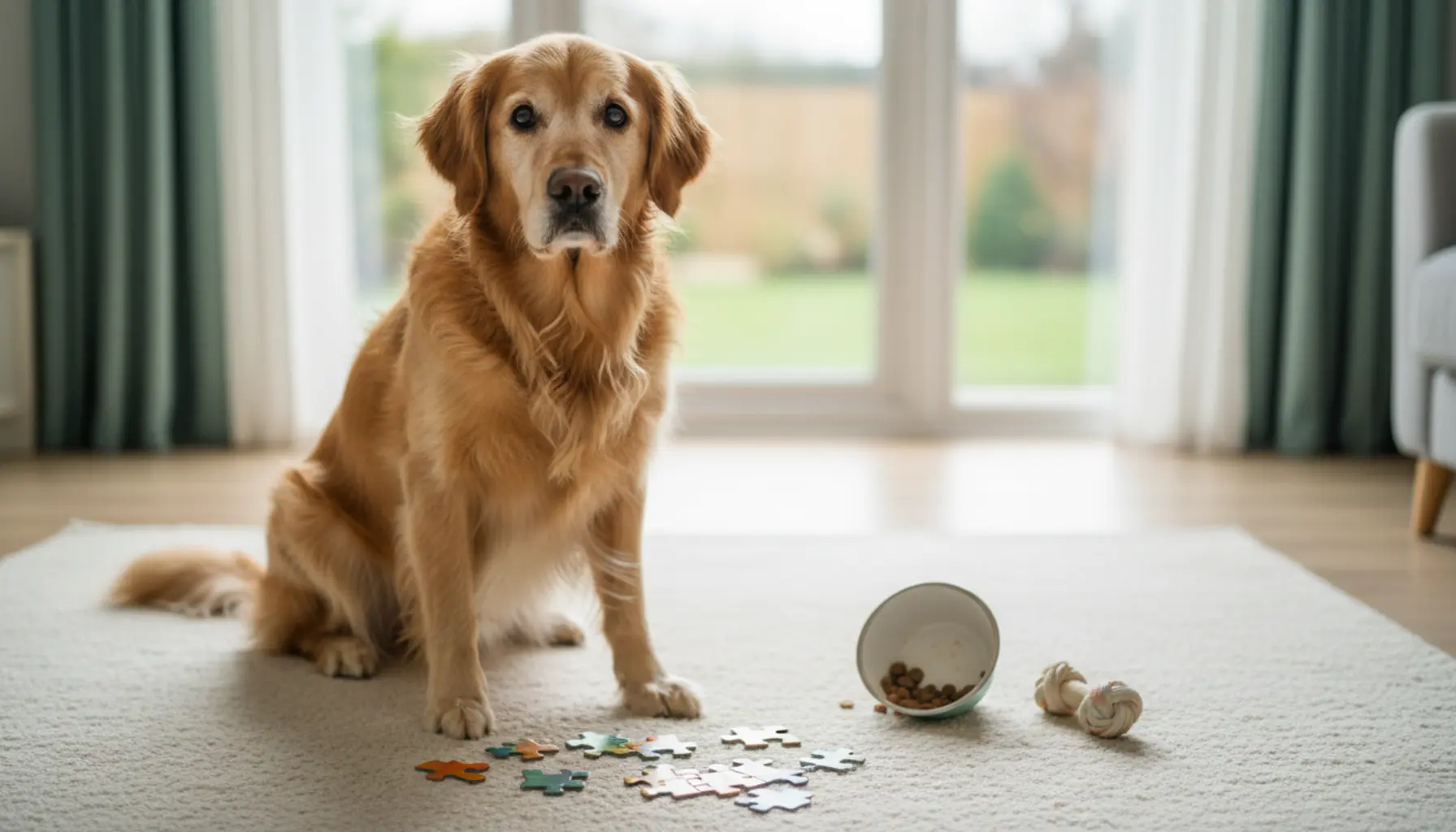
Dog dementia is a serious challenge for caregivers of older pets. Recognizing the first symptoms of dementia in a dog allows for quicker implementation of effective care and treatment. Awareness of the issue is key, as is daily concern for the pet’s mental and physical comfort.
Table of Contents
- What is dementia in dogs?
- First signs of dementia
- How to diagnose cognitive dysfunction syndrome
- Treatment methods and best practices
- Daily care for a dog with dementia
- Tips for caregivers of senior dogs
What is dementia in dogs?
Dementia in dogs, also known as Canine Cognitive Dysfunction (CCD), is a progressive neurodegenerative condition associated with brain aging, which in many respects resembles Alzheimer’s disease in humans. It is not “just getting older” but a specific medical condition involving changes in the structure and function of the dog’s brain. Over the years, harmful proteins accumulate in neurons, microvascular damage and reduced blood flow occur, along with oxidative stress that damages nerve cells. Neurons lose their ability to properly transmit signals, some synaptic connections disappear, and certain areas of the brain, especially those associated with memory, spatial orientation, and behavioral regulation, atrophy. As a result, the dog gradually loses the ability to learn, remember, regulate emotions, and respond appropriately to environmental stimuli. The disease develops insidiously—the first changes in the brain may appear before the caregiver notices any clinical symptoms, which is why many owners initially interpret the first signals as “just old age” instead of a disease requiring intervention. Importantly, dog dementia is not a character defect or “malicious behavior”—it is the consequence of physical changes in the nervous system that the animal has no conscious control over. Medically, dementia is understood as a combination of cognitive decline (memory, orientation, learning, simple problem-solving), behavioral changes, and gradual loss of independence in daily functioning. In many dogs, it coincides with other age-related illnesses, such as kidney failure, heart disease, hormonal disorders (e.g., hypothyroidism, Cushing’s syndrome), or joint degeneration, which further complicates the clinical picture and makes clear diagnosis more difficult. Dementia is not contagious and does not result from upbringing mistakes, though a dog’s lifestyle—mental activity level, diet, and the management of comorbidities—can affect the pace of its development and severity of symptoms.
In clinical practice, veterinarians often describe dog dementia using the acronym DISHA or DISHAA, which groups the most common areas of disorders: D (disorientation)—disorientation, I (interaction)—changes in interactions with people and other animals, S (sleep-wake cycle)—disturbed sleep-wake cycle, H (house soiling)—house-training issues, A (activity)—changes in activity level, and the additional A (anxiety)—anxiety and restlessness. Dementia is most often diagnosed in dogs older than 8–9 years; in large breeds (which age faster), symptoms may appear earlier than in small breeds that typically live longer. It is estimated that clinical signs of cognitive dysfunction may appear in several tens of percent of elderly dogs, but the actual number is likely higher, as many cases remain undiagnosed. The key is to understand that dementia is a chronic and progressive disease—it cannot be reversed, but with appropriate treatment strategies, diet, supplementation, and environmental adjustments, it is possible to slow the neurodegenerative process and significantly improve quality of life for both the dog and its caregiver. From a behavioral perspective, the main difference between dementia and typical “old age” is the quality and extent of changes: the dog stops responding to familiar commands, gets lost in familiar places, forgets house-training, suddenly starts barking without obvious reason, wanders or howls at night, while being either excessively sleepy during the day or, conversely, restless and disoriented. Its attitude towards caretakers often changes as well: an animal that was always social and eager to interact may become withdrawn or anxious, as if it “no longer fully recognizes” household members. All these elements make up the complex picture of dementia as a brain disorder requiring both medical management and emotional understanding, patience, and adaptation of daily care to the new abilities and limitations of the aging dog.
First signs of dementia
The earliest signs of dog dementia are usually very subtle and easily mistaken for normal aging, fatigue, or a temporary decline in condition. At this stage, caregivers often overlook or rationalize them, thinking “the dog is just getting older.” However, the sooner these changes are identified, the more effectively the progress of cognitive dysfunction syndrome can be slowed. One of the most characteristic early symptoms is spatial disorientation: a dog that always maneuvered effortlessly around the house suddenly stops in doorways, stares at the wall, confuses directions, enters dead ends, or stands helplessly in a corner without knowing how to get out. Sometimes the animal “gets lost” in a familiar place, e.g., in the garden, wanders aimlessly, or cannot find its bowl, bed, or the entrance to the house, though these were never issues before. Some dogs may stop during a walk and look as if they no longer remember where or why they went out. Another group of early symptoms includes changes in social interactions. A previously sociable dog may withdraw, seek solitude, avoid petting or play—or, conversely, become overly clingy, follow the caregiver everywhere, demand attention, or whine when left alone even for a short time. These changes can be misread as “dog quirks,” but in a senior dog, they often herald the onset of cognitive impairment. Changes to the sleep-wake cycle are also fairly typical: the dog sleeps more during the day, is drowsy, and becomes restless at night, wandering around the house, scratching at doors, whining, or barking for no apparent reason. Nightly awakenings and “wandering” can lead to caregiver frustration, but are an important signal that the dog’s brain is struggling to regulate the daily rhythm. Short-term memory impairment also occurs—the animal forgets it just ate, demands another meal, or can’t remember where it left a toy; it may also be surprised by routine activities as if experiencing them for the first time.

Early symptoms of dementia often involve loss of learned habits and behavioral changes related to hygiene and reacting to stimuli. A dog that always signaled the need to go outside starts relieving itself indoors—sometimes just after a walk, as if it forgot it had the opportunity to go. It might stand by the door but no longer give the cues (barking, scratching) it used to, as though it no longer connects the door with going out. Some dogs begin to struggle to follow previously well-learned commands; the animal seems “deaf to orders,” even though hearing tests show no significant impairment. This apparent “disobedience” often stems from difficulties processing information and decreased concentration, not from stubbornness or rebellion. In the early phases of dementia, activity level may also change: a moderately energetic senior may turn apathetic, give up favorite activities, be reluctant to go for walks, and spend more time sitting or lying down, staring into space—or, conversely, become restless, pace in circles, and struggle to settle or sleep. Subtle signs of anxiety, such as being startled by familiar sounds, overreacting to noise, anxiety in new environments, or reluctance to be alone in a room, may also be early indicators of declining cognitive function. It is important to observe not just isolated incidents, but behavioral patterns—repetition of situations and their gradual intensification. If a caregiver notices that over a few months their dog has become much more confused, less predictable in routine activities, frequently “does not know what to do,” reacts like a stranger in a familiar environment, or changes social and toileting habits, a veterinary consultation is strongly recommended. Early detection of these subtle signs allows for differential diagnosis (excluding, for example, joint pain, endocrine issues, hearing and vision problems) and initiation of therapy to slow dementia progression before deeper, more difficult-to-reverse brain and behavioral changes occur.
How to diagnose cognitive dysfunction syndrome
Diagnosing dog dementia is a multi-step process that should always begin with a detailed interview with the caregiver and a thorough clinical examination. Since cognitive dysfunction syndrome (CCD) does not have a single, simple confirmatory test, the veterinarian relies on a combination of observed symptoms, overall health evaluation, and the exclusion of other illnesses causing similar symptoms. During the initial interview, it is key to describe specific behaviors: when the dog started getting lost at home, how often do “absent episodes” occur, whether sleep issues at night, cleanliness accidents, changes in relationships with household members, unusual fears, or irritability have appeared. Keeping a behavioral diary—recording the day, time, and situation in which a behavior occurred, e.g., night wandering or staring at a wall without reason—is helpful. Such a diary allows recognition of patterns and helps the veterinarian assess symptom severity and dynamics over time. The veterinary clinic performs a full physical examination, including listening to the heart and lungs, evaluating neurological status, vision, hearing, skin, and joints, since pain, sensory organ diseases, or mobility restrictions may influence behavior and mimic dementia symptoms. The next stage are laboratory blood and urine (biochemistry, blood counts, thyroid hormones) tests to rule out, for example, hypothyroidism, chronic kidney failure, liver conditions, diabetes, or electrolyte disturbances—all of which can lead to apathy, disorientation, and changes in activity and behavior. In some cases, measuring blood pressure is also recommended, as hypertension can cause microdamage in the brain and cause sudden neurological changes. If standard tests do not clarify the symptoms, the veterinarian may refer the dog to a veterinary neurologist, who will assess the need for advanced imaging such as MRI or CT.
In clinical practice, standardized questionnaires and cognitive function rating scales are increasingly used to systematize caregiver observations. They contain questions about the five main DISHA areas: disorientation (e.g., going into dead ends, trouble finding bowls or doors), changes in social interactions (less contact, withdrawal, excessive need for attention), sleep disturbances (night wanderings, waking up family, nighttime barking), loss of house-training, and changes in activity and emotional responses (anxiety, restlessness, irritability, aimless circling). Based on the answers, a score is calculated, helping assess the severity of the disease—from mild to severe cognitive dysfunctions. However, even a high score in a questionnaire does not replace full differential diagnosis. Similar clinical pictures can be caused by chronic pain (e.g., osteoarthritis), brain tumors, epilepsy, hydrocephalus, cerebrovascular diseases, anxiety disorders, or significant vision or hearing loss. Therefore, CCD is a diagnosis of exclusion—made only after other neurological, metabolic, and behavioral causes are ruled out. Although brain imaging is not always necessary, it may reveal cortical atrophy, enlarged ventricles, or white matter changes typical of neurodegeneration, while also ruling out e.g., tumors. In the diagnostic process, it is also important to assess the impact of symptoms on the dog’s daily functioning—can it find its way on a walk, know where its bed is, recognize familiar people and situations, and still learn simple things such as a new walking route or new command? Regular follow-up visits and repeated questionnaires allow for monitoring the disease’s progression and adjusting pharmacological, dietary, and environmental therapies. The earlier the caregiver reports unusual behaviors and starts the diagnostic process, the greater the chance of slowing neurodegeneration and better tailoring the care plan to the dog’s current cognitive and emotional abilities.
Treatment methods and best practices
Treatment of dog dementia is based on a combination of pharmacotherapy, a properly balanced diet, environmental modification, and the caregiver’s daily efforts toward mental stimulation and the animal’s emotional well-being. The goal of therapy is not to reverse neurodegenerative changes—current medical knowledge does not allow this—but to slow disease progression, reduce symptom severity, and improve the dog’s quality of life. The basis is a comprehensive plan set with the veterinarian, tailored to the dog’s age, general health, and the stage of cognitive dysfunction. The most commonly used medications are those that improve brain blood flow and neuron metabolism (e.g., selegiline, propentofylline), which can increase alertness, enhance learning ability, and reduce episodes of disorientation and anxiety. In some cases, particularly with pronounced sleep disorders, anxiety, or accompanying joint pain, the vet may additionally prescribe mild sedatives, anxiolytics, melatonin supplements, or painkillers, with attention to senior safety. It is essential to strictly follow dosage recommendations and regularly monitor therapy effects, as medication response is individual, and its effects typically appear after several weeks. Pharmacological supplements include neuroprotective dietary supplements such as omega‑3 fatty acids from fish oil, phosphatidylserine, L‑carnitine, antioxidants (vitamin E, C, polyphenols), and herbal extracts supporting brain function, e.g., Ginkgo biloba. Supplementation should always be consulted with the vet, as some products may interact with medications or be contraindicated in comorbidities such as kidney or liver failure. Special veterinary diets designed to support cognitive function—with increased antioxidants, medium-chain fatty acids as alternative brain energy sources, and microcirculation-supporting components—are gaining importance. Introducing such food should be done gradually, to avoid gastrointestinal disorders and allow the dog to accept the new taste and texture. Regular health checks are an important part of treatment, assessing not only dementia symptoms, but also blood parameters, blood pressure, body weight, and possible comorbidities that could aggravate cognitive problems (e.g., hypothyroidism, heart disease, chronic pain).
A key pillar of therapy, besides pharmacology, is the dog’s living environment and conscious, patient care. Small home modifications can greatly help the animal’s orientation and daily functioning. Maintain a fixed arrangement of furniture, bowls, and bedding—frequent rearrangements or moving important items can increase disorientation. Designate a quiet resting area with a soft bed, away from noise, drafts, and busy hallways. For mobility issues, anti-slip mats, steps or ramps to favorite places or the car, and gentle night lighting in corridors and common areas prevent bumping into walls and reduce nighttime anxiety. For dogs with difficulty finding doors, visual “landmarks” such as a contrasting mat or a tag on the handle can help. A constant, predictable daily routine—feeding, walks, play, and rest at similar times—reduces anxiety and helps the dog “predict” what will happen next. Gentle mental stimulation—brief training sessions, scent games (finding treats in a snuffle mat or boxes), puzzle toys matched to the dog’s ability—should not overwhelm the dog and requires watching for signs of fatigue. In advanced dementia, simple activities and quiet rituals (gentle brushing, massage, sitting together in a quiet place) are more effective than complicated training. In terms of hygiene and house-soiling, more frequent, predictable outings, washable floor protection in key areas, and positive, punishment-free handling of accidents are important—punishing the dog for indoor accidents only increases stress and confusion. Best practices also include the caregiver’s own mental health: seeking help from behaviorists, senior dog support groups, or vet consultations when unsure about the animal’s quality of life. Close cooperation with professionals, systematic behavior monitoring, and readiness to modify the treatment plan as the disease progresses help maintain the highest possible comfort for the dog with dementia and reduce the caregiver’s sense of helplessness and overload.
Daily care for a dog with dementia
Daily care for a dog with dementia requires a combination of empathy, consistency, and good organization, as even small elements of routine can significantly impact the dog’s sense of security and comfort. The key is to introduce as stable a daily schedule as possible—walks, feeding, sleep, and play—at similar times and in the same order. Dogs with cognitive dysfunction adapt poorly to changes, so avoid sudden schedule adjustments, frequent trips, or a high turnover of caregivers. If changes are unavoidable, introduce them gradually, e.g., shifting walk times by several minutes per day. The environment is crucial—furniture and bowls should remain in the same places, and sudden rearrangements or adding large objects to the dog’s usual paths can increase disorientation and anxiety. Ensure good lighting, especially in hallways and near the bed, since vision problems typical of seniors, coupled with dementia, increase the risk of bumping into objects and “getting lost” at home. Soft night lamps help with nighttime wandering, aiding orientation while not fully waking the dog or household members. A stable, well-padded bed in a quiet corner, away from drafts and intense stimuli, acts as a “safe base” where the dog can retreat when feeling lost. For animals with mobility issues, consider anti-slip mats on slippery floors, ramps or steps to sofas and cars, and raised bowls for joint or neck problems. If the dog tends to pace aimlessly, secure stairs with gates and ensure no sharp edges are at head level. Equally important are predictable caregiver contact rituals—repeated, calm gestures such as gentle petting in the same spot, short chats by the bowl, or a fixed post-walk routine, all helping the animal “anchor” in reality and lower anxiety.
For a dog with dementia, calm, ability-matched mental and physical activity is particularly important. Overly intense stimuli can cause overload and increase anxiety, but total lack of movement or play hastens disease progression. The best regimen is frequent, shorter walks in familiar areas, without sudden route changes or too many dogs or people. If orientation is an issue, use a leash or a long line in unsecured areas to prevent the dog from getting lost. Mental stimulation should be gentle: simple scent games, hiding treats in a familiar room, very easy food puzzles (e.g., snuffle mats, slow feeder toys) engage the brain without causing frustration. Watch for signs of fatigue or confusion and reduce session length as needed. Communication with a demented dog should use short, always-the-same commands, spoken calmly and softly. Pairing verbal commands with visual cues (e.g., hand gesture, pointing at the bed or bowl) helps comprehension even as cognitive decline and hearing loss progress. Patience and avoiding punishment are crucial—the dog is not “acting out” when it soils the house or doesn’t respond, but is simply losing physiological control and processing ability. Instead of scolding, take more frequent outdoor breaks, especially after naps and meals, use washable pads, and calmly redirect the dog. Nighttime anxiety—pacing, barking, waking family—can often be eased with soothing evening routines such as a short quiet walk, an easily digestible meal served well before bedtime, gentle massage, or background noise (e.g., quietly playing radio), along with consulting the vet about supplements or medicines for sleep. The caregiver should also note behavioral changes (in a diary or app) and seek support—conversations with a vet, behaviorist, or other senior dog owners can help set realistic expectations and focus on maximum animal comfort at every stage of the disease, even if that means giving up old activities or household rules.
Tips for caregivers of senior dogs
When caring for an older dog at risk of dementia, it is worth introducing preventive habits that will also make later care easier if cognitive disorders develop. Observing even minor changes—hesitation over simple tasks, moments of disorientation, staring at a wall, or sudden withdrawal from human contact—is fundamental. Keeping a simple diary (date, situation description, symptom intensity) not only helps detect early CCD signs faster but also allows presenting a clear picture to the vet. Every few months, fill out a standardized cognitive function questionnaire available from your veterinarian, treating it as a “technical review” of your dog’s brain. At the same time, maintain health prevention—regular blood tests, checking thyroid, blood pressure, heart, teeth, and body weight, as undiagnosed chronic illnesses (pain, hypertension, hormonal issues) can exacerbate or mask dementia-like symptoms. Systematic but gentle physical activity is also crucial: shorter, more frequent walks on familiar routes are safer than rare, long, exhausting outings. The balance between movement and rest helps maintain muscle, joint, and cardiovascular health, and thus better brain oxygenation. At home, start adapting the environment: avoid unnecessary rearrangements, ensure good lighting in hallways and stairs, secure slippery surfaces with anti-slip mats, and consider ramps or steps if the dog struggles with cars or getting to favored resting places. With a healthy but older dog, it’s wise to establish fixed spots for the bed, food bowls, and (if needed) pee pads for easier adaptation should dementia appear in the future.
Everyday mental stimulation and routines that give the older dog a sense of security are equally important. Short sessions revisiting familiar commands, simple scent games (searching for treats in a snuffle mat, boxes, or grass), easy interactive toys, and calm, predictable interactions with the caregiver all help brain plasticity and may delay CCD onset. Establish fixed times for feeding, walking, play, and night rest—a regular daily rhythm helps regulate sleep, reduces overexcitement, and aids orientation. If the vet recommends a cognitive-supporting diet (e.g., food with added omega-3s, antioxidants, MCT), introduce it gradually, watching for digestive tolerance and behavioral changes. In caring for a senior dog, avoid physical punishment and yelling—older dogs are more stress-sensitive and process stimuli more slowly; instead of “punishing for accidents,” manage the environment (more frequent walks, easier access to toileting places, protective pads) and reward desired behaviors calmly with praise and treats. The caregiver should also care for themselves: take breaks, involve family members in care, and don’t hesitate to ask the vet for clarification or referral to a behaviorist if there is aggression, separation anxiety, or difficult-to-interpret behaviors. It is a good idea to discuss a so-called long-term care plan with the vet in advance—talk about which symptoms will require urgent attention, what treatment options are available, and how to adapt the home if the dog can’t use stairs or begins having trouble with nighttime anxiety. Such preparation reduces anxiety about the future, makes for calmer decisions, and helps approach aging not as a series of losses but as a natural life stage, calling for different care, greater attentiveness, and expectations adapted to the senior dog’s real abilities.
Summary
Dementia in dogs, known as cognitive dysfunction syndrome, manifests as disorientation, behavioral changes, and memory loss. Early recognition of symptoms like sleep problems and anxiety allows for implementing an effective treatment plan. Professional veterinary diagnosis and recommended therapeutic methods can significantly improve the dog’s comfort. Caregivers should provide daily support, taking into account the needs and behavioral changes of the senior dog. Introducing appropriate care practices for older dogs helps minimize symptoms and improve their daily functioning.

