
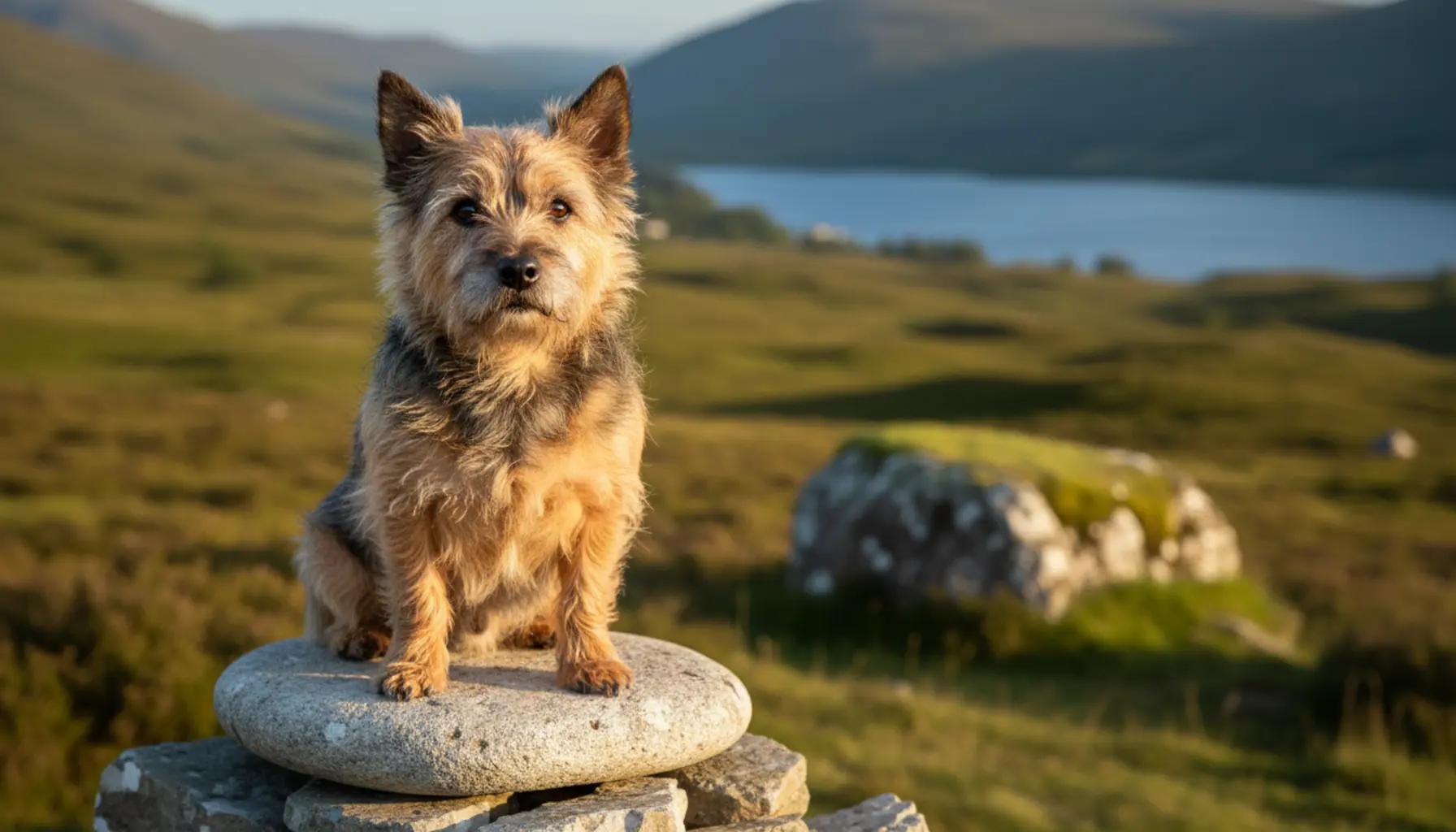
Cairn Terrier is a dog with an extraordinary character and energy that delights with its intelligence and compact size. This breed is ideal for active people who value loyal, sharp companions. The Cairn Terrier adapts perfectly both in rural areas and in city apartments.
Table of Contents
- History and Origins of the Cairn Terrier Breed
- Characteristics and Behavior of the Cairn Terrier
- Health and Lifespan of the Cairn Terrier
- Grooming and Nutrition of the Cairn Terrier
- Training and Socialization of the Cairn Terrier
- Price and Maintenance Costs of the Cairn Terrier
History and Origins of the Cairn Terrier Breed
The Cairn Terrier is one of the oldest terrier breeds originating from Scotland, with roots going back hundreds of years, long before official breeding records were kept. The breed’s name comes from the word “cairn,” meaning stone mounds or piles of boulders, which in the Scottish landscape served as field boundaries or memorial sites; it was among these that these small but incredibly brave dogs would flush out foxes, martens, and other pests. In the harsh, mountainous climate of the Scottish Highlands, there was a need for a dog that was resilient, tough, and independent—the Cairn Terrier perfectly met these requirements: small enough to squeeze into crevices between stones, yet strong and determined enough to face game much larger than itself. For a long time, all the rough-haired terriers of the Highlands and the Hebridean islands, including those from the Isle of Skye, were generally called “Scotch terriers” or simply “mountain terriers,” and divisions into separate breeds—such as the Cairn Terrier, West Highland White Terrier, or Skye Terrier—only appeared in the 19th and early 20th centuries, when breeders began to pay more attention to looks and the stable inheritance of traits over generations. Particular significance for shaping the modern Cairn Terrier lay with farms and estates in Northwest Scotland and on the islands, where dogs worked in tough terrain, often in very small groups or even alone, fostering intelligence, resourcefulness, and independence—traits so highly valued by breed enthusiasts today. A key moment in Cairn Terrier history was the early 20th century, when more organized breeding began and dogs were prepared for shows. In 1910, the British Kennel Club officially recognized the Cairn Terrier as a separate breed, and soon the first enthusiast clubs were founded, setting breed standards, promoting responsible breeding, and boosting the breed’s popularity outside their original working context. Interestingly, some lighter-colored dogs from Cairn Terrier lines formed the basis of another breed—the West Highland White Terrier—showing just how closely related the Scottish terriers were before distinct pedigree boundaries were drawn. Over time, the Cairn Terrier ceased to be merely a “vermin dog,” as some farmers called them, and began to win the hearts of city dwellers—first in Britain, then in the United States, where it quickly adapted to the role of family companion: full of temperament but small enough to live in apartments.
The breed’s global distribution changed significantly with the worldwide popularization of pedigree dogs in the 20th century. Cairn Terriers, though never as numerous as some other terriers, have become widely recognized among dog lovers thanks to their distinctive silhouette and “mischievous” facial expression. A major boost to the breed’s recognition came from its presence in popular culture: the most famous Cairn Terrier is Toto from the movie “The Wizard of Oz” (1939), embodying the breed’s typical traits—courage, cheerfulness, and a strong bond with its owner. Thanks to appearances like this, the Cairn Terrier won America’s affection and later spread across Europe. Today, the breed is recognized by all major canine organizations—including FCI, the Kennel Club (UK), and AKC—and the standard describes the Cairn Terrier as a small, robust, rough-coated terrier with a lively temperament, originally designed for working in dens and among rocky debris. In FCI classification, the Cairn Terrier belongs to group 3—terriers, section 2—small terriers, reflecting its physical size and original working function. The largest and most stable Cairn Terrier populations are now found in the UK, Scandinavia, Germany, the USA, and Canada, where active breed clubs operate, shows are organized, work trials held, and many educational activities offered. In Poland, the Cairn Terrier remains a relatively rare breed, though it is steadily gaining popularity among those seeking an energetic yet compact companion; breeding is supervised by the Polish Kennel Club, and kennels are few, which favors conscious selection and health control of the population. Despite their geographical dispersion, modern Cairn Terriers still retain many characteristics of their Scottish ancestors: resistance to adverse weather, a love of outdoor activity, eagerness to explore rough terrain, and a natural hunting instinct for small game. Thanks to this, the dog that once squeezed between cairn stones in search of foxes now, with equal enthusiasm, accompanies its owner during mountain hikes, woodland walks, or playing in a backyard, preserving a vivid connection with the historical landscape and function from which it originated.
Characteristics and Behavior of the Cairn Terrier
The Cairn Terrier is a small dog with a big heart and an even bigger temperament, whose lively character is apparent after only a few moments of company. This breed is full of energy, curiosity, and innate self-confidence—a classic terrier in compact form. These dogs are highly active and have a need for action, so they are not “couch potatoes”, although they can snuggle up with their owner for hours after a well-utilized, busy day. The innate hunting instinct inherited from their ancestors who hunted among stone piles for foxes and rodents is manifested in their love of digging, tracking, and exploring. A Cairn is usually always “alert”—listening, observing the surroundings, quickly reacting to stimuli, and eagerly interacting with people. This is an intelligent and clever dog that learns quickly but can also be stubborn and independent. Unlike breeds focused exclusively on cooperation, the Cairn Terrier often likes to make its own decisions, which can be amusing but requires consistent training. In daily life, they show a cheerful, playfully mischievous disposition: they eagerly initiate play, bring toys, encourage chasing or walks, and can be quite loud, barking in response to unfamiliar noises or strangers. As a natural “signaler”, the Cairn Terrier quickly notifies household members of whatever it deems important. With proper guidance, it can be taught not to bark excessively, but completely silencing this instinct is usually unrealistic and contrary to the breed’s nature. In relations with humans, the Cairn Terrier is surprisingly affectionate and family-oriented: it likes closeness and its owner’s presence, often following them around the home, and at night, gladly snuggles up to their feet on the couch. By nature, it is not overly “sweet” or submissive—has its own opinion, needs respect and a partnership approach. A well-trained Cairn combines courage and independence with loyalty to the family, becoming a vigilant but non-aggressive home guardian.
The Cairn Terrier’s relationships with children and other animals depend largely on early socialization and owner awareness. As a rule, it is a cheerful, social, playful dog, so it can fit well in a home with children provided the children are gentle and have been taught proper dog handling and to respect boundaries. Thanks to a solid build and balanced energy, the Cairn generally handles children’s chaos better than delicate, nervous breeds, but like every dog, it requires adult supervision during play. Its lively nature means it’s great for family activities—trips, excursions, and outdoor games. Toward strangers, depending on temperament and experience, it can be friendly or a bit distant, but is generally not shy; more often, it will first bark to “assess” the situation, but if it senses no threat, it greets guests curiously, tail wagging. With other dogs, the Cairn Terrier is typically brave and occasionally provocative—it doesn’t seek conflict but isn’t submissive either; it’s important to teach proper interactions from puppyhood to avoid ingraining overly dominant or territorial behaviors. Due to a strong hunting instinct, its attitude toward smaller animals like rodents or birds can be difficult—it often treats them as potential “prey”, making it less suitable for a home with free-roaming rabbits or guinea pigs. This breed’s mental requirements include a large dose of exercise and mental stimulation: a Cairn that regularly gets walks, tracking games, obedience training, or simple agility tasks is more balanced and easier to live with. Boredom and lack of occupation can lead to undesirable behaviors like excessive barking, destroying things, or escaping in search of “adventures”. Despite its small size, it is a resilient dog that enjoys spending time outside, running on meadows, through forests or on the beach, exploring new places and checking every nook. The ideal Cairn owner is active, consistent, yet cheerful and patient, ready for life with a dog full of temperament and sharp wit. With such an owner, a Cairn becomes a charismatic, charming companion, bringing lots of joy, dynamism, and a characteristic “terrier spark” to the home.
Health and Lifespan of the Cairn Terrier
The Cairn Terrier is generally considered a healthy and long-lived breed—average lifespan is around 13–15 years, with many individuals in good condition reaching 16–17 years. This above-average longevity is influenced by several factors: sturdy, compact build, no extreme selection for looks (e.g., very flat muzzle or exceptionally small size), and origins from working dogs that needed to be durable and functional. However, Cairn Terriers are not completely free from disease—like every breed, they have certain health predispositions worth knowing about when planning to care for a puppy or adult dog. The most commonly discussed problems include orthopedic disorders (especially mild forms of hip dysplasia and patellar luxation), eye and thyroid diseases, and in some individuals, liver disorders and skin allergies. For a future owner, two things are crucial: choosing a responsible breeder who tests breeding dogs, and diligent preventive care—proper diet, maintaining healthy body weight, regular check-ups, and exercise suited to the dog’s needs. Although the breed is robust, it does not tolerate excess weight well, which burdens the joints, spine, and heart, and increases the risk of diabetes and other metabolic diseases. It’s also important to remember that although the Cairn is small, its exercise requirements are comparable to larger working breeds—regular physical activity not only impacts fitness and muscle mass, but also stabilizes hormonal balance and supports immune function.

Breed-specific health problems include liver diseases such as congenital portosystemic shunt (where blood bypasses the liver) and chronic cholangitis; symptoms may include problems gaining weight, lethargy, excessive drooling, intermittent neurological symptoms, or vomiting after meals—so in young dogs with unusual signs, it’s worth asking a vet for detailed liver diagnostics. The breed is also predisposed to endocrine disorders, particularly hypothyroidism, with rather non-specific symptoms: weight gain despite normal feeding, apathy, cold intolerance, dull coat, thinning hair, and recurring skin infections. Cairn Terriers can also be prone to hereditary eye diseases such as progressive retinal atrophy (PRA), cataracts, or corneal dystrophy—responsible breeders test breeding stock’s eyes, and owners of adult dogs should arrange regular checkups, especially with seniors. Skin problems often include contact and food allergies and so-called “hot spots” (hot spots), resulting from sensitive skin, dense coat, and moisture; improper coat care or aggressive grooming products also contribute. Oral care is practically important too: small breeds, including the Cairn Terrier, tend to develop tartar and gum disease—over time, this can cause tooth loss and indirectly affect the heart, kidneys, and liver due to chronic inflammation. To keep your Cairn Terrier fit for many years, you should implement a schedule of regular vaccinations and deworming, use tick and flea prevention, conduct annual blood and urine tests, and around age 7–8, expand diagnostics to include blood work (echo, ECG) and thyroid screening. Don’t forget behavioral aspects either: sufficient exercise, nosework, obedience, and mental activities reduce stress, which—just like in humans—affects immunity, the pace of aging, and susceptibility to chronic diseases. Thanks to conscious, preventive care, many Cairn Terriers remain healthy and energetic even into old age.
Grooming and Nutrition of the Cairn Terrier
Cairn Terriers have a rough, double coat that is one of their hallmarks—when well-maintained, it protects them from rain, cold, and mechanical injury during outdoor activities. Unlike many silky-coated breeds, the Cairn Terrier should not be regularly clipped with clippers, as this weakens the hair structure, removes its resilience, and may lead to skin problems. Correct grooming relies on hand-stripping (removal of dead hair by hand or with a stripping knife) every 8–12 weeks; show dogs need it more often, pet Cairns a bit less frequently, but it must be regular. If the owner lacks experience, it’s best to seek a groomer familiar with rough terriers—many salons don’t offer hand-stripping, so it’s good to ask in advance. Between appointments, regular coat checks and removal of single dead hairs (done gently while petting the dog) suffice. Bathing should not be frequent; usually, once every 2–3 months or only as needed (e.g., after rolling in mud or something unpleasant) is enough. Always use gentle shampoos for rough-coated dogs, and after bathing carefully dry them to avoid chilling or skin irritation. Daily care mostly involves short brushing 2–3 times per week, which removes dirt, dead undercoat, and helps monitor for skin problems such as redness or dandruff. Regular ear checks are worthwhile—Cairn Terriers, being active and exploring bushes, may develop minor injuries, have prickly seeds or excessive wax. Clean ears with special solutions and avoid cotton buds for the ear canal; if infection is suspected (bad odor, redness, scratching), consult a vet promptly. Eyes also require attention—check for excessive tearing, irritation, or lens clouding, which in this breed may signal hereditary issues. Nail inspection is necessary; although the Cairn is active and often wears down their nails naturally, city dogs walking on soft surfaces may need nails cut every 3–4 weeks to avoid toe deformities and pain when walking. Never neglect dental hygiene—many small breeds are prone to tartar, so start tooth brushing with dog paste from puppyhood, offer dental chews, and have teeth routinely checked at the vet to reduce the risk of periodontal disease, pain, and secondary organs infections. During shedding periods and seasonal changes, keep closer watch on skin and coat, as this is when contact or food allergies most often appear—if you notice itching, redness, or excessive paw licking, consult a vet and, if needed, a canine nutritionist.
The Cairn Terrier’s diet should consider its small size but high activity and lively temperament—despite low body weight, these dogs expend a lot of energy and need food properly balanced in protein, fats, carbohydrates, vitamins, and minerals. You can opt for high-quality dry or wet food for small breeds, choosing products with a clear composition and meat as the main ingredient—not cereals or plant-origin products with low nutritional value. Alternatively, you can go for a cooked or BARF (raw) diet, but in this case you must consult a veterinary nutritionist to avoid deficiencies or excesses of minerals, especially calcium and phosphorus, which are crucial for the health of bones, joints, and teeth. It’s best to divide the daily portion into 2–3 smaller meals to keep energy levels stable, lower the risk of digestive issues, and avoid greedy gorging, especially in dogs prone to fast eating. As is common in many small breeds, the Cairn Terrier is prone to becoming overweight, particularly if owners over-reward with treats and don’t provide enough exercise. Excess weight strains the joints and heart, and can encourage endocrine disorders, so regularly check your dog’s weight and assess their BCS (Body Condition Score)—the ribs should be palpable but not visible, and the waist gently outlined. Treats for training should be included in the total calorie count, choosing low-calorie treats high in meat or vegetables rather than highly processed ones with excessive sugar or fat. Due to possible breed predispositions to skin and food allergies, monitor your dog’s reaction to new diet components—if itching, diarrhea, flatulence, or excessive scratching occur, switching to a mono-protein or hypoallergenic diet after consulting a veterinary professional may help. Fresh water should always be available, especially for an active dog who runs a lot and can easily overheat in hot weather. Bring a water bottle and travel bowl on walks, hikes, or training. It’s also good practice to periodically run blood and urine tests, particularly for middle-aged and older dogs—this allows assessment of whether the current diet fully meets their needs and allows us to catch early symptoms of liver, kidney, or pancreatic disease before visible clinical signs appear. For castrated/spayed dogs, which usually need fewer calories, consider low-calorie dog food but maintain appropriate protein levels to support muscle mass. Properly chosen nutrition, combined with appropriate coat, skin, dental, and nail care, is one of the most important factors in Cairn Terrier health prevention and greatly affects their overall condition, looks, and well-being at every stage of life.
Training and Socialization of the Cairn Terrier
The Cairn Terrier, as a typical terrier, combines great intelligence, independence, and stubbornness, so its training requires owner awareness, consistency, and a sense of humor. This isn’t a dog that blindly obeys commands—it likes to know “why” it’s doing something and enjoys getting something out of it, whether a treat or a shared game. The basis of working with a Cairn should be positive reinforcement: rewarding desired behaviors (food, praise, toy, chance to run), avoiding physical punishments or yelling, which only build distrust and cause the dog to try to “outsmart” the owner behind their back. Due to a lively temperament and a “spring” in the back legs, it is especially important to quickly teach self-control: sitting calmly before going for a walk, not lunging at other dogs, not jumping on people. Good first commands are “sit,” “stay,” “come,” “place,” and “drop,” each practiced in short, dynamic 3–5 min sessions several times a day. Cairns get quickly bored with repetition, so it’s better to weave learning into daily situations: ask for “sit” before meals, “stay” when opening the door, “come” on walks—rewarding coming with a highly attractive prize, more interesting than the surroundings. Instinctive chasing is a challenge, so solid recall and teaching to walk on a long lead are training priorities—a Cairn who sees a running cat or bird may give chase, and only good habits and ingrained cooperation with the owner will “break through” the genetic chasing drive. Begin teaching the dog to respond to a whistle or other distinct sound, always linked to the most valuable reward; such an emergency recall is invaluable in practice. The Cairn Terrier loves nosework and problem-solving, so excels at trick training, amateur scent work, Nosework, or “find the toy” games. Start mental exercises—even for puppies—with simple at-home scent games, snuffle mats, food puzzles, and later on, more advanced tasks. This channels the dog’s energy and satisfies its need to explore in a controlled way, thus reducing risk of destructive behaviors like chewing furniture, digging up the garden, or barking from boredom. Also, work on good home manners—a Cairn, despite its size, can be surprisingly assertive, so set clear rules from day one: is the dog allowed on the couch, where does it sleep, how are guests greeted, and is begging at the table allowed. Consistency by all household members makes expectations clear and prevents frustration, which with a terrier can show as stubbornness, snapping, or ignoring commands.
Socialization of the Cairn Terrier is just as important as technical training, because this breed is naturally alert, vocal, and can become overstimulated in new situations. The period between 8 and 16 weeks is crucial for exposing puppies to a world of stimuli: different people (children, elderly, people with glasses, hats), sounds (vacuum cleaners, traffic, trains, lawnmowers), surfaces (tiles, grass, sand, metal grates), and environments (city, park, countryside). This should always happen in a controlled manner, without overwhelming the puppy, and never forcing it into frightening contact—instead, let it observe from afar, rewarding curiosity and calm behavior. Cairns are sometimes “brave on the outside” but sensitive within, so neglected socialization can result in timidity, fear-based aggression, or excessive barking at every stimulus. Signing up for positive-method puppy classes is useful, where a pup learns dog-to-dog communication, basic commands, and training with distractions. However, remember that the Cairn Terrier is usually not a “pack animal” in the sense that it doesn’t need intense interaction with large groups of dogs—more important is learning to calmly pass strange dogs on the street, disengaging from play, and not pestering every animal encountered. At home, with the right socialization, a Cairn can thrive as either the only dog or a companion to another, preferably balanced dog with a similar temperament; just establish clear rules over resources (bowls, toys, sleeping spots) to avoid conflicts. With children, two-way education is vital: the child must learn to respect the dog, not pull its hair, not disturb while it’s eating or resting, and an adult should supervise interactions, rewarding the dog’s calm behavior near the child. Cairn Terriers have quick reflexes and a low reactivity threshold, so poor handling can lead to growling or snapping, signaling boundaries have been crossed and not “meanness” from the dog. Another field of socialization is preparing the Cairn for city life: car travel, public transport, visits to groomers and vets. From a young age, practice calmly entering a carrier, associate the grooming table and touching paws, ears, or muzzle with rewards, and take “fake” vet visits to get weighed, petted, and rewarded. This way, real vet visits and grooming are less stressful. Since Cairns love to influence their surroundings, introduce a clear but friendly daily routine: regular feeding, walks, playtimes, and rest help them relax and accept situations where humans make decisions. Regular, varied walks—including exploration, obedience training, nose games, and controlled social opportunities—make the best training and socializing tools for this active, clever breed.
Price and Maintenance Costs of the Cairn Terrier
The price of a Cairn Terrier from a legal, registered breeder ranges from about 4000 to 7000 PLN (roughly $900–$1,600), though for puppies with outstanding show pedigrees or imported from abroad, the price may be higher. Factors influencing the price include breeder reputation, health tests for the parents, show achievements, and whether the puppy is sold as a pet (“on the couch”) or intended for breeding/show career. Price differences often reflect breeding quality—responsible breeders invest in genetic tests, specialist consultations, high-quality nutrition, socializing puppies, and proper care for the dam, benefiting both health and temperament of young dogs. Unusually low prices should raise suspicions of a puppy mill, lack of parental health testing, poor husbandry, or “cut-rate” breeding. At the puppy selection stage, ask about completed health tests (hips, eyes, thyroid, genetic screenings), see the mother, learn about housing conditions, and sign a solid purchase contract with a pedigree from an FCI-affiliated club. Beyond the puppy’s price, initial expenses for a starter kit must be considered—bed, bowls, leash, harness or collar, crate (often useful for house training and calm time alone), toys, grooming tools, car carrier, and a supply of quality food for first weeks. The first layette for a Cairn is usually 800–1,500 PLN ($180–$340), depending on product quality. In the first year, also count costs for vaccinations, deworming, possible microchipping (if not done by the breeder), and later neutering/spaying, if breeding isn’t planned—this surgical procedure for a small dog is typically a few hundred PLN.
In daily maintenance, the Cairn Terrier is relatively economical in food consumption, but as an active, energetic dog, it does need quality diet. Monthly food costs for an adult Cairn fed complete premium dry food are typically 150–250 PLN ($35–$60), depending on the brand, protein level, ingredient quality, and additional training treats. For mixed diets (dry + wet), home-cooked or BARF (with nutritionist guidance), costs can be somewhat higher, but still much lower than large breeds. Routine costs also include veterinary preventive care—yearly vaccines (100–200 PLN/$25–$50), regular deworming and protection against fleas/ticks (200–400 PLN/$45–$90 per year). Once every 1–2 years, basic blood and urine tests for chronic disease prevention are advised, costing 200–400 PLN ($45–$90) per package. Budget also for grooming, especially hand-stripping, which is key to maintaining the Cairn’s proper coat structure. If not done by the owner, a groomer session may cost 150–250 PLN ($35–$60) every 2–3 months, i.e., 600–1,200 PLN ($140–$270) per year. Add grooming accessories like brushes, combs, gentle shampoo for rough-haired dogs, and ear and dental hygiene products—these can be one-off or every few months, costing tens to hundreds of PLN. Every owner should be prepared for unexpected health expenses (emergency visits, dental procedures, injury treatments, specialist consultations—ophthalmology, orthopedics, endocrinology). Single complex treatments may cost from a few hundred to several thousand PLN, which is why more people now choose dog health insurance. The insurance premium depends on coverage but usually is 400–1,200 PLN ($90–$270) annually and can partly cover visits, tests, or surgery. Additionally, consider “organizational” costs: dog hotel or petsitter for holidays (approx. 60–120 PLN/$13–$30 per night), participation in basic or further obedience/nosework courses (hundreds of PLN per course), and regular replacement of worn accessories, leashes, harnesses, or toys. In total, the annual cost of maintaining a Cairn Terrier—assuming good care, preventive health, and regular grooming—can be estimated at several thousand PLN, with year-to-year variation depending on health, family lifestyle, and individual dog’s needs.
Summary
The Cairn Terrier is the ideal companion for active families. They are intelligent and spirited dogs that require regular activity and appropriate grooming. With proper socialization, Cairn Terriers thrive among children and other animals. Their health is usually good, and their lifespan can reach well over a decade. Grooming, though demanding, is the key to their beautiful rough coat. It is also important to consider the cost of keeping a Cairn Terrier, including food and regular veterinary consultations.

