

Hot spot in dogs is a sudden and painful inflammatory skin condition that can occur in any four-legged friend. Recognizing a hot spot is crucial for effective response and to prevent further complications. Proper care and prompt treatment of hot spots allow for a quick return to health for your dog.
Table of Contents
- What is a hot spot in dogs?
- Recognizing symptoms of skin inflammation
- Causes of hot spots
- Effective treatment methods
- Professional veterinary care
- How to prevent hot spots in dogs?
What is a hot spot in dogs?
A hot spot in dogs, also known as acute moist dermatitis, is a localized, very painful inflammatory skin condition that appears suddenly and develops at a lightning-fast pace—often within just a few hours. This skin lesion is sharply demarcated, most commonly round or oval, usually strongly red, moist, sticky to the touch, and covered with a serous-purulent exudate. The hair around the lesion is matted, tangled, or completely chewed off by the dog, who intensively licks, chews, or scratches the painful spot to relieve itching and discomfort. Unlike many chronic dermatological diseases, hot spots are sudden and acute processes—the skin may have looked perfectly normal the day before, and the next morning the owner finds an extensive, oozing sore. Hot spots are more commonly seen in dogs with dense coats and undercoats because moisture and heat trapped near the skin create the ideal environment for bacterial growth, but they can occur in virtually any dog, regardless of breed or age. A hot spot is not a single disease “out of nowhere” but rather the skin’s reaction to a triggering factor: this can be a flea bite, an allergy, mechanical irritation (e.g., after brushing or pulling on hair), a scratch, or even maceration of the skin after prolonged contact with water. When a dog experiences intense itchiness or pain, it starts licking and scratching intensively, which disrupts the continuity of the epidermis. The damaged skin becomes susceptible to the proliferation of bacteria that naturally reside on the surface of the dog’s body, and combined with warmth and moisture, this very quickly leads to the development of an acute inflammatory condition. This is where the name “hot spot” comes from—the area is literally hot, tender, and highly inflamed. It is important to note that a hot spot only affects the superficial layers of the skin (the epidermis and upper dermis), but despite this “shallow” location, its course can be dramatic: the lesion quickly enlarges, covering an increasing area, and the dog may become restless, hyperactive, or even apathetic due to pain.
From a medical perspective, a hot spot can be considered an acute, bacterial inflammatory condition of the skin, usually caused by opportunistic bacteria that normally inhabit the dog’s skin harmlessly, such as Staphylococcus pseudintermedius. The problem arises only when micro-injuries and disruption of the natural protective skin barrier occur—open wounds, scratches, and persistent moisture create the perfect environment for rapid bacterial multiplication. This process is self-perpetuating: the greater the inflammation and itchiness, the more intensely the dog scratches and bites the affected area, further damaging the skin and opening the way for more microorganisms. As a result, a small and seemingly insignificant redness can transform into a painful, oozing lesion measuring several centimeters in just a few hours. Hot spots most often occur on the neck, cheeks, the rump area (at the base of the tail), the sides of the body, and the thighs—places the dog can easily reach with its mouth or back legs—but they can also appear around the ears and chest. It is important to stress that a hot spot is not an infectious disease in the sense of “contagion” between dogs—it is not transmitted like a virus or ringworm between dogs. Its appearance is related to individual animal predisposition (e.g., allergy tendencies, coat type, grooming habits, living environment), as well as the initial cause of skin irritation. Although the clinical picture of a hot spot is rather characteristic, owners often confuse it with other dermatological problems such as an abscess after a bite, ringworm, impetigo, or even simple irritation after a walk through bushes. The distinguishing factors are the sudden onset, intense pain, and the presence of a very moist, sticky area often with an unpleasant smell. Understanding that a hot spot is more a symptom of acute, localized inflammation rather than a distinct disease entity is extremely important in practice: effective treatment requires not just alleviating the skin lesion itself, but also identifying and removing the trigger that caused it (e.g., flea infestation, food allergy, improper coat care, or chronic joint pain prompting the dog to obsessively lick a specific spot). This explains why, for some dogs, a hot spot occurs only once, while for others it recurs regularly—it is precisely the presence or absence of a persistent irritant and individual skin sensitivity that determines the likelihood of recurrence.
Recognizing symptoms of skin inflammation
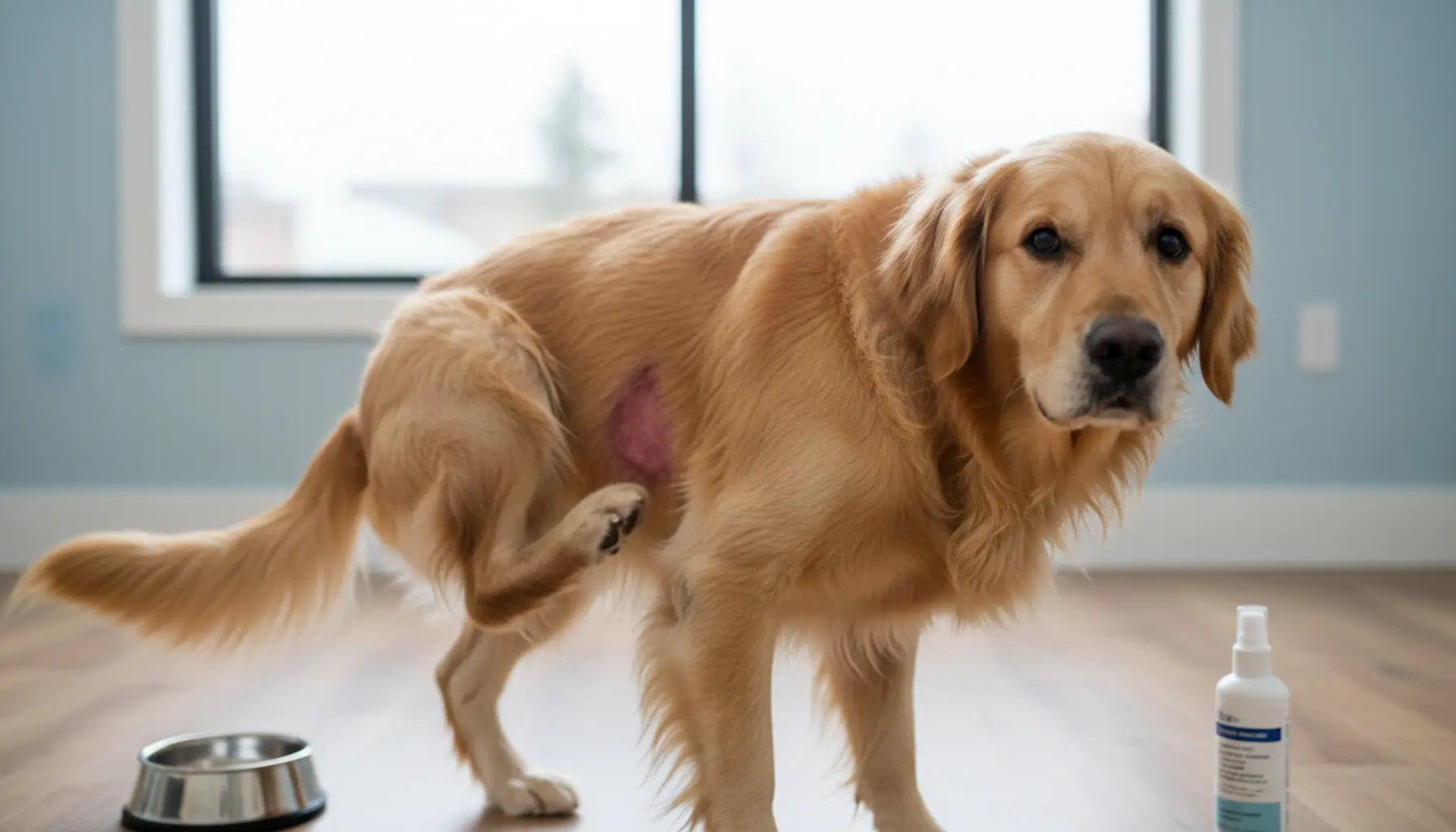
Recognizing a hot spot in a dog relies largely on careful observation of the animal’s behavior and the appearance of its skin. One of the first warning signs is sudden, obsessive scratching, biting, or licking of a specific area—usually the neck, rump, base of the tail, thighs, sometimes the cheek or under the ear. The dog may be noticeably restless, shake itself more often, seek hard surfaces to rub against, or even whimper when the irritated area is touched. Owners often notice that “something happened” literally overnight: the evening before the skin looked normal, and by morning there is a clearly inflamed lesion. A typical hot spot begins as a small but very itchy or painful spot which the dog quickly licks and scratches until it damages the epidermis and creates a moist, oozing wound. From a dermatological standpoint, the key is the combination of symptoms: a surface-limited but intensely red, shiny or wet lesion, distinct from healthy skin, usually painful to the touch and rapidly enlarging. Around the hot spot, exudate often glues the hair—making it stiff, matted, and concealing the true extent of the problem beneath. An owner who only sees a small stain or mat may discover an extensive, red, sometimes ulcerated area of skin with yellowish discharge, sometimes with a characteristic bacterial infection odor, by parting the hair. Another crucial symptom is pronounced pain—many dogs do not tolerate touch in the affected area, may jump away, growl, or attempt to escape, which can be misinterpreted as “bad behavior” but is actually a defensive response to significant pain. There may also be general symptoms: lethargy, unwillingness to play, decreased appetite, and in advanced cases, fever; however, these are nonspecific and usually appear only with more extensive inflammation.
When recognizing hot spot-type skin inflammation, it is useful to pay attention to several features that distinguish it from other skin problems. A hot spot is typically very acute—it appears and intensifies over a matter of hours, while many other dermatoses develop more slowly. The lesion usually has an oval or round shape, a distinct red border, and a moist, oozing center which can be covered with yellowish or greenish discharge, scabs, and remnants of hair stuck to the wound. The skin within the hot spot may be raised, swollen, and warm to the touch; this can be felt through the fur. In contrast to classic skin allergies, which usually cause widespread redness and generalized “scratching” in many areas, hot spots typically appear as a single, intense lesion—though, if untreated, multiple foci may develop. It should also be remembered that hair loss around the lesion is a secondary symptom and not the original cause: the hair falls out or is mechanically removed by the dog, so the bald patch is a consequence of constant licking and scratching. In long- and thick-coated breeds, such as golden retrievers, labradors, German shepherds, or Bernese Mountain Dogs, diagnosis is more difficult because the lesion “hides” under a thick coat and only becomes visible once already advanced. Therefore, it’s important to react to subtle signs: sudden reluctance to brush a specific area, discomfort when putting on a collar or harness, persistent licking of the rump after a walk, or an unpleasant odor emanating from the fur. To avoid confusing a hot spot with a tick bite, purulent wound, or ringworm, the key association is: sudden onset, severe itching, a wet, shiny lesion, and rapid expansion. In case of doubts, with a highly sensitive, painful dog or when the lesion is near the mouth, eyes, or genital area, it’s always recommended to consult a veterinarian, who through clinical examination and history can confirm that this is indeed an acute, moist dermatitis and not another skin disease requiring a different treatment.
Causes of hot spots
A hot spot in a dog is almost never an “out-of-the-blue” event—it is usually the result of a chain of events, starting with itchiness, pain, or skin irritation, followed by intense scratching and secondary bacterial infection. At the skin level, the mechanism is similar: something causes inflammation or itching, the dog responds by scratching, chewing, licking, or rubbing against various objects, which damages the epidermis and opens the door for bacteria naturally present on the skin. Bacteria such as Staphylococcus pseudintermedius multiply rapidly in the warm, moist environment beneath the coat, leading to rapid expansion of the inflammatory reaction. The most common primary causes initiating this process are external parasites (especially fleas), skin allergies, mechanical irritation, and moisture trapped in the coat. Flea bites are among the most important factors—even a single bite in a dog allergic to flea saliva can cause intense itching that leads to vigorous scratching at one spot. The same effect can be triggered by bites from mosquitoes, midges, lice, and some reactions to ticks—the bite site becomes the focus of obsessive scratching, quickly turning into a painful, moist hot spot. Another significant group of causes are allergies: food, contact (such as laundry detergents, cleaning agents, certain plastics in collars or bedding), and atopic dermatitis related to an individual’s predisposition to react to environmental allergens such as plant pollens, house dust mites, or molds. Allergic dogs have more reactive skin, which reddens and itches faster, and any episode of allergy exacerbation can lead to the formation of a hot spot at the site they obsessively lick or bite. Often, this is just the tip of the iceberg—recurring hot spots in a young dog can be the first clear signal that a chronic allergic disease is developing in the background. For many dogs, mechanical factors and injuries play an important role: abrasions from too tight a collar or harness, micro-injuries from repeated friction (e.g., on the rump in dogs sitting on hard surfaces), scratches from play with other dogs, and even the wound left by a flea or tick bite. Sometimes all it takes is a small wound or scratch from a branch or thorn, combined with moisture and bacteria, to create the perfect environment for acute, oozing skin inflammation. Another very important cause relates to moisture and temperature—so-called “wet dogs” are particularly vulnerable to hot spots. Swimming in lakes, frequent bathing, walking in the rain, and then not drying the coat thoroughly leaves the skin moist and warm for a long time. In breeds with thick undercoats (e.g., golden retrievers, labradors, German shepherds, Saint Bernards), water trapped deep in the coat promotes maceration and weakens its protective barrier. In such conditions, even minor irritation, friction, or a flea bite can quickly turn into a hot spot, especially around the neck, rump, base of the tail, or thighs, where the fur is densest and slowest to dry.
There are also several less obvious causes that indirectly lead to hot spots by increasing itchiness or disturbing normal skin function. One is ear problems—chronic or recurrent external ear inflammation prompts the dog to persistently scratch the area around the ears, neck, and cheeks, very often resulting in moist, painful inflamed foci in these regions. A similar mechanism operates with orthopedic issues and pain—a dog experiencing discomfort in the hip, knee, or spine may compulsively lick the painful area until it damages the skin and develops a hot spot. Endocrine diseases (such as hypothyroidism, Cushing’s syndrome) are also frequently present, affecting skin and hair quality and resistance and increasing susceptibility to bacterial infection. The role of stress, boredom, and behavior disorders should not be underestimated—in some dogs, licking and chewing serve as compulsive mechanisms for coping with psychological tension. Prolonged stress, lack of adequate mental and physical stimulation, loneliness, or sudden environmental changes (moving, new household member, another animal) can lead to so-called psychogenic dermatoses, in which the dog obsessively focuses on one body area. This not only sustains inflammation but also impedes healing of the lesion. Incorrect skin and coat care is equally important—infrequent brushing in long-haired breeds promotes mats where the skin cannot breathe and moisture and contaminants accumulate. Mats pull on the skin, causing micro-injuries and pain, and the dog instinctively scratches and chews the area, leading to formation of inflammatory foci. On the other hand, overly frequent bathing with inappropriate products (human shampoos, harsh detergents) can disrupt the skin’s natural hydro-lipid barrier, causing dryness, itching, and increased sensitivity to environmental factors. For some dogs, genetic and breed factors also play a role—breeds with dense, undercoated coats and allergies (golden retriever, Labrador retriever, German shepherd, Newfoundland, Bernese Mountain Dog, Chow-Chow) statistically experience hot spots more often. These factors rarely act in isolation—they usually coexist: e.g., a predisposed breed with allergies and poor coat care, after a swim and a flea bite. Understanding that a hot spot is most often the result of many stimuli acting together, and not “just one cause,” is crucial for effective treatment and prevention of recurrence, as it allows one to seek and eliminate the main triggers initiating the vicious itch–scratch–infection cycle.
Effective treatment methods
Treating a hot spot in a dog should always be multi-step and individualized, as it involves both managing the acute inflammatory state and eliminating the trigger that caused the lesion. The first and key step is a thorough examination by a veterinarian—self-diagnosing based on internet images or using random ointments can only delay proper help. During the visit, a general clinical examination is usually carried out, the skin is assessed, and if needed, dermatoscopic or cytological examination (taking a sample from the lesion and viewing it under a microscope) is performed to confirm bacterial inflammation and rule out, for example, ringworm. The standard in hot spot treatment is local management of the skin lesion: shaving the coat around the inflamed area, including a margin of healthy skin, to ensure air access, reveal the full extent, and allow effective cleaning. Many owners are shocked that under apparently minor clumps of hair lies an extensive inflammatory lesion; but thorough shaving is necessary for healing to begin. After exposing the lesion, the skin is gently but thoroughly cleaned—usually with an antiseptic, such as chlorhexidine, iodine solution, or a veterinary dermatological wash. The aim is to remove exudate, scabs, dead tissue, and bacteria from the wound while minimizing further skin irritation. Depending on the dog’s sensitivity, the vet may apply a local anesthetic spray or gel so that the shaving and cleaning procedure isn’t painful for the pet. In acute, extensive cases, systemic pain relief, e.g., nonsteroidal anti-inflammatory drugs adjusted for the dog’s weight and health, may also be necessary.
After mechanical management, pharmacological treatment is introduced, which can be local or systemic. Topical agents are most often used in the form of sprays, creams, or gels combining antibacterial, anti-inflammatory, and anti-itch properties—often containing an antibiotic and a low-concentration glucocorticosteroid, as well as healing adjuvants such as allantoin, panthenol, or zinc. It is very important to strictly follow recommendations on frequency and duration, because overdosing corticosteroid creams on your own can impair natural skin repair processes. In cases where the hot spot is extensive, very painful, or growing rapidly, the veterinarian may resort to systemic antibiotic therapy in pills or injections, usually for 7–14 days or longer until symptoms completely resolve. If severe itchiness is present, additional anti-itch medications or short-term steroid therapy are used to break the itch-scratch cycle. Meanwhile, behavioral treatment and protective measures are also critical—such as fitting a protective collar, post-surgical “body,” or special clothing to physically prevent the dog from accessing the wound. At home, soft inflatable or foam collars (well tolerated by the pet and effective at protecting the area) are sometimes used. The owner should also ensure the skin remains dry and clean—avoid bathing until cleared by the vet, dry the dog thoroughly after rain or snow, use only pet-safe dermatological products, and strictly adhere to follow-up visit schedules. Effective treatment also targets the underlying cause: if the hot spot was caused by flea bites, comprehensive parasite prevention is essential; for allergies, dermatological diagnostics and possibly allergy tests, diet change, antihistamines, or immunomodulatory therapy may be introduced; if related to joint pain—orthopedic management to reduce compulsive licking of painful sites. The better recognized and managed the trigger, the lower the risk of recurrence and chronic skin problems in future, eliminating the need for repeated, demanding treatment for both dog and owner.
Professional veterinary care
Professional veterinary care for a hot spot in dogs starts with a detailed interview and thorough clinical examination, allowing the vet to determine if it’s acute, moist dermatitis or another skin disease such as ringworm, demodicosis, pyoderma, or a deep abscess. The vet asks about when the changes appeared, their development, any prior skin problems, anti-parasite products used, diet, and possible allergies. Assessment of the dog’s lifestyle is also crucial—the frequency of bathing, water exposure, activity level, exposure to stress, and the presence of other pets at home. Next, the vet examines the entire body, not just the visible wound, as the hot spot is often just the tip of the iceberg and a signal that something more is going on. Inspection of the skin in various locations, palpation to check for pain, swelling, and extent, and, when other diseases are suspected, additional blood tests, skin scrapings, wound cytology, or bacterial cultures (to identify bacteria type and antibiotic susceptibility) may be conducted. This is what distinguishes professional care from home “treatments”—the vet is not only looking at the surface wound but is seeking its cause and selecting therapy that is effective, safe, and as minimally burdensome as possible for the animal. An essential exam component is general health assessment: pulse, temperature, hydration, breathing, as well as coat and skin condition. Some dogs with hot spots may display fever, apathy, and general weakness, which requires more intensive treatment and strict monitoring. In many cases, the vet will, during the first consultation, proceed with mechanical lesion management—shaving and cleaning—which allows better evaluation of depth and margins, and brings much relief to the dog by removing matted, pulling hair, scabs, and exudate. Because this procedure can be painful, the vet often uses local anesthesia, and for highly sensitive or aggressive dogs—short sedation to avoid additional stress and risk of staff being bitten.
After initial hot spot management, the vet establishes an individualized treatment plan usually involving a combination of topical therapy, systemic treatment, and modification of the dog’s environment and habits. Topical treatment usually involves antiseptic, drying, and anti-inflammatory products, sometimes combined with antibiotics or corticosteroids, tailored to the type and extent of lesions and the animal’s health status. Professional care involves precise calculation of doses, frequency, and therapy duration, with consideration of possible side effects—e.g., when using steroids or antibiotics often. In severe cases, with painful, widespread hot spots, or if there are systemic symptoms, systemic antibiotics, anti-inflammatory and pain relief medications, and sometimes antihistamines for severe itch may be implemented. However, a professional does not stop at medication alone—they also educate the owner. During the consultation, the vet discusses how to properly clean the wound at home, which products never to use (such as human steroid ointments or alcohol-based solutions), how to fit a protective collar or post-operative garment, and how to monitor healing progress. The doctor also sets dates for follow-up visits, assessing whether the treatment is effective, if drug regimens need adjustment, changing antibiotics according to culture results, or expanding diagnostics with allergy, endocrine, or behavioral consultation if a psychogenic cause is suspected. Professional veterinary care also includes long-term prevention planning—choosing effective flea and tick control, recommending a suitable diet for allergies or obesity, advice on regular brushing, proper drying after bathing, and minimizing stress. Thanks to ongoing collaboration with a veterinarian, the owner is not left to rely on random internet advice but receives a coherent, tailored plan that actually reduces the risk of recurring hot spots and other dermal issues. This continuity of care allows for a rapid reaction to early, subtle relapse signs when the lesion is still small and easy to control, instead of waiting for it to become an extensive, painful wound that requires intensive, long-term treatment.
How to prevent hot spots in dogs?
Prevention of hot spots in dogs is based primarily on consistent skin and coat care, proper nutrition, and minimizing factors that provoke itchiness and self-trauma. The key element is regular brushing—at least 2–3 times a week for shorthaired dogs, often daily for long-haired and undercoated breeds. Systematically removing dead hair limits matting, improves air circulation next to the skin, and helps to quickly spot redness, minor injuries, parasites, or an unusual odor, which can be the first clue to a developing infection. Responsible bathing is also important—bathing too often with harsh shampoos can disrupt the skin’s natural lipid barrier and promote dryness, and as a result, itchiness. Usually, baths every few weeks with gentle, species-appropriate products matched to coat type and dermatological needs suffice; when in doubt, ask your vet for a dermocosmetic recommendation. After each bath, swim, or play in the sea, the coat must be thoroughly dried, especially in thick undercoated dogs—the warm, moist environment under the fur is perfect for bacterial and fungal proliferation. Prevention also includes trimming the fur in areas particularly prone to moisture and abrasion, such as around the ears, rump, base of the tail, and groin, which makes those areas easier to keep clean and dry. Effective external parasite control is essential for hot spot prevention. Regular use of flea and tick preventatives (spot-on solutions, collars, oral tablets, or sprays) according to manufacturer and veterinary recommendation reduces the risk of bites and hypersensitivity to flea saliva, which frequently triggers acute skin inflammation. Year-round protection is necessary, not just in summer, since parasites may be active in warmer periods of autumn and early spring—and in heated apartments, even in winter. For dogs diagnosed with allergies (food, atopic dermatitis, flea allergy), prevention requires greater vigilance—a hypoallergenic or elimination diet, regular deworming, and during flare-ups, consultation with a veterinary dermatologist for a tailored long-term itch management plan may be essential. Nutritionally, make sure your dog’s food is complete, well-balanced for protein, fat, vitamins, and minerals, with appropriate levels of omega-3 and omega-6 fatty acids that support skin health and reduce inflammation; sometimes, the vet may suggest supplementation with fish oil, borage oil, or evening primrose oil.
In addition to grooming and nutrition, environmental and behavioral factors—often overlooked by owners—influence hot spot risk. Dogs who spend lots of time outdoors, swim, or train in rain or snow must have the chance to dry thoroughly after returning home, and bedding must be kept clean and dry, regularly washed and aired. In summer, avoid prolonged sun exposure, especially on hot surfaces that can cause overheating and skin irritation; on hot days provide a cool, shady resting spot and access to fresh water. It is also important to avoid collars or harnesses that chafe or constantly press the same areas, especially in dogs with sensitive skin—choose better-fitting designs, with softer linings or wider straps, and regularly check the skin under the collar. Behaviorally, it’s important to limit stress, boredom, and frustration, as emotionally overloaded or under-stimulated dogs (physically and mentally) are more prone to compulsive behaviors such as obsessive licking or chewing. Provide sufficient daily exercise, scent games, training tasks, and quality time together to reduce tension and the risk of self-destructive coping behaviors. Watch your dog and respond to the first signals of a problem: sudden focus on a certain body area, frequent chewing, licking, rubbing against furniture or the floor should prompt you to check the skin, and if the lesion doesn’t clear up quickly, contact your vet. For dogs prone to recurring skin issues, keeping an observation diary of symptom dates, dietary changes, new grooming, cleaning products used at home, stressful events, or the season can greatly help specialists identify causative factors and plan a customized prevention program. On a practical level, never use aggressive antiseptics, human ointments, or home remedies on your dog’s skin, as these may further irritate, dry, or trigger additional allergies. Responsible grooming, attentiveness to subtle behavioral changes, and close cooperation with your veterinarian for deworming, vaccinations, and dermatology checkups form the foundation for successfully preventing hot spots in the long term.
Summary
Hot spots in dogs can be a troublesome problem for both pets and their owners. Early symptom recognition and understanding the causes are key for effective treatment. Consulting with a veterinarian and using appropriate treatment and preventive methods can bring relief to your pet. Maintain regular check-ups and grooming to reduce the risk of recurrence of this condition.

