
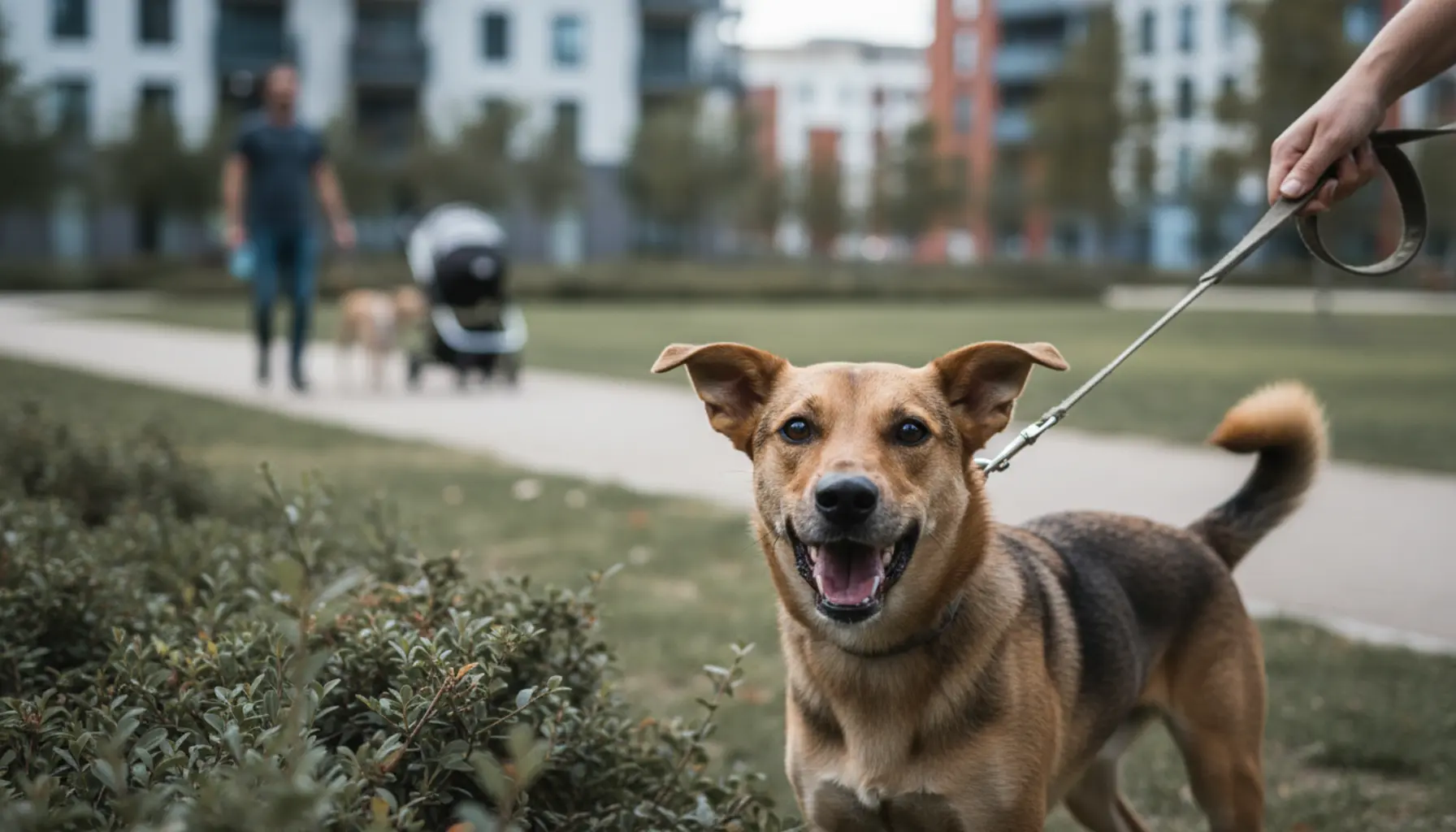
A reactive dog can surprise you with sudden outbursts of emotion, which often makes everyday life difficult. Understanding what reactivity in dogs is and how to respond to it allows you to effectively support your pet. Training based on positive methods and appropriate accessories can genuinely improve the comfort of both the guardian and the dog.
Table of Contents
- What is a reactive dog?
- Causes of reactivity in dogs
- Effective training methods for reactive dogs
- How to deal with hyperactivity on walks
- The importance of building a dog’s confidence
- Equipment and accessories to support training
What is a reactive dog?
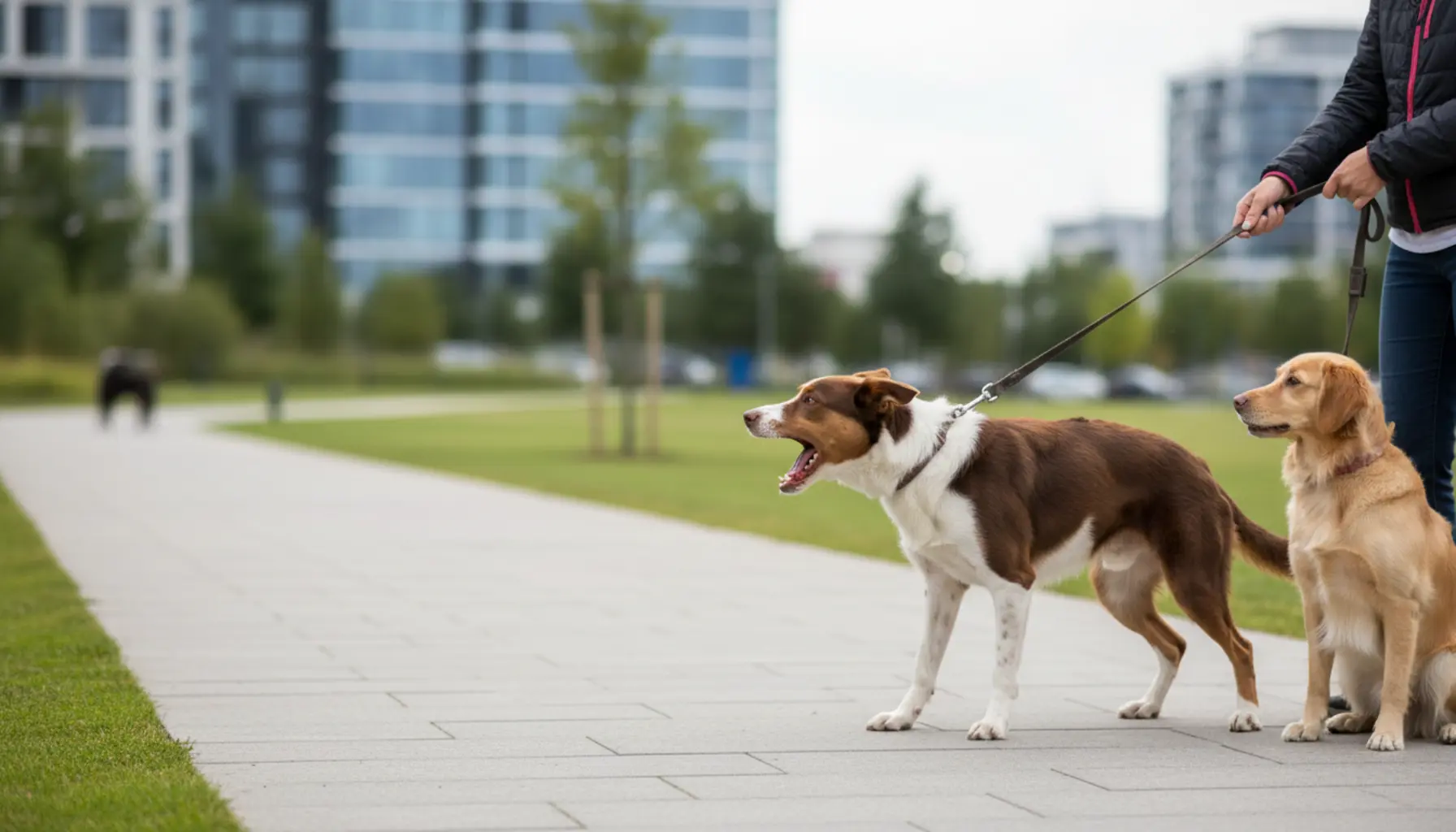
A reactive dog is not a “bad” or “aggressive” dog, but one that reacts excessively intensely to certain environmental stimuli. This could be seeing another dog, a person, a bike, a car, noise, or even sudden movements of household members or guests. Instead of remaining relatively calm, such a dog’s reaction is violent: barking, pulling on the leash, jumping, growling, attempting to flee, or freezing in place. In practice, this means that their nervous system “overloads”—a stimulus that is neutral or mildly stressful for many dogs becomes an alarm signal for the reactive one. Note that reactivity is not a “character flaw” in a moral sense, but simply the way a dog processes and experiences emotions. It’s often caused by hypersensitivity to stimuli, chronic stress, lack of a sense of security, inability to cope with emotions, and sometimes genetic predisposition or life history (e.g., neglect, trauma, lack of socialization). Reactivity may be visible both on walks and at home—the dog may react violently to an intercom sound, noises outside the window, the appearance of strangers, rearranging furniture, or even to the owner suddenly standing up from the sofa. Many people mistake reactivity for pure aggression, but there is a significant difference: aggression is a specific behavioral strategy (e.g., attack, biting), while reactivity is a general tendency to explosive, excessive emotional reactions. A reactive dog can be extremely affectionate at home, loving the family and seeking closeness, and yet “turned into someone else” outside, which is often frustrating and can make the owner feel helpless. Reactivity often arises from fear—the dog tries to “scare away” a stimulus it perceives as a threat before it gets too close. Another cause is frustration, for example when the dog wants to approach another dog or person but is held back by the leash. In that case, barking and pulling are results of accumulated tension that the dog does not know how to relieve. It’s also important to know that reactivity can concern a variety of emotions: fear, excitement, anger, frustration, or even excessive joy—the problem is not the emotion itself, but how intensely the dog experiences it and copes with it. For some dogs, reactivity is visible from puppyhood (easily aroused, unable to calm down, violent reactions to new things), for others it develops later, for example in adolescence, when a young dog starts to react more intensely to stimuli and tests boundaries. Often, additional factors are pain or physical discomfort—a dog with orthopedic, skin, or digestive problems has a lower tolerance for stress, which is manifested precisely by growing reactivity. Therefore, dogs that suddenly start reacting more strongly than before should also be checked by a veterinarian to rule out health issues.
Owners often describe their dog as “constantly switched on”, “always on guard”, or “exploding out of nowhere”. On the surface, this can look like poor upbringing or “stubbornness”, but reactivity is usually based on an overloaded nervous system and accumulating stress, not the bad will of the animal. A reactive dog simply has a very low tolerance threshold—they reach the point where emotion takes control over their behavior much faster. At such times, they stop being able to calmly think or respond to commands, because their brain switches into “fight or flight” mode. Understanding this mechanism is crucial for later work: the goal is not to “force” obedience through power, but to help the animal gradually lower their overall stress level and teach alternative response strategies. In behavioral terms, reactivity is often likened to “a short fuse”—the spark (which may be a minor stimulus) quickly reaches the “charge” of accumulated emotion, causing a spectacular outburst. For one dog, that spark will be another dog, for another a running, screaming child, for a third a sudden noise like keys in the door. There is no single pattern of reactivity, so it’s important to view each dog individually and monitor what exactly triggers them. Reactive dogs are not rare—in urban settings with a high density of stimuli, a lack of proper movement and rest, and still-popular outdated “hard” training methods, many animals end up functioning in a state of constant tension. Such a dog “explodes” more easily because its coping resources are constantly depleted. It’s also important to distinguish reactivity from simply an energetic temperament. A lively, happy dog who likes to run and move a lot isn’t necessarily reactive, as long as they can calm down fairly quickly and their responses to stimuli are appropriate. A reactive dog, however, shows clear issues with self-regulation—once aroused, they have trouble returning to equilibrium, and after a series of intense events, they may even start reacting more strongly to weaker and weaker stimuli. For the owner, the first step is accepting the fact that they have a dog with particular emotional and environmental needs. Naming the problem correctly (“my dog is reactive”) often brings relief, as it allows the owner to view difficult behaviors not as a personal upbringing failure, but as a challenge that can be understood and, step by step, wisely overcome with the right strategies, professional support and well-selected training accessories.
Causes of reactivity in dogs
Reactivity in dogs rarely has a single, simple cause—it’s usually the result of a mix of factors: genetics, early life experiences, current lifestyle, health, and how the owner responds to the dog’s behavior. For many dogs, innate predisposition plays a key role: working breeds, guard dogs, or hunting breeds may naturally have a “higher revving” nervous system, a quicker reaction tempo to stimuli, and a stronger need to control their environment. Adding to this are individual temperament traits—some puppies are more cautious and alert from the start, others are bold but get aroused more quickly. If these predispositions encounter inappropriate environmental conditions, the risk of developing reactivity rises significantly. The so-called socialization period, falling roughly between the third and sixteenth week of life, is also very significant. It’s when the puppy learns what stimuli are “normal” and safe. Lack of exposure to diverse dogs, people, sounds, surfaces, and situations, being taken too soon from the mother, or, conversely, growing up in noise and chaos, can all cause a dog to react with fear or overstimulation to everyday, ordinary stimuli as an adult. Equally detrimental is forced socialization, which is flooding the puppy with too many, too intense experiences—continuous petting by strangers, crowded streets, busy playgrounds—which can easily overwhelm a sensitive dog. Often, fear is at the root of reactivity—fear of other dogs, strangers, traffic, or even specific sounds. A fearful dog may bark, leap forward, and appear “brave,” though in reality, they are trying to maintain distance from the source of danger. Dogs that are quick to frustration—for example, when they cannot approach other dogs due to the leash—may develop a reactive pattern: pulling, frantic running, loud barking. If the owner doesn’t recognize subtle stress signals (turning the head away, lip licking, tense body), and only reacts to the “outburst”, the vicious cycle becomes reinforced, and the dog doesn’t learn to regulate emotions, but just escalates to peak arousal faster. Reactivity is also often the result of chronic overload—a dog living in a busy city, bombarded by sounds, smells, and sights, going for long but highly stimulating walks where there’s always something happening, may not get enough real rest and recovery during the day. Lack of sleep, constant stress, and no quiet breaks make the nervous system “thin-skinned”—the dog reacts faster, more intensely, and the cup overflows more often and more easily, so situations previously neutral become triggers for violent reactions.
An important and often underestimated group of causes of reactivity are health issues and pain—both acute and chronic. Dogs with undiagnosed joint, spine, muscle tension, digestive problems, thyroid diseases, or other hormonal disorders may have a lowered threshold for stress and touch. When every movement is uncomfortable, the dog may avoid contact with other animals and people, and when feeling cornered—react violently. An improperly balanced diet (too many simple sugars, artificial additives, lack of key micronutrients) also affects mood and arousal levels—a body constantly fighting minor inflammation or blood sugar swings may have lower self-control. Add to that behavioral and environmental factors connected with daily care: using aversive training methods (pulling the leash, shouting, prong collars, choke chains, shock collars) increases stress, undermines a dog’s trust in humans, and boosts their sense of threat. If a dog learns that when a stimulus (another dog, a human) appears the owner reacts with punishment, they start associating those situations with discomfort and begin to “anticipate”—becoming more alert and responding even more intensely. The owner’s expectations, lack of clear, consistent rules, everyday chaos, and lack of opportunities to fulfill natural canine needs, such as sniffing, exploring, chewing, or appropriate movement depending on the breed, are also unfavorable. Reactivity often intensifies in dogs that lived for a long time in shelters, were isolated or experienced trauma—violence, attacks from other dogs, accidents. In such cases, any similar stimulus (such as a dog resembling the aggressor, sound of screeching brakes, a man resembling a former abuser) can trigger a strong, automatic emotional response. Let’s also not forget the owner’s own role: their emotions, the way they handle the leash, panic, or tension, all of which dogs sense perfectly. Human stress, nervously shortening the leash, abrupt movements, or a tense voice, signal to the dog that the situation is potentially dangerous—thus confirming their fears and reinforcing the reaction. For any given dog, it’s usually a mix of all these factors: certain genetic predispositions, suboptimal socialization, prior experiences, chronic tiredness or pain, and behavioral patterns entrenched by the owner’s unconscious reactions. That’s why a thorough diagnosis is so important—one that includes health assessment, environmental analysis, and life history, instead of searching for a single “magic” root of the problem.
Effective training methods for reactive dogs
Training a reactive dog requires a combination of conscious work on emotions, appropriately selected exercises, and wise planning of daily situations. The absolute foundation is to abandon punishment and shouting—these methods only increase stress levels and can worsen the problem. When working with a reactive dog, it is crucial to use techniques based on positive reinforcement, i.e., rewarding the behaviors you want to reinforce. The first pillar is teaching the dog to focus on the guardian. Exercises such as “name = eye contact,” “look at me,” or simple recalls in a calm environment help the dog learn that in challenging situations, it’s worth turning to the human for support. Practice these first at home, then in quiet outdoor areas, gradually adding more distractions. The “look at that” (LAT) method is also very helpful—when the dog notices a stimulus (e.g., another dog) from a safe distance, mark the moment with a command or clicker and immediately reward. The dog learns that the appearance of the stimulus means something pleasant, and their “task” isn’t attacking, but informing the owner. This builds calmness and reduces tension. In parallel, train alternative behaviors: sit, walking by your side, turning around on command (“let’s go”), arching away, jumping to your side and temporarily “hiding”—any of these can become a “plan B” if the dog starts to wind up. Over time, these exercises give you a “first aid toolkit” for walks. Another important training element is consciously managing distance from difficult stimuli—you never “expose” the dog to what they fear in hope they’ll “get used to it”. Instead, use desensitization and counterconditioning: pick a distance where the dog can still eat, react to cues, and not “explode.” In this “green zone”, associate the stimulus with something highly attractive (treats, play, running to a fun place). As the dog becomes more confident, gradually and intentionally decrease the distance without crossing the reactivity threshold. “Pattern games”—repetitive sequences such as 1-2-3-treat, calmly walking along a path with rewards at the same spots, or searching the grass for treats on cue—are also very useful. Such predictable exercises reduce tension, give the dog a sense of control, and help “switch” the brain from “fight/flight” mode to task mode.
The next essential area is building the dog’s emotional competence outside of trigger situations. Training a reactive dog is not just “on walks” but primarily creating a stable base—everyday routines that lower overall stress levels. Scent exercises, such as searching for treats scattered in the apartment, simple track games, or finding a specific toy by scent, engage the dog’s brain and have a calming effect. Proprioception exercises (body awareness)—walking on different surfaces, climbing stable platforms, balancing on sensory cushions—help the dog regain bodily control, and thus emotional control. Teaching a “break” or relaxation cue is a powerful tool—teach the dog to go to their bed on cue, where they find relaxing chews or licking games (e.g., a licking mat or natural chews). This positively associated “safe zone” becomes a secure base for the dog to “return to” after difficult experiences. Don’t forget about predictability and clear rules—set walk, feeding, and play times, and use consistent communication (the same commands, same reward pattern) to help the dog feel safe. It is also vital for the guardian to manage their own reactions—a calm tone of voice, composed body language, no sudden movements. It’s useful to pre-practice crisis scenarios in neutral conditions: what to do if a dog suddenly appears around the corner; how to quickly shorten the leash without jerking; how to shield the view with your body or use a car, hedge, or bench as a “screen” to block a stimulus. How you hold the leash matters: a longer, non-retractable leash, allowing the dog to pass stimuli in a curve, gives greater control, and soft, fluid handling (no continuous tension) lowers arousal. All methods are most effective when applied systematically and at a pace suited to the individual dog—instead of expecting fast results, focus on small steps: a single calmer meeting, a shorter barking outburst, faster regaining of contact with the guardian. Over time, these minor changes build into genuine progress, and the dog learns that the world is not as dangerous as it seems, and that their human can safely guide them through it.
How to deal with hyperactivity on walks
Hyperactivity during walks with a reactive dog usually results from accumulating emotions, lack of self-regulation, and too many tough stimuli in too little time. Before demanding “the perfect walk”, analyze its structure and consider whether it is even manageable for your dog. The foundation is to lower arousal levels even before leaving home—abandon stimulating rituals like: “Shall we go for a walk!?”, intense jumping, chasing before the door. Instead, establish a calm, repeatable routine: putting on the harness, brief focus exercises (e.g., simple eye contact for a treat), a moment of waiting calmly by the door, and only then going out. Many owners find it helpful to introduce the rule that the door opens only when the dog has all four paws on the floor—not as strict “obedience”, but as a clear frame to lower arousal. Route selection is also important: for a reactive dog, quieter routes with more space from other dogs and people are much better than busy sidewalks where stimuli appear every few seconds. In the early stages of managing hyperactivity, it may even be best to avoid the most “attractive” but stressful places (dog parks, narrow residential streets, playgrounds), replacing them with wider avenues, meadows, or forest edges, where the dog can safely use their nose and feel more secure.
A key tool in managing hyperactivity on walks is calm, predictable communication and properly selected accessories. A long, comfortable harness (which does not encircle the neck) and a 3–5 meter leash help the dog choose a comfortable distance and reduce body tension, in contrast to a short, constantly tight leash that acts like a “high-voltage wire” and further excites the dog. Practice “sniffing walks”—giving the dog time to sniff, explore, check out scents, rather than constantly urging them on (“let’s go, move, faster”). Sniffing has a self-soothing effect, helping relieve tension and shifting their focus from environmental scanning to a specific task. As for training, good solutions include introducing tasks that support self-control but do not frustrate: calm stops, “walk with me” on a loose leash for several steps, rewarding spontaneous glances at the guardian, moving away from an interesting scent when gently called and being allowed to sniff again as a reward. From the dog’s perspective, the walk’s pace is crucial—a nervous, fast pace by the owner, leash jerking, and frequent sharp commands only increase tension. Instead of scolding, use gentle cues such as the dog’s soft name, a calm “let’s go”, a small direction change encouraged with a treat when the stimulus might be overwhelming. For especially hyperactive dogs, plan walks for quieter times of day (early morning, late evening), and visit challenging places for shorter periods with a clear goal: a brief “exercise” on encountering distant dogs, a quick turn around the block, observation, reward, and return to quieter places. It’s also useful to follow the “dilution of stimuli” principle: when something appears on the horizon that usually excites the dog too much, increase the distance, ask the dog for a simple task (e.g., look at you, a few steps parallel to the stimulus), reward, and if you see arousal rising—retreat. This is not “running away”, but a strategic way to protect the dog’s nervous system from overload. Escaping the cycle of hyperactivity on walks requires consistently caring for emotional “hygiene”: enough sleep (an adult dog needs 14–18 hours per day), breaks between intensive activities, quiet days after particularly stimulating walks, and reducing other sources of stress at home. Only then will leash training have a chance to “stick” in the dog’s nervous system, rather than being a momentary change that disappears with the first strong emotion.
The importance of building a dog’s confidence
Building a reactive dog’s self-confidence is a key pillar in working with their emotions—without it, even the most technically sound training will just put out fires instead of solving the root problem. A dog who does not feel safe and doesn’t trust either itself or its environment reacts violently because for them, the world is unpredictable and stimuli are often perceived as threats. Building confidence does not mean raising a “brazen” dog who bulldozes through everything, but fostering a feeling of “I can handle myself, and when it’s tough—I can count on my human.” For a reactive dog, it’s the difference between panic and brief tension they can then overcome. Greater confidence leads to a lowered level of general fear, thus less susceptibility to emotional outbursts. Dogs who feel competent have a higher reaction threshold—seeing another dog or hearing a sudden noise, they regain their balance faster or don’t get highly aroused at all. Confidence is also closely tied to a sense of control over the situation. When the dog learns its behaviors have predictable consequences (e.g., I look at my human—I get info on what’s next; I stop—the leash loosens), the world stops feeling chaotic. This reduces frustration, which often fuels reactivity. Confidence is also protective against chronic stress—the dog adapts to changes better and accepts new experiences more easily, without building up as much tension as an insecure dog. For the owner, this means fewer blow-ups, shorter recovery times after stressful situations, and greater flexibility in daily life, like changing walk routes or going to new places. Building confidence is especially important for dogs with tough backgrounds—rescues, those from shelters, or those that have experienced pain or fear around humans or other dogs. Such dogs often live in constant alert mode and rely too much on “fight or flight” mechanisms. Restoring control over their life and trust in their owner is essential for any reactivity techniques to work in the long run. Confidence also improves relationships—a dog that believes their human understands and protects them is more cooperative, learns new skills faster, and tests boundaries less because they no longer feel the need to keep confirming they are safe. This not only makes training easier but genuinely improves the dog’s wellbeing, letting them finally stop living in a state of constant tension.
In practice, building a reactive dog’s confidence is based on a series of small, repeated experiences where the dog succeeds, is able to make choices, and receives clear, predictable feedback from the guardian. One basic tool is wisely structured skills training—simple but useful in daily life. Teaching commands such as “stop”, “come”, “move aside” or calmly walking on a loose leash is more than obedience—it’s about building the conviction: “I know what to do in a tough situation, I know the routine.” Set realistic, but achievable challenges, gradually increasing the level so most attempts end in success. Too hard tasks only deepen insecurity, so it’s vital to accurately match the difficulty of stimuli and environment. Activities engaging both the nose and body play a huge role: scent games, searching for treats in the grass, indoor “treasure hunts”, sniffing mats, recreational nosework—all these allow the dog to be an expert at something, use their natural talents, and every discovered scent or treat strengthens their sense of agency. The same is true for proprioceptive games and homemade obstacle courses: walking over different surfaces, climbing stable platforms, going over low obstacles. When the dog consciously uses their body, they gain better coordination, feel their own strength and control, which boosts confidence even in new environments. Letting the dog make decisions within their limits matters—choosing a direction on a fork, moving away from a stressful stimulus, or having the right to “say no” to interacting with a stranger are powerful tools for building agency. Reactive dogs often experience the world as overwhelming, and systematically giving them a choice reduces the need to “shout” with behavior. The guardian’s attitude is just as important: consistency, predictability, avoiding anger and physical punishment, and clear communication (steady cues, routines, calm tone). The dog watches how the human reacts—if they see their person keeping calm and reacting appropriately without panicking, it is easier to accept their guidance as reliable. This way, the guardian becomes the dog’s safe base to “plug into” in difficult moments. Remember: building confidence does not mean throwing the dog into the toughest situations “to get used to it,” but gradually exposing them to stimuli in a way and intensity that allows them to remain able to learn. It’s a process requiring time, consistency, and empathy, but it brings a profound, qualitative change for reactive dogs—from living in constant defense mode to walking through life with calmer, more flexible reactions to the world.
Equipment and accessories to support training
Choosing the right equipment is hugely important in working with a reactive dog—it can significantly lower stress levels, increase the sense of security, and make it easier to introduce new skills. The basics are well-fitted guard or Y-style harnesses that do not restrict the dog’s movement or press on the neck or shoulders. For reactive dogs, it’s better to give up using a collar as the main tool, especially with vigorous pulling—pressure on the larynx, thyroid, or neck spine not only causes pain, but can increase fear-based or frustration-based reactions. Harnesses should be softly padded, adjustable in several places, and fit well enough that the dog can’t easily slip out of them during high arousal. The length and type of leash also matter—a 2–3 meter city leash works for urban spaces, while for calm walks in less crowded places, use a longer leash (5–10 meters), letting the dog explore and sniff without sacrificing safety. For reactive dogs, avoid retractable “flexi” leashes—the constant tension, sudden jerks, and loss of distance control usually raise arousal. Better are light, webbing leashes with a comfortable handle that you can easily shorten or lengthen with your hand, teaching the dog that leash slack communicates with you. Look after your own comfort, too—neoprene-padded handles and the ability to sling the leash over your shoulder help keep your body stable, which the dog reads as greater guardian calm. Reward accessories are also essential in reactivity work. A treat pouch means you always have rewards at hand, allowing you to react instantly to desirable behaviors, and the dog learns their human is the “center of good things.” Treats should be soft, aromatic, and attractive enough to compete with the trigger—for many dogs, bits of cooked meat, quality hot dog slices, or special high-meat training treats are best. For dogs more interested in play than food, tug toys, balls on a string, or discs can make great rewards for focusing on the human when passing tough triggers. These toys should be reserved mainly for training and moments requiring extra motivation—this maintains their high “value” for the dog. For reactive dogs, sniffing mats and toys like kongs or lickimats can be invaluable, both at home (for calming) and in safe outdoor places for helping the dog “come down” after stressful experiences. Licking and sniffing are relaxing, occupy the mouth and nose, and lower the dog’s readiness for sudden reactions to the environment.
For dogs who react especially intensely or have a history of escaping equipment, an additional security leash (“security clip”) attaching the harness to the collar can act as backup—if one fails, the other keeps the dog safe. When passing triggers and practicing calmness, use a longer leash attached to the harness, but also carry a short backup attached to the collar in case of emergencies. Some dogs benefit from a well-introduced physiological muzzle—not to “suppress” the problem, but as a way of improving public safety and giving the human more peace of mind. A calm owner lowers the dog’s tension, so many people find that after properly training their dog to wear a muzzle (with no force, slowly, with lots of rewards), walks are paradoxically less stressful. A good muzzle should allow free panting, drinking, and treat feeding. Its introduction should be a training process, not a one-off forced fitting. There are also accessories that are definitely contraindicated for reactive dogs: prong collars, choke chains, e-collars, or pain- and fear-based pseudo-trainer gadgets. While these may “suppress” symptoms in the short term (the dog becomes afraid to react), in reality they raise arousal and perpetuate the idea that stimuli are dangerous because “every time another dog appears, something bad happens.” This leads to worsening problems and possible aggression later. Instead, invest in accessories that support communication and calm: a bell or whistle as a recall cue (which is easier to hear amid noise), reflective or lighted elements for safer evening walks, and light training lines for recall and distance training in controlled settings. Some dogs benefit from vests or scarves with clear messages like

