
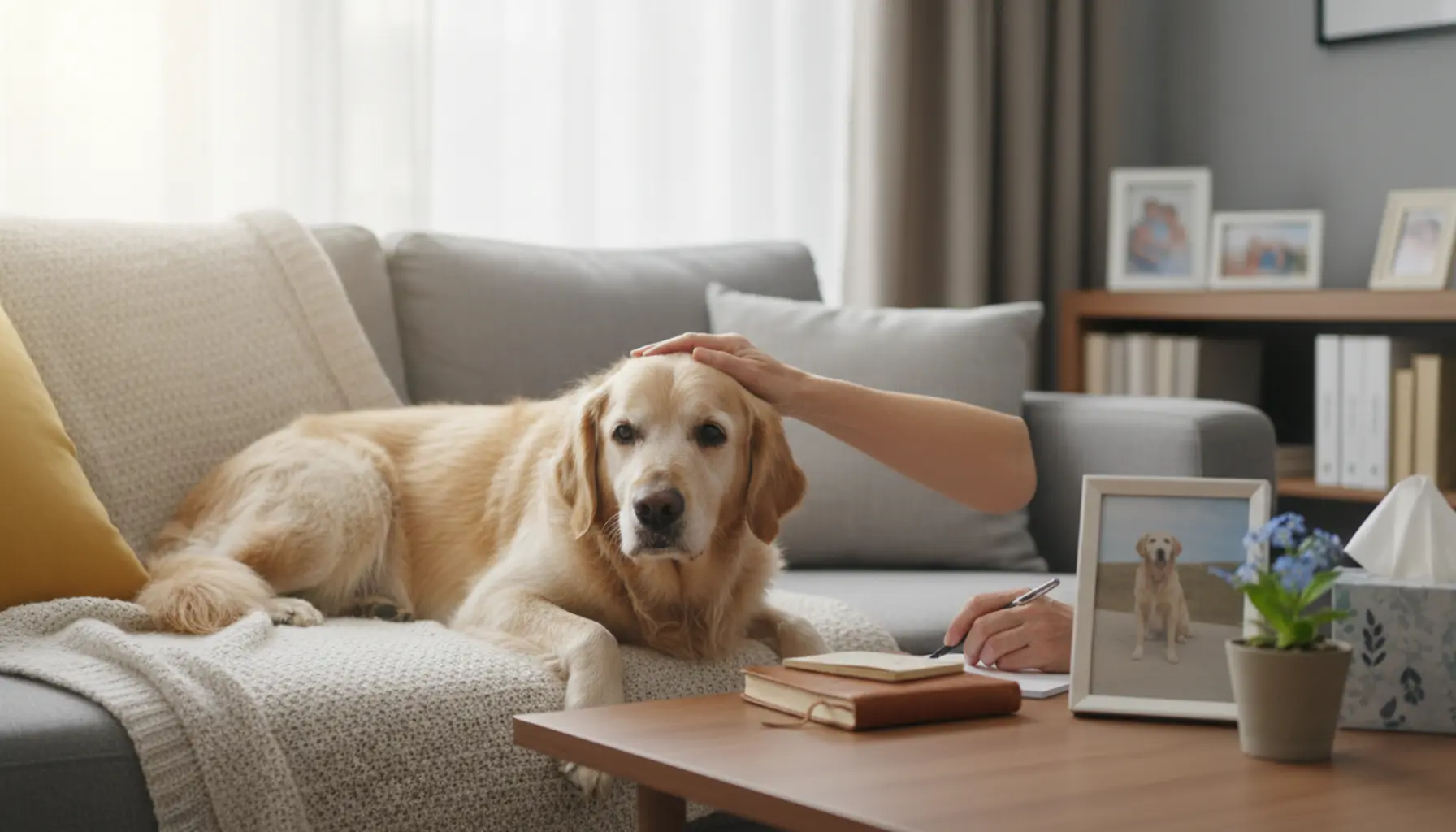
Losing a dog is one of the most difficult experiences for an owner who treated their pet as a family member. How can you cope with the loss of a beloved dog to find peace and support yourself and your loved ones in mourning? Consciously going through your emotions and nurturing the memory allows you to find new sources of strength after this loss.
Table of Contents
- Preparing for the Departure of Your Pet
- Emotional Experience of Loss
- How to Cope with Grief
- Support for Owners After Loss
- Life After Losing a Dog: How to Find Peace
- Remembering Your Beloved Four-Legged Friend
Preparing for the Departure of Your Pet
Preparing for the departure of a beloved dog is one of the toughest stages of a shared relationship, and at the same time an important element of caring both for the animal and for yourself. Many people avoid the subject of a dog’s death, fearing that merely thinking about it will hasten what they fear most. Meanwhile, consciously and gradually getting used to the idea of separation can soften the shock, reduce the sense of helplessness, and allow for better care of the dog’s comfort in its final stage of life. In practice, this primarily means accepting the fact that the dog is aging or ill, closely observing changes in its behavior (weakness, decreased appetite, difficulty walking, disorientation), and regular consultations with a veterinarian. It is worthwhile to talk in advance with the veterinarian about forecasts, possible scenarios of the disease’s course, symptoms of pain and discomfort, and how to recognize the moment when suffering outweighs the joy of life. Such a conversation may be painful, but it helps to make responsible decisions regarding treatment, palliative care, or possible euthanasia in due time. Preparation also includes practical issues: checking available forms of treatment and painkillers, planning more frequent check-ups, as well as adjusting home conditions—providing the dog with a warm, quiet place, a soft bed, easy access to water, and limiting stairs or slippery surfaces where the dog could slip. A good step is also to prepare household members, especially children and seniors, for the upcoming changes: calmly explaining what is happening to the animal, what its departure might look like, and why some decisions are necessary helps reduce the later sense of shock and injustice. Establishing joint rules—for example, about the way to say goodbye to the pet, presence during euthanasia, form of burial or cremation—lets the family avoid conflicts at the most sensitive moment.
An important part of preparation is also taking care of your own emotions and psychological needs. Many people experience so-called anticipatory grief—sadness that appears at the mere thought of the impending loss. You may notice mood swings, tearfulness, irritability, a sense of injustice or guilt (“Maybe I should have done more”, “If only I had noticed the symptoms earlier…”). Instead of dismissing these feelings, it is worth naming them, talking about them with a trusted person, partner, friend, or family member who knows your bond with the dog. Consider contacting a psychologist, therapist, or support group for those grieving the loss of a pet—such initiatives, both onsite and online, are increasingly available in Poland. Even at the preparation stage, you can develop your own “support system”: a list of people you can call when things get tough, a plan for taking time off work after your dog passes, and simple rituals to help you grieve (e.g., walking in your dog’s favorite spot, printing photos, writing a farewell letter). It is also helpful to consciously experience the last phase of living together: spend more calm, mindful time with the dog, take photos and videos if you feel like it—not out of obligation, but from the heart; give up demanding activities in favor of those that truly give pleasure and do not burden the body—this may be a slow walk, ear scratching, cuddling on the couch, calm sniffing games, or hand feeding favorite treats (in agreement with the vet). You should also consider the logistics of the departure in advance: where you want the dog to pass (at the clinic, at home if possible), whether you want to be with the dog until the end, whether you need someone’s supportive presence, and which form of burial you will choose (pet cemetery, individual or collective cremation, keeping mementos like a collar, photos, paw print). Sorting these issues out in advance does not “summon” death, but gives a sense of control and protects you from making difficult decisions in a state of strong emotions at the last minute. Preparing for your pet’s departure in this sense is an act of love—it allows you to focus on what truly matters to the dog: easing pain, a sense of safety, and the presence of their beloved person until their very last moment.
Emotional Experience of Loss
The loss of a beloved dog is an experience that, for many people, is comparable to losing a close family member—and it is entirely natural that the pain is so intense. A dog is present in everyday life, welcomes you home, shares routine, walks, moments of joy, and crises; when they are suddenly gone, the world feels unnaturally quiet and empty. In the first days and weeks after the loss, emotions are usually intense and chaotic: sadness mixes with disbelief, relief (if the dog suffered for a long time), guilt, and sometimes anger at doctors, fate, or even other household members. It is important to understand that all these feelings are a normal part of the grieving process and do not mean that “something is wrong with us.” Psychologists emphasize that grief after a pet can follow similar stages as when a human is lost—shock and numbness, denial (“It’s impossible, just yesterday…”), and strong longing manifested in habits: listening for familiar sounds, calling the dog by instinct, or searching visually for them in familiar places at home. A characteristic feeling is the “hole in the daily routine”—no more walks, feeding, evening rituals. Many people describe a feeling of disorientation and lost meaning in daily life, as if an important reference point suddenly disappeared.
The circumstances of your dog’s passing strongly influence your emotional experience of loss. If it was a sudden death, accident, or rapid health decline, shock, disbelief, and intense guilt may dominate, with thoughts like “I could have done more, I could have prevented this.” In the case of planned euthanasia, even if it was an act of compassion and ending the pet’s suffering, guardians very often struggle with the burden of a decision which, from an emotional perspective, feels like “sentencing” a friend to death. Intrusive questions are typical: “Was this really the right moment?”, “Shouldn’t we have waited one more day?”, “Did I shorten their life too soon?” These doubts should be seen as proof of immense love and responsibility, not guilt. Relief that the dog’s suffering has ended can also be a source of shame (“How can I feel relief if I loved him so much?”), yet this is a natural psychological reaction to constant tension and fear about the animal’s condition ending. Particularly burdensome is complicated grief when the bond with the dog was “substitute”—for example, after difficult family relationships or previous losses. In such cases, the dog might have been the only “safe” loved one, and their death opens not just current pain, but old, unprocessed wounds. Some people also experience anger: at the vet for “not saving” the pet, at family for “not understanding how important this was,” at the dog for “leaving,” or even at those who downplay the loss with comments like “it’s just a dog.” Lack of understanding from others can deepen pain, leading to withdrawal and a sense of being alone in mourning. At such times, it is good to seek contact with people who are sensitive to animals—in the family, among friends, in support groups, or online communities—because being able to express your emotions, tell your dog’s story, or share photos and memories significantly helps process feelings. It is equally natural for grief to manifest physically: sleep problems, lack of appetite or, on the contrary, compulsive eating, muscle tension, headaches, “lump in the throat,” or heaviness in the chest. Mood swings should not be regarded as a “sign of weakness”—for many, grief over a lost dog becomes wave-like: some days are filled with tears and sadness, others with brighter memories, and then, suddenly, longing returns, triggered by a small thing like a clump of fur under the furniture or an old collar. It is important to allow yourself the full range of emotions, not judge yourself or force a pace of “returning to normal” that only suits others. Recognizing that grief after a dog is real, important, and deserving of care is a key step in gradually accepting the loss and finding a new way of functioning without the physical presence of your beloved pet.
How to Cope with Grief
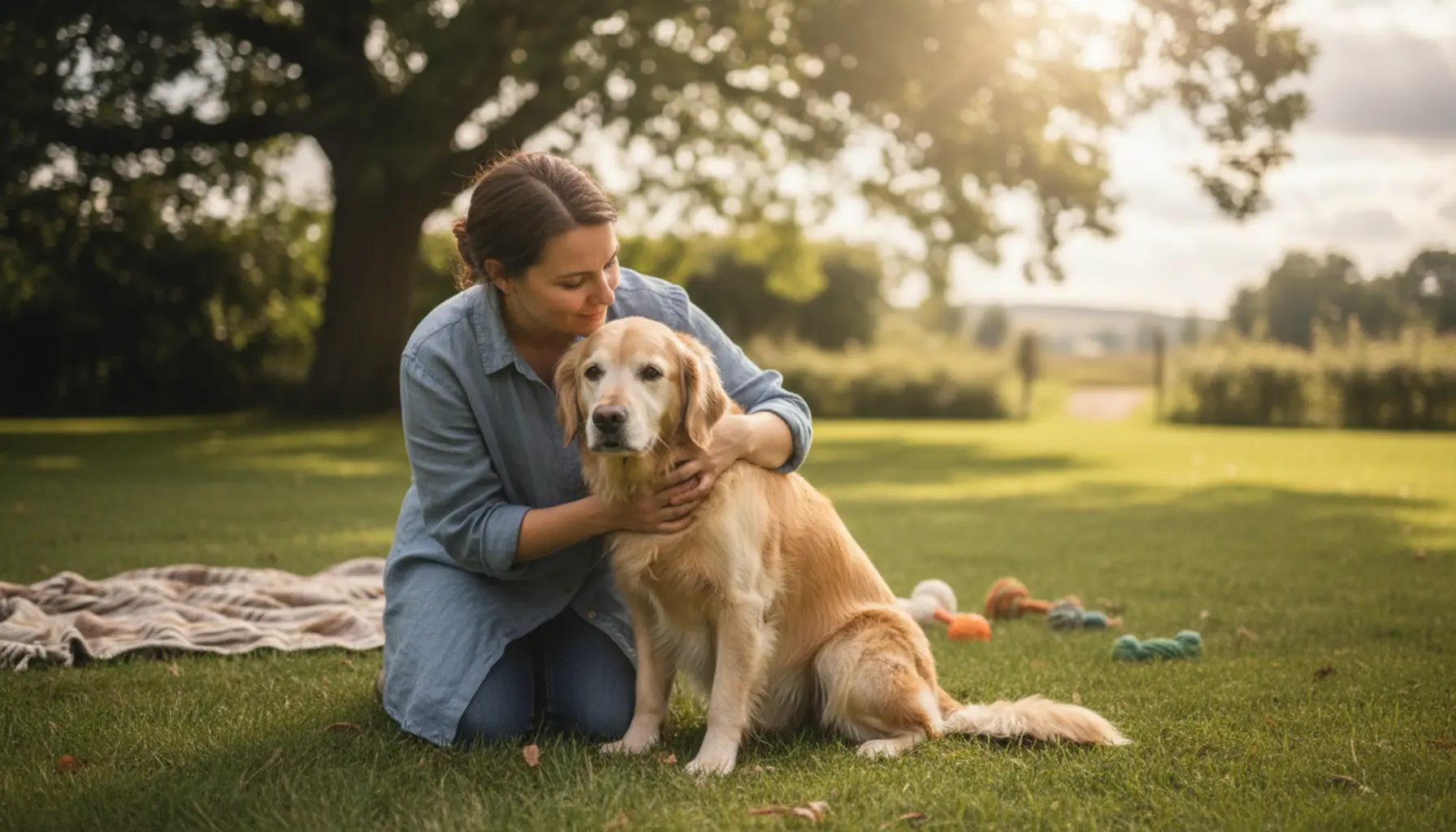
Grief after the loss of a dog is a natural, healthy response to the loss of a being with whom you shared a deep emotional bond; attempts to “speed up” this process or suppress it usually only intensify pain in the long run. The first step is to allow yourself to experience your emotions without judgment—crying, feeling emptiness, anger, self-blame, or even relief (e.g., after a long illness) are normal and do not reflect “weakness” or “lack of love.” It is helpful to name what is happening: “I feel very bad, I miss him,” instead of escaping into activity and pretending everything is fine; accepting emotions helps to gradually get used to and regulate them. It may help to set “safe periods” for grieving, e.g., in the evening, when you can consciously focus on memories, write a few lines in a journal, look at photos of the dog, and let your feelings flow freely. A gentle restructuring of your day after the loss is a good strategy—even though the daily plan may be “full of holes” without walks and feeding, it is worth introducing new, small rituals at those times: a short walk alone or with a trusted person, a moment of breathing exercises, noting thoughts. Maintaining a routine (regular sleep, meals, basic hygiene) should not be an escape, but rather self-care, as the body also feels grief. Many people experience physical symptoms—tightness in the chest, muscle tension, headaches, concentration problems—so it is worth consciously introducing simple tension reduction techniques: a few deep breaths, stretching, a short relaxation before bed. Be kind to yourself—if you have an internal critic (“You’re overreacting, it’s just a dog”), consciously replace it with a more supportive voice (“This was an important family member, I have the right to feel this way”). Grief is not linear: there can be days of relative peace, followed by sudden breakdowns—on anniversaries, when finding an old toy, or hearing barking outside. This is not “regression,” but a natural wave of emotions, and it’s important to allow yourself to feel them rather than blame yourself. Giving grief a symbolic form also brings relief: creating a photo album, writing a letter to your dog to thank him for the years together, drawing their portrait, or preparing a small memory corner at home (a candle, collar, favorite photo). Such gestures organize emotions, set boundaries, and help transfer the bond with your pet from “here and now” to the memory sphere, which is central to a healthy grieving process.
Support from others and the way your environment reacts to your loss is also vital in coping with grief; unfortunately, many people encounter dismissive remarks (“Just get another one,” “It’s only an animal”), which may lead to so-called disenfranchised grief—experienced alone, with a sense that it’s “not appropriate” to grieve a dog as much as a person. At such times, seek out people who understand the importance of the pet bond: friends, family, but also online support groups, forums for owners mourning a pet, or local initiatives by veterinary clinics and foundations. Sharing with those who have had similar experiences normalizes emotions and reduces isolation; often, it is only in such company that it is easier to say aloud, “I miss him,” or “I don’t know how to live without him.” For some, talking to a psychologist or therapist may also help—especially if the grief is very intense, long-lasting, disruptive to daily life, leads to withdrawal or triggers memories of earlier, unresolved losses. A specialist will help you understand the dynamics of grief, name the feelings, process guilt (“Did I do everything I could?”), and take the right steps if the loss has reignited deeper traumas. Alongside interpersonal support, it is also important to take care of the quality of your thoughts—instead of focusing solely on the dog’s last, difficult moments or time of illness, you can consciously practice recalling good memories: shared walks, playtime, your pet’s funny habits. It’s not about idealizing the past, but about restoring a full picture of the relationship, where joy and closeness existed alongside pain. Small remembrances may also help—lighting a candle on a particular day of the week, visiting the burial site, reading a poem or prayer; these rituals organize time, bring comfort, and create a space to “talk” to the dog, thank him, or say what you did not have time to express. Let yourself gradually open up to other sources of meaning and joy, without feeling like you are betraying your departed dog—their passing doesn’t cancel your right to happiness, and nurturing love and gratitude for the years together may eventually be the foundation for your next phase of life. There’s no need to rush into adopting another pet—the decision should only come when the grief has eased enough that a new dog won’t be a “replacement” but a separate, new relationship. Recognizing that grief is part of love and not its opposite helps you gradually find a place inside where the memory of your dog is no longer only a source of pain, but becomes a source of warmth, gratitude, and inner strength.
Support for Owners After Loss
Support after the loss of a beloved dog can take many forms—from the quiet presence of a loved one to professional psychological help—and it is one of the key factors that influence how we cope with grief in the long term. In the first days after your pet has passed away, most people experience profound shock, emptiness, and disorientation, so the foundation is to provide yourself with a safe environment where you don’t have to pretend to be “strong.” Support from a partner, family, or friends may come in very simple gestures: crying together, listening to the dog’s stories for the hundredth time, help with daily duties, or taking care of burial or cremation arrangements. Many owners also value “practical support:” someone who will call the clinic, collect ashes from the crematorium, remove bowls or the dog’s bed from the house when it is too difficult to do alone. Equally valuable may be the support of people who have themselves experienced the death of a pet—their understanding that “it really hurts” reduces the strangeness of one’s emotions and helps avoid the feeling of overreacting to the loss of “just a dog.” Actively communicate your needs to those close to you: whether you want to talk or prefer silence; whether you need company or a short break from the topic of loss. Setting boundaries is a form of self-care—if someone brushes aside your grief, you can say clearly that such comments are hurtful, and if necessary, limit contact with those who don’t show empathy. Social media groups, forums, and online support communities devoted to grieving pets can also be a valuable source of support: they offer a sense of belonging among people who understand that a dog is a family member, not a “hobby.” Posting memories, photos, stories, or reading about other pets may help process the loss by giving it sense and context. But remember to use the internet consciously—avoid getting caught in painful content and comparisons (“others have it worse,” “they recovered faster”) for such support to truly help.
Along with informal support, more and more people are using professional help, which is especially important if grief makes normal functioning difficult, is very intense for a long time, worsens prior emotional difficulties, or is associated with traumatic circumstances like an accident or decision about euthanasia. A psychologist, psychotherapist, or grief counselor can help you sort out thoughts and feelings that alone often seem overwhelming: guilt (“I should have noticed the illness earlier”), shame (“I mourn my dog more than some people”), anger (“the vet didn’t do everything”), or the relief you feel after your pet’s suffering is over, which may be mistaken for “lack of love.” In the office, you can create a symbolic place for your relationship with the dog—not to suppress it, but to transform it from physical presence into memory, gratitude, and the influence the dog had on your life. Some veterinary clinics cooperate with psychologists or trainers specializing in pet loss support; check for such options when collecting paperwork from the clinic or planning euthanasia. Online consultations are also available, which is convenient for people living in small towns or those too overwhelmed to leave the house. Psychological support can also include shorter forms, such as single crisis counseling sessions, joining support groups or grief-sharing circles, where it’s safe to talk about your pain without fear of judgment. It’s important to find a professional who respects the human-animal bond, does not belittle the loss, and does not try to forcibly accelerate grieving. Support can also involve taking care of the body: consulting your doctor for sleep issues, severe anxiety or loss of appetite, plus stress-reduction techniques (breathing, gentle movement, yoga, mindfulness) which calm the nervous system and make it easier to experience difficult emotions. A key form of support is also creating rituals and physical “memory anchors”—a photo album, a keepsake box, a tree planted for the dog, a plaque, or participating in farewell ceremonies organized by pet crematoriums. These actions do not “prolong suffering,” but help you move from shock to consciously saying goodbye and building a new, mature relationship with the past, where pain gradually coexists with gratitude and peace.
Life After Losing a Dog: How to Find Peace
Life after losing a dog rarely looks “normal” right away—it’s more like the process of slowly rearranging everyday life, in which a being who was always there is now missing. The first step to finding peace is accepting the fact that things will not return to the way they were, but many elements can eventually form a new, equally valuable whole. It is natural for everything at home to “remind you of your dog” for a while: from the bowl in the kitchen to the empty pillow by the bed. Instead of removing all items abruptly, it may help to gradually organize your space—some things can be put in a memory box, others given to a shelter or friends with dogs if you are ready. This process is symbolic: it acknowledges that the phase of living together has ended, but the emotional bond and gratitude remain. Peace does not come overnight, but is the result of consciously passing through the subsequent stages of grief—from intense pain, through gradually getting used to the emptiness, to the point when memories no longer trigger mainly suffering but more often tenderness and a smile. Defining meaning in the loss helps: realizing how much your dog influenced your personal development, values, and relationships. Many people notice that thanks to their dog they learned patience, consistency, care, and greater mindfulness “in the here and now”—these qualities become a legacy from the pet that can be shared in relationships with people and other animals. Building inner peace also means giving yourself space to experience difficult anniversaries: the day your dog left, their birthday, or holidays you once spent together. Instead of running from these dates, you can plan a calm, symbolic ritual—lighting a candle, walking your dog’s favorite route, looking at photos—which transforms potentially painful moments into times of reflection and quiet honoring of the relationship. At the same time, ease gently into new routines. The painful empty morning “walk” can be replaced with self-care practices: yoga, meditation, a quiet breakfast by the window, jotting down thoughts or memories of the dog. Such rituals don’t erase longing, but give it structure and help you regain a sense of control over your day. Take care of your body, too—gentle physical activity, regular sleep, light meals, limiting stimulants can reduce stress and make it easier to bear emotional loads. In many cases, mindfulness is helpful: short breathing exercises, body scans, consciously noting thoughts like “I miss him, but I am safe right now” help stop catastrophizing. Peace also means allowing yourself moments to “disconnect” from grief—watching a show, meeting friends, focusing on a project at work—without feeling guilty for not “suffering enough.” These breaks are not a denial of love for your dog, but a healthy response of your body, which needs to recharge before facing more emotions. Redefining your identity is also important: gradually moving from being a “dog parent” to someone who carries those memories but no longer builds each day around the pet’s needs. Some may feel a void or loss of meaning, especially if a large part of the day was devoted to feeding, walking, and vet visits—in this case, purposefully look for new sources of involvement: volunteering, hobbies, learning, or new social relationships. It’s not about “keeping busy,” but exploring activities that resonate with what your dog taught you—for example, working with other animals, caring for nature, building closeness with people. For many, a significant stage is deciding if and when to have another pet. Achieving peace does not mean you must immediately get another dog; you can also decide to be a “free guardian” for a while, occasionally helping friends or local animal welfare organizations. If, however, you are thinking about adoption, ask yourself some honest questions: Can I see the new dog as a separate being, not as a replacement? Do I have the emotional and time resources to step into a responsible relationship again? Am I making this decision out of curiosity and readiness for a new bond, not out of panic to fill a void? Such self-reflection leads to calmer choices and reduces disappointment risk. Whatever path you choose, the foundation of finding peace is gentleness toward yourself—treating your own grief as you would a suffering friend: with patience, understanding, and the acknowledgment that deep longing is proof of how important and real your relationship with your dog was.
Remembering Your Beloved Four-Legged Friend
Remembering your beloved dog means not only touching memories but also a way to process grief and restore a sense of continuity after loss. For many, it is precisely the conscious nurturing of bonds “in memory” that helps turn piercing pain into quieter, warmer longing. In the early weeks after your pet’s departure, it can be natural to avoid everything associated with them—bowls, leashes, toys. However, allow yourself gradual, gentle contact with these things, observing how much you can handle emotionally. Instead of throwing everything away as a defensive reaction, it is better to place your dog’s things in one place you don’t have to visit yet, but can return to whenever you are ready. For some guardians, creating a home memory corner becomes a vital ritual—it could be a shelf with a photo, collar, favorite toy, or a box of mementos. Such a place functions as a symbolic “monument” where you can turn in moments of longing, talk to your dog in your thoughts, light a candle on the anniversary of their passing, or simply sit and reminisce for a moment. In the digital age, many guardians also create albums—printed photo books or online galleries; the process of choosing photos, adding short comments, dates, anecdotes, helps organize memories and realize how many good moments the dog brought into daily life. Memories can take the form of images as well as words: keeping a journal, writing a letter to your dog, a summary of the most important moments together, or a “history of their life” are very effective ways to express feelings that may be hard to say out loud. Many decide on small, discreet symbols—a tag with the dog’s name, a bracelet with a small paw, jewelry made with a bit of fur or ashes after cremation—which serve as reminders of the bond and give comfort on harder days.
For some guardians, the way of saying goodbye and commemorating their dog outside the home is especially meaningful. If individual cremation was chosen, the urn can be kept at home or a symbolic location agreed upon with family or loved ones, making sure everyone feels safe with the decision. Where local law allows, some owners create a small remembrance garden—with a stone, a plaque inscribed with the name, a planted tree or bush growing as a living symbol of continuity and love. Planting a tree, wildflower meadow, or a bed of “dog treats” (like parsley or carrots the pet enjoyed), is a beautiful ritual, especially for children: it helps them see that although the dog’s body is gone, something new grows from the story. Online condolence books, memorial groups on social media, or even virtual pet cemeteries are increasingly popular, where you can add a photo, short description, and return to them whenever needed. Publicly sharing your dog’s story—their character, funny habits, what they taught you—not only honors their life but also brings support from those who have experienced a similar loss and understand the intensity of your feelings. You can also keep your dog’s memory alive by engaging in activities for other animals: volunteering at a shelter, sponsoring an adoptable dog, joining a food or blanket drive, or organizing a charity campaign on the anniversary of your pet’s departure. Giving your loss a broader meaning—“helping other dogs because mine taught me so much”—can be a breakthrough moment, where grief gradually merges with gratitude. Remembrance rituals can also be simple and everyday: repeating your dog’s favorite walking route in “memory,” making a dog treat from time to time and delivering it to a shelter “in their name,” or continuing a tradition the dog introduced to your home, such as going outside every morning—even now, without a leash. Most importantly, the form of remembrance should match your sensitivity and stage of grieving—if a certain ritual brings only pain, put it aside and find something that brings some solace. Memory does not need grand acts—often, it is the small, regular acts of tenderness toward memories that keep the presence of your dog alive, but not paralyzing, and gradually transform the relationship from painful loss into a source of strength, warmth, and inspiration for the next chapters of life.
Summary
Losing a beloved dog is a difficult experience, but proper preparation and emotional understanding can help in the grieving process. It is important to allow yourself to feel sadness, talk openly about your emotions, and take advantage of the available support. Remembering the happy moments with your pet and cherishing their memory may bring relief. Although dealing with grief is highly individual, finding ways to continue life after loss is possible. Remember that time and patience are key to regaining emotional balance.

