
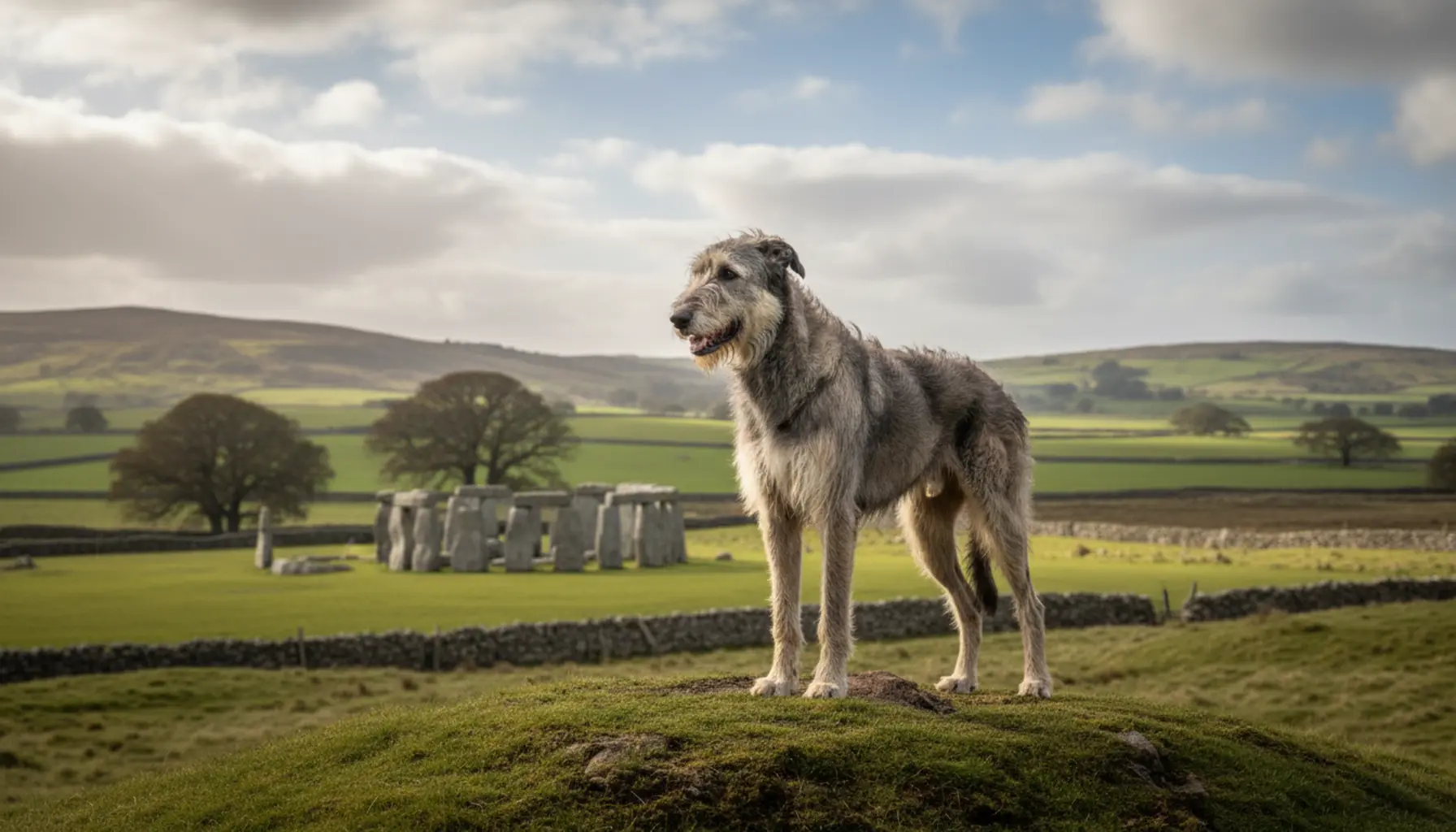
Irish Wolfhound is a dog that impresses with its appearance and moves with its gentleness. The history of the Irish Wolfhound shows how it transformed from a brave hunting dog into a loyal family companion. Discover the character, care, and needs of this extraordinary dog.
Table of Contents
- History and Origins of the Irish Wolfhound
- Characteristics and Behavior of the Wolfhound
- Grooming: How to Care for a Wolfhound
- Health and Common Problems of Wolfhounds
- Feeding and Activity of the Wolfhound
- Is the Irish Wolfhound the Dog for You?
History and Origins of the Irish Wolfhound
The history of the Irish Wolfhound is inextricably linked with the history of Ireland itself – its mythology, war-torn past, and the old way of aristocratic life. The first mentions of giant dogs from the Emerald Isle appear in ancient Roman records; it is said that legionaries brought impressive Irish hounds to Rome as unusual gifts for the nobility. In Irish sagas and legends, great battle dogs accompany heroes both on the battlefield and during hunts. It is believed that the ancestors of the Irish Wolfhound were native, powerful Celtic sighthounds, which over time were crossed with large molossers brought by Vikings and Romans. Thus, a dog of remarkable strength, speed, and courage was created, able to face wolves, boars, and even armed opponents, yet intelligent and devoted enough to be a loyal companion for its owner. Already in the Middle Ages, Irish Wolfhounds became a symbol of prestige – they were owned by kings, clan leaders, and high officials, and these dogs often appeared on family crests and seals. They were given a nearly ceremonial rank: gifted as royal presents between European courts, and the number of Wolfhounds one could own was regulated to emphasize the breed’s elite status. However, their main role was very practical – to guard herds and people against wolves, eradicate predators destroying property, and participate in hunts for large game in the challenging, muddy, and mountainous Irish terrain. Their remarkable height and massive yet still elegant shape meant they surpassed most European hunting breeds, while their tough, wiry coat protected them from Ireland’s unpredictable, damp climate. Over centuries, as the number of wolves on the island drastically declined, the Irish Wolfhound’s role changed as well – from an essential survival dog for farmers in wild regions, it became primarily a hunting companion and a ‘living ornament’ at courts. The 18th and 19th centuries brought further challenges: changes in hunting methods, the advent of firearms, the collapse of some landowning families, as well as famine and emigration, all led to a dramatic decrease in the number of Wolfhounds. At one point, the breed was so rare that many cynologists considered it practically extinct, with the last mentions of pure-working Wolfhounds coming from local oral tales, more resembling legends than factual descriptions. Nevertheless, interest in these dogs survived in literature and art – painters and writers continually depicted proud, gigantic dogs alongside Irish heroes, which later had a significant impact on attempts to reconstruct the breed. A breakthrough came in the second half of the 19th century, when Captain George Augustus Graham, fascinated by old descriptions and the few remaining dogs, decided to restore the Irish Wolfhound. He had only a very limited gene pool believed to descend from the original breed, therefore he supported his breeding by crossing them with other large breeds: the Scottish Deerhound, Great Dane, Mastiff, and other sighthounds. The goal was to produce a dog as close as possible to historical descriptions: very tall, with a wiry coat, an impressive but harmonious build, and a gentle, well-behaved temperament. Graham carried out meticulous selection, eliminating individuals that were too aggressive or too heavy, or could not be managed indoors – it was emphasized from the start that aside from hunting ability, the Wolfhound should be a family dog, balanced and bonded to people. In 1879, the restored breed was officially presented at dog shows, and in 1885 the Irish Wolfhound Club was established, which created the first breed standard and began planned breeding under strict supervision. Over time, the Irish Wolfhound was recognized by the British Kennel Club and subsequently by Fédération Cynologique Internationale (FCI), opening the door for the breed to show rings across Europe. At the same time, in Ireland, its status gradually developed into that of an unofficial national symbol – like the harp or shamrock, the Wolfhound was used in heraldry, on posters, and in national promotional campaigns, evoking the image of the ‘gentle giant’ guarding home and tradition. Today’s Irish Wolfhound is thus the result of centuries of natural hunting selection combined with deliberate, modern breeding. It has preserved the majestic figure and impressive stature of its ancestors, but its role has completely changed: from merciless wolf slayer to a devoted family companion, an ambassador for Irish history, and a living bridge between ancient Celtic past and the contemporary urban world. Although today it is rarely used for hunting, its behavior still echoes its original purpose – alertness, courage, and readiness to protect loved ones, combined with an extraordinary gentleness and calm that have earned it the reputation of a dog with a big, kind heart enclosed in the body of a giant.
Characteristics and Behavior of the Wolfhound
The Irish Wolfhound, despite its impressive size and warrior history, is today known above all as a dog with an exceptionally gentle, balanced character. This is the classic “gentle giant” – a huge body hides a sensitive, delicate nature, which often surprises those meeting the breed for the first time. In temperament, he is calm, not noisy, does not show excessive excitement or nervousness, and his reactions are more subdued than explosive. At home, he moves with a certain phlegmatic grace, more eager to laze next to his caregiver on the couch than to endlessly run around the garden. At the same time, we must not forget that this is a hunting dog, with a strong chasing instinct and considerable strength – his gentleness is not to be mistaken for weakness, and from puppyhood, he demands conscious and responsible leadership. In general, the Irish Wolfhound is very friendly towards humans, often picking one “chosen person,” but usually affectionate towards all family members. It is a dog that gets deeply emotionally attached – it does not cope well with loneliness, and long hours spent without human contact can lead to frustration and behavioral problems such as destructive behavior or vocalizing. Although not a typical “guard dog” in the sense of aggressive territorial defense, it has a strong protective instinct – in the face of real danger it may stand between its family and an intruder, often deterring simply by its posture and size. Its natural reserve towards strangers often manifests as calmly observing from a distance, without frantic barking. A well-socialized Wolfhound can learn proper communication with people and with dogs early on, which is crucial given its size – uncontrolled leaping with joy or rough play can be dangerous for smaller animals and children, even if no harm is intended.
With children, the Irish Wolfhound is usually exceptionally patient, gentle, and tolerant. It generally tolerates petting, cuddling, and even the clumsy movements of toddlers—but due to its weight and height, it should never be left unsupervised with children, since accidental bumping or stepping on a child could cause them to fall. This breed is particularly suited to calm families, in a harmonious household with a predictable daily rhythm. The Wolfhound needs close contact with people – it is not suitable for those seeking a typical “yard dog” to live outside in a kennel. The breed is sensitive to tone of voice and the mood in the house, responding poorly to shouting, harsh treatment, or chaotic, noisy environments. Training is best based on a gentle, consistent approach rooted in positive reinforcement. Despite its intelligence, the breed is not a “keen student” like some working breeds – it can be somewhat stubborn and independent, stemming from its role as a hunting dog that makes autonomous decisions. Short, varied training sessions, lots of praise and treats, and consistent rules from puppyhood are key to raising a well-balanced Wolfhound. In terms of physical activity, the Irish Wolfhound is not hyperactive, but it is not a “couch potato” either. It enjoys long, relaxed walks, a chance to gallop freely in a secure area, and exploring the environment at its own pace. However, joints need special care, especially during growth – excessive stress, jumping, or running on stairs can contribute to orthopedic issues. The chasing instinct – for a running cat, deer, or bike – may kick in unexpectedly, so it should never be let off-leash in unsecured, dangerous places. With other dogs, the Wolfhound is usually calm and non-confrontational, rarely starts fights, and more often avoids disputes. Nevertheless, due to its size, every sign of aggression or lack of control must be taken seriously and corrected as early as possible in cooperation with an experienced behaviorist. The Irish Wolfhound adapts well to apartment living if given enough exercise and a comfortable resting spot – it prefers a soft bed, away from drafts, where it can stretch out fully. Its home behavior is often that of a calm, slightly phlegmatic family member, who above all wants to be close to its people—whether lying at their feet or quietly following every move around the house. A well-trained and socialized Irish Wolfhound combines an impressive figure, calm temperament, and strong human bond, making it a uniquely special companion in everyday life.
Grooming: How to Care for a Wolfhound
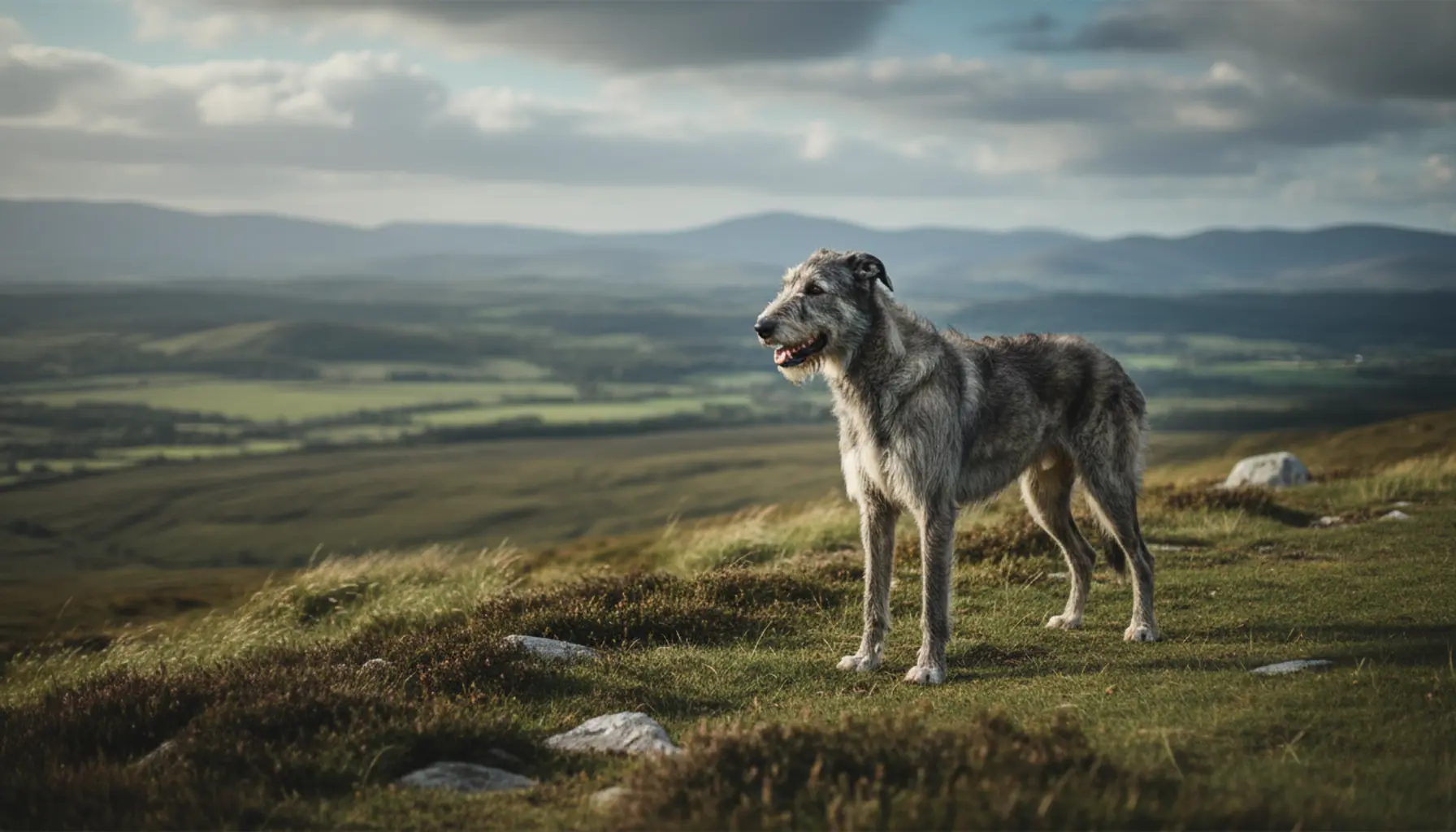
The Irish Wolfhound, despite its impressive size, is not particularly demanding when it comes to grooming, but due to its sheer size and unique body structure, it requires regular and thoughtful care. Its tough, wiry coat with a dense undercoat needs systematic brushing – usually 1–2 times a week – to remove dead hair, prevent matting, and improve skin blood flow. The best tools are a slicker brush and a dense metal comb, used especially around the neck, rump, tail, and rear thighs, where tangles most often form. Bathing does not have to be frequent; typically every few months or as needed, after heavy soiling. Use mild shampoos for wire-haired dogs, and after washing, dry the coat thoroughly with a towel and, if the dog tolerates it, with warm air from a dryer. This is especially important on cold, damp days, when the risk of chills is higher. In many bloodlines, regular stripping – removing dead hair by hand or with a stripping knife – is advisable to maintain the coat’s characteristic harsh texture. If hair grows abundantly between the toes and pads, it should be trimmed regularly to prevent slipping on smooth surfaces and avoid dirt buildup. Due to their mass and delicate movement apparatus, Irish Wolfhounds need carefully maintained claws – claws that are too long change the toe position, stress the joints, and can cause micro-injuries. Check every 2–3 weeks and trim when the claw touches the ground in a standing position; many owners prefer gradual, frequent trimming rather than one big cut to reduce the risk of injuring the nail quick. Care for the ears and eyes should also be part of routine – the Wolfhound’s hanging ears are prone to moisture buildup, so clean the ear flap with a damp cotton pad weekly and use ear hygiene products, especially with individuals prone to infections. Eyes should be wiped as needed with a saline-soaked gauze pad, watching for signs of irritation or excessive tearing.
Wolfhound care also includes ensuring home comfort and proper health prophylaxis tailored to a giant breed. Due to their size and sensitive bone-joint system, it’s crucial to provide a sufficiently large, well-padded bed, preferably orthopedic, which protects joints and elbows from pressure sores and abrasions on hard floors. The Wolfhound should have its own designated, quiet place away from drafts and direct heat sources, where it can stretch out fully; cramped quarters encourage unnatural positions and overload the spine. Oral hygiene must not be overlooked – big dogs are particularly at risk for tartar buildup and gum inflammation, so regular tooth brushing (even 2–3 times a week) and the use of dental chews and diets that support oral health are vital. These routines should be started in puppyhood, so an adult Wolfhound remains calm during any grooming procedures—which is crucial for caregiver safety given its size. Monitoring body weight is also essential – even slight overweight in such a big dog vastly increases stress on joints, heart, and the respiratory system. Regular weighing, adjusting meal portions to activity level, using feeds intended for giant breeds, and avoiding common “table scraps” helps keep the dog in good shape. The caregiver should watch for behavioral and condition changes – lethargy, reluctance to move, lameness, trouble rising from bed, or recurring diarrhea demand consultation with a vet. The breed is prone to typical large dog ailments (such as gastric torsion, heart disease, hip and elbow dysplasia), so routine preventive exams are advised, including periodic echocardiograms, joint checks, and quick response to any concerning symptoms. Daily calm routine is critical for the Wolfhound’s well-being—fixed meal times, moderate, age- and health-appropriate activity, avoiding sudden jumps after eating, and ensuring the dog has plenty of human contact. Managing mental health through gentle handling, patient training, sufficient rest, and avoiding prolonged isolation is an integral part of caring for this sensitive, family-oriented breed.
Health and Common Problems of Wolfhounds
The Irish Wolfhound, like most giant breeds, has particular health predispositions that future owners should know about before buying or adopting. The average lifespan of the Wolfhound is usually 6–8 years, though with conscious care, proper nutrition, regular health screenings, and appropriate body weight management, some dogs live longer. Owing to the rapid growth rate in the first months of life, it’s vital to control nutrition and physical stress – excess protein, calories, or calcium supplements, as well as overly strenuous exercise, can contribute to diseases of the skeletal system, such as hip and elbow dysplasia, osteochondrosis (OCD), or general posture defects. Regular joint x-rays (ideally under sedation in dogs over 12–18 months) assess their state and enable early intervention or rehabilitation when needed. During growth, moderate, controlled activity is advised – walks on soft surfaces, avoiding stairs, jumps into cars, or intense running by bike. Wolfhounds are also more prone to gastric torsion (GDV) – a sudden, life-threatening condition in which the stomach twists, trapping gas and food. To reduce this risk, divide daily food rations into 2–3 smaller meals, avoid intense exercise before and right after feeding, encourage slow, calm eating (e.g., with slow-feeder bowls), and observe your dog after meals. Warning signs include restlessness, unsuccessful attempts to vomit, excessive drooling, an enlarged and tense abdomen, and sudden fatigue – immediate veterinary care at a 24/7 clinic is needed. Some owners choose a preventive gastropexy surgery (stomach tacking), especially if GDV has occurred in the pedigree. Wolfhounds are relatively often affected by dilated cardiomyopathy (DCM) and other heart conditions typical for large breeds, such as valve defects or arrhythmias.
Given these predispositions, regular cardiac exams are advised – echo and ECG, at least every 1–2 years in adult dogs, and more often if there are concerning signs (decline in fitness, fainting, coughing, quicker fatigue). Routine blood and urine tests help catch early organ problems—liver, kidneys, thyroid, or inflammation—which can develop deceptively in large breeds. Wolfhounds are also predisposed to cancer, especially bone tumors (osteosarcoma), spleen cancers, and lymphomas—chronic lameness, swelling on bones, abdominal swelling, weight loss despite good appetite, and sudden weakness all demand urgent veterinary consultation and often advanced imaging (x-ray, ultrasound, CT scan). Eye diseases such as cataracts or progressive retinal atrophy (PRA) are less common than in smaller breeds, but responsible breeders should screen for genetic disorders and share results with future owners. Also worth noting is skin sensitivity – although the harsh coat offers good weather protection, some individuals have contact or food allergies manifesting as itching, redness, recurring ear infections, or digestive problems. Properly selected, high-quality food, sometimes a mono-protein diet or consultation with a pet dietitian, can greatly improve a dog’s comfort. Systematic weight monitoring is essential – overweight rapidly increases the stress on joints and the heart, so it’s better to keep the Wolfhound in light, “athletic” condition than to allow for obesity. Prevention also covers deworming based on stool tests, vaccinations suited to lifestyle (core and optional, e.g., Lyme disease in endemic areas), and parasite control for ticks and fleas. Despite its imposing stature, the Irish Wolfhound is sensitive to pain and stress—often showing subtle behavioral changes: loss of playfulness, withdrawal, increased need for closeness, or conversely – avoidance of touch. An attentive caregiver, who knows the dog’s daily routine, is more likely to spot early symptoms and consult a vet sooner, which is especially important for a breed with a somewhat shorter average lifespan. Conscious preventive care, cooperation with breeders who perform health testing, thoughtful nutrition, and age- and health-appropriate activity lay the foundation for keeping an Irish Wolfhound in the best possible condition throughout its life.
Feeding and Activity of the Wolfhound
Feeding the Irish Wolfhound should be mindful of its rapid growth, sensitive digestive system, and susceptibility to joint diseases and gastric torsion. During puppyhood, it’s vital to provide food intended for large and giant breeds, with a balanced calcium-to-phosphorus ratio and moderate protein and energy content, to avoid too rapid development. Overly calorific diets and ‘just in case’ supplements (e.g., additional calcium) can be harmful, potentially causing bone and joint deformities. Puppies are typically fed 3–4 times a day at regular intervals, with portions gradually reduced to two meals daily in adulthood. High-quality dry and wet foods work well, as do elimination diets or home-cooked meals, but home feeding must be consulted with a veterinary nutritionist to avoid nutritional deficiencies or excesses. A key component of the Wolfhound’s diet is appropriate animal protein, healthy fats (e.g., from fish), and supplements supporting joint health, such as glucosamine, chondroitin, and omega-3 fatty acids – but all supplementation should be considered carefully and discussed with a veterinarian. Because of the risk of gastric torsion, a single large meal or rapid gobbling should be avoided – slow-feeder bowls are recommended. After a meal, the dog should not run or jump vigorously; allow at least an hour of rest to minimize strain on the digestive system. Avoid feeding just before or right after intense exercise and limit gassy foods (excess dry food, fermenting leftovers, fatty dishes). There must always be access to fresh water, but don’t let the dog gulp large volumes at once after exertion – it’s better for the dog to drink smaller amounts more frequently. Regular weighing and physique evaluation (palpable ribs, visible waist) help avoid overweight, which in such a massive breed quickly stresses the joints, heart, and spine. An overly skinny Wolfhound is also undesirable – energy and protein shortages harm muscle tone, immunity, and coat quality, so feeding method and portion size should always be tailored to the dog’s age, activity level, and metabolism, not simply based on general food package guidelines.
The Irish Wolfhound’s physical activity also requires thoughtful management – while these are strong, large dogs, they are not “athletes” for constant running alongside bikes or repeated, intense workouts. Puppies and young dogs of this breed grow very quickly; up to about 18–24 months, special care must be taken not to overload their joints. Prolonged, intense runs, stairs, slippery floors, or frequent jumping from furniture may trigger or worsen dysplasia and other orthopedic problems. Instead, several calm, short walks a day are suggested, gradually extended, with free movement on safe, non-slippery ground, allowing the dog to control its pace naturally. An adult, healthy Wolfhound usually needs 1.5–2 hours of moderate activity daily, split into 2–3 walks, with opportunities for light trotting and exploration. Many individuals enjoy short sprints and chasing balls or tug toys, but such play should not be prolonged or monotonous – varied and relatively gentle forms of movement are better. Mental stimulation is equally important for this intelligent, sensitive breed: simple obedience practice, learning tricks, scent games (finding treats in grass, a snuffle mat), clicker work, or calm activities such as nosework help relieve tension and prevent boredom, which in this “giant couch potato” can lead to destructive behavior. A steady daily rhythm, with regular times for walks, rest, and meals, is recommended—the Wolfhound feels more confident and secure with predictable routines. Note that the breed tolerates heat poorly, so in summer plan walks and training for early mornings or late evenings, always providing shade and water. In winter, despite the dense coat, pups or sick dogs may need extra cold protection, such as a light coat. Always consider the individual health limitations of the dog – Wolfhounds with heart, joint, or senior issues need a gentler approach, shorter and more frequent outings, and avoidance of sudden physical stress. Regular veterinary consultations and careful observation of the dog’s response to exercise (panting, stiffness after walks, reluctance to move) allow for safe, comfortable activity tailored to the dog, supporting condition without risking overload.
Is the Irish Wolfhound the Dog for You?
Taking on an Irish Wolfhound requires a very mature approach, given this breed combines immense size, a sensitive psyche, and specific health demands. It suits people who value calm and closeness, not those seeking “sporty exploits” with a dog in tow. The Wolfhound is often happiest in homes with a balanced, peaceful atmosphere, without chronic noise, chaos, or intense emotions – it is a very empathetic type, easily soaking up its owner’s mood. If your dream is a dog that lies at your feet after work, is a companion for quiet walks and quiet presence, and not a “hyped-up” ball of energy, the Wolfhound could fit your lifestyle. On the other hand, if you travel a lot, often work long hours, or are spontaneously away for whole weekends, this breed is unlikely to suit you: the Wolfhound does not cope with extended loneliness, may develop separation anxiety, destructive behaviors and mental decline. Also consider if you are prepared for a dog that, for all its gentleness, needs consistent but delicate guidance—it is not usually stubbornly disobedient, but its sheer size means even occasional pulling on leash or sudden bursts of excitement are real physical challenges for the owner. Anyone of smaller stature, or with back or joint problems, should carefully consider whether they will be able to safely walk and handle such a large dog during walks and stressful situations.
Before choosing a Wolfhound, it’s smart to critically consider your living arrangements and budget. While the Irish Wolfhound can live in an apartment, it really needs a large, comfortable area for lying down and getting up, preferably with non-slip floors and a high-quality, thick bed that eases stress on the joints. Small studio flats with narrow halls, slippery floors, and tight elevators can be uncomfortable or even dangerous. Costs must also be considered: high-quality food for giant breeds, supplements, regular orthopedic and cardiac check-ups, health insurance, and even simple accessories (solid beds, bowls, harnesses, leashes, transport) will be distinctly higher than for a medium or small dog. The breed statistically has a shorter lifespan—on average 6–8 years—which can be tough emotionally for sensitive people; you should know that the intense bond with such a gentle giant often ends relatively soon. The Wolfhound is not a “yard dog” or traditional guard – it does not cope with isolation outside, chained up or in kennels, and its need to be near people is so strong it should live at home with the family. Though it is usually gentle with children, careful adult supervision is required: both the child must be protected from accidental knocks by such a large dog and the dog from rough play, ear-pulling, or being climbed on. If you have other animals, the Wolfhound is usually friendly or indifferent, but its size still warrants supervision, especially with much smaller dogs or cats. Training philosophy is key too: if you seek a dog “to control with a firm hand,” this is not the breed for you – the Wolfhound thrives on gentle, reward-based methods, calm boundary setting, and trust-based bonds. The ideal Wolfhound owner should be prepared for regular but not intensive activities (moderate walks, calm outings), care for joints and heart, routine veterinary checks, and readiness to promptly respond to even small changes in your dog’s health or well-being. Only then does the gentle giant have a chance to become a harmonious family member, and life together – an experience full of warmth, closeness, and everyday contentment.
Summary
The Irish Wolfhound is an extraordinary breed of dog, remarkable for its size and gentle nature. Originating in Ireland, it fulfilled various hunting roles and accompanied people on hunts. Thanks to its balanced temperament and devotion, this giant dog is an ideal companion for responsible owners. Wolfhound care requires regular attention, but its health can be maintained with proper diet and exercise. Before deciding to adopt, it’s worth learning about the Irish Wolfhound’s needs and temperament to ensure you can meet its requirements and provide a happy life.

