
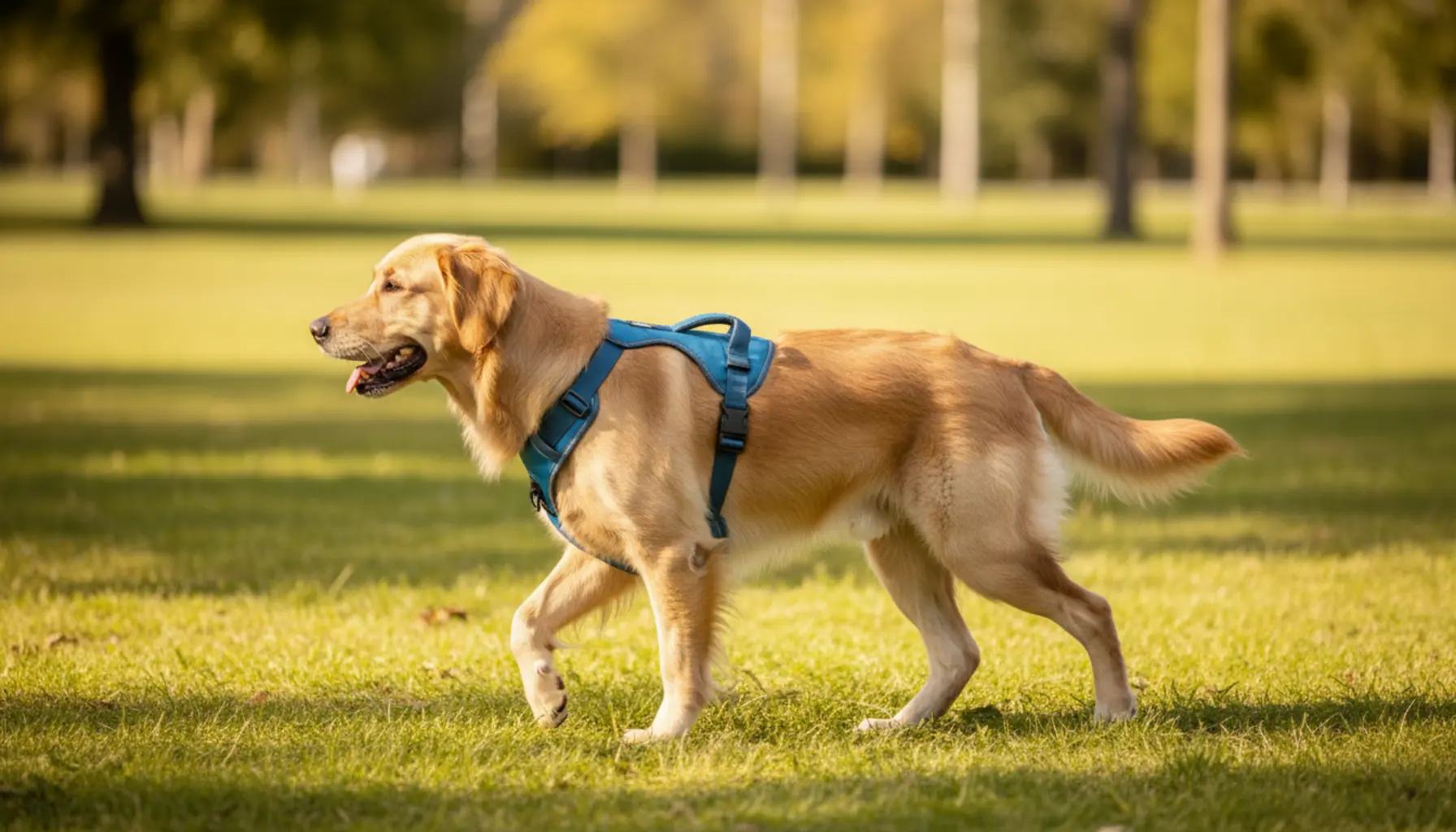
Guard harness for dogs is a solution recognized by owners who value safety and comfort. The ergonomic design guarantees the freedom of movement for the dog, without the risk of pressure on the neck or spine. Guard harnesses also provide greater control during walks and the certainty that your dog remains safe even in challenging situations.
Table of Contents
- Why choose a guard harness?
- Ergonomic design for dogs
- Comparison with other harness types
- Which dogs are guard harnesses suitable for?
- How to fit a guard harness?
- Best guard harness brands
Guard harness compared to other types
Guard harnesses are increasingly being compared to other popular solutions—the classic collar, step-in harnesses (put on from below), and so-called “Norwegian” type harnesses. The differences are not limited to appearance, but above all concern ergonomics, safety, and their impact on a dog’s health. Unlike collars, which concentrate pressure in one place—the neck and cervical spine—a guard harness distributes the pulling force over a larger area of the chest and shoulder girdle. This is especially significant for leash-pulling dogs, young growing puppies, and brachycephalic breeds, for whom pressure on the trachea can exacerbate breathing problems. Collars are sufficient for dogs walking perfectly on a loose leash and well-trained ones, but in practice, many caregivers are still learning, and a guard harness acts as a “safety device” that reduces the risk of painful jerks, coughing, or forming negative associations with a walk. Compared to simple step-in harnesses, which often cross on the sternum or run too close to the armpits, the guard design is more thoughtful: the front strap is usually at sternum level and does not block the full stride of the forelegs. Dogs in step-ins, especially those that are ill-fitted, may compensate for discomfort by shortening their stride, which over time favors joint strain. Norwegian harnesses—with a characteristic horizontal strap across the chest and a single strap encircling it—are considered quick to put on but can restrict the freedom of shoulder movement in many dogs, especially during intense activity. Thanks to two loops connected by dorsal and sternal straps, the guard harness typically avoids the largest joints and follows the body’s natural lines, allowing for freer movement both while walking and running. Another significant aspect is adaptation for fearful and adopted dogs—many classic harnesses or collars can be relatively easy to slip out of during a sudden backward movement. The construction of guard harnesses—with the chest strap running behind the elbows and the neck and chest straps connected—drastically reduces the risk of escape in panic situations, e.g., during fireworks, sudden street noise, or unexpected stimuli. A well-fitted guard harness “holds” to the body and, though not tight, its geometry makes it harder for the dog to slip out—unlike some Norwegian or step-in models, from which dogs with narrow chests can escape if they pull back strongly.
The differences between guard harnesses and other types become even clearer when you consider specific uses: sports, urban walks, training, or working with a reactive dog. In amateur dog sports, such as canicross, dog trekking, or running alongside a bike, it’s important to combine freedom of movement and secure harness stabilization. Simpler walking harnesses may rotate, shift sideways, or dig into armpits under heavy load, and a collar is simply contraindicated due to neck injury risk. A high-quality guard harness, thanks to multi-point adjustment, allows circumference fitting in several places, so it stays in position even during dynamic movement. In everyday use, especially in the city, the guard harness’s advantage over collars and many “pet store” harnesses is visible in control: a handle on the back enables quick restraint at street crossings or in crowded places, and stable strap distribution limits the “dangling” effect on the leash. For reactive dogs that lunge at stimuli (other dogs, cyclists, cars), the guard harness transfers the leash jolt energy to the torso instead of the sensitive structures of the neck and larynx, thus reducing the pain risk that could further exacerbate defensive reactions. Regarding adjustment to different body types—whippets, molossers, or small breeds—guard harnesses are generally better than step-ins, which tend to fit more “standard” builds. Multi-point adjustments and “in-between” sizes (e.g., S/M, M/L) allow the straps to be precisely set not to encroach into the armpits or chafe the sternum. For thick-coated and undercoated breeds, such as huskies, shepherds, or malamutes, the guard’s simple linear straps minimize hair matting near fastenings, which is an issue with more complex harness constructions. Furthermore, compared to many cheap walking harnesses, guard harnesses more often offer reinforced buckles, solid leash rings, and higher-quality webbing, translating to durability and safety during intensive use. Some caregivers may see the need for careful adjustment and initially teaching the dog to put on the harness “over the head” as a drawback, but in practice, most dogs accept the routine quickly, while the gain in control, freedom of movement, and reduced injury risk stands out against collars, step-in harnesses, and Norwegian models.
Why choose a guard harness?
Guard harnesses are considered by behaviorists, trainers, and aware dog caregivers as one of the safest and most comfortable walking solutions because, unlike traditional collars, they don’t compress the neck, trachea, or delicate structures of the cervical spine. The guard design is based on two loops—front (on the chest) and rear (behind the forelimbs)—connected by straps running along the back and chest. This allows the pulling force to be spread evenly across the chest, which is especially important for small breeds, brachycephalic breeds (e.g., pugs, French bulldogs), and all dogs prone to coughing, breathing issues, or intervertebral disc disease. Eliminating neck pressure reduces the risk of injuries, tracheal microdamage, as well as headaches and tension, which in dogs may show up as irritability, avoidance of collars, or even aggression upon touching the neck. Additionally, wide, well-contoured straps of guard harnesses don’t cut into armpits or chafe the skin and allow full shoulder movement, enabling a natural gait. This is a vast advantage over many poorly designed “step-in” harnesses or low-quality Norwegian models, which can limit the forelimbs’ movement and encourage compensatory overuse of muscles and joints long-term. Well-fitted guard harnesses are also more stable on the body—they don’t twist sideways during sharp turns, don’t shift while running or jumping, and since they envelop the torso in two points, they’re harder for the dog to remove, increasing safety in stressful situations such as fireworks, meeting other dogs, or crossing busy streets. Many models come with an extra “anti-escape” strap behind the chest that makes it harder for the dog to slip out, which is particularly important for fearful dogs, adopted strays with uncertain backgrounds, or young, unpredictable pets. Guard harnesses also offer better communication between human and dog: the leash attachment on the back—or in some models, an extra front loop—makes it easy to send subtle directional cues without jerking, which aids in loose-leash walking and supports positive training methods based on comfort, not aversion.
Choosing a guard harness also means investing in everyday usability and durability of the accessory. The advanced adjustment system—usually at least four, sometimes even five points—lets you fit the harness precisely to the dog’s build, whether it’s a slender female with a narrow chest, a muscular sporting dog, or a molosser with a broad, deep chest. Such a broad adjustment range means the harness can “grow” with a puppy, and as an adult, it’s easy to adapt to seasonal weight fluctuations or differences in fur thickness (shedding, thicker winter undercoat). High-quality models are made from durable yet lightweight materials: strong polyamide or polyester webbing, lined with soft foam or breathable mesh, which minimizes the risk of chafing and limits moisture or unpleasant odor buildup. Many guard harnesses feature reflective elements or sewn-in reflective tape, improving the dog’s visibility after dark or at dawn—an important safety aspect often underestimated by owners, yet crucial on walks near roads, bike paths, or dimly lit parks. A functional addition is the back handle, which allows you to quickly hold the dog, help them jump into the car, pass over field obstacles, or assist while descending steep rocks during mountain hikes. From a grooming perspective, guard harnesses are often milder than narrow collars: they fit the body evenly, don’t cause localized pressure, tangle fur less, and don’t rub away hair on the neck, which is important for long-haired or delicate-coated breeds. Additionally, they tolerate frequent contact with water, mud, and sand well—most models can be washed by hand or in a washing machine, making it easy to maintain hygiene after intensive walks. Economically, guard harnesses are a reasonable investment: although often pricier than the simplest collars or budget harnesses, their durability, reduced injury risk (thus, potentially lower vet bills), and years of use make them a cost-effective and healthy choice in the long run. Finally, their universal applications—for urban strolls, trekking, running with a bike, dog trekking, obedience training, or working with reactive dogs—mean that instead of several pieces of gear, you can have one well-chosen harness serving most daily and sporting activities.
Why choose a guard harness?
Guard harnesses are increasingly replacing traditional collars and other harness types because they combine a high level of safety, comfort, and owner control without limiting the dog’s natural movements. The key advantage is the ergonomic shape—the straps cross the chest and torso, avoiding the delicate neck, trachea, and cervical spine. Thus, even dogs that pull strongly or lunge suddenly are much better protected against injuries and microdamage, which in the long run can lead to breathing problems, coughing, or neck pain. Distributing force over a larger body area means the pressure is gentler, and the dog doesn’t experience the discomfort associated with classic collars tightening around the neck. For many owners, it’s also important that guard harnesses minimize the risk of the dog slipping out—properly fitted, they create a stable “frame” around the torso, vital for fearful, reactive dogs or escape artists. Thanks to the symmetrical straps and buckles, this harness doesn’t twist, slide sideways, or chafe under the armpits as happens with simpler, less-considered harnesses. Comfort-wise for daily use, guard harnesses are also a better choice for dogs with unusual builds, such as sighthounds, bulldogs, or those with deep chests—the multi-point adjustment allows for precision fitting and avoids pressure on the shoulders, sternum, or abdomen. Owners of active dogs, those practicing dog trekking, running, or mountain hiking, appreciate guard harnesses because they don’t restrict shoulder or scapular movement, letting the animal move freely and efficiently without forced, shortened steps. This movement freedom translates to less muscle fatigue, better coordination, and less risk of overload, especially important for sporting, senior, or previously injured dogs.
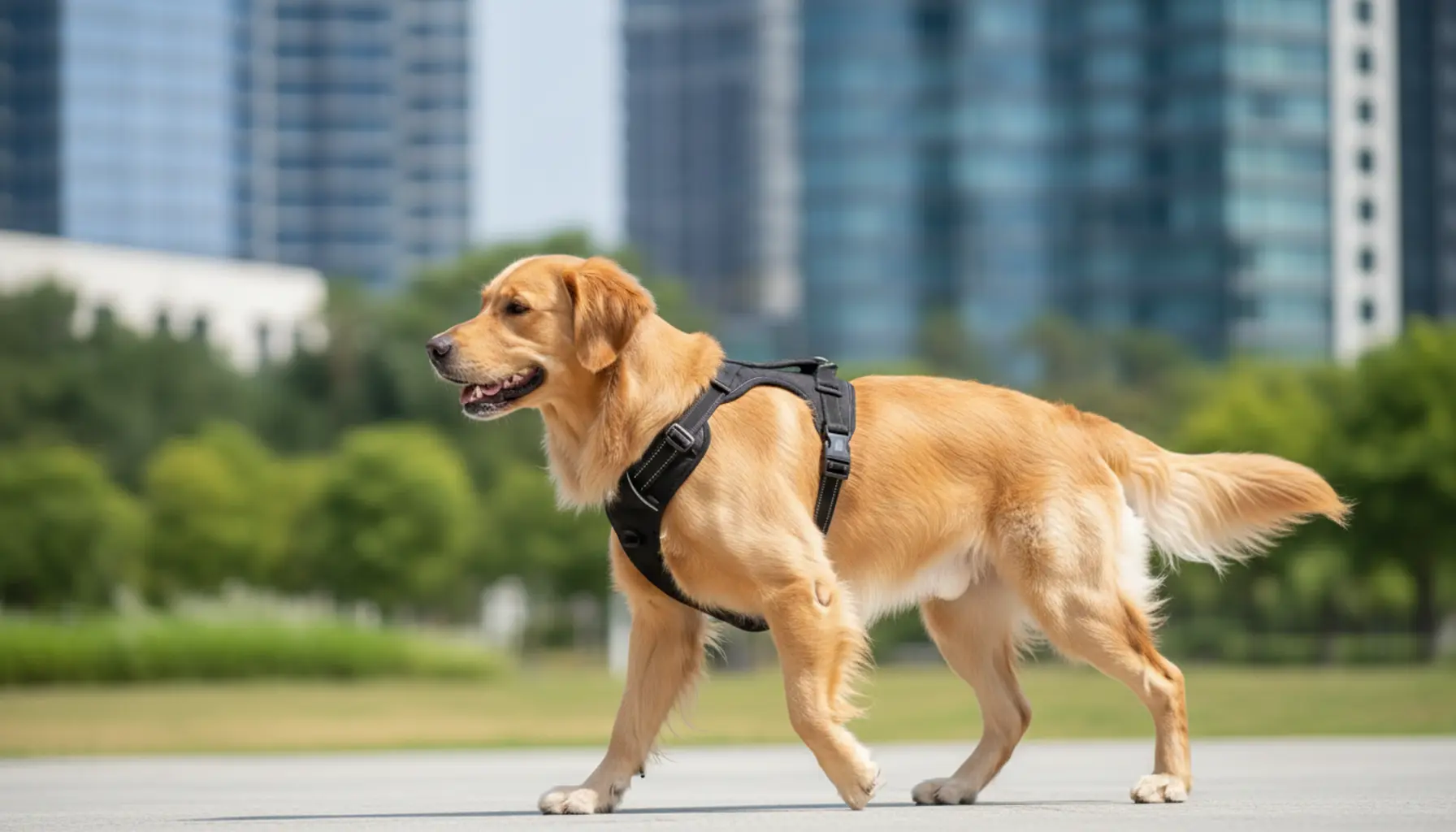
Choosing a guard harness also means better communication with your dog and more peaceful walks, especially in urban environments full of stimuli—traffic, crowds, children, dogs, bicycles, scooters, etc. The guard’s construction allows for gentler, more “diffused” signaling through the leash, so your dog doesn’t associate each leash tension with a sudden neck jerk, but with a mild change of pressure on the chest. This facilitates loose-leash walking and work with reactive or fearful dogs who are easily aroused or stressed. Many trainers and behaviorists recommend the guard harness as the most neutral and safe starting point for training because it allows you to use positive reinforcement techniques without risk of associating exercises with pain or severe physical discomfort. The health aspect is equally important: for puppies whose skeletal and joint systems are still developing and for seniors with orthopedic or neurological problems, relieving the neck and distributing forces evenly over the torso is especially beneficial. Well-chosen guard harnesses, made of soft but durable materials and padding in sensitive areas, help prevent skin chafing and coat felting—appreciated by owners of long-haired or sensitive-skinned dogs. Sturdy buckles, metal rings, and strong stitching make good guard harnesses resistant to intensive use, frequent washing, and weather: rain, snow, mud, or UV rays. Many are also equipped with reflective or fluorescent elements, increasing the dog’s visibility after dark and in low-light, thus supporting safety during both urban and rural walks. From a practical owner perspective, guard harnesses offer great value for durability—instead of replacing a cheap, uncomfortable harness every few months, you can invest once in a well-designed, adjustable harness that serves for years, fitting changes in your dog’s shape (weight loss, gain, or muscle development in sporting dogs). All these elements—ergonomics, safety, comfort, training, and durability—make guard harnesses attractive both to experienced caregivers and those just starting their adventure with a dog and looking for a universal, “safe” choice.
Ergonomic design for dogs
The ergonomic design of guard harnesses means a construction that naturally adapts to a dog’s anatomy instead of forcing the body to adapt to the accessory. The chest strap runs horizontally through the most robust, muscular part of the chest, not high up at the neck, so that during sudden jerks, the force is distributed over a larger area and doesn’t compress the trachea or cervical vertebrae. The extra belly strap, located behind the rib arch, stabilizes the harness and prevents it from shifting forward or twisting, crucial for dogs with atypical builds—very slim, long-bodied, with deep chests or broad sternums. The simultaneous work of both straps means the harness “moves” with the dog’s body, not against it: when the dog accelerates, stops, turns, or jumps, individual elements don’t dig into the skin, but follow the movement of the whole shoulder girdle and torso. Good guard harnesses are designed to control the dog’s position without limiting natural movement patterns—the widely spaced shoulders work freely, forelimbs have a full stride, and paraspinal muscles aren’t overly pressured. Properly shaped straps avoid sensitive spots such as the shoulder plexus or the edges of the shoulder blades, particularly important for sporting and very active dogs where any movement dysfunction can lead to long-term overload and injury. Details also matter in ergonomics: rounded strap edges, soft chest and armpit padding, flat, secure stitching with no protruding elements reduce chafing even with daily, extended wear. The placement of buckles and adjusters should avoid resting on ribs, the spine, or armpits, where microtrauma and discomfort can lead the dog to avoid wearing the harness or attempt to free themselves. A key aspect is broad adjustability—at multiple points, independently at the front and belly, so you can tailor the harness to your dog’s physique and adjust easily as the dog grows, gains/loses weight, builds muscle, or changes posture with age. A well-fitted guard harness rests stably but is not tight; you should be able to slip two fingers under the straps, and the dog should have no trouble lying down, sitting, or stretching; during a run, their natural stride is not shortened. This fit provides not just physical comfort but also a sense of security—the dog doesn’t perceive the harness as restrictive pressure, which makes them more willing to cooperate on walks, learn easily, and react less tension to stressful situations, such as passing other dogs or busy roads.
The ergonomics of guard harnesses are also influenced by material selection and their assembly—they determine how the harness sits while in use, not just during static fitting. Soft but springy straps don’t deform permanently, so the harness doesn’t “fall apart” after a few walks or require constant re-tightening, while gently conforming to muscle movement. The lining material, often neoprene, spacer foam, or soft, breathable technical fabric, should be resilient, quick-drying, and resistant to pilling, so it doesn’t irritate even short-haired or allergy-prone dogs. A thoughtful arrangement of straps and anchor points (metal rings or D-rings) ensures load transfer to the strongest muscle groups without “breaking” the dog’s posture—many ergonomic models offer two leash attachment points: on the back and at the front of the chest. For strong pullers, attaching the leash to the front loop gently diverts the dog from pulling and directs them toward the handler—without neck jerks and unnatural spinal twisting. The upper handle on the back is useful for support on stairs, getting into cars, or rough terrain—when you lift the dog by this handle, you lift in the body’s axis, not to one side. Sensory aspects matter, too: the harness shouldn’t be too heavy or “stiff” to the touch, because excess weight and rigidity might make the dog feel restricted and move unnaturally, with a tucked tail or lowered back. A well-designed guard harness is almost “invisible” to the dog—after a few minutes, most dogs ignore it, and the owner feels that the dog moves as freely as if wearing nothing. This effect is possible through anatomical tailoring, lightweight advanced materials, and careful finishing of all elements—from buckles to stitching to reflective inserts that boost nighttime safety without adding stiffness. Ergonomic design in guard harnesses is not just a marketing term but a real set of construction solutions with direct impact on health, movement comfort, and the dog’s well-being in everyday use, regardless of age, breed, or activity level.
Comparison with other harness types
Guard harnesses are most often compared with classic step-in harnesses, Norwegian harnesses, and traditional collars, as owners typically choose between these accessories for daily use. Unlike a collar, which concentrates pressure on the neck—especially during jerks or sudden stops—the guard harness distributes force over a greater area of the chest and sternum, significantly reducing the risks of tracheal compression, irritation of the cervical spine, or circulatory problems. This is a huge advantage for sensitive dogs—brachycephalic breeds, seniors, or dogs recovering from injuries—as well as for young, energetic dogs learning to walk on a loose leash. Compared to step-in harnesses, which the dog “steps into” with their forelegs, guards are generally more stable and less prone to twisting sideways, which is important for sharp turns or running. Step-ins are convenient for owners because they are easy to put on, but for dogs with unusual builds (very broad chest and narrow waist, long back, very deep chest), they may shift forward or upward, restricting shoulder movement and causing armpit chafing. The guard’s design, based on two loops connected by a sternum strap, sits more stably on the dog’s body and, when properly fitted, doesn’t press into the armpits or block the forelimbs’ stride. Ergonomics are thus one of the most often mentioned advantages of the guard design over both step-in and some simpler Norwegian harnesses.
Norwegian harnesses—popular one horizontal strap across the chest and a single strap encircling the body behind the shoulders—seem more convenient for many people; the dog just puts their head through, and the owner fastens the side buckle. In practice, however, this type often sits too close to the shoulder joint, and the front strap can limit the natural movement range of the forelimbs, which, in the long run, affects overload and improper movement. Guard harnesses, when properly adjusted, “avoid” sensitive areas—the chest strap runs below the neck but above the elbows, while the crosswise sternum strap stabilizes the construction, not blocking shoulder blades or chafing the armpits. In daily life, this means the dog can freely run, jump, climb stairs, and change pace, while the handler maintains full control through even force distribution throughout the harness. For “escape artists” and fearful dogs, it’s also critical that, unlike looser Norwegian or open step-in models, guard harnesses make it harder to slip out when backing up. The extra belly strap in many guards acts as anti-escape protection, whereas simple Norwegian or step-in harnesses can simply fall off in such situations. From the handler’s perspective—especially when training—a guard harness transmits leash signals through the whole body, not just the neck or a single point on the chest, simplifying heelwork or working with reactive dogs. While a collar may work with very well-mannered, calm dogs, in busy urban settings, hiking, running, or traveling on public transport, guard harnesses offer higher safety, more control, and better movement comfort than most alternatives. The combination of ergonomics, stability, wide adjustment range, and low injury risk means that, compared to other harness types, guards are most often recommended by behaviorists, trainers, and veterinarians as a universal model—appropriate for daily walks and more demanding activities alike.
Which dogs are guard harnesses suitable for?
Guard harnesses are extremely universal but particularly recommended for dogs where comfort and safety are paramount. They are an excellent choice for puppies learning to walk on a leash—the gentle, evenly distributed pressure helps them better understand cues from the handler, without straining their still-fragile spines and neck muscles. For young dogs prone to sudden lunges or pulling, the chest strap absorbing the pulling force protects the trachea and cervical vertebrae, which is key during rapid growth periods. Guard harnesses are also great for small breeds like chihuahuas, yorkshire terriers, maltese, or shih tzus—their delicate build and frequent tracheal issues make classic collars too invasive. Thanks to the guard’s construction, even energetic small dogs that react to every stimulus on a walk stay safe without a strong risk of neck pressure. Equally important are brachycephalic dogs—pugs, French and English bulldogs, boston terriers—prone to respiratory and overheating issues. For them, neck pressure aggravates breathing difficulties, so guard harnesses, avoiding the throat area, are recommended by many vets and behaviorists. These harnesses are perfect for dogs with unusual body types, like sighthounds, dachshunds, or dogs with very wide chests and narrow waists—their broad range of adjustment allows a better fit compared to many “stiff” step-in or Norwegian models, which tend to slide one way or press the armpits. For dogs sensitive to touch and who dislike putting harnesses over their heads, guards can be more acceptable—some versions open fully, so you can put them on from the side, not over the ears or snout, reducing stress for those with unpleasant past experiences.
Guard harnesses should also be considered for very active dogs engaging in sports with their handlers like trekking, long mountain hikes, recreational canicross, or dog trekking. The stable structure keeps the harness fixed even during sharp turns, jumps, or running on uneven ground, and the lack of elements blocking the shoulders allows for a full range of front limb movement. This enables natural movement, important both for physical performance and joint or muscle overload prevention. Guard harnesses are also suited for reactive, fearful, and so-called “escape artist” dogs. The extra belly strap and anatomical fit hinder harness removal in response to sudden fright, e.g., fireworks, passing bikes, or encountering another dog; this is essential when working with traumatized, adopted, or intervention-rescued dogs. The ability to comfortably attach the leash to the rear or front (some models) allows better behavior management—the front point can help teach loose-leash walking and curb pulling, making guards a practical training tool. These harnesses are also beneficial for seniors or dogs with orthopedic or neurological issues like hip dysplasia, spinal degeneration, or muscle weakness—the wide, softly padded straps support the body, and the top handle (if present) lets the owner help, e.g., getting in the car, climbing stairs, or navigating rough terrain, minimizing the risk of slips and falls. Importantly, the broad range of adjustment also suits dogs whose physique changes over time: when losing weight, after surgery, during rehabilitation, or for breeds that seasonally change muscle mass. A well-fitted model is perfect for a calm senior’s city walk as well as a young, lively dog needing daily activity, making guard harnesses an extremely versatile solution in every canine wardrobe.
How to fit a guard harness?
Fitting a guard harness begins with properly measuring your dog, because even the best-designed model won’t work if too loose or too tight. The two most important measurements: chest circumference (measured at the widest part, just behind the elbows) and neck circumference at the collar level (for some models, also the sternum length—from the neck base to the spot between the forelegs). Measure your dog with a soft tape measure, while standing naturally; don’t hold the head high or stretch the dog, as this gives a false result. Add 1–2 cm to the chest measurement for comfort, but not more—too much extra will make even tight straps shift. Compare your result with the manufacturer’s size chart, remembering that S, M, or L vary between brands, so always use centimeters, not letter sizes. For dogs with unusual builds (very deep chest, long torso, narrow waist, bulldogs, sighthounds), choose a model with a broad adjustment range and—if possible—try it on in-store or order with a return option. Consider strap width: for small, lightweight dogs, narrower, lighter straps are better, while for large, strong pullers, wider straps with robust buckles distribute pressure better and don’t cut into the skin. Before first use, loosen all adjusters to “lay out” the harness on the dog’s body and gradually fit it, not cinching it tightly at once. Fit in a quiet, calm environment, rewarding with treats to build positive associations—especially if the dog has never worn a harness before or has had negative experiences with gear.
The positioning of each strap is crucial so that movement isn’t restricted or sensitive areas compressed. The chest strap should run horizontally across the sternum, roughly where the shoulder blades end, but shouldn’t go into the armpits or chafe between the forelegs—if the strap ends just behind the elbow, it’s usually the right place. The top (shoulder) piece should lie stably on the back, about midway between the neck and the torso’s start; if it shifts toward the neck or tail, straps are uneven. The neck strap shouldn’t ride up the throat—two fingers between strap and neck for small and two-three for large breeds is the rule, without a “choking” effect when gently pulling the leash. Similar for the under-chest strap: too tight causes discomfort and hinders breathing, too loose and the dog could slip the harness off, especially fearful dogs or those with narrow waists. After initial fitting, ask your dog for a few steps, a bow, a turn—ensure the straps don’t ride into the armpits, chafe the shoulder blades, and buckles don’t press on ribs or spine during movement. Well-fitted guard harnesses stay stable even with strong leash pulls, don’t “wander” sideways, don’t spin around the torso, or slip toward the shoulders or sternum. After each walk—especially with growing or weight-changing dogs—quickly check the fit, as several centimeters’ difference in girth can appear within weeks. Also consider seasonal changes: with thick winter fur, the girth appears smaller after shedding; harnesses perfect in winter may be too loose in spring. Regular checks, maintaining the “two fingers” rule, and observing your dog’s behavior (scratching under harness, reluctance to move, escaping attempts) let you quickly correct minor fitting mistakes for maximum comfort and safety on every walk.
Best guard harness brands
Choosing a specific guard harness often starts with recognizing brands specializing in ergonomic harnesses highly trusted by owners, behaviorists, and veterinarians alike. In the premium segment, particular attention should go to Ruffwear, Hurtta, Julius-K9, Truelove, Non-stop Dogwear, as well as Polish producers: Dog’s Profit, Hunter Polska (local distributor), and DogWalkDesign. Ruffwear is one of the best-known outdoor dog brands; their guard harnesses (e.g., Front Range or Web Master models) are designed for long hikes and demanding activities, with solid manufacturing, contoured chest panels, and multiple adjustments, making them fit a variety of dog builds, including sporting or working dogs. Features such as a handle for tough terrain support, reinforced leash rings, and reflective zones make Ruffwear a top choice for active owners—trekking, canicross, or dog trekking. The Finnish brand Hurtta is renowned for very soft yet durable materials, ideal for sensitive-skinned or thin-coated dogs. Guard harness lines like Weekend Warrior or Casual are anatomically shaped, with wide straps and even pressure distribution—perfect for small breeds, seniors, and post-injury dogs. High-quality buckles, resistant to frost and moisture, and liner fabrics preventing chafing make Hurtta a year-round choice blending comfort, looks, and function.
Among brands well-known in Poland, Julius-K9’s place is significant; their IDC harnesses are iconic at dog parks, though note that the classic IDC is closer in design to Norwegian harnesses than typical guards. However, the brand also offers variants closer to classic guard harnesses with extra stabilizing straps. Their big plus is robust build quality, wide size range, and fast fit, effective for large, strong dogs or owners needing a quick grab via the prominent handle. Truelove is a brand popular for a good quality-to-price ratio: their guard harnesses are lightweight, with wide adjustment range and thick soft lining, making them popular for growing dogs or first-time harness buyers. Notable are the many 3M reflective elements and reinforced stitching for safety on night walks. Non-stop Dogwear is a more “sporty” choice—a brand known in sled dog, canicross, and skijoring circles. Their guard and semi-guard harnesses are tailored for very active working dogs, focusing on shoulder freedom, no airway compression, and maximum stabilization under load. For running, biking, or long-distance trekking with dogs, Non-stop Dogwear is highly recommended. For Polish owners, local brands like Dog’s Profit or DogWalkDesign are also worth a look. Their handmade guard harnesses offer customization—from strap pattern and extra reinforcement, right down to sizing personalized to the dog. Particularly valuable for dogs with nonstandard builds (deep chest, short muzzle, muscular shoulders), where foreign brand sizes may not fit perfectly. Owners also appreciate the faster contact, consultation, and occasional custom tweaks after trial fittings from smaller specialist brands. When choosing the best guard harness brand, aside from the manufacturer’s reputation, crucial factors are fitting the construction to the individual dog, its activities and skin sensitivity, plus practical details like buckle type, number of adjustments, stitch method, and ease of cleaning. When buying harnesses from reputable brands—in physical or online authorized stores—it’s worth checking the warranty, size exchange policy, and reviews from other owners with similar size or lifestyle dogs—all of which help realistically judge whether a brand will meet expectations in daily use.
Summary
A guard harness for a dog is the ideal solution for owners caring about their pet’s comfort and safety. The ergonomic construction provides freedom of movement and minimizes pressure risk. In this article, we compared them to other popular harness types, showing that guards are versatile and suit various breeds. To fulfill their purpose perfectly, correct fitting is crucial. The market offers high-quality options from reputable manufacturers, worth considering when purchasing. A guard harness is an investment in your dog’s well-being, ensuring peace of mind and comfort during daily walks.

