
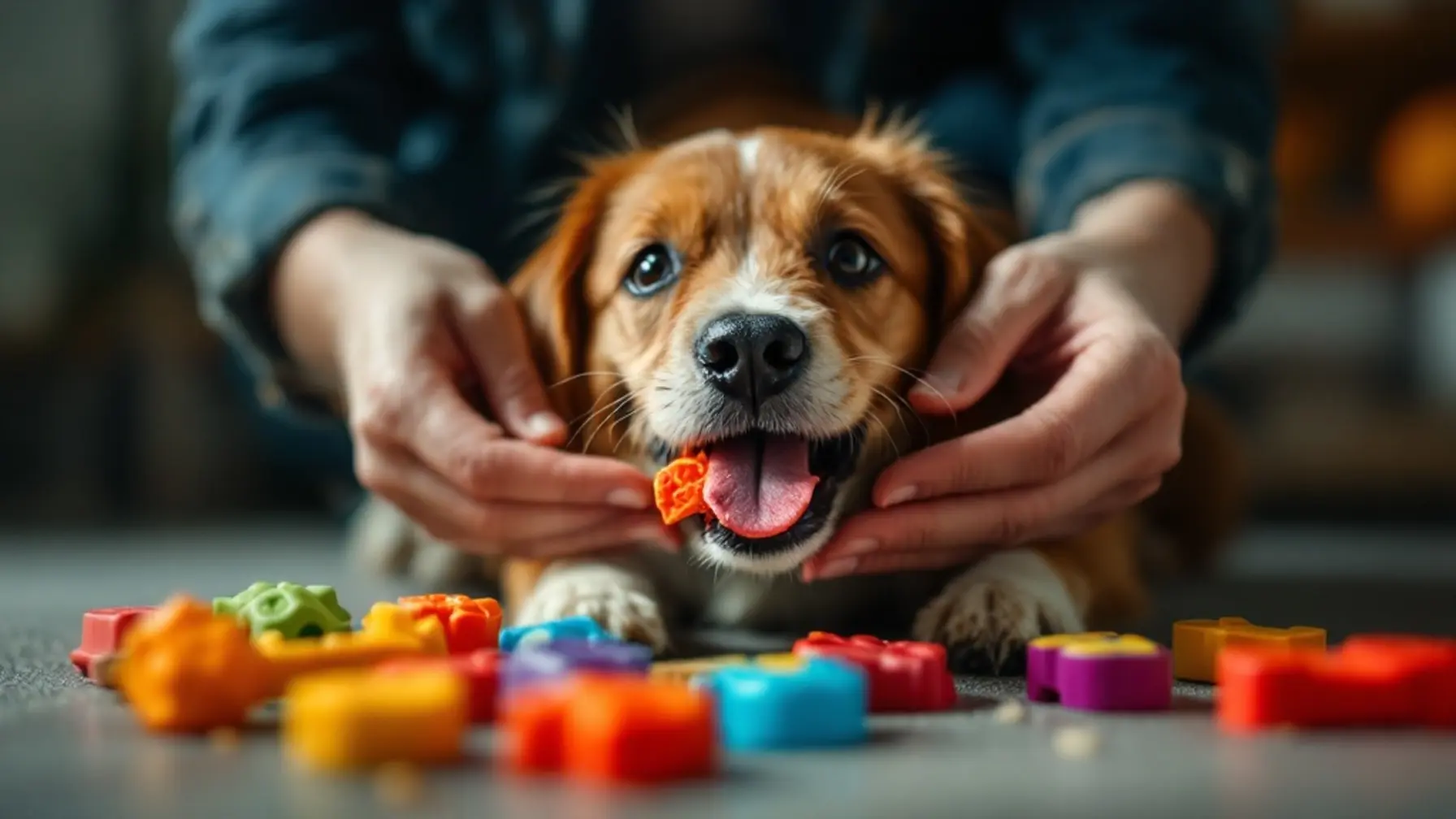
It’s not easy to stop a dog from chewing on hands or destroying furniture, but understanding and redirecting the dog’s chewing instinct brings lasting results. The best chew toys not only solve the problem but also care for your dog’s emotions and needs. Discover how to effectively redirect your dog’s chewing instinct for a calm home free of destruction.
Table of Contents
- Why Do Dogs Chew Hands and Furniture?
- Understanding Your Dog’s Chewing Needs
- Effective Chew Toys
- Techniques to Redirect Chewing Instinct
- Solving Problems with Destructive Chewing
- How to Positively Reinforce Good Habits?
Why Do Dogs Chew Hands and Furniture?
Chewing on the owner’s hands and destroying furniture is one of the most common challenges dog owners face. Yet, from the dog’s perspective, it’s a natural behavior often rooted in specific causes. Especially for puppies, teething plays a key role: the eruption of baby teeth, followed by their replacement with adult teeth, causes discomfort, itching, and gum pain, which dogs instinctively try to relieve by chewing whatever is within reach—hands, pant legs, chair legs, or cabinet corners. Young dogs also explore the world mostly with their mouths, similar to how children use their hands and mouths to investigate—so biting an owner’s hand often isn’t about aggression but curiosity, a desire for contact, and understanding how their environment works. Dogs also quickly learn that biting human hands gets an immediate reaction: if grabbing fingers always results in yelling, laughing, pushing, or a burst of playtime, the behavior is unintentionally reinforced—so the dog discovers that chewing is a reliable way to get attention, even if it’s negative. For adult dogs, hand biting often shows up as rough play or tug games—many dogs, when overexcited, forget to be gentle because they never learned bite inhibition or jaw control. Other causes include frustration or pent-up energy—if a dog lacks enough activity, mental stimulation, or suitable chew toys, they may “take it out” on their owner’s hands in exciting moments, like when you get home, before a walk, or when guests arrive.
Furniture chewing—on baseboards, doors, or pillows—tends to have a different root from hand chewing, though both stem from a strong need to chew and relieve tension. For many dogs, intense chewing and destroying objects is a coping mechanism for stress and loneliness—take, for example, a dog left alone who chews up a couch, table leg, or door frame, especially near entrances where the owner’s scent is strongest. Here, chewing may signal separation anxiety, frustration from isolation, or the inability to self-soothe. For hyperactive young dogs, destructive furniture chewing usually combines boredom with excess energy—a dog without enough exercise or mental tasks “creates a job” for itself, and the easiest targets are household items. Environmental factors also matter: leaving a dog unsupervised in a room full of tempting wooden, fabric, or foam furniture strongly reinforces destructive habits, as chewing these materials provides instant pleasure—the resistance, sounds, and mess all contribute. Sometimes chewing furniture is triggered by diet or health issues—a dog with deficiencies, GI troubles, pain, or itching may seek relief through compulsive chewing; so if your dog’s destructive behavior suddenly escalates, consult a veterinarian. The role of training shouldn’t be overlooked: if owners have not set clear rules, shown what is okay to chew, or secured the home during the dog’s adolescence, the pet simply won’t distinguish between an allowed toy and a table leg or leather sofa. And finally, both hand and furniture chewing can relate to temperament and breed tendencies—working, hunting, and herding breeds often have a stronger need to use their mouths, grab, and carry objects, so without proper direction, their instincts can easily become persistent, problematic chewing of anything within reach.
Understanding Your Dog’s Chewing Needs
To effectively redirect chewing from hands and furniture to appropriate items, you first need to recognize what needs chewing fulfills for your dog. The chewing instinct isn’t a “bad habit” but a natural behavior serving different functions depending on the dog’s age, health, temperament, and life context. For puppies, the main need is to soothe pain and discomfort from teething—chewing massages their gums, speeds up the process of losing baby teeth, and relieves tension. That’s why young dogs love to gnaw on hands, furniture edges, or slippers: they’re handy, with varied textures and often carry the owner’s scent, increasing motivation to chew. For adults, the need is often relaxation or stress relief—rhythmic gnawing helps them calm down after exciting outings, social meetings, or changes in their environment. Watch when your dog chews: Is it after their owner returns? When left alone? After strenuous play? Or during tense moments at home? This helps you learn whether chewing is a “calming” habit or a way to burn off too much energy from lack of movement and mental stimulation. Preferences in material are also revealing—a dog obsessed with wood may just love the texture, or may be bored, or lack proper toys of a similar type; persistent chewing of fabrics (blankets, pillows, clothes) might relate to comfort needs, especially for anxious or separation-prone dogs. Chewing owner-scented items (shoes, socks, remote controls) signals longing for closeness, not malice or spite. To truly understand your dog’s chewing needs, consider the timing: if an adult dog who never chewed before suddenly does, pain (such as dental problems), hormonal changes, sudden changes in routine, or new stresses (renovation, a new pet, a new baby at home) could be at play. Here, intense chewing may help the dog cope emotionally, or alleviate mouth pain, so observation and a vet check are key. Check if chewing is more common when you’re present (e.g. playing and grabbing hands or clothes) or mainly when alone (furniture destruction, door frames, cables). In the first case, chewing may be more of a hunting instinct or social interaction—the dog doesn’t realize human skin is delicate and needs to be taught jaw control; in the second case, the cause is likely emotional (stress, anxiety, frustration), and chewing is a form of self-soothing or stress discharge.
Recognizing your dog’s chewing needs involves attentive observation of body language and details that might otherwise seem minor. A dog who chews slowly and contentedly, squinting, lying on its side or chest, usually does so for comfort and relaxation—here, your job isn’t to eliminate chewing but to offer safe, suitable objects for them. However, nervous, rapid chewing, changing objects often, vocalizing (whining, barking), wandering the house with a toy, or immediately chewing hands or clothes when you arrive—signals chewing as an attempt to cope with strong excitement or frustration. Track the frequency and intensity: the occasional Kong session after a walk is normal, but hours-long daily “obsessions” indicate unmet physical or mental needs. Consider keeping notes: when chewing starts, what triggers it, for how long, and what happened earlier (isolation, loud noises, visitor, walk, or lack of one). Such a “chewing journal” helps identify patterns and connections, making it easier to strategize proper redirection. Some physical signs—bad breath, red gums, drooling, avoiding hard foods, or head tilting during chewing—can indicate pain, and require veterinary attention. Also account for individual differences: some dogs simply need to chew more—due to their temperament, puppyhood experience, or breed (working, hunting, retrieving breeds especially). By observing your dog in different contexts—during play, relaxation, stress, or boredom—you can gradually determine whether chewing is play, self-soothing, relief for inactivity, or a “remedy” for separation anxiety. Only with holistic understanding can you choose the right strategies and redirect your dog’s chewing instinct from hands and furniture to safe alternatives, tailored to your individual pet, not just generic advice.
Effective Chew Toys
Effective chew toys are essential for redirecting a dog’s attention from hands and furniture to allowed objects, but choosing the right ones matters. A good toy must be safe, appropriate for the dog’s age, size, and chewing style, and genuinely attractive—able to “compete” with the table leg or owner’s hand. Start by differentiating between hard and soft toys: hard toys (durable rubber or nylon) are better for adult dogs with a strong bite who find intense chewing relaxing and boredom-busting. Soft, pliant toys are best for teething puppies or dogs with sensitive teeth—they gently massage gums, provide comfort, and focus energy on a safe object. Always choose the right size: toys too small (like mini balls for big dogs) are choking hazards, and oversized ones may be ignored. Texture also counts—toys with bumps and grooves not only stimulate senses but can also help oral health by scraping tartar and massaging gums, which matters for dogs prone to dental issues. Many owners see toys as simply “something to bite,” but well-chosen toys are training tools: every time the dog tries to grab a hand, calmly offer a toy, rewarding him for switching his chewing—this only works if the toy is actually enticing. Test various shapes (bones, rollers, balls, discs, rope toys) and materials (rubber, thermoplastics, cotton rope), noticing your dog’s preferences. Some dogs like long objects they can hold between their paws; others prefer small, softer ones they can easily grip. Make sure “legal” toys look and smell different from household items: if you give your dog old shoes or socks, they won’t see any reason not to chew new ones—pick chew toys as a clearly defined category, separate from home objects.

Among effective toys, interactive chews—stuffed with treats or dog food—stand out, satisfying both chewing and mental engagement. Treat-dispensing toys require dogs to roll, press, and think to release food—this helps burn off both mental and physical energy, lowering frustration that could otherwise target furniture or hands. Fill such toys with wet food, dog pate, or blended treats and freeze them for lasting distraction, especially helpful for dogs left home alone or during remote work. Tug toys (thick cotton ropes, rubber rings) are great for teaching bite control—reducing hand contact by enforcing “only the toy gets chewed.” Use a clear sequence: if the dog goes for the hand, calmly present a tug toy, encourage him to grab it, and then play tug—ending play on cue like “drop it” or “finished.” Practicing this forms the association that excitement and hunting instincts can be satisfied on proper objects. Rotate toys frequently: access to everything at once gets boring fast. Keep most chew toys out of reach, swapping the selection every few days—making “rediscovered” toys feel new and more desirable than the sofa leg. Check toy condition regularly: cracked rubber, shredded ropes, or broken plastic bits can be ingested and cause digestive trouble or choking—replace worn items promptly. Ultimately, if your dog willingly chooses a chew toy instead of your hand, is calmer after chewing, and damages less furniture, you’ve picked the right approach. Make chew toys part of everyday routine—offer one after walks, before you leave, or during periods of high energy as a set ritual, teaching your dog when and where it’s acceptable to satisfy their chewing instinct.
Techniques to Redirect Chewing Instinct
Effectively redirecting your dog’s chewing instinct combines environmental management, consistent rules, and appealing alternatives to hands and furniture. Start by arranging your space so your dog easily accesses chew-appropriate items and is blocked from off-limits ones. Tidy up shoes, cables, remotes, or kids’ toys, and place safe chew toys within reach—ideally at multiple spots around your home, so something “legal” is always nearby. Make a clear rule: anything soft and smelling strongly of people (pillows, socks) is off-limits, so don’t leave such items within reach, especially with young dogs. Use a “swap” strategy: if your dog picks up the wrong item, don’t snatch or chase (which makes it a game). Calmly offer a better chew toy—preferably filled with treats or presented enthusiastically. When your dog chooses the toy and starts chewing, quietly praise them without interrupting, reinforcing the right choice. Be consistent—each time your dog goes for your hand or furniture, the routine should repeat: interrupt the behavior and point to the alternative. For hand biting, the “freeze” technique works well: when the dog grabs your skin during play, suddenly become still, withdraw attention, and look away. With no reaction, there’s no “reward” (movement, emotion, contact)—so biting loses value. Then, offer a tug toy or chew and resume interaction only when your dog focuses on the object. Everyone at home must react the same way—if one person allows “friendly biting” and another forbids it, your dog will struggle to figure out the rules. For teething pups, add chilled chews (toys left in the fridge), which relieve discomfort and lessen the urge to chew random items. For adults with strong prey drive, swap out hand biting for structured tug games with clear start and end cues; teach that only on cue is the toy allowed, and on “drop” or “finish” it must be released, pausing play at that point.
A key part of redirecting chewing instinct is leveraging rewards and managing your dog’s activity schedule. Chewing is a self-soothing behavior, so give chew toys at moments prone to tension or boredom—before you go out, after walks, or in the evening when the house quiets down. Rather than “forcibly” taking items away once your dog is focused, teach a swap command (“give” or “drop”), rewarding with treats for every voluntary exchange. This is crucial for young dogs who like picking things up off the floor; it lets you calmly recover a sock or toy and immediately offer a proper chew instead. Create a “chewing ritual”—every day at a set time, give a chew toy in their bed or crate, so the association is that this is a time to relax and chew on allowed items. For dogs who destroy furniture when left alone, gradually introduce a secure space (pen, crate, closed room) stripped of temptations but stocked with chews, snuffle mats, and licking mats. Remember, redirecting alone won’t succeed without physical and mental exercise—dogs who get enough walks, sniffing games, and training are far less likely to chew furniture out of pent-up energy. For dogs who chew from anxiety or frustration, combine chew management with calmness training and increasing independence (training for alone time, “settle” cues, relaxation exercises). Dogs that are especially “passionate chewers” should have this channeled productively: schedule regular “chewing tasks” (stuffed frozen Kongs, natural chews served on a plan) to satisfy oral needs before it becomes a problem. As you make progress, watch for when your dog voluntarily chooses toys and reward those moments with praise or short play, making it even more likely the right habit will repeat.
Solving Problems with Destructive Chewing
Solving destructive chewing combines root cause analysis, modifying the home, working on your dog’s emotions, and consistently building new habits. Begin by distinguishing normal chewing from destructive action: if your dog regularly destroys specific furniture (table legs, trim, pillows, doors) or bites hands hard enough to cause pain, scratches, or bruises, it’s a problem needing intervention. Start by “damage control”—organize the area so your dog has fewer opportunities to reinforce bad habits—protect cables, hide shoes, block access to favorite targets, and if needed use gates, pens, or dedicated rooms holding only allowed chews. Make this space positive—with comfy bedding, water, chews, and quiet—not a punishment. Check your daily schedule: many dogs chew destructively during high emotion—just after you leave, in the morning when full of energy, or the evening, when overstimulated. Fixed walk, feeding, and play times help stabilize energy and excitement. Dogs who regularly burn off energy on walks (with sniffing, exploring, obedience) rarely chew destructively to release tension. If your dog still chews, add independence training and work on separation anxiety—slowly increase alone time, associate your departure with the appearance of high-value chews (like food-stuffed, frozen Kongs), and ignore the dog for a few minutes before you go and when you return to minimize excitement swings. If chewing happens mainly when you are present (during play), work on self-control—stop play immediately if teeth touch skin or clothes, teaching that only gentle contact or chewing on toys continues the interaction. Short basic cue sessions (“leave it,” “drop it,” “take it”) help dogs practice mouth control.
For destructive furniture chewing, stick to the swap rule: when you see your dog with an off-limits item, don’t chase or try to force it away (that makes it more fun, and can trigger resource guarding). Instead, calmly offer a better chew or treat toy, encourage approach, and when your dog gives up the forbidden item, reward them with the new toy and praise or a treat. Over time, your dog learns giving things up is beneficial, and chewing allowed items brings only rewards. If the problem is emotion-driven (stress, frustration, boredom), it takes more than toys—relieve overall tension. Regular sniffing games (mats, treat hide-and-seek at home or outside), mental challenges (Training tricks, loose leash walking, impulse control cues), and introducing “calmness rituals” (e.g., evening long-lasting chews in a quiet spot until your dog falls asleep) all help. For extreme chewers who destroy even the tough toys, invest in specialty ultra-durable products (hard rubber, nylon, properly prepared natural chews) and consult a behaviorist to rule out chronic stress or pain. Never use intimidation, shouting, shaking by the scruff, or “nose correction”—these only increase tension, making compulsive chewing worse. If destructive behavior appears suddenly, see a vet—dental pain, gum disease, GI issues, or neurological conditions can spike chewing urges. If health problems are excluded, and the issue persists or worsens despite these strategies, seek experienced behaviorist support for a program tailored to your dog’s temperament, history, and your options.
How to Positively Reinforce Good Chewing Habits?
Positive reinforcement is essential for correcting hand and furniture chewing—without it, even the best toys and a dog-proof environment won’t bring lasting results. Your dog must clearly see what pays off: chewing a Kong, rope, or approved toy brings better rewards than grabbing hands or trouser legs. In practice, this means you reward every instance of the desired behavior—even if small, like a quick focus on a toy instead of the table. Prepare your “reward arsenal”: tiny, delicious treats (soft and quickly eaten), calm happy verbal praise, gentle petting, or, for some dogs, the start of a tug game. Use a marker—like a “yes!” or clicker—to signal the precise moment your dog makes the right choice (lets go of your hand and focuses on a toy). For hand chewing: if the dog bites skin, you freeze and ignore, then as soon as he lets go or looks toward a toy—mark (“yes!”), then immediately give the chew and praise. This builds a “release and get something better” habit. For furniture, do the same: catch the dog picking up the proper item (lounging near the sofa but chewing a Kong), cheerfully say “good job!” and offer a treat at the same time as the chew, or play briefly together. Dogs quickly learn grabbing their toy “activates” you and rewards, while chewing the furniture is ignored or calmly interrupted. Be absolutely consistent: if you laugh at puppy bites one day because “it’s cute,” but yell the next, your dog gets mixed messages, which may escalate their chewing due to stress and confusion.
Positive reinforcement for good chewing also needs a predictable routine and clear, repetitive cues. Build rituals where chewing is a legal, rewarded activity—for example, after the morning walk give a Kong in the same spot, or at night offer a long-lasting chew before bed. If you always praise and reward your dog for lying down with a toy, it becomes their default way to cope with boredom or emotion. Introduce simple commands to promote self-control: “leave it,” “drop it,” “take it,” “bed.” Practice these easily at home with treats and toys, then move to trickier situations when your dog tries to grab something forbidden. For instance, if the dog grabs the pillow, don’t chase—calmly offer a swap: show the chew, say “drop it,” and when your dog drops the pillow, mark, treat, and approve chewing the toy. Don’t focus only on punishment (yelling, intimidation, leash tugs)—these only raise stress and don’t teach what to do instead. For rewards to work, give them immediately after the correct behavior, so your dog associates the action with the outcome. Make rewards up to the challenge: if furniture chewing really relieves your dog’s tension and the chew toy is only so-so, treats alone may not suffice. Enhance rewards—fill a Kong with high-value paste, offer brief play with you, or ensure peace in their favorite spot whenever they opt for the right chew. Ensure household consistency: if one person allows hand biting in play, and another demands gentle contact, your dog will always be testing boundaries, prolonging habit formation. Create a unified rule: hands are never toys, furniture is off-limits, and chewing happens only on specific items. Everyone—including guests and children—should respond the same: freeze and do not react to skin bites, immediately reward redirection to a toy. Over many repetitions, your dog will naturally choose safe chews over hands or furniture in exciting, boring, or stressful situations—because that habit reliably leads to rewards.
Summary
Redirecting your dog’s chewing instinct is the key to keeping hands and furniture safe. When you understand your dog’s needs and provide appropriate chew toys, destructive behaviors can be minimized. Positive reinforcement and the right training techniques ensure your dog focuses on acceptable items. Remember, patience and consistency are essential for changing habits. Choose proven methods and be a strong, supportive guide for your dog.

