

Snuffle mats for dogs are an effective way to tire your dog out without long walks. Just 15 minutes of sniffing on a snuffle mat fully engages your dog’s senses and mind, perfectly balancing their need for activity. Snuffle mats for dogs support your pet’s mental and emotional wellbeing, helping to prevent boredom and frustration.
Table of Contents
- What Are Snuffle Mats for Dogs?
- Benefits of Using Snuffle Mats
- 15 Minutes of Sniffing vs an Hour of Running
- How to Use a Snuffle Mat Effectively
- When and How Often to Use Snuffle Mats?
- Snuffle Mats as Part of Your Dog’s Routine
What Are Snuffle Mats for Dogs?
Snuffle mats for dogs are special training and enrichment accessories designed to stimulate your dog’s sense of smell and engage their mind, encouraging them to search out food or treats hidden among the mat’s fabric. Snuffle mats typically have a flat base with lots of fabric flaps, pockets, folds, and tunnels where you can hide dry food, semi-moist food, or tasty treats. The mat’s varied structure—its dense or long fabric, numerous pockets, nooks, and tunnels—is intentional: it’s made to mimic the natural foraging your dog would do in grass, leaves, moss, or woodland ground. This way, a snuffle mat goes far beyond being just another toy or disguised food bowl, acting instead as a tool that lets your dog exercise their most fundamental instinct—the need to sniff and search. The key difference between a snuffle mat and a classic toy is that it prioritizes nose-work, concentration, and slow, methodical searching rather than running, jumping, or tugging. A well-designed snuffle mat offers several difficulty levels: from simple flaps that you can scatter kibble in, to deep pockets or tight compartments that require your dog to use their nose and paws with precision.
In practice, you simply scatter or hide food in the mat, cover it lightly, then give your dog the cue to “hunt.” Unlike gulping down a meal in seconds, your dog will spend many minutes sniffing, foraging, and working for every bite—making 15 minutes with a snuffle mat as tiring as an hour-long run. A dog’s sense of smell is their most powerful cognitive tool; their brain processes scent information intensely, which leads to strong mental fatigue and a refreshed, “tired” mind.
Snuffle mats use this natural system safely and in a controlled way, letting dogs get quality mental exercise without stressing their joints or musculoskeletal system—especially important for puppies, seniors, recovering dogs, or city dogs who can’t always run freely.
Snuffle mats are usually made from sturdy, dog-friendly textiles like fleece, felt, or other soft but durable materials that won’t irritate your dog’s nose or snout. Most entry-level mats have a non-slip base (like rubber or textured fabric) and lots of densely sewn fabric strips that create a grassy texture. More advanced mats use modular construction: in addition to fabric flaps, you’ll find all kinds of concealed pockets, folding “flowers,” rolls, mini-tunnels, and complex mazes. This range lets you level-up the challenge—starting with treats easily found on the surface, and increasing difficulty as your dog grows in skill. Important: snuffle mats aren’t just for “bored” dogs! They’re a full-fledged training tool you can use as part of your daily feeding (serving a full meal on the mat instead of a bowl), during calming sessions after walks, or as a safe way to provide enrichment when weather, health, or time limitations prevent long walks.
A crucial benefit lies in the mat’s emotional effects too: calm, focused sniffing helps reduce stress, redirect attention away from external distractions (like traffic or neighborhood dogs) and into a purposeful routine where “I search – I find – I eat” creates a sense of accomplishment and satisfaction. Snuffle mats are also super safe when picked to match your dog’s size/strength and supervised properly; the risk of injury is minimal—unlike intense cycling, fetch, or high-impact sports, which can over-stress joints, spine, and even the heart. In this way, a snuffle mat is a true “home gym for your dog’s nose and brain”—it takes little space, requires zero complicated skill from you, and empowers your dog to enjoy mentally challenging enrichment that’s hard to replicate with just short walks or backyard romps.
Benefits of Using Snuffle Mats
Snuffle mats provide a range of benefits that go far beyond just a fun treat-hunt. Above all, they’re a powerful mental workout—your dog exercises their nose, focus, and working memory much more than during a standard walk along a familiar route. Sniffing activates huge sections of your dog’s brain dedicated to scent analysis, stimulation filtering, and tiny day-to-day decisions (“where to go next, which part to check, what’s the freshest scent?”). That’s exactly why roughly 15 minutes on a snuffle mat can be as tiring for your dog as an hour of running—physical fatigue is replaced by pleasant mental tiredness.
This is especially useful for high-energy dogs who can’t always run (puppies, older dogs, dogs with joint or heart concerns, or those recovering from injuries): snuffle mats let them “burn off” energy in a safe, controlled way. Regular sniff sessions help reduce excessive arousal, lower stress and tension, and even limit compulsive or destructive behaviors rooted in boredom and frustration. For anxious or easily overstimulated dogs, or those who struggle to relax, snuffle mats can be a crucial part of their daily mental hygiene—much like how meditation or breathing exercises help people. Psychologically, snuffle mats also give your dog a sense of agency: they solve the “puzzle,” earn the reward, and learn that their effort pays off, boosting confidence and helping build inner security.
Snuffle mats also offer practical everyday perks. Swapping out the food bowl for a snuffle mat, even once a day, makes meals last longer so your dog won’t gobble food in seconds—better for digestion and less risk of choking or bloat for food-crazy pups. Slower eating means your dog feels more satisfied—the search, hunt, and reward mimic their natural foraging much more than “all-you-can-eat” bowl feeding. For pet owners, snuffle mats are a true multi-tool: use them as a calming ritual post-walk, a rainy day boredom-buster, or a special reward after training sessions. You can even use snuffle mats to help with crate or alone time: give your dog a loaded mat before you leave, and it can ease separation stress and give them something purposeful to do.
Moreover, snuffle mats help build self-control and patience—your dog learns that tearing or scratching won’t find food; their nose does. For puppies, mats offer a safe “test lab” for gentle mouth use, practicing patience, and learning new textures and scents to support socialization. For older dogs starting to show cognitive decline, regular snuffle sessions function as “brain training,” slowing aging and maintaining mental sharpness. Finally, using snuffle mats together—prepping the mat, watching your dog work, rewarding calm focus, and tweaking challenge levels—deepens trust and mutual understanding.
So a snuffle mat isn’t just a gadget: it’s a real tool for holistic dog wellbeing, supporting their body, emotions, and owner-dog communication.
15 Minutes of Sniffing vs an Hour of Running
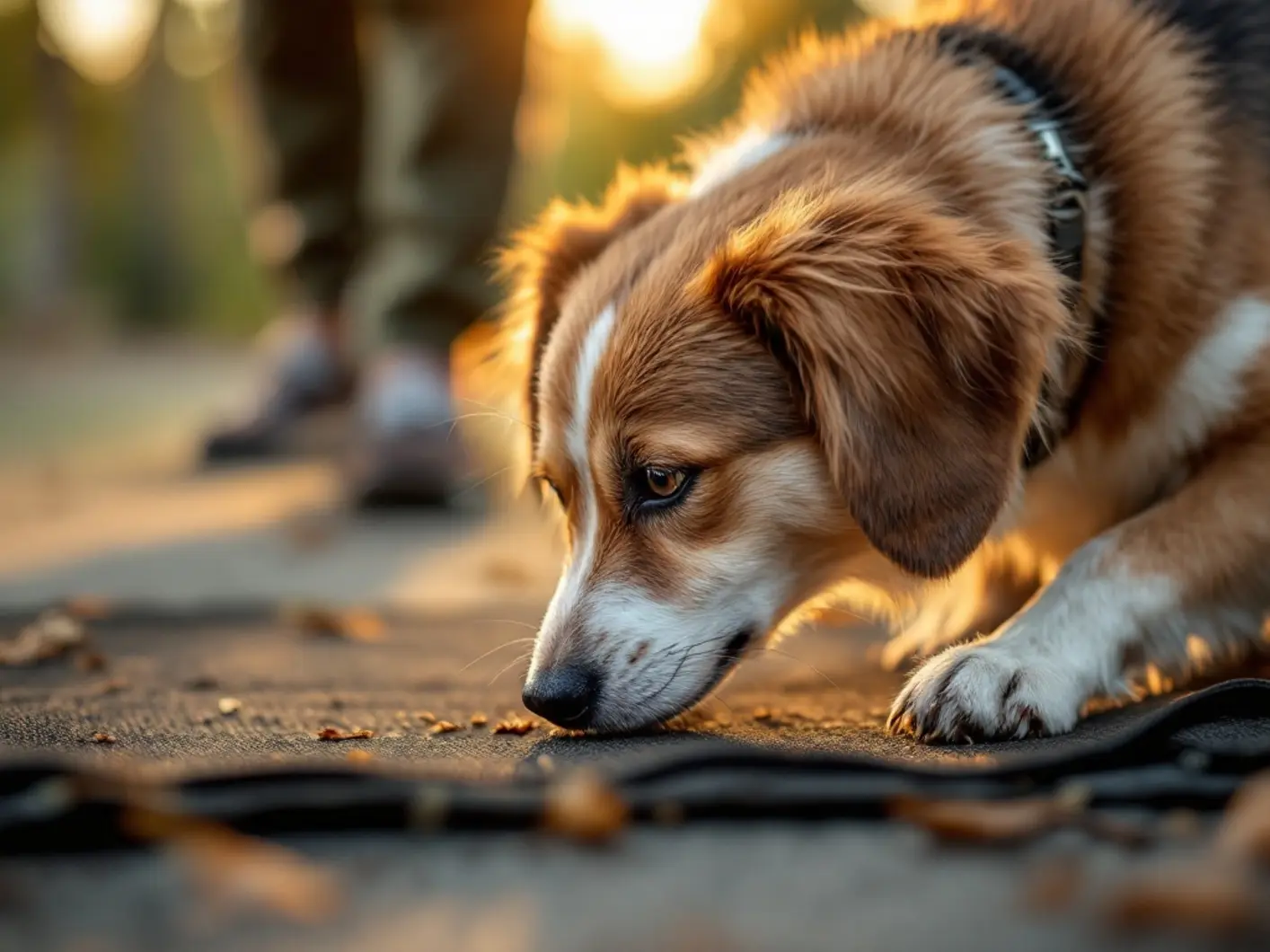
Claiming that 15 minutes of snuffling equals an hour of running might sound exaggerated—until you understand how your dog’s brain works during scent work. A long run taxes your dog’s muscles, heart, and lungs—a valuable physical activity, but a relatively automatic one. Running rarely demands complex decisions or active, critical thinking from your dog. On a snuffle mat, it’s the opposite. Sniffing demands total focus, controlled breathing, constant filtering of hundreds of scent signals, strategic memory (which part did I check already?) and real-time micro-decisions: where to sniff next, how deeply to inhale, whether to return to a previous spot. All these together mean incredibly intensive brainwork—and the brain, just like muscles, uses a lot of energy. For dogs, this “brain workout” leads to highly visible fatigue after even short, focused sniffing sessions.
When your dog uses a snuffle mat, they tap into their primal “hunting mode”. Dogs have far more scent receptors than people, and a much larger portion of their brain is dedicated to analyzing smell. Just parsing the complex scent-maps on a snuffle mat—mixing food, material, ambient smells, even their own—becomes an ongoing stream of puzzle-solving. Add to that the emotional aspect: your dog feels real excitement searching for treats, activating their brain’s reward system and motivating continued engagement. The constant alternation of searching (tension) and finding (reward) keeps your dog immersed and prevents “mechanical” repetition. As a result, after just 10–15 minutes on a snuffle mat, many dogs show clear signs of mental tiredness: wanting to rest, calmer behavior, less urge to seek new stimuli. This deep mental fatigue—rather than sheer physical exertion—is what makes a snuffle mat session equivalent to a much longer run: your dog’s “brain gets a workout,” even if their legs didn’t run a single mile.
How to Use a Snuffle Mat Effectively
For 15 minutes of snuffling to truly equal an hour of running, it’s crucial to use the snuffle mat methodically and mindfully. Start by introducing your dog gently, to build positive associations and avoid frustration. Make early sessions very easy: scatter treats or part of the day’s meal on the mat, visible and easy to reach. Let your dog approach, sniff, and start searching on their own—don’t force their nose into the mat or rush them. If your dog hesitates, point out a treat or ruffle the fabric slightly to spark interest. Only once they grasp the concept (find food with their nose) should you slowly increase the challenge, hiding bits deeper among the layers, in pockets or tunnels.
Early sessions should be short—3–5 minutes is plenty, especially for puppies, dogs recovering from illness, or adults new to mental workouts. As your dog gains skill and stamina, lengthen sessions up to 10–15 minutes, watching their behavior for real fatigue: signals include slower movement, more frequent pauses for licking their nose, and a desire to rest after finishing. Maintain a clear routine: use the mat in the same location, at similar times (maybe before work or in the evening), and use a consistent cue like “search” to signal the start. Ritual helps prepare your dog mentally and boosts focus; be just as clear about finishing—after 10–15 minutes, pick up the mat, say “finished,” and let your dog take a break. That way the mat won’t create never-ending expectation, and won’t overstimulate your dog simply by appearing.
To switch from bowl to mat feeding, do it gradually—start with one meal a day on the mat, then alternate, watching for any signs of stress or frustration with more challenging searches.
The secret to an effective snuffle session—so 15 minutes truly tires your dog like an hour’s run—is to adjust the intensity, timing, and treat type to your own dog’s needs and temperament. High-strung dogs may need the mat first thing in the morning, or before known stressors (like vet visits, or you leaving); calmer dogs may benefit most from mat sessions as a dinner enrichment or evening wind-down. Watch your dog’s breathing, body tension, and mat behavior: if you see tugging, frantic digging, barking, or restless pacing, the challenge may be too hard or your dog too wound up—pause, make the task easier, and return to calm searching. Do not overload the mat with food; too many treats can make it a mindless eat-fest, reducing the search and mental challenge. Instead, aim for a few short, well-planned sessions per week with different treats or kibble: dry kibble one time, small aromatic soft treats another, or a tiny bit of high-value food (like cooked chicken) to motivate.
Don’t forget hygiene—keep the mat clean, shake out debris, wash as per the instructions, and ensure old food doesn’t rot between layers (which can turn your dog off or cause mouth irritation). Maximize results by combining the mat with other activities: on time-crunched days, offer a single longer snuffle session; on active days, a shorter, calming post-walk mat session. Don’t combine heavy physical and mental tasks at once; after a long run, choose a short, simple mat session as a gentle add-on, not a challenge. This way, a snuffle mat unlocks its full benefits: your dog learns focus, patience, and independent problem-solving, and gets the kind of deep mental activity that a long, repetitive run just can’t provide.
When and How Often to Use Snuffle Mats?
Introduce snuffle mats whenever you want to give your dog intensive but controlled and safe mental exercise—particularly when classic long walks or runs aren’t possible. They’re perfect for bad weather, hot days (when running could overtax heart and lungs), winter ice, or when you’re short on time or feeling under the weather. They’re also great when your dog is bouncing off the walls after a lazy day at home—15 intense minutes of sniffing helps calm your dog and turn their extra energy into constructive mental work, which as you know, matches the benefit of an hour’s run. Snuffle mats can also be a stress-reliever—before vet visits, house guests, moving, or any change of routine; searching for food in a familiar place helps lower cortisol and gives your dog agency and comfort. For puppies, a snuffle mat is an ideal break after obedience training or early house-training; for seniors, a gentle brain-game to maintain cognitive skills as physical stamina decreases. Consider making the mat a regular part of your dog’s day—perhaps as an engaging way to serve breakfast or dinner, aiding digestion and structuring their routine with a focused, positive ritual.
Good times to use a snuffle mat are early mornings—to dial down morning excitement—or late afternoon/evenings, especially if your dog needs help winding down before bed.
How often should you use a snuffle mat? This depends on your dog’s age, temperament, and health, and remember, sniffing is exhausting mental work—overdoing it can lead to frustration, not just pleasant tiredness. Most healthy adult dogs do well with 1–2 sessions a day of around 10–15 minutes. Start with one short “workout” and watch: if your dog is content to relax, nap, or chew quietly after, you’ve hit the sweet spot; if they seem more wound up, aggressively searching for more food or “digging” the house apart, try shorter sessions or easier hiding.
Puppies and young dogs with shorter attention spans and quick excitement respond well to 5–10 minute sessions 1–2 times daily, interspersed with chewing or licking games. Active adults (sport breeds, working dogs, energetic mutts) can enjoy daily snuffling as a complement to their walks, but shouldn’t rely solely on sniffing for all exercise—while 15 minutes on the mat can substitute mental workload from running, your dog’s body still needs movement for health. Elderly dogs, especially those with mobility issues, may benefit from shorter but more frequent sessions (for example, 5–8 minutes two or three times a day), with very simple hides to avoid excessive head or spinal movement. For anxious or behaviorally special needs dogs, build snuffling into the same calm, predictable place and schedule for a deep sense of safety and control.
Give regular “break days” (once or twice a week) when, instead of structured mat work, your dog can do free sniffing on grass, giving their brain a restful change from the structured puzzle. In the long term, treat the snuffle mat as one of several key tools: sometimes it can replace a short walk, sometimes top off a calm outing, and sometimes serve as a slow feeding option—always adjusting as needed for your dog. The goal: 15 minutes of snuffling truly does the work of an hour’s run—without stress, overexcitement, or overload.
Snuffle Mats as Part of Your Dog’s Routine
To make snuffle mats a consistent, valuable stand-in for long walks or exercise, put a plan in place: decide ahead when your dog will “go to work with their nose” and keep to a clear routine. Many dogs do best when the snuffle mat is part of a daily meal—like breakfast. Instead of a bowl, scatter the meal on the mat and let your dog slowly forage, step by step. This “morning brain workout” puts your dog in a focused mood, calms them, and channels pent-up energy before you leave for work or before a longer walk. Alternatively, try an afternoon or evening session after a walk—your dog is physically relaxed but still alert, so a 15-minute sniff session helps close their “active day” with satisfying mental engagement. For clarity, use reliable visual or word cues: keep the mat in the same spot, start at a regular time, use the same cue like “search” or “nose-work.” Consistency means your dog gets right into the right frame of mind, and the presence of the mat becomes a soothing sign—predictable, meaningful activity is about to begin. Choose whether the mat is only for food, or sometimes for bonus treats too; mixing is fine, but keep it predictable (e.g., breakfast on the mat, evening a short session with high-value treats). Not every day needs to push their limit: even if 15 minutes equals an hour’s running, it need not always be maximum intensity—match session length to your dog’s age, temperament, and physical day’s activity.
Snuffle mats are especially valuable as routine enrichment when regular exercise is tough: in summer heat, snow, vet recovery, or for city dogs lacking space to run. A sample day: short morning walk (because of weather), then breakfast on the snuffle mat; midday quick sniff session to break up boredom; evening walk; and a final calm sniffing before bed to ease the transition into sleep.
For anxious or hyper dogs, the mat can be a regular “stress-relief station”: before vet trips, storms, fireworks, or parties. A focused 10–15 minute session somewhere safe lowers adrenaline and helps your dog face challenges in better headspace. Importantly, blend snuffle mats with physical movement and outdoor scent games where possible—never use the mat as your dog’s only enrichment. Try an “energy block” approach: movement first, then nose work on the mat, then clear rest. This teaches your dog a pattern: after sniffing = downtime, not another cycle of escalating arousal. Maintain the mat’s practical system: keep it clean, dry, and out of reach between sessions—taking it out only for dedicated work makes it extra motivating, and prevents misuse or destructive play. With consistency and routine, the 15-minute snuffle mat session becomes a reliable, meaningful part of your dog’s day—offering organized mental activity instead of chaotic restlessness, and real satisfaction from purposeful “work.”
Summary
Snuffle mats for dogs not only offer a chance to tire out your pet quickly, but also enrich their senses and reduce stress. Used regularly, 15 minutes of nose-work delivers mental stimulation, entertainment, and satisfaction that regular walks can’t match. By incorporating snuffle mats into your daily routine, you’ll support your dog’s emotional and physical development—and offer a healthy, rewarding alternative to intense physical exercise.

