
The French Beauceron Shepherd is a herding dog breed known for its courage, intelligence, and exceptional loyalty to its owner. Discover a detailed description, character, upbringing and grooming rules for this extraordinary dog and find out if it meets your expectations.
Get to know the French Beauceron Shepherd: breed description, character, training, grooming, and tips for future owners. Check if this is the dog for you!
Table of Contents
- History and Origins of the French Beauceron Shepherd
- Appearance and Distinctive Breed Features
- Beauceron Character and Temperament
- Training and Upbringing – Tips for Owners
- Grooming and Health of the French Beauceron Shepherd
- Who Is This Breed For? Requirements and Lifestyle
History and Origins of the French Beauceron Shepherd
The French Beauceron Shepherd is one of France’s oldest herding breeds, and its history is closely connected to traditional agriculture, sheep herding, and livestock protection from predators. It is believed that the ancestors of the Beauceron were large, strong shepherd dogs present in what is now France as early as the Middle Ages, when agriculture and sheep breeding formed the foundation of the local economy. Historical records from the 14th–15th centuries mention “large black shepherd dogs” that guarded herds on vast, fenceless pastures – it was from this population that the two French shepherd varieties later evolved: the long-haired Briard and the short-haired Beauceron. These two types were only formally distinguished at the end of the 19th century, when French cynologists began systematically describing native breeds. In 1896, Pierre Mégnin, a renowned zoologist and dog expert, presented a report at the Paris exhibition in which he precisely described the differences between the “chien de Brie” (Briard) and the “chien de Beauce” (Beauceron). The name “Beauceron” comes from the Beauce region – a vast, fertile agricultural area southwest of Paris, known as the “granary of France.” It was there, and in the neighboring areas, that a type of dog developed, valued for its strength, independence, courage, and ability to work in harsh weather. The breed quickly gained popularity among shepherds and farmers not only as a herding dog but also as a reliable farm guard – its impressive stature, piercing gaze, and determined demeanor effectively deterred thieves and predators like wolves. As early as 1897, the first breed club was founded – Club des Amis du Beauceron – dedicated to preserving the working character of the dog and establishing a unified breed standard. The first official standard was approved by the French Kennel Club (Société Centrale Canine) in 1897, and updated in 1922 to clarify preferred color, body structure, and the typical Beauceron expression. Even then, attention was paid to the breed’s characteristic hallmark – “tan socks” on its paws, from which it gets its folk nickname “Bas Rouge” (Red Stockings). The Beauceron was always primarily a working, not a show dog, so selection was mostly based on practical traits: resilience, balance, independent decision-making, and loyalty to its handler. At the turn of the 19th and 20th century, Beaucerons were especially valued in regions with vast pastures, where their tasks included not just herding sheep and cattle but also maintaining order in the herd without constant human supervision. The dog had to be able to assess a situation, react accordingly to dangers, and independently correct the livestock’s behavior, forging the intelligent but demanding personality seen today. Over time, the breed also moved into cities, where Beaucerons were used as guard dogs in warehouses and factories, and their reputation as reliable, incorruptible guards grew year by year.
The Beauceron’s history is also inextricably tied to the history of the French military. As early as World War I, dogs of this breed were used as messengers on the battlefield, as paramedics, and guard dogs. Their balanced temperament, psychological and physical endurance, and ability to move easily in difficult terrain meant that soldiers highly valued them – Beaucerons could carry messages, point out the wounded, as well as guard warehouses and strategic points. They had a similar role during World War II, serving in the French army and police formations. In the interwar and postwar period, the breed began to slowly venture outside France, but its international career developed gradually, far more slowly than the more popular German or Belgian Shepherds. However, Beaucerons started to appear in other European countries, and later also in the United States, Canada, and Japan, where they were appreciated as service, sport, and family dogs while still maintaining their working character. In 1963, the Fédération Cynologique Internationale (FCI) officially accepted the breed standard in the herding and driving group (Group 1), cementing its status on the international stage. In subsequent decades, the Beauceron, while never becoming a mass-popular breed, achieved “insider” status – chosen by knowledgeable people seeking a large, intelligent, and versatile helper, rather than just an impressive couch companion. Today’s Beauceron still carries the traits shaped by centuries of work on French pastures: a strong herding instinct, a need for action, independence of thought, and deep attachment to “their” human. Modern breeding lines are developed both for utility (working in police, gendarmerie, rescue, dog sports) and family life, yet in many French farms Beaucerons can still be found working herds – just as their ancestors did hundreds of years ago. As a result, the breed has retained its authentic shepherd-guardian character, and its story continues to be written live in the fields, meadows, uniformed services, and homes of experienced caretakers who know how to appreciate the heritage and temperament of a true French Shepherd.
Appearance and Distinctive Breed Features
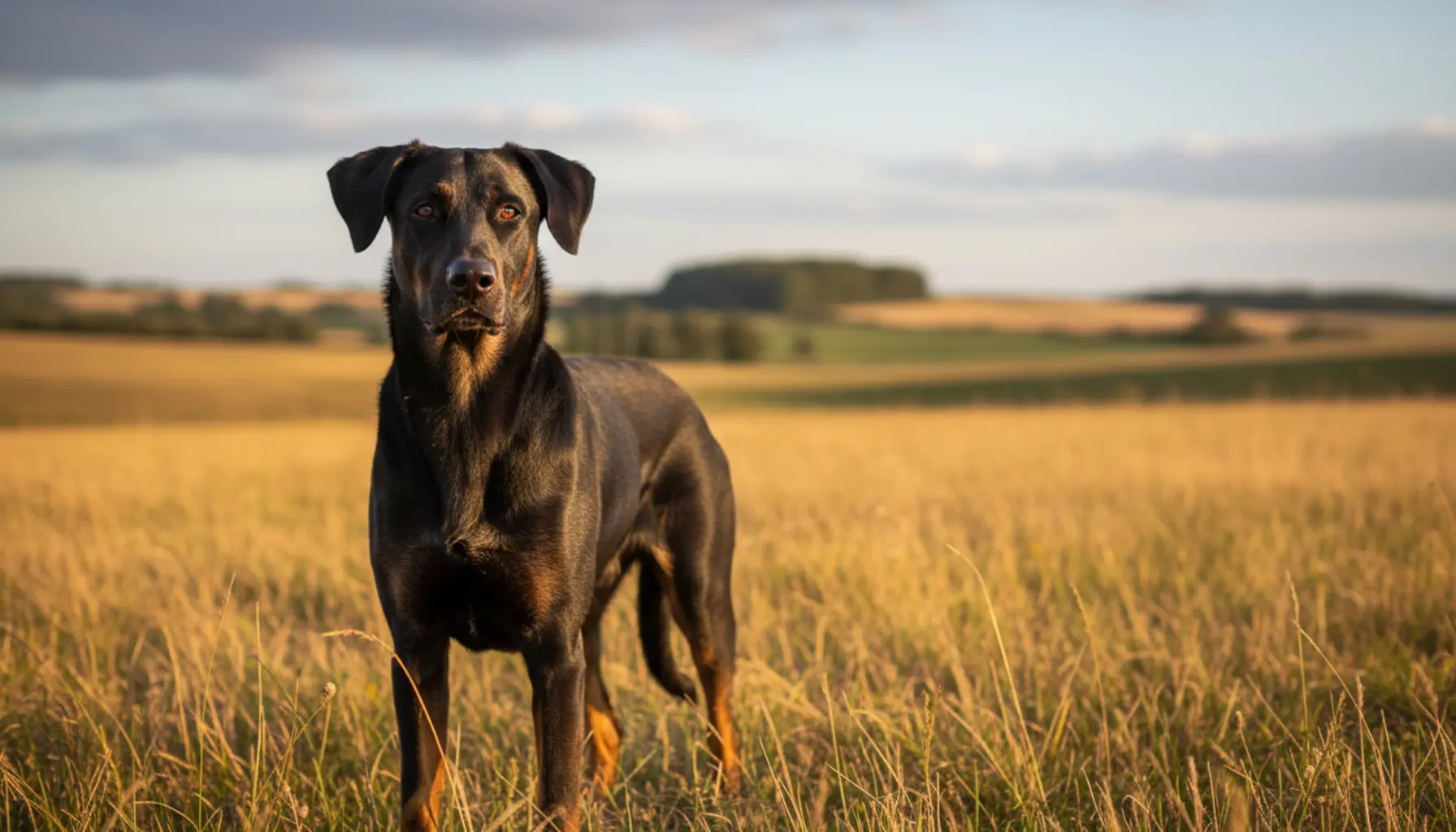
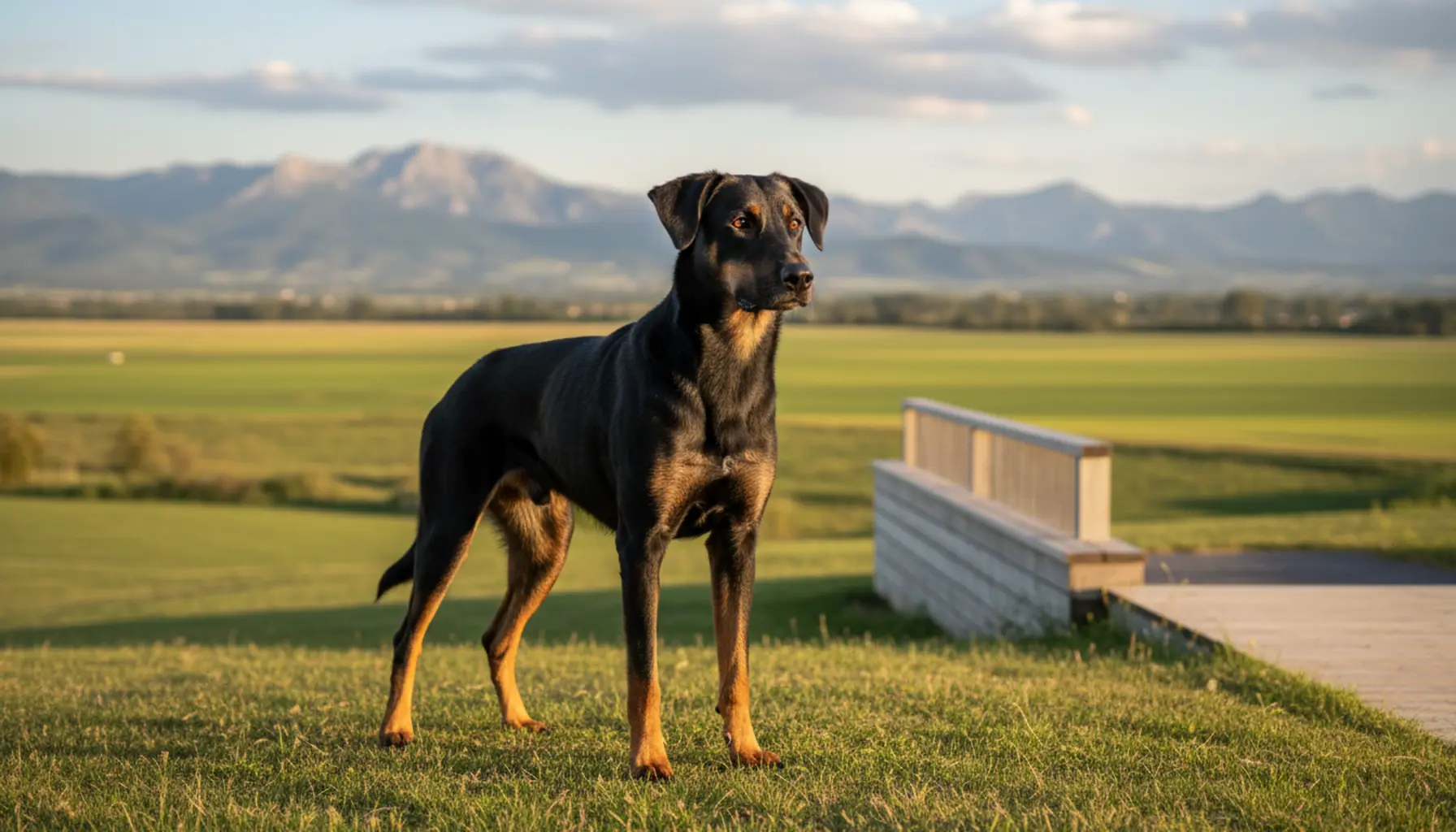
The French Beauceron Shepherd is an impressive, athletically built dog with a harmonious silhouette that combines strength, elegance, and readiness to work. He is clearly larger and more massive than the average family dog, yet lacks heaviness – every body line suggests quick reactions and endurance. Adult males typically reach 65–70 cm at the withers, females are slightly smaller, about 61–68 cm, with weight ranging between 30 and 45 kg depending on sex, build, and condition. The body is rectangular, moderately long, with a strong back, well-muscled croup, and a deep chest enabling effective lung work. The topline is straight and stable, without dips or arches, highlighting the breed’s functional nature. The Beauceron’s head is proportional to the body, dry and elongated, with a straight muzzle and skull line, separated by a gently marked stop. The muzzle is strong but not coarse, and the jaws have full, proper dentition – formerly crucial for working with cattle. Eyes should be dark, preferably deep brown, with an intelligent, alert look; harlequin-colored dogs may have slightly lighter irises. The overall expression reveals confidence and focus – the Beauceron gives the impression of a dog who assesses a situation before taking action. Traditionally, ears were cropped, but today in most countries, including Poland, they are left natural, triangular, medium-sized, carried semi-erect or close to the head. The tail is long, natural, set low, carried in a gentle “J”-curve, never raised above the topline, adding nobility and balance. One of the most distinctive features is the double dewclaw on the hind legs – for the Beauceron this is not a fault, but a breed-defining trait required by the standard. Two pronounced, separate phalanges with nails should be well developed and set as low as possible, initially intended to increase traction on difficult terrain. Limbs are straight, strong, with a solid bone structure and marked muscles; feet are compact, slightly oval and have resilient pads. The Beauceron’s movement is fluid, energetic, with a good front reach and strong rear drive – the dog moves freely, effortlessly, as if he could walk or run for hours.
The French Beauceron Shepherd’s coat is another trait that immediately distinguishes him from other herding breeds. The coat is short to medium-length, but very dense, close-lying, and harsh to the touch, with abundant, woolly undercoat, especially in winter. This double-layered structure provides excellent protection against adverse weather – rain, frost, wind – which was key for working in the field and with livestock. The most recognized and common color variety is black and tan (noir et feu), where the predominant color is shiny, deep black, complemented by distinctly defined, intensely rust-colored markings. Typical tan markings appear over the eyes as small “eyebrows,” on the muzzle, cheeks, chest, under the tail, on the lower limbs, and the inside of the thighs. It is essential that the tan is warm, rusty in tone, not too pale or overly diluted. The second approved color is harlequin – a blend of black and gray with tan; on the black base there are irregular gray splashes resembling marbling, with gray not allowed to predominate over black and the whole must maintain a clear, harmonious pattern. Dogs of this breed also present characteristic “socks” in rusty color on their paws, which combined with a muscular silhouette and confident posture gives them an exceptionally striking appearance. Despite his impressive size, a Beauceron should not seem oversized or heavy; balance of proportions is key – strong bone but not exaggerated, good musculature without “bodybuilder” overstatement, a dry, defined head, and distinct but not overdone limb angulation. The overall image is of a dog with a working, functional build, ready to take on a task with perceptible energy in every gesture. This blend of elegance, rugged, utilitarian type, signature tan markings, and double dewclaws makes Beaucerons instantly recognizable even at a distance or among other large shepherd breeds for those who have ever gotten to know them.
Beauceron Character and Temperament
The French Beauceron Shepherd is a dog with an extremely complex personality, combining intelligence, courage, independence, and a high sensitivity to people. By nature, he is a working dog, programmed to make decisions in the field and respond independently to dangers, so his character differs significantly from typical “couch” dogs. The Beauceron is very loyal and strongly attached to its family, often choosing one person as leader but remaining affectionate and caring toward all household members. With its owner, it can be extremely devoted, following them step by step and intuitively picking up emotions, but it is not the type of dog to overly display feelings loudly – rather, it is a balanced, “serious” dog that maintains dignity and some reserve. Its innate confidence means he is rarely fearful, but lack of proper socialization can make him excessively alert or suspicious towards strangers. Toward unfamiliar people, the Beauceron usually remains restrained, reserved, observing and assessing the situation – he does not joyfully approach everyone he meets – his natural temperament prepares him to be a guardian, not a “cuddle dog” for everyone. Properly raised, the Beauceron should be mentally stable, calm and composed, responding decisively only when he genuinely assesses a situation as threatening. The role of breeding and early socialization is crucial here – a well-balanced individual should not be aggressive or excessively timid, but rather alert, intelligent, and composed.
The Beauceron’s herding and protective abilities are evident in his daily behavior. This dog naturally has a strong instinct to guard his territory and “his” group, so he often intuitively organizes household life, watches the movements of all family members, and reacts if something seems “out of place.” Some individuals may display a tendency to “herd” – gentle nipping or nudging, especially of children or other animals, as a remnant of livestock work; responsible owners should direct and teach acceptable behaviors from the beginning. The Beauceron is very intelligent and learns quickly, but can also be stubborn and independent, requiring consistent handling and clear rules from the handler. This is not a dog who obeys every command without thought – he analyzes a situation and needs a reason for what is being asked. He dislikes boredom and monotony, so repeating the same exercise constantly without clear purpose may lead to frustration or “rebellion” during training. Instead of harsh discipline, calm, confident leadership based on respect, rewarding desired behavior, and providing him with intellectual challenges works much better. The Beauceron is highly sensitive to human emotions – shouting, nervousness, and chaos in the house can cause uncertainty, while a calm, decisive owner inspires trust and promotes building a strong bond. When properly socialized and supervised around children, the Beauceron can be caring and patient, but due to his size and strength, caution and teaching both the dog and children the rules of contact is required. With other dogs, he can be assertive, and males may display dominance, making early exposure to different dogs and situations crucial. The great need for physical and mental activity, combined with a strong protective and herding instinct, means the Beauceron feels best with an experienced, active person capable of harnessing his potential – in dog sports, utility work, long hikes, or organized training. In the right hands, this “tough,” yet very emotional dog, becomes a wonderful, devoted companion whose balanced temperament fully develops when he has clear rules, a sense of security, and a daily opportunity for action.
Training and Upbringing – Tips for Owners
The French Beauceron Shepherd is an exceptionally intelligent, confident, and independent dog; therefore, his training demands greater awareness from the owner than with many companion breeds. The foundation is to start upbringing early – from the very first days in the new home, you should introduce clear rules for everyday situations like feeding, rest, greetings, walks, and play. The Beauceron quickly learns patterns, so both good and bad habits solidify rapidly; consistency and coherence among all household members are absolutely key. This dog does not respond well to yelling, jerking, or a “heavy hand” – overly harsh, forceful methods can lead to fear, resistance, or aggression and destroy trust. Training based on positive reinforcement – reward with treats, praise, toys, or continuation of a desirable activity – works much better. Yet the owner must be calm, assertive, and clear in communication – Beaucerons quickly pick up on mood swings and hesitation, which encourages them to “take charge.” Practically, training should begin with basic commands: “sit,” “down,” “stay,” “come here,” “no,” “drop it.” Exercises should be short, varied, and woven into daily life, rather than replacing one long, tedious training session. One of the most important aspects of upbringing is a reliable recall – an energetic, fast, and strong Beauceron must learn to respond instantly so he can safely enjoy more freedom during walks. From the very first weeks, it’s worth teaching him to walk calmly on a leash rather than allowing pulling; this isn’t about advanced sports heelwork but everyday ability to move without pulling or nervousness. It is also very important to teach a young dog to rest and calm down – Beaucerons can “wind themselves up” with activity, and an owner who constantly excites the dog with play and running may create an overly excitable dog who has trouble relaxing at home. Introducing a “place” command, using the dog bed as a peace zone, calm chew toys, snuffle mats, or simple mental tasks after a walk teach balance between activity and regeneration. Upbringing should include teaching good manners at home – if not taught, the Beauceron may “regulate” access to space, people, or objects himself, which can result in resource guarding, insistently demanding attention, or defending the sofa. Therefore, it’s best from the start to define clearly where the dog can go, when is playtime and when is quiet time, and never reward unwanted behavior (e.g. jumping on guests, pawing for petting). A good practice is also to gradually accustom the Beauceron to grooming, wearing a muzzle, harnesses, and calmly tolerating touch on different body parts – this eases later vet and grooming visits and builds trust and a sense of security. Beaucerons do very well in organized group activities such as puppy classes, basic obedience, and later dog sports (IPO/IGP, scent work, obedience, agility, amateur herding), but owners should select schools that use modern, force-free methods focused on the needs of working breeds.
Socialization is the second, equally important foundation in raising a French Beauceron Shepherd. According to breed traits, he may be reserved and distrustful toward strangers and other dogs, as well as highly focused on protecting his territory and family. To prevent these traits from developing into excessive aggression or over-vigilance, the puppy should be introduced to a variety of stimuli from the start – people of different ages, other animals, both urban and rural environments, street noises, public transport, road traffic, as well as calmly experiencing cafes, parks, or train stations. It is crucial that these experiences are controlled, safe, and as positive as possible: it’s not about a “flood” of stimuli, but about gradually building confidence and trust in the leader. The Beauceron should learn that the presence of unfamiliar people and dogs is normal and predictable, and that proper behavior – calm passing, no outbursts, ignoring provocations – brings him benefits. With other dogs, especially males, pay attention to assertiveness and the tendency to control the environment. The owner should teach his Beauceron polite passing, turning away from bothering every dog, and responding to a recall command even in tough situations. Short, well-matched interactions with balanced dogs are much better than chaotic encounters in crowded dog parks. In relations with children, rules must be introduced on both sides – the Beauceron should not be treated like a plush toy, and the child must know not to pull, sit on, or disturb the dog while he eats or rests; meanwhile, the dog learns gentle handling of youngsters, moving slower near them, and not leaping over toddlers. The breed’s mental balance requires sufficient activity – not just running, but also brain work, scenting, learning new tasks, search games, or tracking. The Beauceron likes to have a “job,” a sense of purpose working alongside his human; a monotonous walk on the same route with no interaction or challenge will frustrate him, while too much uncontrolled frenzy will only increase arousal instead of tiring him. Also, ensure exercise suits the dog’s age – a puppy or young dog should not be overloaded with long runs by the bike or jumps on hard ground, to avoid overstraining joints. With proper training, the Beauceron learns his boundaries, can cooperate with the owner, but maintains the independence needed for herding and guarding work. An owner who understands the breed’s specifics, accepts its innate vigilance and territorial instinct, but also teaches the dog socially acceptable behaviors, gains an extremely devoted, stable, and predictable partner. This requires time, patience, regularity, and willingness for self-improvement – acquiring canine knowledge, consulting experienced working dog trainers, and observing the dog’s body signals. Properly conducted Beauceron training and upbringing is not about “breaking the spirit,” but channeling his potential so that his strong personality, courage, and intelligence become everyday assets.
Grooming and Health of the French Beauceron Shepherd
Despite its striking, robust appearance, the Beauceron is not particularly demanding in terms of grooming but does require regular and mindful care. Its coat consists of short, harsh guard hair and a dense undercoat, which protects against rain and cold but sheds heavily usually twice a year – in spring and autumn. Normally, brushing once a week with a deshedding tool or a stiff-bristled brush suffices to remove dead hair and limit fur at home; during shedding, brushing daily is worthwhile. Baths should not be too frequent – excessive washing can dry the skin; usually, bathing every few months or when the dog is truly dirty is enough, using a gentle canine shampoo. Watch for skin condition: redness, dandruff, persistent scratching or odor may signal allergies, fungal infections, or skin issues, which are not uncommon in active dogs, particularly with frequent exposure to moisture and mud. A breed-specific feature is the double dewclaw on the hind legs; these require special attention – trim them regularly as they grow in an arc and can embed themselves or snag, resulting in pain or injury. Other claws should also be trimmed every few weeks if not naturally worn down on hard surfaces. Systematic ear checks are crucial – though upright ears improve ventilation, they still collect dust and dirt; once a week consider gently inspecting and, if necessary, cleaning them with ear care solution. Eyes should be clear, not overly watery, and teeth should be regularly brushed or supplemented with special chew toys and a diet that helps reduce tartar, which is important not just for fresh breath but for overall health. Beauceron care also means proper weight management – as a large, active dog, he should have a well-defined waist and ribs that can be felt under a thin layer of fat; overfeeding and lack of exercise will quickly negatively impact joints and condition. The diet should be tailored to age, activity level, and health issues; for working, sport, or actively training dogs, food with higher protein and fat contents is often suitable, while neutered or less active dogs benefit from “light” formulas or properly portioned, high-value food to prevent obesity. Adjusting nutrition for calcium, phosphorus, omega-3 acids, and supplements supporting joints (glucosamine, chondroitin) should be discussed with a veterinarian, particularly during puppy growth and for senior dogs.
French Beauceron Shepherds are generally considered healthy, but, as with any large, working breed, there are some predispositions prospective owners should know. The most monitored problems are orthopedic diseases, especially hip and elbow dysplasia. Responsible breeding is based on radiological parental tests, greatly reducing risk but not totally eliminating it. Too intense exercise in puppies – long runs by bike, jumping stairs, hard surfaces or exhausting training in the first months – can overload the developing skeletal system, so gradually increasing exercise is crucial. The Beauceron, as a deep-chested dog, may also be vulnerable to gastric torsion (bloat) – a life-threatening condition requiring emergency surgery. Prevention includes feeding in 2–3 smaller portions daily, avoiding exercise before and after meals, and, in high-risk dogs, some vets suggest prophylactic gastropexy (stomach tacking), often done during another procedure, like castration. Given their working nature, some Beaucerons may develop cruciate ligament problems, degenerative joint conditions, or injuries resulting from intense sporting use; hence, regular orthopedic checks and prompt response at the first signs of limping, post-exercise stiffness, or reluctance to jump are crucial. Note genetic aspects – the breed may sporadically suffer hereditary eye diseases (e.g. progressive retinal atrophy – PRA) or heart problems; good breeders test breeding dogs, and new owners should require test documentation and choose puppies only from responsible, registered breeders. The foundation for a long and healthy Beauceron life is veterinary prevention: a complete vaccination program (especially against infectious diseases and rabies), regular deworming, protection against ticks and fleas, as well as yearly clinical checkups, listening to the heart, teeth, skin assessment, and for older dogs, periodic blood and urine tests. Thanks to their high endurance, many health issues stem from overload, stress, nutrition neglect, or improper exercise. Thus, a conscious, attentive owner plays a key role, observing the dog daily: changes in appetite, behavior, coat quality, or energy levels often signal the body needs support. Regular grooming combined with rational prevention and thoughtful activity planning helps the Beauceron stay fit for many years, remaining active and able to work even into late adulthood.
Who Is This Breed For? Requirements and Lifestyle
The French Beauceron Shepherd is definitely not a breed “for everyone” and is best suited to people who are aware, have experience working with dogs, or at least a strong motivation to learn. This is a dog bred to act – he needs tasks, challenges, and human engagement, not just occasional walks around the city block. The ideal owner is someone active, enjoys outdoor activity, and is ready to dedicate daily time to the dog, not just on weekends. This involves not only running or cycling but also obedience training, scent games, and mental tasks. The Beauceron adapts well to people who value clear rules and can enforce them in a calm yet assertive way. He needs an owner who is consistent, unafraid to take responsibility for leading a strong-willed dog, but who also does not resort to violence or physical punishment – with this breed, such an approach will quickly lead to loss of trust and behavioral issues. Due to its size, strength, and energy, the Beauceron is not a good choice as a first “test” dog, especially for people who imagine having a dog mainly as a cuddling companion for the couch and short walks. This is a working breed, with a strong instinct to guard and herd, and without a job to do, will find “work” on its own – patrolling the yard, supervising household members, barking at every outside stimulus, or even destroying objects out of boredom and frustration. For these reasons, the Beauceron thrives particularly well in homes with a yard, but a yard alone does not replace walks, exploration, and human interaction. It is essential the owner is prepared for at least two solid doses of exercise daily: calm, long walks with scenting opportunities and dynamic activity tailored to the dog’s age and condition. This breed excels in dog sports like obedience, tracking, mantrailing, rally-o, agility (with appropriate caution for young dogs) or canicross, and for many Beaucerons, such activities are the best way to satisfy their mental and physical needs. Prospective owners must remember, however, that Beaucerons mature slowly – often mentally only around three years old – meaning a long adolescence marked by excess energy, testing boundaries, and the need for patient, systematic upbringing.
Regarding living conditions, a Beauceron can live in both a house with a yard or an apartment in the city, provided its needs are consistently met. In apartments, special care must be taken for socialization and learning to calm down, to prevent overreactions to staircase noises, elevators, or the presence of other dogs. For those with a yard, solid fencing is necessary – Beaucerons are vigilant and may try to “control” movement beyond the fence. This breed is not suitable for kennel or isolated yard living; although physically resilient and weather-tolerant, it psychologically needs close contact with its family. For families with children, the Beauceron can be a wonderful, caring, and protective companion, but this requires a conscious adult approach. Children should know how to interact with a dog, and interactions – especially with young kids – should always be supervised. The herding instinct may manifest, for example, in “herding” running children, which, without proper management, can be seen as nipping or overly intense chasing. Thus, this breed is better suited to families where adults can actively participate in dog upbringing and have the time to work on proper dog–child relations. In interactions with other dogs, Beaucerons can be confident and may not tolerate overly persistent or aggressive individuals, especially of the same sex; thus, good socialization and controlled contacts are important. Owners should also understand that not every dog needs many canine friends. People who travel often, work long hours away from home, or have an irregular lifestyle may have difficulty providing the regular routine the Beauceron needs for security. This is not a dog who tolerates prolonged solitude or frequent changes of caregivers; the bond with “his human” is fundamental. On the other hand, for those seeking a partner for active time outdoors, canine sports, or engaged in uniformed service or rescue work, the Beauceron can be an excellent choice, offering loyalty, dedication, and readiness to cooperate at a very high level. However, the owner must accept investing time not just in walks but in their own knowledge: consulting trainers, reading canine literature, observing the dog’s behavior, and tailoring methods to the individual dog. For people ready for this commitment, the Beauceron becomes not just a dog but a true partner in daily life and activities.
Summary
The French Beauceron Shepherd is an intelligent, loyal, and energetic dog, ideal for active people seeking a devoted companion. In this article, we explored its history, appearance, unique character and temperament, and tips for training, upbringing, and care. The Beauceron requires commitment, regular activity, and a wise approach from the owner. It is an excellent choice for experienced families as well as lovers of an active lifestyle seeking a dog for special tasks and shared adventures.

