

Choosing the right dog food is one of the most important decisions in a dog owner’s life, directly affecting your pet’s health, energy, and longevity. Amid a jungle of options—from traditional kibble to flavorful cans and raw BARF diets—it’s easy to feel overwhelmed. That’s why it’s worth understanding the key differences between the most popular feeding methods.
Table of Contents
- Why is proper dog nutrition so important?
- Types of dog food: kibble, wet, homemade, or BARF?
- How to read dog food ingredients and understand labels?
- How to choose food based on age, size, and activity?
- Most common feeding mistakes dog owners make
- How to change your dog’s diet step by step?
Why is proper dog nutrition so important?
Proper dog nutrition is not just about a “full bowl”, but the foundation of their health, lifespan, and daily well-being. A dog’s body, much like a human’s, needs the right amount of energy, protein, fats, carbohydrates, vitamins, and minerals—but in different proportions than humans. A well-balanced dog food maintains healthy body weight, an efficient immune system, strong muscles, healthy skin, and a shiny coat. Improper feeding—too poor, too fatty, one-sided, or based on table scraps—gradually strains internal organs, leading to obesity, deficiencies, and eventually, chronic illnesses. What you put in your dog’s bowl each day truly impacts their liver, kidneys, heart, intestines, and thyroid, as well as hormonal balance and energy levels. In practice, good food helps avoid many vet visits, while low-quality food becomes one of the main risk factors for diseases. Remember, dogs are carnivores adapted to digesting some carbohydrates—their digestive tract is shorter than humans’ and requires diff erent nutrients and enzymes. Randomly “feeding like for humans”—with sandwiches, deli meat, or table scraps—can quickly cause stomachaches, diarrhea, bloating, but also chronic pancreatitis, gut microbiome issues, or nonalcoholic fatty liver disease. Equally dangerous are overly restrictive or trendy but unplanned diets (for example, homemade food without vet nutritionist guidance, monoprotein diets, or carb-free options), which can easily result in serious calcium, phosphorus, B vitamins, vitamin D, and trace mineral deficiencies crucial to heart, nervous system, and immune function.
Appropriate nutrition affects the entire dog’s body in many ways. Balanced, high-quality protein supports muscle growth and regeneration, vital for active, sporting, working dogs, puppies during growth, and older dogs prone to muscle loss (sarcopenia). Good fats—especially omega-3 and omega-6 fatty acids—ensure healthy skin, elastic, hydrated skin barrier, reduce itching, and support the brain and nerves, which is key for puppies and senior dogs at heightened risk for cognitive issues. Proper quantity and type of carbohydrates (including soluble and insoluble fiber) keep intestinal motility, stool quality, and gut bacteria in balance. Well-chosen food helps prevent blood sugar spikes, important for both healthy dogs and those prone to diabetes or insulin resistance. The balance of minerals is also crucial—too much phosphorus and too little calcium strains bones and teeth, and inappropriate sodium/potassium levels affect blood pressure and heart function. Practically, well-balanced food boosts immunity via antioxidants (vitamins E, C, some carotenoids), zinc, selenium, and other micronutrients, allowing your dog to better handle infections and inflammation. Nutrition is also vital in preventing obesity, which now affects up to one in three dogs. Overweight shortens life and raises the risk of joint problems, diabetes, heart and respiratory issues—and decreases overall quality of life. Mindful monitoring of meal calories, portion sizes, and fat content keep your dog healthy for years. Behavior is also affected by nutrition—a dog fed regular, stable-energy meals without blood sugar “spikes” tends to have steadier energy, and is calmer and easier to focus. On the other hand, belly pain, chronic diarrhea, or hunger from an unbalanced diet can cause hyperactivity, irritability, and even aggression. Long-term, correct nutrition is a crucial tool in prevention—slowing joint degeneration, supporting the heart in at-risk breeds, easing kidney load in seniors, and protecting the digestive system. Choosing the right dog food isn’t a trivial shopping decision, but a deliberate investment in your dog’s health, considering age, breed, activity, health, and individual needs.
Types of dog food: kibble, wet, homemade, or BARF?
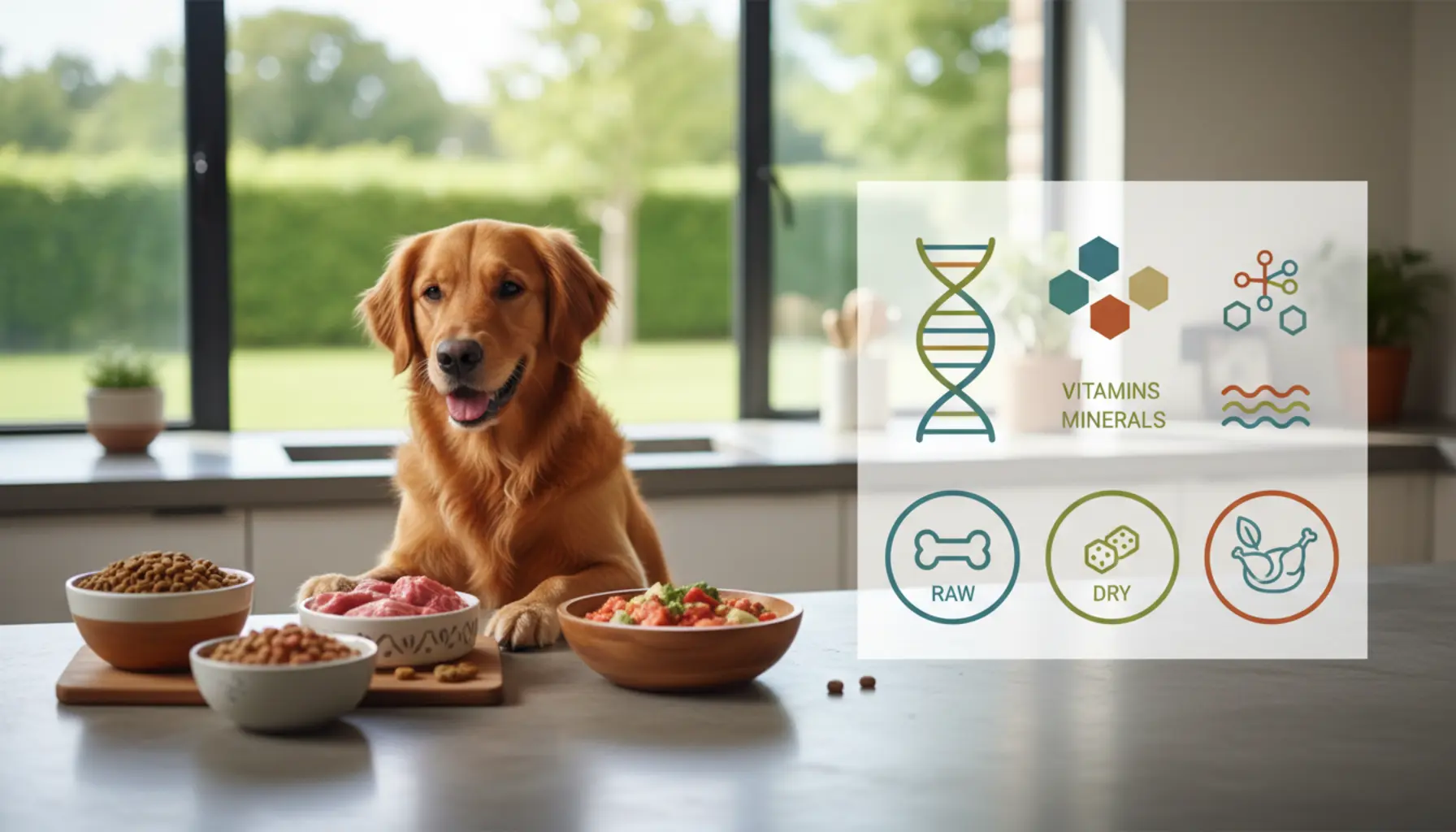
Choosing the food type is one of the first and most important choices you’ll make as a dog owner, so it’s worth understanding the options—not just for your convenience, but primarily for your dog’s health. Dry food (kibble) is the most common choice due to easy storage, lower daily cost, and simple portioning. Quality dry dog food has a high meat content, balanced fat, fiber, and functional additives like omega-3s, glucosamine, or prebiotics. An advantage is its dental-cleaning action (though not a substitute for brushing). The downside appears when low-grade kibbles dominate—with high grain, cheap fillers, and minimal meat. For dogs with kidney, dental issues, older, or sensitive dogs, dry food may be less suitable—it’s energy-dense and low-water, so consistent access to fresh water is vital. Wet food, meanwhile, is can-like in consistency, has more aroma, and is usually favored by fussy or low-appetite dogs. It’s 70–80% water, helping hydrate, important for dogs with urinary or kidney issues and for seniors. Its texture is easy to chew, which suits puppies and dogs missing teeth. However, its calorie content per 100g is lower than dry, so a dog needs to eat more by volume—an advantage for overweight dogs who like to “snack”, though total calories must still be monitored. Wet food’s downsides: higher per-calorie cost, less convenient storage after opening (needs refrigeration, quick use), and it may encourage tartar if oral hygiene is neglected. Many owners therefore opt for mixed feeding—kibble as a base, with some wet food added to make meals more interesting or hydrating.
Increasingly popular are homemade and BARF diets, especially among those seeking maximum naturalness and control over ingredients. Homemade feeding involves preparing meals from “human-grade” ingredients—meat, organs, vegetables, sometimes rice or groats—but in proportions suited for dogs, not people. Its major advantage: you control ingredient quality (e.g., specific meat sources, no artificial additives, preservatives, or colorants) and can tailor meals to allergies or intolerances. The precondition for safety is close cooperation with a vet or pet nutritionist to plan recipes and supplements (calcium, vitamin D, omega-3, trace elements). Do-it-yourself, “intuition-based” cooking most often leads to nutrient shortages or excesses, which can ultimately do more harm than a medium-quality commercial food. BARF (Biologically Appropriate Raw Food / Bones and Raw Food) goes further—feeding raw meat, bones, organs, and a small amount of veggies and fruit. BARF fans argue it’s the most natural diet, boosting oral health, skin/coat, reducing stool, and sparking vitality. But nutrition and hygiene errors are even easier in BARF than cooked home food. The wrong meat-to-bone ratio can disrupt calcium-phosphorus balance, strain kidneys, or harm bones/joints (especially puppies); lack of supplements means severe deficits. Microbial safety is crucial: raw meat may carry bacteria (e.g., Salmonella, Campylobacter), parasites, or other pathogens—so only high-quality sourcing, cold-chain, and strict kitchen hygiene are a must. Not every dog should be BARF-fed—many chronic illnesses (kidney, liver, pancreas, some GI issues) are contraindications, per veterinarians. When choosing among dry, wet, homemade, or BARF diets, keep in mind safety, completeness and balance, fit for your dog’s age/activity/health, your lifestyle, and whether you can maintain that system long-term. Regardless of form, a well-planned menu supports your dog’s health, while even the most “trendy” diet, poorly balanced or unsupervised, may do more harm than good.

How to read dog food ingredients and understand labels?
The skill of reading dog food ingredients is critical for responsible dog owners and, at the same time, a challenge for many. By law, manufacturers must show full composition, nutritional analysis, and information about additives on the packaging, but presentation styles can be misleading. First, know that ingredients are always listed in descending order—what’s first is present in the highest amount. Good dog food should name a clear animal protein source at the top, e.g., “chicken meat,” “beef,” “fresh turkey,” “salmon,” not vague “animal by-products” or “meat and animal derivatives.” The more specific the ingredient, the greater transparency and the higher the chance of quality sourcing. If the first items are grains, corn, rice, wheat, or “plant by-products,” the food is mainly fillers, not the nourishing animal protein your carnivorous dog needs most. Also understand the difference between “fresh meat” and “meat meal”: fresh meat includes more water, so its percentage shrinks after processing; meat meal is a more concentrated protein source. Meat meal itself isn’t bad if it’s “chicken meal,” “salmon meal,” etc.—not just “meat-and-bone meal.” Another marketing trick is splitting grains: listing “corn,” “corn meal,” and “corn by-products” separately—together, they may total more than meat, but will not appear at the top of the ingredient list, making meat seem more present than it is.
Nutritional analysis is also crucial: crude protein, crude fat, crude fiber, ash, moisture, and sometimes calcium and phosphorus. These show the macro proportions, but not quality. Good foods for most adult dogs are about 22–28% protein (dry matter), higher for active/sporting dogs, lower for seniors or illness—as your vet advises. Fat is a main energy source—typical dog food has 10–18% fat; overweight, pancreatic, or liver-issue dogs often need reduced-fat diets. Crude fiber (roughage) helps digestion; too little causes constipation, too much—diarrhea or poor nutrient uptake. High ash (above 9-10% dry) may signal too many bone constituents or low meat selectivity. Examine the additive list: it’s good to see specific vitamins (A, D3, E, B-group) and trace elements in bioavailable forms (e.g., “zinc as amino acid chelate”), not just “minerals.” Watch out for synthetic dyes, flavors, or preservatives—prefer naturally preserved foods with tocopherols (vitamin E variants) or rosemary extract. “Premium,” “superpremium,” “natural,” or “holistic” on the pack are only marketing—there are no legal standards, so read real ingredients not front claims. Look for terms like “complete food” (can be sole source of nutrition) versus “complementary food” (e.g., treats, wet sachets) which lack key nutrients. The label must state what group it’s for—puppies, adults, seniors, small or large breeds—important as feeding needs vary. Finally, makers provide portion advice per dog’s weight; use this as a starting point, not a strict rule—individual meals should adjust to your dog’s condition, activity, and metabolism, with regular monitoring of body mass and shape.
How to choose food based on age, size, and activity?
Matching food to your dog’s age is one of the most important elements of conscious feeding since the needs of puppies, adults, and seniors differ considerably. Puppies grow intensively and require “puppy” or “junior” foods with higher calorie density, more protein and fat, and supplements supporting bone and joint development—such as calcium, phosphorus (at proper ratios), or chondroprotectants. For large/giant breeds, choose “puppy large breed” foods with tightly controlled energy and minerals—fast growth encourages dysplasia and joint problems. Small breed puppies need smaller-size kibble to fit their mouths and slightly higher energy since their metabolisms are usually faster. Adult dogs (typically 1–7 years depending on breed) eat “adult” food with adjusted calories, protein, and fat for stable weight and moderate activity; it’s easy to cause overweight in this phase if food is too calorie-rich for their lifestyle. Seniors (over 7–8 years for medium/large, around 10 for mini breeds) are best fed “senior” or “mature” foods—lower caloric density, high-quality protein, more fiber for bowels, additives for joints and heart (e.g., taurine, L-carnitine), and often reduced phosphorus for kidney health. Transition between life stages should be gradual, over 7–14 days by mixing old and new foods, to avoid GI upset. Also, consider health status: some puppies, adults, or seniors require therapeutic diets for allergies, kidney, or GI issues; in such cases, age is one factor, but the final choice should be made with your vet.
Size influences not only calorie needs but kibble size, composition, and energy release rate. Toy (up to 5kg) and small breeds (up to 10–15kg) have faster metabolisms and relatively higher energy needs per kg than large breeds, so

