

Meet the Pumi dog – a Hungarian Shepherd with a unique appearance and energy. Learn about its temperament, care, upbringing, and who this breed is ideal for.
Table of Contents
- Pumi – Origin and Breed History
- Appearance and Distinctive Features of the Pumi
- Personality and Temperament – Who is the Pumi for?
- Training and Education of the Pumi – Key Tips
- Coat Care and Health of the Pumi
- Diet and Physical Activity – How to Care for Your Pumi Every Day?
Pumi – Origin and Breed History
The Pumi is one of the most distinctive and unique shepherd breeds originating from Hungary, with a history spanning several centuries, intrinsically linked to the development of traditional shepherding in the Pannonian Basin. The exact beginnings of the breed are shrouded in a bit of mystery, but recent cynological and historical studies allow researchers to identify its key formative stages. The ancestors of the Pumi first arrived in today’s Hungary with the nomadic Magyar tribes in the 9th century, when smaller Asian shepherd and herding dogs accompanied the herders during the grazing of vast flocks of sheep and cattle. Thanks to their agility, vigilance, and outstanding intelligence, these dogs quickly earned a reputation as irreplaceable guardians of both herds and homes. For many years, Pumis were not recognized as a separate breed; instead, they were a mixture of herding-type and terrier-type dogs. By the 16th and 17th centuries, local shepherds began consciously selecting those best suited for work in the harsh steppe conditions. Alongside Puli and Mudi (both Hungarian breeds), Pumis were crossed with German and French sheepdogs brought to Hungary by sheep traders. The result was the creation of a dynamic, medium-sized dog with signature springy curls and lively, erect ears—one of the Pumi’s most recognizable features. Despite significant phenotypic diversity, at the turn of the 19th and 20th centuries the breed became increasingly popular in rural areas, valued both for its independent herding skills and for its loyalty and alertness to strangers.
The decisive moment in the Pumi’s history came in the early 20th century when, thanks to the efforts of cynologists and fans of Hungarian breeds, the Pumi became formally distinguished from other shepherd dogs. In 1920, Dr. Emil Raitsits, a veterinary professor and great enthusiast of Hungarian cynology, produced the first official classification, clearly differentiating the Pumi from the Puli and Mudi. In 1924, the first official breeding program was launched and the breed standard established, which was accepted by the Hungarian Kennel Club (Magyar Ebtenyésztők Országos Egyesülete – MEOE). These steps enabled systematic breeding and preservation of breed purity. The first official pedigree entry occurred in 1924, and by the 1930s the Pumi gained increasing popularity in urban areas—not just among shepherds, but also city dwellers looking for a family pet and vigilant guardian. World War II and the post-war period brought enormous population losses to all traditional Hungarian breeds, including the Pumi. However, breeder commitment and the work of cynological organizations helped restore the breeding pool and stabilize breed characteristics during the 1950s and ‘60s. In 1966, FCI (Fédération Cynologique Internationale) officially recognized the Pumi as a separate international breed, cementing its status worldwide. Today, the Pumi is a globally recognized breed – still closely tied to Hungarian traditions and herding work, yet appreciated in America, Scandinavia, and Germany as a companion, canine sports dog, or exceptional herding dog. The modern Pumi is the ideal example of a functional working dog: thanks to its rich and fascinating heritage, it has retained its unique character, temperament, and striking appearance, all the result of centuries of both natural and planned selection to suit human needs.
Appearance and Distinctive Features of the Pumi
The Pumi is a medium-sized dog that immediately grabs attention with its unusual, slightly rakish look. The Pumi’s silhouette is lightly rectangular, muscular, and yet extremely harmonious and full of lightness. An adult male Pumi reaches 41 to 47 cm at the withers, while females stand between 38 and 44 cm. The body weight ranges from 8 to 15 kg, giving the Pumi a compact, but not heavy, form ready for dynamic work. The most notable feature is the coat—dense, resilient, flexible curls of medium length (5–7 cm), giving it a rough, almost tousled appearance. The waterproof coat, thanks to its curls, doesn’t mat easily, making grooming unusual compared to other breeds. Pumis appear in several FCI-accepted colors: grey and black are the most common, though white, fawn, or wolf-grey are also acceptable. Ears immediately set the Pumi apart from other shepherd breeds—medium-sized, high-set, standing upright with slightly rounded tips that move energetically and further emphasize its cheerful, alert personality. The head is well-proportioned with a distinct stop, and the medium, dark-brown eyes reflect intelligence and endless curiosity. The tail is carried above the topline in a cheerful curl, underlining the breed’s sharpness and vitality. Anatomically, the Pumi combines strength, flexibility, and endurance—a compact, springy posture and developed musculature allow for hard work, sharp turns, and rapid acceleration so essential in herding.
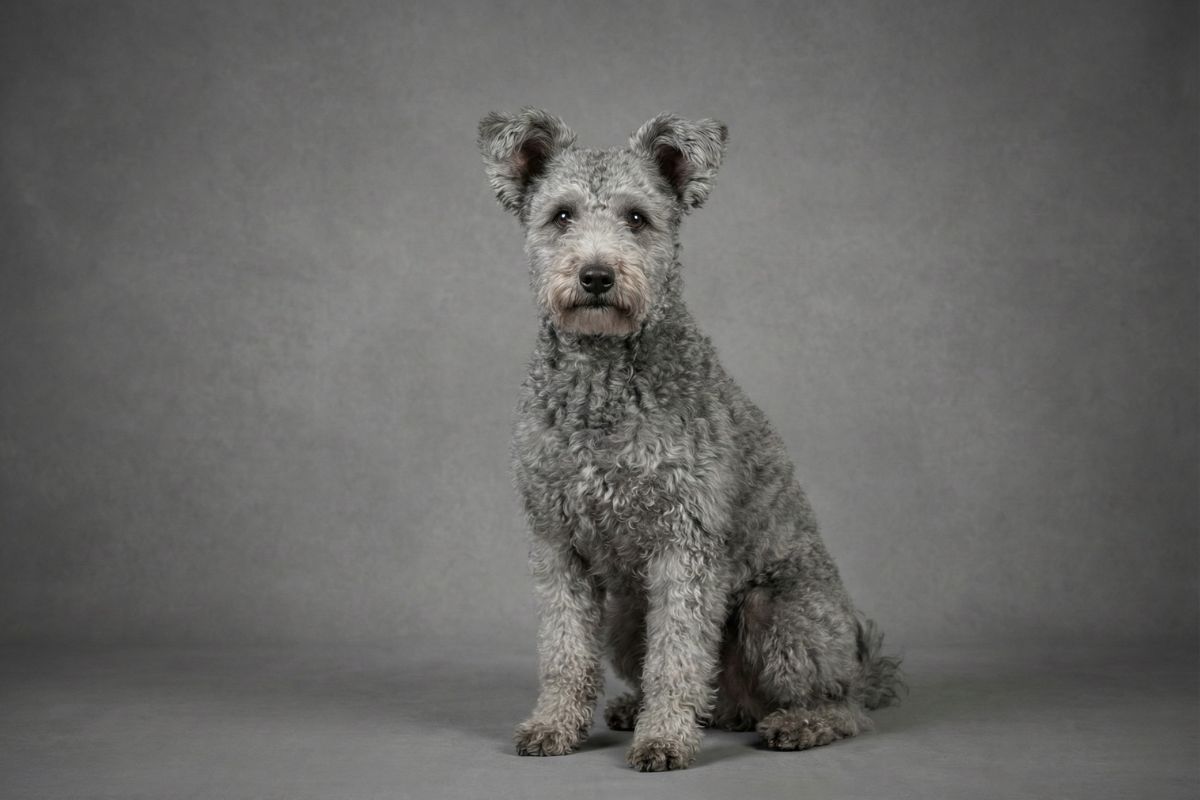
But the Pumi’s looks are merely the foretaste of what its temperament and personality hide. A Pumi is naturally highly lively, enthusiastic, and extremely inquisitive. Its expressive movements, energetic posture, and sparkling eyes are the marks of its inexhaustible willingness to act and constant readiness for new challenges. This breed stands opposite to many other sheepdogs, which tend to be more placid. What makes the Pumi exceptional is its rapid capacity to learn and ability to adapt to changing environments. These dogs are highly sensitive to environmental stimuli, always react quickly to commands but also demonstrate initiative and independence—a desirable trait particularly for herding work. Pumis are known for their loud barking, which has always served as a means of communication with people and the flock. Towards their family, they are loyal, joyful, and passionate about demonstrating affection and devotion. They are friendly, albeit a little reserved with strangers, which makes them excellent home guardians. With an innate herding instinct, Pumis like to keep “everything under control,” watch over their surroundings, and protect their loved ones’ safety. Their temperament demands an active lifestyle, plenty of stimulation, games, and tasks—boredom can lead to unwanted behaviors. Despite their immense energy, the Pumi is exceptionally gentle with children and, once properly socialized, can sensibly relate to other household pets. It’s a dog that requires clear rules, but offers in return intelligence, inventiveness, and endless energy eagerly shared with its owner. All that makes the Pumi a versatile dog—an excellent companion not only for work but also for family life, dog sports, or canine therapy, in any situation where a bright, sharp, loyal friend is needed.
Personality and Temperament – Who is the Pumi for?
The Pumi is a breed distinguished by a remarkable combination of energy, intelligence, and strong personality, making it both fascinating and demanding as a companion. These dogs are incredibly clever, quick to react to their environment, and endlessly curious about the world. Their innate herding instinct means they constantly monitor their surroundings, often displaying alertness—they’re always ready to signal any disturbing sound or movement near their owner. Nevertheless, Pumis are not overly nervous or aggressive dogs; rather, they are mentally active dogs who love new tasks and challenges, always with engagement and characteristic cheer. Their constant need for movement and inborn curiosity mean that Pumis require a very active lifestyle—best suited to people and families ready to devote time every day for walks, play, training, or even canine sports. Pumis value human closeness and deeply bond with household members, although they can be a little reserved and wary with strangers. They quickly sense the moods of their owners and have strong communication skills. This complexity of temperament comes paired with great loyalty—Pumis are ready to follow their guardian everywhere and dislike being left alone for long periods, which can lead to behavioral issues if their basic needs go unmet.
Thanks to their high intelligence and herding drive, Pumis excel at learning new commands, tricks, and complex tasks. At the same time, they require their owners to be consistent, patient, and understanding of their unique needs. This is not a breed for someone who wants a quiet lapdog—a Pumi is happiest where it can influence daily family life and be involved in various activities. The ideal owner is energetic, active, enjoys spending time outdoors, and is ready for the adventure of joint training or trips to new places. Thanks to their flexibility and intelligence, Pumis excel in canine sports, agility, obedience, herding, and even canine therapy, provided they are socialized appropriately from puppyhood. The breed gets along well with children, especially when socialized early, but note their herding instinct may surface as attempts to “herd” running kids—owners should be aware and train accordingly. With other household pets, especially cats or rodents, gradual socialization and teaching the Pumi that these animals are not “herds” to monitor is vital. Pumis dislike monotony and value variety in stimulation, so thrive in homes where routine alternates with novelty and challenges—they’ll be happy on a farm, in a house with a garden, or even in an apartment, as long as they get enough exercise and mental engagement. It’s important to note that Pumis may have a tendency to bark, especially if bored or demanding attention. Therefore, consistent training and clear household rules are a must. This extraordinary energy, signature cheerfulness, and inherent intelligence make the breed a superb choice for people who want an active, involved, and clever companion but won’t suit everyone—a Pumi is for conscious, consistent, and devoted owners ready for an active lifestyle and ongoing shared adventures.
Training and Education of the Pumi – Key Tips
Proper upbringing and training are key to building a harmonious relationship with this extremely clever and energetic breed. Pumis absorb new commands at lightning speed, but can just as quickly pick up undesirable habits if their owner is not consistent. The most important aspect of raising a Pumi is early socialization—from the first weeks of life, puppies should be exposed to various people, children, other dogs, and new situations, ensuring adult Pumis become confident and outgoing. Exposing your puppy to typical urban stimuli such as cars, noises, or crowds will also prevent excessive distrust or reactivity. The strong herding instinct might show as attempts to “herd” playing children or other pets—so proper training and ongoing behavioral control must start early, using positive, reward-based methods. Pumis respond exceptionally well to motivational learning techniques based on patience, consistency, and clear boundaries; any form of psychological or physical punishment, including shouting, is likely to result in loss of trust or withdrawal rather than the desired effect.
Due to the Pumi’s exceptional intelligence, the breed quickly gets bored with repetition and lack of challenge—so it’s recommended to provide varied exercises and diversify each training session. Short training sessions spread throughout the day and tailored to the dog’s temperament work best: Pumis prefer intense but brief learning concluded with play or rewards. Mental games, agility, obedience, nosework, or treibball are also perfect—they utilize the Pumi’s physical and cognitive capacities and strengthen the bond and trust between human and dog. Patience is essential—Pumis will test boundaries and observe human reactions, so each action must be consistent, clear, and firm without excess pressure. Particular attention should be paid to managing barking—a common issue for this breed—with owners teaching calming commands and signals to help dissipate excitement and keep their dog feeling secure. Should difficulties or major behavioral issues arise, consulting a qualified dog trainer (preferably experienced with herding breeds) can help develop a customized training approach and avoid mistakes stemming from misunderstanding this lively character. Remember: a Pumi requires a curious, adventurous owner willing to spend time on shared activity, play, and skill development, to fully showcase all its traits and remain a balanced, happy, and obedient family member.
Coat Care and Health of the Pumi
Taking care of a Pumi’s coat is an exceptionally important part of caring for this energetic breed. The Pumi features a characteristic, medium-length coat of defined curly and springy structure, offering great protection against the elements. The coat is composed of a soft undercoat and tougher, coarser top hairs, making it resistant to moisture, cold, and dirt—however, it demands regular care to keep it healthy-looking and free of mats. For the Pumi, brushing is recommended at least twice a week using a metal comb or a special brush for curly-coated breeds. This effectively removes dead hair and minimizes the risk of tangling. The Pumi’s coat doesn’t mat quickly, provided grooming is consistent, but during heavy shedding (most intense in spring and autumn), more frequent brushing is advisable. Baths should be performed only when needed, for example after heavy soiling, using gentle shampoos made for curly coats; too frequent washing removes the natural protective oils. After baths, it’s important to thoroughly dry and brush the coat to prevent mats. Regular trimming is vital, especially around the paws, face, and ears, to keep the dog comfortable—trimming should never alter the coat’s characteristic shape, just gently tidy it. Ear care is also important: the Pumi’s medium, erect ears should be dry and clean inside, as excess inner hair can hinder ventilation and promote ear infections. Regular checks of ears, eyes, and teeth, alongside monitoring nail length (trimming as necessary), complete the basic hygiene routine and support wellbeing. Most grooming procedures can be done at home, but many owners also opt for professional grooming, especially before dog shows or when the coat needs specialist care.
The Pumi’s health, being a relatively young breed in terms of formal breeding, stands out for its good hardiness and low incidence of typical genetic diseases—but this doesn’t mean the breed is problem-free. Pumis are long-lived—with an average lifespan of 12 to even 15 years—making them some of the hardiest sheepdog breeds. Typical diseases that may occur include hip dysplasia, which is common among medium and large breeds. Responsible breeders focus on selecting healthy dogs and performing regular orthopedic tests; owners should also schedule routine vet checks to spot any skeletal abnormalities early. Eye problems, including progressive retinal atrophy, sometimes occur, so regular eye checks, especially in older dogs, are recommended. Another possible issue is patellar luxation—usually mild and occurring in one leg—especially needing observation in active individuals. Pumis rarely experience food or skin allergies, which is a big advantage, but owners should still watch the diet’s quality and avoid problematic allergens. Balance between dry and wet food, a high-protein diet, and good sources of Omega-3 and Omega-6 support both health and coat appearance. Constant access to fresh water and avoiding overfeeding protect against obesity, which can worsen joint and heart health. Regular physical activity is crucial—limiting movement in these highly active dogs can lead to health and behavioral problems. Mental exercise through play, training, and new challenges helps preserve health at all life stages. Preventive measures such as vaccinations, deworming, and parasite control (especially during summer when fleas and ticks are a risk) are essential. Well-run grooming and health care result in a long, satisfying life for your Pumi, enabling this intelligent and active breed to realize its full potential.
Diet and Physical Activity – How to Care for Your Pumi Every Day?
A proper diet and daily physical activity are the foundation of health, condition, and well-being for every Pumi. Proper nutrition for this breed requires adjusting meals and food quality to the dog’s activity level, age, body weight, and individual needs. Pumis, being energetic and highly mobile, require a balanced, complete dog food providing high-quality animal protein, healthy fats and carbohydrates, and the right amounts of vitamins and minerals. Special attention should be paid to food composition—avoid cheap brands full of grains, artificial dyes, or preservatives. Investing in premium food or preparing meals at home (under a vet nutritionist’s guidance), especially with proper supplementation for working and very active dogs, is worthwhile. The amount of food should match energy needs—young, growing puppies and active adults need more calories than calm, senior dogs. Dividing daily rations into 2-3 smaller meals helps avoid digestive issues and keeps energy levels steady all day. Ensure constant access to fresh water and monitor your dog’s weight—Pumis burn calories quickly but can slowly gain weight if overfed or under-exercised. Consulting a vet about the diet (especially with any allergies or intolerances) is always a good idea.
Physical exercise is not only a joy for a Pumi, but above all the key to maintaining psychological balance and preventing behavioral problems arising from boredom or excess energy. As herding dogs, Pumis are naturally agile, resilient, and dynamic—requiring daily access to outdoor exercise—at least two energetic walks per day, supplemented with activities providing mental and sensory development. Options include various games and training like agility, scent work, frisbee, canicross, or dog trekking—these let your Pumi fully unleash both its physical power and smarts. Incorporate obedience, interactive, or educational games and new command learning, which relieve pent-up energy and strengthen owner-dog bonds. Regular exercise keeps weight in check, minimizes joint and heart disease risk, and prevents excessive barking or destructive behavior that may arise if a Pumi is bored. Variety is key—monotonous walks can make them lose interest, so field trips to new places, route changes, or group activities with other dogs pay off. Pumis are not lapdogs—their vitality, intelligence, and work instinct require owners willing to engage in daily joint practices and play. A well-balanced combination of proper diet and diverse physical stimulation leads to a happy, healthy, and harmonious life for this fascinating breed.
Summary
The Pumi is an extraordinary Hungarian shepherd breed, combining intelligence, energy, and a charming appearance with its wavy coat and signature ears. It’s an ideal dog for active people who appreciate vigorous temperament and daily mental stimulation. Proper grooming, conscious training, and a well-balanced diet will ensure your Pumi’s health and happiness. Choosing this breed means gaining a loyal companion, ready for fun, sports, and work—both in the countryside and in the city.

