

Table of Contents
- Chow Chow – origin and breed history
- Distinctive appearance of Chow Chow: the lion among dogs
- Temperament and disposition – who is the Chow Chow for?
- Chow Chow price and basic information about puppies
- Grooming and health of the Chow Chow dog
- Frequently asked questions about Chow Chow – curiosities and important information
Chow Chow – origin and breed history
The Chow Chow is one of the oldest and most enigmatic dog breeds in the world, whose unique characteristics and history have attracted dog lovers’ attention for hundreds of years. It is thought that the ancestors of the Chow Chow appeared around 2-3 thousand years ago in ancient China, with some sources suggesting even earlier beginnings – possibly dating back as far as 3000 BC. The breed was closely tied to the people of northern China, with its fortunes accompanying the development of Asia’s greatest civilizations. The Chow Chow was valued by Chinese emperors and the imperial family as a palace dog, reflecting dignity, independence, and strength. Its unusual silhouette, which somewhat resembles a lion or bear, and its trademark “blue” tongue lent it an air of mystery and made it a symbol of prestige and protection. In ancient China, the Chow Chow played many roles – it was not only a companion animal but was also used as a hunting dog, guard dog, sled dog, and, in some regions, even bred for its fur and meat, practices that today prompt firm opposition and incomprehension. This versatile nature led to the Chow Chow’s widespread presence across northern China, Mongolia, Manchuria, and Tibet, where its resilience to harsh climates, bravery, and loyalty to owners gained admiration.
According to historical chronicles, the Chow Chow already appeared on Chinese silver and bronze artifacts in the times of the Han dynasty (206 BC – 220 AD). Certain reliefs depicting dogs with a lion-like mane and characteristic build confirm the presence of this breed several centuries before our era. In Chinese temples and palaces, the Chow Chow often served as a “temple dog,” guarding sacred places and warding off evil spirits – a role attributed both to its appearance and its “heavenly” aura. In Far Eastern culture, the Chow Chow was associated with mythical guardians and regarded as an animal bringing good luck, a belief that was reflected in art, legends, and numerous Buddhist texts. The breed was not imported into Europe until the second half of the 19th century, mainly thanks to the British, who were fascinated by the East’s exoticism. The first Chow Chows arrived in England, where, as early as the 1880s, the first kennels were established, and in 1895 the breed was registered with the British Kennel Club. The British aristocracy soon fell in love with these stately dogs for their unique looks, independence, and distinguished presence, and the Chow Chow trend quickly spread across Europe and subsequently to North America. The breed was regularly showcased at prestigious exhibitions, winning recognition from international judges and dog enthusiasts alike. Each subsequent stage in Chow Chow history tells a fascinating story of the breed’s evolution from a practical working dog to an exclusive companion and symbol of luxury. Today, the Chow Chow remains an extraordinary dog, whose rich history – from legendary imperial palaces to modern salons and homes – continues to intrigue cynologists, researchers, and dog lovers worldwide. The characteristic features of the breed, such as the proud figure, mane like a lion, and the unique blue-black tongue, directly refer to Asia’s millennia-old heritage and emphasize the colorful and intricate origins of the Chow Chow.
Distinctive appearance of Chow Chow: the lion among dogs
The Chow Chow instantly captivates and intrigues with its majestic, almost royal appearance, which dog lovers often associate with a lion’s visage. Its remarkably dense, abundant coat, which especially around the neck and shoulders forms an impressive mane, immediately draws attention. Thanks to this trait, the Chow Chow is often called “the lion among dogs.” The coat, which comes in two varieties – long-haired (more common) and short-haired – is extremely soft, fluffy, and pleasant to the touch, adding to the breed’s noble and exclusive character. Chow Chows present a broad range of colors: the most common are red, gold, cream, blue, black, and cinnamon. The fur often feels velvety and thick like that of a wild cat, requiring proper and careful grooming to maintain its appeal. This breed is characterized by a massive, square-shaped build with a strong, broad chest and straight, well-muscled limbs. The Chow Chow’s gait is stiff, “proud,” and somewhat similar to a bear’s walk, due to the unique almost-straight hind legs – a distinguishing feature among dogs. The Chow Chow’s head is broad, flattened at the forehead, and ends in a short muzzle, with a characteristic large nose – usually black, though lighter shades may appear in blue or cream dogs.
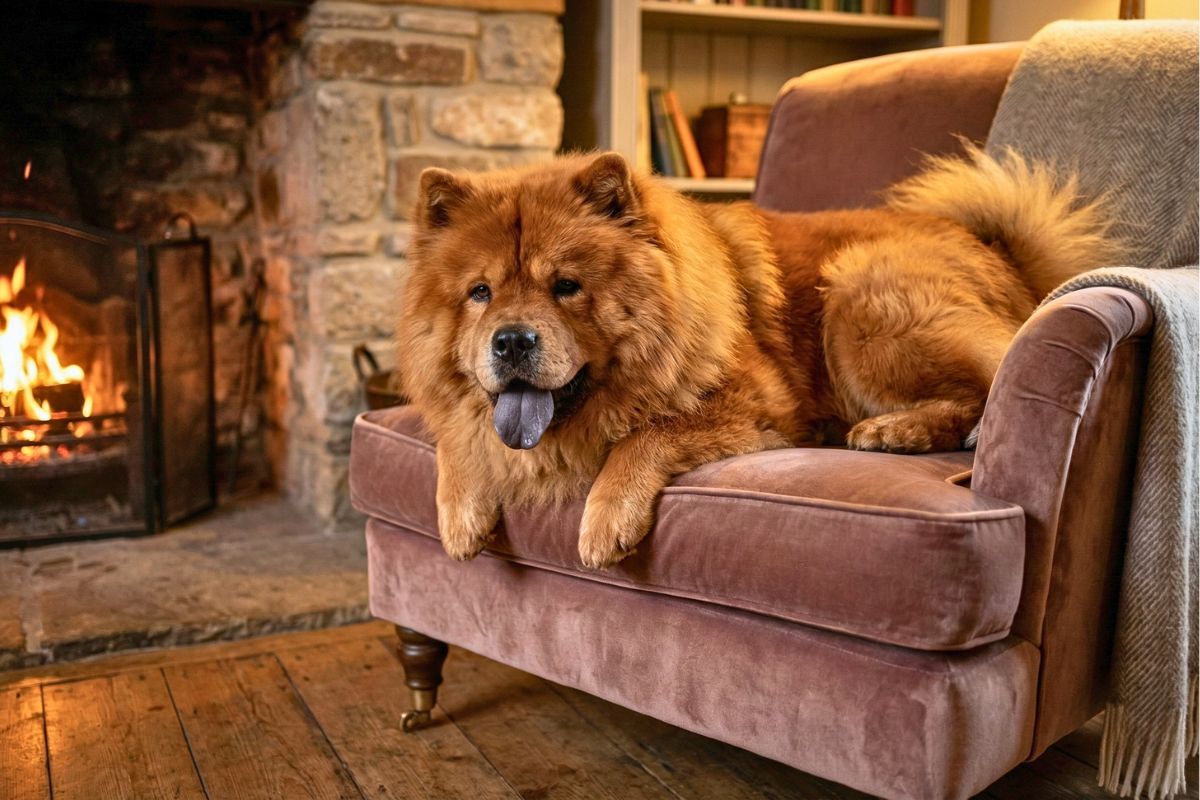
One of the most iconic and recognizable features of the Chow Chow is its tongue – a deep blue-black, a rare trait among dogs and often considered the breed’s signature. Combined with dark, almond-shaped eyes, the Chow Chow’s gaze appears deep, serious, and full of dignity and tranquility, sometimes even a bit aloof. The ears are small, thick, triangular, and erect, set wide on the top of the head, emphasizing the “lion’s mane” and contributing to an impressive and slightly fierce expression. The tail is set high and typically curled over the back, densely furred, and eye-catching for its fluffiness. Overall, the Chow Chow stands out not only for its original beauty but also for its air of distinction and aristocracy. Few medium-sized dogs (adults typically weigh between 20 and 32 kg, with a height of 46–56 cm at the withers) present themselves so uniquely – no wonder the Chow Chow often inspires artists, filmmakers, and illustrators. This unusual appearance, combined with harmonious proportions and pronounced features, evokes not only lions but also exotic beasts from Far Eastern legends. Interestingly, Chow Chows maintain their majestic figure and “royal” posture throughout most of their lives, and thanks to their distinctive build, always appear solid, self-confident, and very robust, although under the coat lies a well-muscled, strong physique. The Chow Chow’s characteristic look is thus not only a matter of beauty but also a symbol of centuries-old tradition, strength, and dignity that established its prestige among emperors and global elites.
Temperament and disposition – who is the Chow Chow for?
The Chow Chow has an exceptionally distinct temperament, quite different from more expressive or eager-to-please breeds. Above all, the Chow Chow is widely regarded as a dog with marked independence. It is a proud, calm, and balanced animal – it does not constantly seek human contact, and its attachment develops slowly, on its own terms. Unlike typically sociable breeds, the Chow Chow rarely shows affection openly, although that does not mean it is indifferent towards its owner. On the contrary – it is extremely loyal, valuing stability and tranquility at home. By nature, it is somewhat reserved and cautious with strangers, making it an excellent guard dog. It lacks the effusiveness or “grinning expressiveness” found in other breeds; instead, it commands respect with dignified and “regal” calm. A well-raised and socialized Chow Chow is a trustworthy companion, but it requires the owner to accept its individuality. This is not a dog that will obey unconditionally or be willing to accept imposed rules without mutual respect. Its strong character means it needs a determined, patient, and consistent owner – ideally, someone with experience handling independent or primitive breeds.
Choosing a Chow Chow should be carefully considered – it is not a breed for everyone or every family. It is best suited to quiet households with an orderly life rhythm, free from constant noise and frequent changes. Chow Chows are not typical dogs for children, especially very young or boisterous ones, as they do not enjoy rough handling or impulsive play – for this reason the breed is best recommended for families with older, calm children, singles, or mature individuals. These dogs do not cope well with shouting, inconsistency, or attempts at “dominating,” which can make them stubborn or even lead to avoidant behaviors. They thrive in environments with clear rules and a calm atmosphere, where the caretaker can combine gentleness with assertiveness. It is also important to note their moderate exercise needs: although the Chow Chow appreciates walks, it does not require intensive training or long runs, making it suitable for urban living (provided it gets daily exercise and mental stimulation). Its independence and relatively high tolerance for solitude mean it handles short periods at home alone better than many other breeds – though, as with any dog, prolonged isolation is inadvisable. The breed also displays a fairly strong territorial instinct, requiring proper management when interacting with other animals and people – early socialization is crucial for raising a balanced dog that does not react fearfully or aggressively to new stimuli. The Chow Chow can be devoted, faithful, and deeply affectionate toward selected family members, but it will always maintain a certain reserve and distance from the outside world. It is a dog that appreciates a calm, understanding owner willing to accept its unique, somewhat “cat-like” character, who in return will be rewarded with unusual attachment and unmatched loyalty, being a quiet, yet proud companion for those seeking a dog with a unique personality.
Chow Chow price and basic information about puppies
When deciding to purchase a Chow Chow, future owners must be ready for the relatively high price of this unique breed’s puppy. The Chow Chow is a prestigious dog due to both its origin and appearance, which increases its market value. The price for a pedigree Chow Chow puppy, sourced from a reputable FCI- or Polish Kennel Club-registered breeder, typically ranges from 6,000 to even 12,000 PLN, and sometimes more – especially for puppies from outstanding show lines. The price depends on many factors, such as breeder reputation, the show achievements of the parents, pedigree origins, breeding potential, and adherence to breed standards. It is important to remember that buying from an unverified source – especially from backyard breeders offering significantly lower prices – involves significant risks: puppies might have genetic defects, health issues, or unwanted temperament problems. Purchasing from a legal kennel ensures the puppy has been properly examined, vaccinated, dewormed, and socialized from the first weeks of life. The cost of maintaining a Chow Chow also includes necessary accessories, high-quality food, veterinary care, vaccinations, health check-ups, and appropriate coat grooming – which collectively may well surpass the initial purchase price.
Chow Chow puppies require attentive care, education, and preparation from the first days in their new home. As naturally reserved dogs, socialization and gentle but firm training are extremely important – the first weeks are crucial for shaping their temperament. A Chow Chow puppy rarely displays great exuberance or interest in strangers, so the owner should devote time to gradually accustoming the pup to different situations, new sounds, people, and other animals. Responsible breeders provide puppies with home-life exposure and conduct basic behavioral and health tests in the early weeks. Young Chow Chows have thick, fluffy fur that needs regular brushing several times a week to avoid matting; it is best to establish grooming routines early to prepare the dog for a life with a lush coat. Puppies should receive a full schedule of vaccinations, routine deworming, and be able to eat on their own before leaving the kennel (around 8–10 weeks old). Responsible breeders provide starter kits, documentation (pedigree papers), and advice on diet and care. For Chow Chows, attachment to routine and calmness is essential – a puppy develops better in a predictable environment with patient and understanding family members. Prospective owners should also be prepared for the breed’s intelligence and independence – training and basic command learning should rely on consistency and positive reinforcement, with no punishment-based methods. The Chow Chow should be taught leash-walking and house-training from the start; any behavioral challenges are best addressed with an experienced canine behaviorist. Thorough consideration, selection of a responsible breeder, investment in healthy development, and care from the earliest weeks will yield a unique, enduring bond with this extraordinary dog.
Grooming and health of the Chow Chow dog
Grooming a Chow Chow requires exceptional dedication and regularity, as their thick, double-layer coat is among the most demanding in the canine world. Regardless of whether it is a long-haired or short-haired variety, both types have an undercoat and outer coat that are dense, prone to matting, and trap dead hair. Systematic brushing – at least 2 to 3 times a week, and daily during shedding periods – is essential to prevent tangles and keep the coat in good condition. Regular brushing also allows inspection of the dog’s skin and the early detection of dermatological issues, which are unfortunately not uncommon in this breed. It is recommended to use brushes and combs designed for heavily coated breeds, as well as shampoos formulated for dense fur, to avoid drying the skin or damaging its natural barrier. During baths – which can be given every few weeks or whenever the dog truly gets dirty – it is crucial to rinse products thoroughly and completely dry the coat, as residual moisture can promote fungal infections or skin irritation. Chow Chows also require regular ear checks, as their shape and moderate ventilation make them susceptible to fungal and bacterial infections. The eyes should also be observed routinely – this breed is prone to entropion (inward rolling eyelids), which can irritate the cornea and requires prompt veterinary attention. Claw care is important too – if the dog does not wear them down naturally on walks, trim them regularly to prevent painful paw deformities.
In terms of health, conscious prevention, regular vet visits, and early recognition of breed-specific problems are equally important. Chow Chows are sturdy but not free from structural flaws—they are predisposed to orthopedic issues, especially hip and elbow dysplasia, so feeding puppies correctly and avoiding strenuous exercise or obesity in the young is vital. During growth, supplement the diet according to veterinary recommendations, maintaining appropriate calcium-to-phosphorus balance and providing high-quality protein. Another crucial aspect is the breed’s susceptibility to autoimmune diseases, such as hypothyroidism, which may manifest as a dull coat, lethargy, or skin problems. Due to their particular skull structure (short, broad muzzle), Chow Chows can be prone to respiratory difficulties, especially in hot weather – these dogs are especially sensitive to overheating, so in summer they should always have a cool, shaded place and walks during peak heat should be avoided. The breed is also prone to food and contact allergies, most commonly manifested by itching, redness, or diarrhea; an appropriate hypoallergenic or elimination diet often helps. Daily tooth and gum hygiene should be a ritual as well – like other breeds with strong jaws, Chow Chows easily develop tartar and dental disease, requiring regular brushing or dental chews. In addition to physical factors, the Chow Chow’s psychological well-being is important: although naturally tranquil and independent, it demands routine, its own space, and gentle handling. Arranging the environment thoughtfully, keeping walks and feeding times consistent, and minimizing stressors will ensure a comfortable, long life. When cared for properly both physically and mentally, the Chow Chow impresses with its appearance and resilience, but it requires patience, breed knowledge, and systematic attention to maintain its exceptional condition.
Frequently asked questions about Chow Chow – curiosities and important information
The Chow Chow has long fascinated both future owners and exotic breed aficionados, who often ask a variety of unusual questions about these dogs. One of the most common queries concerns their characteristic blue-black tongue. This unique pigmentation is extremely rare among dogs and is one of the breed’s main hallmarks – puppies’ tongues may be pink at first, but they take on the special color within a few weeks. This also relates to other physical features: black gums and lips, fleshy jowls, or the striking mane around the neck that likens the Chow Chow to a lion, often earning it comparisons to the mythical “lion dog.” People also frequently ask about temperament – whether the Chow Chow is a family dog and suitable for homes with children. The answer: the Chow Chow can be a loyal family member, but it is best for homes with older, calm children who respect the dog’s boundaries. Given their independence and reserved way of showing affection, this is not a typical play or cuddle dog – their companionship is best appreciated by those who value peace and can respect the breed’s need for distance. Another common question is about relationships with other household pets – Chow Chows can be dominant and territorial with other dogs, especially of the same sex, but with proper socialization, they can tolerate other animals, though this requires patience and experience on the part of the owner. People also want to know whether the Chow Chow barks a lot – the breed is not especially vocal, which many see as a plus; nevertheless, their guarding instincts mean they closely observe their surroundings and may warn with a single, loud bark if something unfamiliar approaches.
Many prospective Chow Chow owners wonder whether the breed is suitable for beginners – the answer is nuanced: while these dogs are relatively calm and do not need a massive amount of exercise, their strong character and requirement for patient socialization mean they do better with experienced owners. Chow Chows are also famous for their cleanliness – puppies learn to do their business outside extremely quickly, and adult dogs very rarely foul their own space. Another curious trait is the breed’s peculiar “stilted” gait – its hind legs are nearly straight, giving it a stiff, proud movement. There are often questions about whether a Chow Chow is suitable for apartment living – their moderate activity needs and love of calm make them well-suited to flats, provided they get short, regular walks and a quiet space of their own. The dense coat’s grooming is another popular topic: do Chow Chows shed a lot and need frequent grooming appointments? The answer: shedding is intense, especially in spring and autumn, and long-haired varieties need regular professional brushing, so owning a Chow Chow means facing this time-consuming duty. Health queries are also common – how long does a Chow Chow live, and what diseases are they prone to? Average lifespan is 9–12 years, with the most frequent issues being skin conditions, orthopedic problems (especially hip dysplasia), and autoimmune disorders. Among fun facts, it’s worth dispelling the myth of Chow Chows being “not cuddly” – while they can be affectionate with their owner, their displays of affection are subtle and non-invasive. Maintenance costs are significant too – owners must budget for specialist food, regular grooming, and preventive vet care, making the Chow Chow a demanding breed but one that rewards with unique charm and pride in owning one of the world’s most unusual dogs. Lastly, questions address its cultural legacy – the Chow Chow has been present in Chinese mythology and art for centuries, and its uniqueness has long been admired by artists, designers, and “royal pet” enthusiasts worldwide, making it not only a cherished companion but also a living symbol of prestige and history.
Summary
The Chow Chow is a dog that captivates with its majestic, lion-like appearance and its independent, loyal character. This breed has a rich history and requires the right approach and patience, especially regarding socialization. The Chow Chow is not only a proud guardian but also a unique companion for patient and consistent owners. With proper grooming, health care, and attention to its distinctive needs, the Chow Chow can be a wonderful household member, attracting both looks and the hearts of dog enthusiasts with its looks and demeanor.

