
Are you planning a trip with your dog? Find out how to prepare your pet for holidays so that the journey is safe and comfortable for both your four-legged friend and yourself. Discover practical tips on vacation planning, maintaining routine, minimizing stress, and taking care of your dog’s health and safety during the trip.
Are you planning a holiday with your dog? Discover proven ways for a stress-free trip, practical advice, and how to ensure your pet’s comfort and safety.
Table of Contents
- How dogs experience separation and travel
- Planning a holiday with your dog – key rules
- Stress-free travel – practical tips
- Maintaining your dog’s routine and comfort in a new place
- Dog’s safety and health on holidays
- Dog owner’s essentials for vacation
How dogs experience separation and travel
Dogs are social animals, strongly attached to their caregiver and familiar surroundings, which is why separation and a change of location – in other words, travel – can be a huge emotional challenge for them. It’s crucial to understand that dogs don’t perceive a “holiday trip” in the same way humans do; what is an exciting adventure for us may be a series of unpredictable stimuli for a dog, new smells, sounds, and situations where they don’t quite know what to expect. From a dog’s perspective, the biggest “safeguard” is the predictability of the day and closeness to their caregiver – any changes to routine, walk length, sleeping place or feeding times can cause anxiety. Even a brief separation (e.g., leaving the dog alone in a hotel room or cottage) is often more stressful for many dogs than the car trip or flight itself. In some animals, this triggers so-called separation anxiety, which may manifest as howling, barking, scratching doors, destroying objects, heavy drooling, or even escape attempts. Other dogs react “inwardly” – becoming apathetic, hiding, losing interest in surroundings or food, often misinterpreted by caregivers as “well-behaved” in the new environment. The level of stress experienced is closely related to previous experiences and temperament – a well-socialized, travel-accustomed dog usually copes with travel and a new environment better than a fearful, change-averse dog. Age also plays an enormous role – puppies may react more emotionally and chaotically, while older dogs often experience physical discomfort (joint pain, nausea, fatigue), increasing aversion to travel. All of this is influenced by signals picked up from the caregiver – if the owner is stressed during preparations, late, tense, or raises their voice, the dog will absorb that mood and associate travel with a high level of tension. On the other hand, calm organization and gentle rituals (like peaceful packing, a short walk before departure) help the dog feel secure. Dogs greatly depend on scent – their world is primarily made up of olfactory stimuli – so a sudden change of environment where “nothing smells familiar” can feel like a loss of safety. Familiar scents from their bed, blanket, plush toy, or even the caregiver’s worn shirt serve as “olfactory anchors” that emotionally ground the dog and help them accept new spaces more quickly. For some dogs, the car trip itself is highly stressful – they may associate it only with vet visits or other unpleasant experiences, causing anxiety even when they see suitcases or hear car keys. Physical symptoms can include drooling, panting, trembling, rapid breathing, “glassy” eyes, inability to relax in the car, and for some, motion sickness (vomiting, diarrhea). This is not “misbehavior” but a natural bodily response to too many stimuli and uncertainty, thus proper preparation is essential – gradual habituation to the car, carrier, or crate, associating travel with positive experiences (treats, play, walk at the end of the road), not only with lengthy, exhausting journeys. Remember, dogs, unlike humans, don’t understand “a week from now we’ll be back home” – every separation with a caregiver is a “here and now” event, with no guarantee the caregiver will return, making unfamiliar places even more distressing, especially in the absence of a familiar, positive bond.
Travel also exposes dogs to an enormous amount of new environmental stimuli, both fascinating and overwhelming. From a dog’s perspective, a new hotel, guesthouse, or campsite is not just different furniture, but primarily a “library of odors” of strangers and animals, unfamiliar sounds from beyond the wall, hallway, or outside – all analyzed by the nervous system and often making it hard to settle, especially in the first hours and days of arrival. If you add changes in routine – different walk times, no access to familiar routes, new rules (e.g., leash requirements where the dog used to run free), and often new people and animals nearby – overstimulation is easy. Some dogs show this with overexcitement – pacing, jumping, trouble focusing, overreacting to stimuli; others, on the contrary, “shut down,” becoming withdrawn, stiff, staring at a point. Learn to recognize subtle stress signs: nose licking, yawning when not tired, head turning away, avoiding eye contact, tense posture, tail low or tucked, hackles raised, frequent shaking “as after a bath,” scratching with no clear reason. These mean the dog is tense and needs support, predictability, and quiet. Also remember that not every stress is bad – mild, short-term stress from novelty can build confidence, provided the dog can gradually get used to the situation and feels able to retreat if overwhelmed. Problems arise when there is prolonged, intense stress with no rest or sense of control – for instance, when they must spend most of the day amid crowds, noise, heat, without a quiet place to nap and “switch off” the stimuli. For your dog’s mental health, organize holidays with their needs in mind: provide their own bed or blanket, keep feeding and walk routines as close to home as possible, regular breaks, and opportunities for close contact. It is also wise to teach your dog, in advance, to calmly stay alone in a new place, starting with very brief separations and gradually extending them, so the dog doesn’t suddenly associate a holiday with a long unexplained human absence. The more you understand how your dog experiences separation and travel, the better you can predict reactions, plan your trip’s pace, journey length, accommodations, and daily activities in a way that makes the trip as peaceful as possible, not a series of highly stressful events.
Planning a holiday with your dog – key rules
Start planning a trip with your dog well in advance, treating your dog’s presence as a key factor, not just an “addition” to your vacation. The first step is honestly assessing your dog’s health and condition – for elderly, chronically ill, very fearful, or just post-surgery animals, travel may be too much. Arrange a pre-travel vet check-up, consult about planned activities (mountains, sea, long hikes, high temperatures), and possible contraindications. The vet may recommend flea and tick prevention suited to the region (collar, tablets, or drops), vaccinate against diseases more common in the destination area, issue a pet passport or medical certificates if traveling abroad. It’s a good idea to keep a note (paper or phone) of all medications, dosages, allergies, and the number of a trusted local vet – health issues and injuries are more common on holiday than many think. Simultaneously, consider whether your chosen location is truly dog-friendly: not just a “pets accepted” note on the hotel website, but specifics – can the dog stay alone in the room, are extra fees or limitations on size or breed, are there walking areas, beaches, or trails that allow dogs, is there a fenced area and safe route for walks. Call the place and ask: can the dog be on the bed, how is cleaning handled, are there other dogs (e.g., aggressive neighbor’s dogs) – establishing the rules first avoids on-site tension. Planning also covers choosing transport – a car offers most flexibility but requires preparation (carrier, seat belts, seat covers, sunshades), while trains or planes require checking the carrier’s regulations, fees, required documents, and weight or breed limitations. Choosing the date matters as well – in the hottest periods it’s better to shorten drives and avoid long trips during the day, while high season is often crowded, noisy, thus more stressful for sensitive dogs. Plan the holiday schedule not only for your own preferences but for your dog’s abilities and temperament, assuming a slower pace and more breaks than in a “human” travel scenario.
After working out the basics – health, accommodations, and transport – prepare practically: pack your dog’s kit, plan the days, and ensure safety at every stage of the trip. The list is longer than you might think: besides food (the same your dog eats daily, to avoid stomach issues) and bowls, pack water for the journey, favorite treats and anti-stress chews, a bed or blanket with familiar home scent, some toys (including a calming one like a sniffing mat), and a towel for wiping paws. Essential walking gear: properly fitted harness or collar, a strong leash (preferably a classic, non-retractable one for public areas), a tag with your phone number, and if needed a muzzle your dog is used to wearing so it’s not just a symbol of force. Especially important are security and identification: your dog should have an up-to-date microchip with your number registered, a tag, and, if going abroad, all required vaccinations (especially rabies) and a valid passport. Prepare a “dog first aid kit,” with basic medicines approved by your vet (for diarrhea, antihistamines for allergy reactions), wound disinfectants, dressings, tick tweezers, and products for motion sickness or travel stress chosen specifically for your pet. Think through your day plan: even if you want to see as many attractions as possible, you must factor in regular feeding times, walks, sleep, and downtime – dogs don’t cope well with overstimulation and a relentless “morning to night” schedule. Plan main activities for cooler times of day, take breaks in the shade, and avoid hot surfaces that could burn paws; dog booties or at least a paw-protecting balm come in handy. Before you go, practice short car trips and visits to new places to gradually desensitize your dog to travel and new stimuli – the more positive experiences, the calmer a longer trip will be. It’s also crucial for caregivers to “mentally switch”: holidays with a dog mean giving up some activities (all-day museum tours, crowded events, boat trips), as not everywhere allows dogs and they may not always feel comfortable there. Instead, look for genuinely dog-friendly places and attractions – walking trails, dog beaches, pet-friendly restaurant gardens – and plan the day so your dog doesn’t have to spend extended time alone in an unfamiliar spot. Thorough preparation that considers logistics and your dog’s emotional and physical needs makes holidays safer, more peaceful, and enjoyable for everyone involved.
Stress-free travel – practical tips
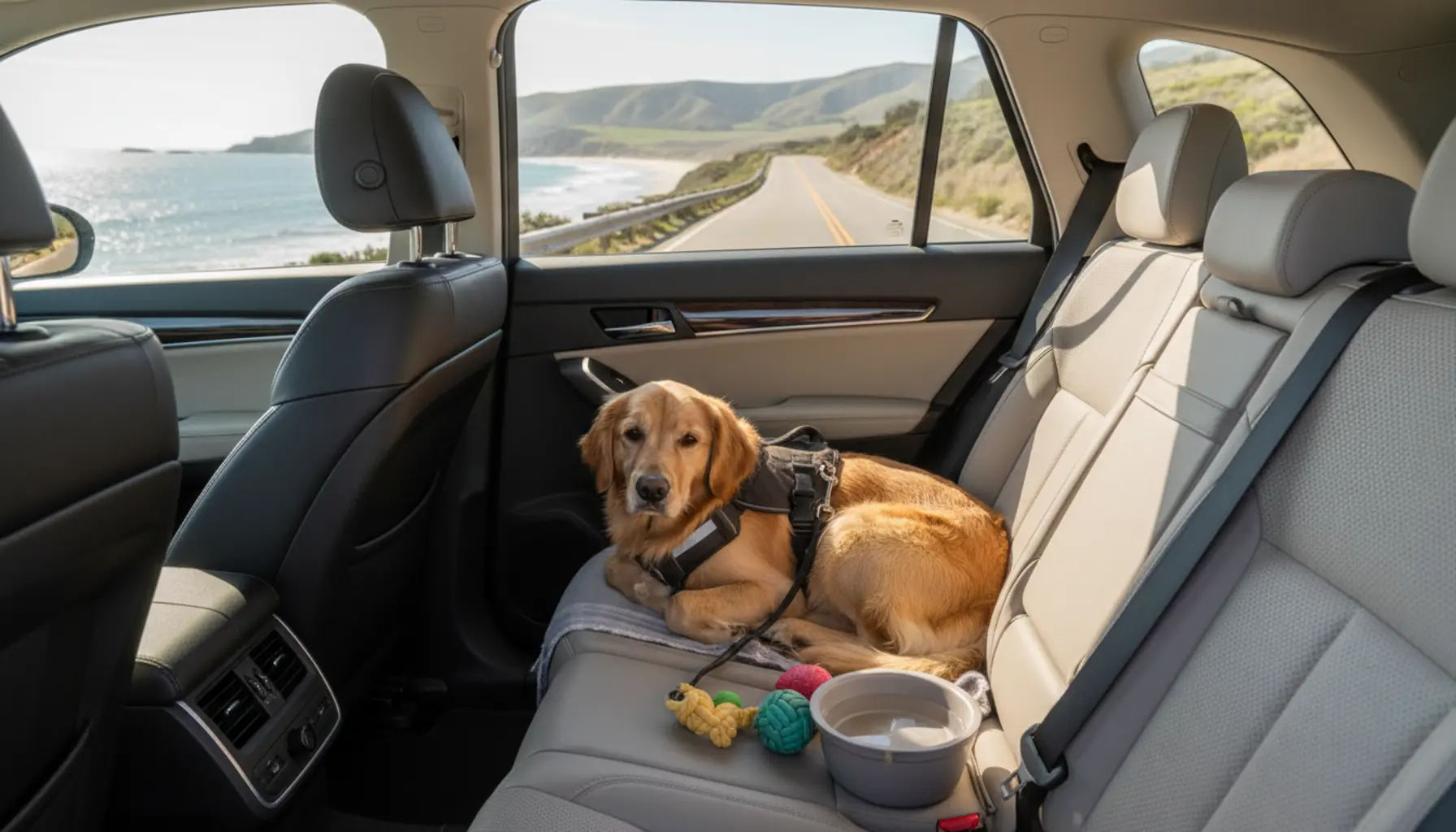
Stress-free travel with your dog starts long before the trip – with proper preparation, gradual familiarization with transport, and conscious route planning. Start by positive association training with the car or carrier: let your dog enter the car with the engine off, reward calm behavior with treats, gradually extend time in the vehicle, then introduce short, pleasant trips ending with a walk in a fun place. If your dog associates the car with enjoyable experiences and not just with trips to the vet, longer journeys will be much easier. The same rules apply to dogs transported in a carrier – set it up at home, in a quiet spot, line it with a favorite blanket, toss in some treats or a toy, so it becomes a “safe base,” not a prison. Regardless of transport method, safety is the priority – your dog should never ride loose on the front seat or on your lap. Well-fitted car harnesses attached to the seatbelt, a carrier fixed with seatbelts, or a kennel crate in the trunk (in estate cars) with a divider, all lower the risk of injury to the dog and passengers. During the journey, provide a pleasant environment: moderate car temperature, fresh airflow (without drafts directly on the dog), no loud music or shouting, and avoid abrupt driving – hard braking, sharp turns, or nervous driving raise your dog’s stress and motion sickness symptoms. Feed a smaller meal 1–2 hours before traveling to lower the risk of vomiting, and always have water and a travel bowl for regular small drinks. Short stops every 2–3 hours with on-leash walks, a chance to stretch and relieve themselves, reduce tension and fatigue. Also bring a scent “anchor of safety”: their favorite blanket, bed, or toy smelling of home helps your dog relax even in a new car, becoming a familiar “island of peace.” For sensitive dogs or those with previous motion sickness, consult your vet about nausea remedies, or calming pheromones (collar, spray) – but these don’t replace training and gradual habituation.
Other transport options, like trains, buses, or flights, require even more planning and reviewing carriers’ regulations – dog size, type of carrier, ticket or muzzle requirements, can all differ. With public transport it’s vital your dog knows how to behave in crowds and noise: practice short rides in less-busy hours, get used to platform sounds, the rattle of wheels, or braking noises. Rewards for calm behavior, the “on your spot” command in a carrier or beside you, and learning to ignore strangers all reduce stress and prevent unwanted behaviors like barking, lunging at people, or nervous pacing. On trains, pick less busy spots – ideally by the aisle or in an area where your dog can lie down without blocking others. On buses or minibuses, strict rules may require a muzzle and a small, well-ventilated carrier; practice the muzzle at home and on walks, rewarding your dog, so it’s not linked only to travel. With air travel, there are extra challenges: dogs must be registered with the airline in advance, have an approved carrier, weight limits, and paperwork (passport, vaccinations, sometimes blood tests or destination quarantine). Here, have weeks of training staying in the carrier with the door closed, gradually increasing time and rewarding calmness – a dog never crated longer than a few minutes may be highly stressed on a multi-hour cargo flight. Whatever the means, be sure your collar or harness fits, that tag and identification are always worn – if your dog gets loose at a station or parking lot, chances of finding them increase. Avoid punishing your dog for stress symptoms (whining, panting, anxiety) – instead, use a calm voice, offer comforting petting if the dog enjoys it (e.g., gentle chest rub), or just allow for retreat, turning away, and lying in a corner or under the seat. Some dogs will also benefit from a previously trained relaxation cue (“chill out”, “lie down”) linked to a specific mat or blanket – just lay out the known “safe spot” in the car, train, or hotel room so your dog calms down faster and feels that, despite the new place, some things are still familiar.
Maintaining your dog’s routine and comfort in a new place
After arriving at your destination, the key is helping your dog feel as “at home” as possible, despite totally new stimuli, smells, and sounds. Dogs function much better when they know what to expect, so maintaining a familiar daily routine is crucial for their calm. In practice, that means keeping about the same feeding times, walks, play, and rest as at home. If you usually take your dog for a morning walk, stick to that even if sight-seeing tempts you to rearrange plans. Routine is a “map of safety” – predictability lowers stress, helps regulate emotions, and speeds adaptation to a new environment. On the first day, plan 1–2 slow walks through the local area, away from crowds, joggers, and cyclists, letting your dog calmly sniff everything. Sniffing is their natural way of “reading” the environment; the more time for quiet exploring, the greater the feeling of control and safety. Immediately set a toilet spot to prevent “accidents” indoors or on the terrace. Also pick a rest zone for your dog – a quiet corner away from entrances, corridors, or balconies, protected from constant movement. That’s where their bed, blanket, or mat smelling of home should go, bowls nearby placed exactly as at home. Familiar smells are powerful “anchors of comfort”: they lower tension, remind the dog of a safe home, and help them sleep in a new place. A “scent ring” – their own blanket, old toy, or even the caregiver’s towel – helps your dog cope with unfamiliar outdoor noises.
It’s easy to fall into the “constant attraction” trap on holiday, but for dogs, overstimulation can be more tiring than several hours of lazy lounging. Emotional comfort requires careful dosing of experiences. If a day is intense – beach, city, new trails – plan 1–2 longer rest breaks in the room or shady spot, with no guests, noise, or extra play. Make sure your dog can lie down, chew a chew or sniffing toy for calming (like a sniff mat, kong, or dog lollipop). Chewing and licking are natural self-soothing strategies, so encourage them. Take care of physical comfort too: right room temperature, fresh water, sun protection. On hot days, choose several shorter walks in the morning and evening, avoid long noonday outings, and always provide shade, a cooling mat, or wet towel. For brachycephalic breeds (pugs, bulldogs, boxers) be extra careful – overheating develops fast, so restrict exertion and focus on calm sniffing activities. Comfort also means predictability in the relationship: avoid suddenly disappearing for hours if your dog isn’t used to being alone. Instead, do short separation training – leaving for a few minutes, then extending, ideally after a walk or sniffing game, and always making sure a safe, restful spot is ready. If you notice overload signs – heavy panting, lip licking, yawning, pacing, seeking shelter under tables or in bathrooms – take it as a cue to withdraw from further attractions and let your dog rest. If possible, also limit sudden, intense contacts with unfamiliar dogs and people; let your dog decide whether to approach or keep distance. Giving your dog a choice and space shows their needs matter and directly supports security and emotional comfort in new surroundings.
Dog’s safety and health on holidays
Your dog’s safety and health on holidays starts with preventive care before you even leave. Schedule a vet check at least a few weeks before travel to ensure general health, up-to-date vaccinations (including rabies), and appropriate flea, tick, and mosquito prevention. Depending on destination, the vet may advise extra vaccinations or preparations against local diseases (such as leishmaniasis in southern countries). Carry a health booklet or pet passport with vaccination entries and list of any medications your dog takes. The first aid kit should include anti-diarrhea meds, electrolytes, “emergency” tick products, sterile wipes, elastic bandage, alcohol-free wound disinfectant, tweezers for removing ticks or splinters, and emergency contact for round-the-clock local clinics at your destination. Make sure your dog is comfortable with basic care (checking paws, teeth, ears) so you can provide care stress-free if needed. During the trip, monitor for health problems: listlessness, sudden appetite changes, diarrhea, heavy panting or swelling require a vet, especially if lasting longer than a day. Overheating and heatstroke are common risks, especially in hot weather. Never leave your dog in a closed car, even for minutes, as temperatures inside can soar rapidly. On hot days, avoid direct sun, choose shaded paths, provide water, and take frequent breaks. Check pavement temperature with your hand – if it burns, it will burn paws; dog boots or grassy routes help. Signs of overheating (heavy panting, drooling, staggering, dark red gums, vomiting) require immediate action: move to shade, cool gently (not with ice-cold water), and call the vet. Water safety is equally vital – not all dogs swim well, and even strong swimmers can tire, get cramps, or panic. At lakes, the sea, or rivers, life jackets are useful especially on boats or SUPs. Prevent swimming in strong waves, currents, or on slippery/muddy bottoms. After swimming in salty or standing water, rinse your dog’s coat, dry the ears (especially for drop-eared breeds) to reduce infection risk. Other threats: plants and animals – in meadows or woods are ticks, vipers, thistles, burrs; by the sea possibly jellyfish or sharp shells. After every walk, check paws, skin, and between toes for thorns, redness, swelling, or sore spots. For viper bites or toxic plant contact, see a vet ASAP and restrict movement (carry the dog or use a carrier if possible).
Also on holidays, poisoning or cuts are a greater risk due to more freedom and access to new places. Prevent your dog from scavenging in rubbish bins, eating “treats” from the ground, or drinking from puddles or standing water, which may harbor bacteria, parasites, or toxins. At beaches and near bars, watch out for discarded food, bones, skewers, or broken glass – use a leash and practice a “leave it” command to intervene before your dog eats something dangerous. Contact with unknown fauna – sea urchins, jellyfish, but also insects like wasps and bees – can cause stings or allergic reactions, so post-bath or meadow walk checks are vital. For sudden swelling, hives, trouble breathing, or weakness, seek an emergency veterinarian. Another safety point is preventing your dog from getting lost. Even well-trained dogs in new and stimulus-rich places might panic, chase scents, or bolt at loud noises. Thus, always use an updated microchip registered to the caregiver and a visible ID tag on the collar or harness with a phone number – ideally international, for trips abroad. Leash must be sturdy and secure in your hand, and harness or collar should fit so your dog can’t slip out. Avoid letting dogs off leash in uncontrolled or high-traffic areas, and if using retractable leashes, maintain extra caution and control. In places with lots of stimuli (stations, promenades, busy streets, playgrounds), a muzzle may be helpful – only if already well-trained not to be seen as punishment, but as normal kit. For anxious or highly reactive dogs, comforting accessories help: a scent mat, or kennel crate at the accommodation as a “safe base.” Make use of local laws – check where dogs are allowed (beaches, parks, trails) and where leads/muzzles are mandatory, and always respect other tourists’ comfort. This not only minimizes stress and potential conflicts, but also lowers risks to your dog’s health and safety, and those around them.
Dog owner’s essentials for vacation
Even the best-planned vacation with a dog can become stressful if you discover you are missing your pet’s essentials. So, before packing your own suitcase, prepare a “dog essentials” checklist and calmly tick it off. The foundation is documents – up-to-date health booklet with vaccination confirmation, microchip number, and for trips abroad, a passport and any required veterinary certificates. Also keep your regular vet’s number and a list for local clinics saved in your phone and on paper. Next, food supplies – sudden diet change, especially while traveling, can easily cause diarrhea and make your dog feel unwell. Take enough food for the whole stay, plus some extra, and treats for rewarding calm behavior in new situations – during car rides, restaurant visits, or exploratory walks. Don’t forget a food and water bowl – ideally a collapsible, travel version for your backpack. For long walks, a bottle with an attachable bowl lets your dog drink anytime, without using risky water sources. Bring some toys – not just favorite chews to handle emotions, but also sniffing toys or a kong to stuff with food for calming activities at your accommodation. Their own blanket, bedding or bed from home, plus a car blanket, offers a “mobile safety zone”; familiar scent is soothing, helps your dog get accustomed in new surroundings, and supports restful sleep after a busy day. A dog-only towel is handy after rain walks, swimming, or in case of dirty fur, as well as a treat pouch, so rewards are always on hand to reinforce good behavior, e.g., recall or calm passing of other dogs.
Leashes and safety gear are a separate category in your essentials – without them, a doggie holiday can become a logistical nightmare. A solid leash sized for conditions is crucial – in city areas, a standard leash, in nature, a longer training line (but always keep control and follow leash laws). Must-haves include a properly fitting collar or harness with a clearly readable ID tag – besides your phone number, it can list the dog’s name and important info such as medical needs. For dogs that slip out of collars, use strong “guard” type harnesses for holidays. For car travel, dog seat belts with certified car harnesses, or a stable transporter/kennel fixed to prevent sliding, are essential. On water vacations, a safety life vest is a good idea – especially if your dog is not a confident swimmer or you’re planning a boat trip. Also pack enough poop bags – more than you expect, since vacation walks are usually longer and more frequent; keep a roll in the backpack, car, and on the leash. A dog first aid kit is indispensable: vet-approved anti-diarrhea meds, tick prevention (if not long-acting), saline for eyes/wounds, sterile pads, flexible bandage, self-adhesive plasters, tick tweezers, alcohol-free disinfectant, and optional paw protectors. If your dog is on meds, take a few extra days’ supply – if your return is delayed or shopping/vet access is tough, you won’t panic. For summer, take cooling gear: a cool mat, bandana, or cooling vest, plus portable shade (a small travel umbrella) for the beach. For light-skinned dogs or those with little hair on nose and ears, bring a safe UV pet sunscreen. Wet wipes designed for pets are handy for cleaning paws after city walks, sand, or fields treated with pesticides. Pack it all neatly in one well-marked “doggie kit and first aid” bag, so in a stressful moment – sudden diarrhea, a paw cut, a lost collar – you can quickly grab what you need, not dig frantically through all your luggage.
Summary
Holidays with your dog can be a wonderful adventure if you properly prepare and care for your pet’s comfort. Dogs may be stressed by both separation and a change of place, so prepare them in advance by keeping routines, providing familiar gear, and ensuring a suitable resting spot. Regular breaks, safety, and attention to health — both in transit and on site — are critical. By following practical advice and packing the essentials, you’ll give your dog a successful, peaceful holiday and create unforgettable moments together.

