
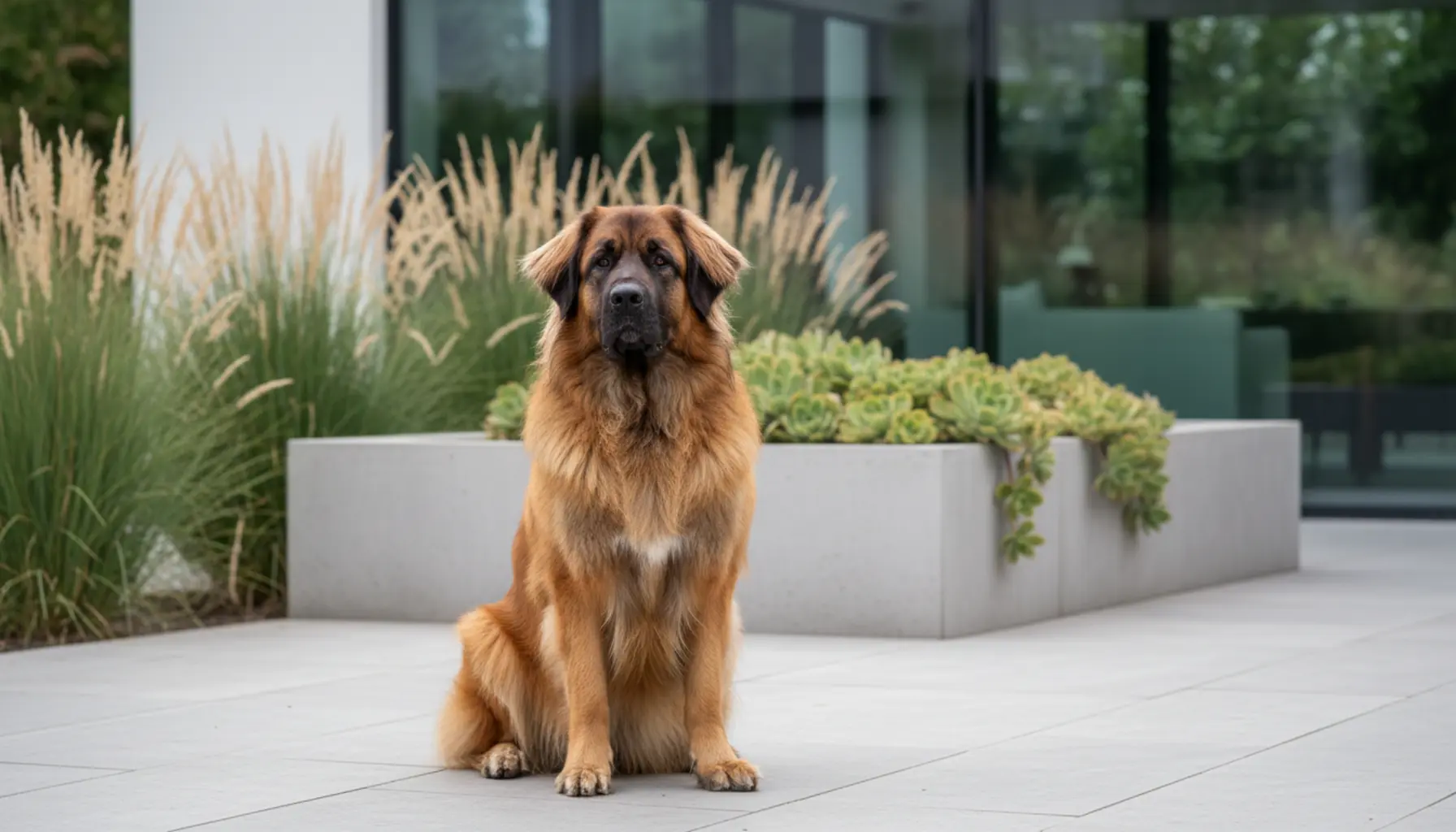
The Leonberger is a dog breed distinguished by its majestic appearance and gentle character. This article describes the temperament, care, and history of the Leonberger, indicating the main requirements of the breed and its suitability as a family dog.
Table of Contents
- Leonberger Characteristics
- Disposition and Temperament
- Care and Grooming
- Leonberger as a Family Dog
- Breed History and Origins
- Requirements and Maintenance Costs
Leonberger Characteristics
The Leonberger is a dog that commands respect through its appearance, yet surprises with its gentle, balanced demeanor. Above all, this is a family breed – deeply attached to its caregivers, focused on close contact with people, and adversely affected by loneliness. Leonbergers are famous for their so-called “golden temperament”: they are calm, emotionally stable, yet alert and aware of their surroundings. At home, they usually move with dignity, are not overly excitable, though as young dogs they can be clumsy and energetic; given their size, this calls for consistent, yet gentle handling. Their gentleness does not mean submissiveness – these are proud, intelligent dogs that respond best to calm, predictable guidance, and are highly motivated by positive training methods. An important feature of the Leonberger is its strong protective instinct—not aggressive defense, but a natural need to “watch over” the family, children, and territory. They rarely provoke conflicts with other dogs, but are not entirely lacking in assertiveness, making early socialization key so that their vigilance does not turn into excessive distrust. Leonbergers generally show equal attention to all household members, though they often select one person with whom they develop a particularly strong bond. With children, they are especially gentle – tolerant of their spontaneity, patient and usually careful during play, but due to their mass and strength they require adult supervision and clear rules both for the dog and for children on proper interaction. This breed is not suitable for those expecting unwavering “movie-like” obedience – the Leonberger works better with a human partner than a strict commander, and in many situations is capable of making independent decisions, which can be both an advantage and a training challenge.
In terms of temperament, the Leonberger usually finds itself somewhere between a “couch potato” and a working dog – it is not the typical slouch that sleeps all day but neither is it a high-performance athlete needing constant activity. It is an active dog that requires regular, long walks, space to run freely and mental stimulation, but after adequate exercise, it can calmly rest at home. It is comfortable in various roles: as a family dog, hiking companion, swimming enthusiast, and, with specialized training, also as a rescue or therapy dog, thanks to its balanced psyche and gentle attitude toward people. Leonbergers are very sensitive to their owners’ emotions – they can read the mood of family members, calm tense environments, and harsh, shout-based training quickly undermines their trust in the handler. This is a breed that matures slowly – both physically and mentally; thus, the extended “youth period” requires patience, consistency and a thoughtful training plan. A Leonberger owner should expect a young, large dog to test boundaries, and its size and strength make training gaps much harder to correct than with small breeds. Properly managed, however, the Leonberger becomes an incredibly predictable, loyal companion who does not seek conflict but harmony and closeness with the family. This is not a dog for people who spend most of the day outside the home – prolonged isolation and lack of contact may lead to frustration, destruction in the house, or the development of separation anxiety. In the right conditions, the Leonberger impresses with its balance, calmness, and self-confidence that, combined with its imposing silhouette, make it seen as a gentle giant – not intrusive, but always present wherever family life unfolds, always ready to accompany both in daily routines and moments of relaxation.
Disposition and Temperament
The Leonberger is considered one of the most balanced “gentle giants” among dogs, and its disposition is the result of years of deliberate breeding for family and working purposes. It is a dog with a calm, but not sluggish nature – not the typical “pillow dog”, but a companion who likes to be close to its people and actively participate in domestic life. From puppyhood, it shows a strong need to be at the center of the family “pack”, and thus fares poorly in isolation, long kennel stays, or a life “in the yard”. The Leonberger is generally not noisy; it does not bark without reason, but can alert with a loud voice when something catches its attention. Its temperament is often described as stable and predictable – a well-socialized Leonberger rarely acts impulsively, preferring to observe calmly before taking action, e.g., moving aside, shielding its caregiver with its body, or standing between a child and a potential source of danger. This type of dog emotionally synchronizes strongly with humans – it reacts to its owner’s mood, may become uneasy with tension at home, but also senses moments of relaxation and can “switch off”, settling peacefully at the owner’s feet. By nature, it is gentle toward people, has no desire to dominate humans through aggressive confrontation, but it’s not passive either – instead of blindly following commands, it tends to reflect and requires respectful, clear communication of rules. During adolescence, a Leonberger’s temperament can be surprising – despite their massive build, they are often very lively and occasionally clumsy teenagers, who get easily excited, especially in new situations and when meeting people or other dogs. They require calm, consistent handling that allows for their natural joy of life while teaching self-control, relaxing on command, and respecting the human’s personal space. A well-trained adult Leonberger becomes a dog that can accompany the family in daily activities for hours, maintaining a calm presence, and when there is an opportunity for activity – switches into full engagement, whether during long walks, swimming, obedience training, or working as a rescue dog. This flexibility of temperament – the ability to shift from stimulation to relaxation – is one of the breed’s greatest strengths, though it develops only with early training in establishing a rhythm: time for play and activity as well as time for rest. The Leonberger’s territorial instinct exists but generally does not manifest as aggressive defense. The dog prefers to control what goes on in its territory, rather than actively “attacking” an intruder. With strangers, it is usually restrained, often reserved – not every Leonberger will immediately warm up to a new person, but under normal conditions should not display unwarranted aggression. Puppyhood socialization is crucial: a dog exposed to various situations, people of all ages, other animals, city noises, and rural surroundings will grow into a confident, open, and simultaneously calm and composed companion. Neglecting this phase can result in excessive distrust, fearfulness, and in extreme cases, defensive reactions to situations the dog considers dangerous. In everyday life, one of the most important traits of the Leonberger’s disposition is its high level of tolerance and patience with children – many individuals allow close contact, petting, hugging, or even leaning on the dog. However, even the most patient dog has its limits, so it’s essential to teach children respect for the animal and always supervise interactions. Due to its mass, a Leonberger can accidentally knock over a child, especially when excited, so early on it’s important to teach calm greetings, walking at heel, and the “stay” or “place” commands. In relations with other dogs, the Leonberger’s temperament is usually balanced, but much depends on bloodline, socialization, and the young dog’s experiences. Males can be more assertive toward other adult males, especially of large breeds, while females are often more socially flexible. Still, the Leonberger is not prone to conflict; properly led, it willingly engages in positive interactions, enjoys group walks, and when raised properly, accepts other pets at home, including small dogs and cats. What’s needed is clear rules – one should not allow innocent leash tension, barking at other dogs, or “managing” them with its mass. A unique trait of the Leonberger is its desire to cooperate with humans: this is a dog that feels best when it has a task – it could be learning tricks, sports such as tracking, nosework, or water work. Without opportunities to use its mental and physical potential, boredom, frustration, and thus unwanted behaviors may follow, such as destroying the garden, pulling on the leash, or excessive barking. Therefore, when thinking of the Leonberger, it’s worth looking not only at its gentleness, but also at its need for daily activity and human contact – this combination of a calm nature with an energetic but balanced temperament means this breed is best suited for those who can blend affection with consistency and give the dog a real place in family life.
Care and Grooming
The Leonberger, as a large dog with a dense double coat, requires thoughtful and regular grooming, encompassing coat maintenance and overall health. Its fur is abundant, with a rich undercoat and a characteristic mane around the neck, therefore brushing should be done at least 2–3 times a week, and daily during the shedding periods. The best option is a combination of a slicker brush, metal comb, and an undercoat rake, while avoiding aggressive brushing that could damage the top coat or irritate the skin. Grooming should cover the entire body – from ears, through the mane, to the feathering on the legs and tail – with attention to areas prone to matting, such as groin, behind the ears, and under the collar. Baths do not need to be frequent; usually every few months or as needed, using mild shampoos for long-haired dogs. It’s important to rinse thoroughly and dry the coat well to prevent skin irritation and fungal development. After muddy walks, most people limit themselves to rinsing the paws and belly and wiping wet areas with a towel, leaving full baths for special occasions. Due to the dog’s size and mass, it’s worth accustoming it from a young age to standing in the tub or shower, and to the dryer – this will make adult grooming easier. Equally important is ear care; floppy ears tend to accumulate moisture and wax, so once a week you should gently examine inside and, if necessary, clean with a veterinary ear cleaner, avoiding the use of cotton swabs deep inside the canal. Also regularly check the eyes (for redness, excessive discharge, or irritation) and trim the nails if they do not wear down naturally – too long nails may cause improper pressure on the joints.
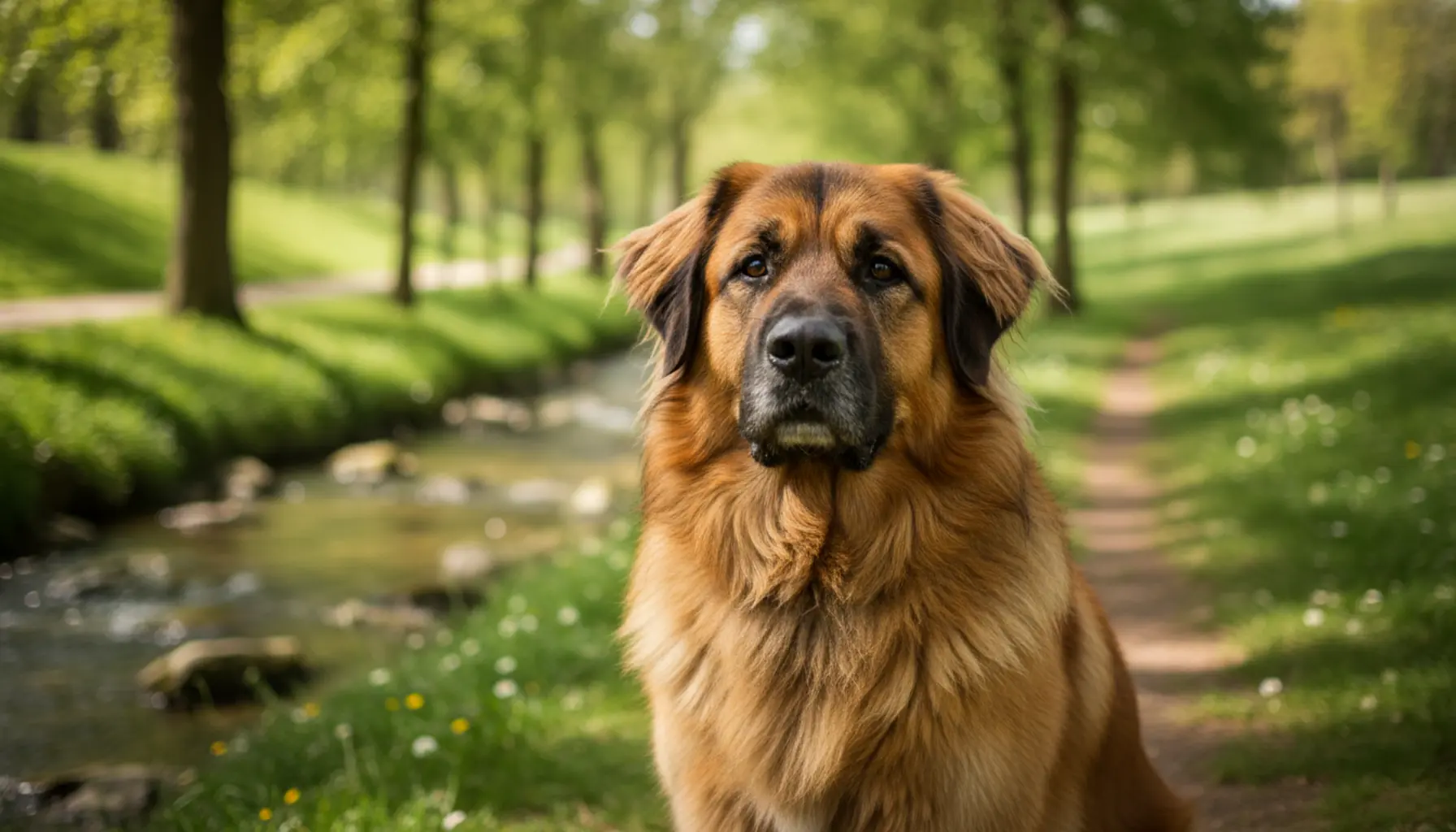
Caring for a Leonberger also means providing a suitable diet, physical activity, and preventive healthcare, all crucial for a large, fast-growing breed. Leonberger puppies should be fed food designed for large and giant breeds, with controlled calcium and phosphorus content and moderate calorie levels to avoid excessive growth, which burdens the joints and skeletal system. Adults require complete food with a proper amount of animal protein, healthy fats, and joint-supporting additives such as glucosamine or chondroitin; many owners opt for “joint support” formulas or add supplements after consulting a vet. Portions should fit the dog’s age, weight, and activity level, monitoring the body line – obesity significantly increases the risk of dysplasia and heart problems. A Leonberger should not be exercised right after eating to reduce the risk of gastric torsion; it’s best to divide daily feeding into two meals and ensure a calm rest after eating. In terms of exercise, this breed requires longer but not overly intense walks, with opportunities for off-leash running where safe and permitted, and mental work – obedience training, scent games, simple working tasks, or training for therapy or rescue sports. Because of susceptibility to joint problems, avoid excessive jumping, running on slippery surfaces, and strenuous workouts during growth. It’s wise to monitor the Leonberger’s health through regular veterinary checkups, vaccinations, deworming, tick and flea prevention, as well as periodic blood tests, heart checks (echo, ECG), and joint X-rays (for dysplasia). Prevention also involves weight monitoring, coat and skin quality assessment, and behavior observation – apathy, reluctance to move, or sudden appetite changes may signal problems. A well-cared-for Leonberger, on a balanced diet, sensible exercise, and systematic grooming, is more likely to enjoy good health despite its size, and daily care for its needs builds the bond and sense of security essential for harmonious coexistence with this gentle giant.
Leonberger as a Family Dog
From the beginning of its history, the Leonberger was bred as a family companion rather than solely for working purposes, which strongly influences its behaviour at home to this day. This breed generally feels best at the heart of domestic life – wanting to be wherever people are, whether it’s the living room, garden, or kitchen. Thanks to its calm resolve and high tolerance of stimuli, the Leonberger usually copes well with the hustle and bustle of family life: children’s noise, guests, and everyday commotion rarely stress it, as long as it was exposed to various situations during puppyhood. However, its size should be taken into account: as an adult, it can weigh as much as an adult person, so the living space should allow for comfortable movement; narrow halls, steep stairs, or slippery floors may pose a problem for a young, rapidly growing dog. The Leonberger does not require a huge estate, but it does need a comfortable place to rest, preferably near the family, and daily walks rather than all-day solitary duty in the garden. Left alone for too long, deprived of contact and stimulation, it can become frustrated, which in such a large dog can quickly lead to troublesome behaviors. Training the family members is also very important – children should know how to be gentle with the dog, not to pull fur or ears, and to let it rest when it withdraws. Meanwhile, the adult caretaker must teach the Leonberger calm home behavior from the start, settling on its bed, accepting grooming, and polite greeting of guests, which is especially important given the dog’s size. When properly trained, Leonbergers are rarely excessively loud at home – they are usually moderate barkers, using their voice to warn rather than for no reason, though compared to small breeds their deep, resonant voice may seem subjectively loud. A major asset of this breed as a family dog is emotional stability and little inclination toward impulsive reactions. A Leonberger is not a hysterical or nervous dog by nature; it prefers to assess the situation than react violently. Well-socialized individuals are typically trusting yet a bit reserved towards strangers, never pushy, but always alert to what is happening in their “pack.” In many households, the Leonberger acts as a calm guardian – not an aggressive defender, but rather one who deters with its silhouette and bass bark, letting you know this is not an “open invitation” for unwanted guests. At the same time, this attachment to family and readiness to “watch over” its members makes it dislike being isolated in another room or a kennel while family life happens elsewhere.
In an active family, the Leonberger can be a wonderful companion for outings, long walks, and trips outside the city, though it is not suitable for extreme sports enthusiasts seeking a marathon or competitive cycling partner. This is a dog made more for gentle but regular forms of exercise: jogging, forest hikes, playing with kids in the meadow, swimming, and trips to the lake than intense sprints on asphalt. For families who appreciate outdoor activity, camping, or camping holidays, the Leonberger could be a dream companion, provided the temperature is not too high – its thick coat and body mass predispose it to overheating, so summer activities need to be planned wisely. At home, it’s important to maintain consistency as a family regarding rules: if you don’t want the dog on the couch, no one should let it up “just sometimes”; if begging at the table isn’t allowed, every family member must ignore the “sad bear eyes” during meals. The Leonberger quickly learns which family members “allow” certain behaviors, so inconsistency creates confusion and may eventually cause conflicts. Early on, it is also good to ensure safe management of space and interactions – door barriers, the possibility of isolating the dog briefly when there are very small children or elderly people with reduced mobility in the house, and teaching calm leash walking are not luxuries but necessities at this size and strength. The Leonberger can be an excellent choice for families with school-aged or teenage children who already follow rules and can help with feeding, brushing, and walks, gaining in return a devoted friend for years. For families with babies or very young children, the breed is also suitable, provided the adults have the time and energy both for raising the dog and caring for the child – neglecting socialization and work with a young Leonberger “because we’re too busy now” can become much harder to remedy later. It’s also important to consider the household budget: a large dog means higher expenses for quality food, health care, potential treatments, gear, and training, which over a year becomes a noticeable line in the family’s finances. When the spatial, time, and financial conditions are right, and all family members understand how to responsibly raise a giant dog, the Leonberger typically fits perfectly as a family dog – very closely bonded, gentle, patient, but also needing a human presence and sensible daily guidance.
Breed History and Origins
The Leonberger is one of the few dog breeds known from the outset as a “designed dog,” not a result of natural selection or purely working breeding. Its history is intertwined with the small German town of Leonberg in Baden-Württemberg and the figure of Heinrich Essig – a city councilman, animal lover, and very ambitious breeder from the 19th century. In the 1830s and 1840s, Essig set out to breed a dog that would resemble the lion from Leonberg’s coat of arms: large, long-haired, majestic, gold-brown in coloring, with a clear “lion’s mane” around its neck and chest. At the time, massive mountain dogs and Newfoundlands were hugely popular in Europe, so they were used primarily in creating the Leonberger – historical records mention crossing large white mountain dogs (probably Pyrenean mountain dogs and other molosser guard types) with Newfoundlands, and later with the addition of Saint Bernards, who were then gaining fame as rescue and family companions in the Alps. Thanks to this, the Leonberger inherited its powerful build, dense double coat providing protection against cold and damp, high physical endurance, but also a gentle, balanced personality and a marked protective instinct. Importantly, Essig’s goal was not so much a working dog but above all a representative one – at a time when prestige and social status were also expressed through rare, impressive animals in wealthier homes and courts. His dogs quickly drew the attention of European aristocracy, including Empress Elisabeth (Sisi) of Austria and other royal family members, who appreciated both the breed’s impressive looks and its friendly character.
In the second half of the 19th century, the Leonberger began spreading outside of Leonberg and its surroundings, reaching Switzerland, France, Austria and further east, gradually gaining recognition as a family, sled, and utility dog. On farms, it was used to guard homesteads, pull light carts, and even for water rescue, making use of its powerful constitution and confidence in water inherited from Newfoundlands. At the same time, its image as a “luxury dog” strengthened by its presence at dog shows and among elites – which had its pros and cons. On the one hand, popularization supported breed development, but on the other hand, it attracted breeders interested mainly in profit, who did not always care about health or stable character. The first clubs and breed associations were formed at the end of the 19th century in Germany, slowly setting clearer breeding criteria. Nonetheless, the breed did not escape the hardships of major wars. World War I led to a collapse in breeding – many dogs died at the front or were put down due to food shortages, others were enlisted as transport or service dogs. After the war, breed fans rebuilt the population, but their efforts were brutally interrupted by World War II, during which the Leonberger again came close to extinction. It is estimated that only a handful of purebreds suitable for breeding survived in Europe after the war ended. Thanks to the dedication of a few determined breeders from Germany and Switzerland, who selected pairs carefully and avoided close inbreeding, the breed was rescued and its population gradually rebuilt in the 1950s and 1960s. As political and economic conditions stabilized, the Leonberger reappeared at exhibitions in various countries, and the FCI ultimately recognized the breed and refined its standard, highlighting both working utility and family character. Over time, the Leonberger spread to North America, Scandinavia, Eastern Europe, and beyond, becoming known as a typical “gentle giant.” Modern breeding programs – coordinated by international breed clubs – emphasize the preservation of the typical temperament – calm, stable, aggression-free – and minimizing common health problems of large breeds. Today’s Leonberger, though descended from working mountain dogs and Newfoundlands, is above all a family and companion dog, and its history – marked both by a deliberate “breeding project” and war dramas – makes every representative of this breed a living testimony to the endurance of breeders and enthusiasts who did not let it disappear.
Requirements and Maintenance Costs
The Leonberger, as a large and massive dog with specific needs, requires from the future owner both appropriate living conditions and readiness for higher than average costs of maintenance. Space is key: the Leonberger feels best in a house with access to a garden, where it can move freely and observe its surroundings. This does not mean simply “letting it out in the yard” – this dog needs constant family contact and should not be kept in a kennel or tethered. It can live in an apartment as long as the owner provides sufficient activity and a comfortable resting place (a large, thick bed on a non-slip surface to protect the joints). Daily logistics are also important – wide passages, sturdy stairs, the ability to carry the dog to the car if sick or elderly. Time requirements are significant: the Leonberger needs 2–3 long walks a day (totalling about 1.5–2 hours), at least one of which should allow free movement on a long line or in a safe area, complemented by short training sessions and scent games. Avoid overexerting it during growth, e.g., long bike rides, jumps, or “timed” stair runs. The breed also has nutritional needs connected to rapid growth and large body mass: high-quality food (dry, wet, or home-cooked/raw diet planned with a nutritionist), with controlled calories, protein, calcium, and phosphorus – which in practice means higher monthly expenses than for a medium-sized dog. Add to this regular grooming – brushing, periodic baths, caring for nails, ears, and teeth, and buying sturdy gear: a solid leash, harness or collar, stable bowls, toys for chewing and mental activity, and for car travel – a transport crate or good seatbelt.
When estimating the costs of keeping a Leonberger, break it down into initial outlay, monthly expenses, and occasional and unexpected outlays. Buying a puppy from a good, registered breeder in Poland typically costs several to a dozen thousand PLN, depending on the breeder’s reputation, parentage, and the show/breeding potential of the litter. Add to that the starter kit: a large bed, bowls (metal or ceramic recommended), leash, harness/collar, toys, grooming tools (brush, rake, comb, nail clippers, optionally a high-power dryer), carrier or car restraint – which can total from a few hundred to several thousand PLN if you invest in quality gear. Monthly food costs for an adult Leonberger are usually from 300 to 600 PLN, depending on the product quality and amount, with an extra cost for supplements and nutritionist advice if following cooked or raw diets. Regular expenses include tick preventives and deworming (higher doses required for large dogs), and veterinary check-ups. Like most giants, this breed is prone to issues like hip and elbow dysplasia, heart problems (e.g., cardiomyopathies), gastric torsion, or degenerative joint diseases – so factor in regular orthopedic checkups, cardiology exams, and preventive abdominal ultrasounds in adulthood. Annual vaccinations, blood and urine tests, possible dental procedures, and neutering/spaying (if chosen) also carry higher costs for large dogs than small breeds. Consider pet health insurance or setting aside a fixed monthly “health fund”, to avoid tough choices in case of sudden illness requiring expensive diagnostics or surgery. Periodical costs may also include professional trimming or grooming in problem areas (feet, ears, pants) at a groomer, though many owners learn basic grooming themselves, investing once in quality tools. Don’t forget training costs – while the Leonberger doesn’t need advanced sport training, puppy classes, basic obedience, and trainer or behaviorist consultations are highly recommended. Group courses typically cost a few hundred PLN, with private sessions an extra expense, but a well-trained and balanced dog means less risk of home destruction, conflict with other dogs, and dangerous situations. In the long run, the Leonberger owner must expect rising costs of veterinary care, joint supplements, painkillers or physiotherapy with age, and that transporting a large, older dog may be harder – occasionally requiring at-home vet visits or extra equipment (e.g., support harnesses for stairs).
Summary
The Leonberger is an impressive and majestic dog breed that combines a lion-like appearance with a gentle disposition. Its key features are calmness and balance, making it an excellent family companion. The Leonberger requires appropriate care and grooming, as well as enough space for comfortable living. Its history dates back to the 19th century and originates from Germany, adding to its unique charm and prestige. When considering this breed, remember its requirements and maintenance costs, but its devotion and loyalty more than reward the investment.

