

Are you looking for a calm dog to live in an apartment block? Find a list of the quietest and most sociable dog breeds that are best suited for urban environments. Learn which character traits are key and how to choose a pet that will ensure comfort for you and your neighbors.
Table of Contents
- Which Dog Breeds are Ideal for Apartment Living?
- Characteristics of Quiet Dogs
- The Calmest Dog Breeds – What Should You Know?
- How to Choose the Perfect Apartment Dog?
- Small, Sociable Dogs for Apartments
- Pros and Cons of Individual Breeds
Which Dog Breeds are Ideal for Apartment Living?
When choosing a dog for an apartment, you should focus not only on size but above all on temperament, energy level, and tendency to bark. Ideal breeds for city life are those that tolerate close contact with people, can relax indoors, and do not overreact to noises from the stairwell or through the wall. Contrary to appearances, not only small dogs do well in apartments—many medium and even large breeds are very calm and quiet, provided they are given the right amount of exercise and mental stimulation. One of the most frequently recommended breeds for apartment dwellers is the Pug—a small, very sociable, gentle, and naturally rather quiet dog. Pugs love human company, are attached to their owner, and are satisfied with moderate walks, napping on the couch after returning home. They are not usually very vocal, though one should remember possible snoring due to their short muzzle. Similarly, the French Bulldog adapts well to apartment living—lively, cheerful, but homely and not in need of vast open spaces. They are people-oriented and like to be at the center of attention. If socialization and calm reaction training are provided from puppyhood, they should not be annoyingly noisy. Among small breeds, the Cavalier King Charles Spaniel is also excellent for apartment life—extremely affectionate, family-oriented, sociable, and naturally calm. Cavaliers rarely bark without a reason, love spending time near their owner, and thrive as couch potatoes as long as they get their daily, moderate walks. Another often overlooked “apartment” dog is the smaller Poodle (miniature or toy)—very intelligent, eager to learn, and, with proper upbringing, rather calm at home. Thanks to their quick wit, they easily master rules and can be taught the “quiet” command and the ability to react calmly to sounds from the corridor, which makes them a good neighbor. Shih Tzu and Lhasa Apso—breeds historically bred to be companions in homes and palaces—also deserve mention, as they feel great as calm, cuddly apartment companions; with proper training, they are not too yappy and are happy with short neighborhood walks. Among medium-sized breeds, the Whippet is exceptionally suited for apartments—a slim sighthound with a surprisingly couch-potato demeanor. Although they love short sprints outdoors, at home Whippets are quiet, balanced, and spend most of their time curled up. Their sensitive nature means they dislike shouting and chaos, which is why they rarely cause noise—the neighbor often doesn’t even know a dog lives next door. Another good candidate is the English Bulldog—despite its massive build, it’s a typical homebody who spends most of the day lazily napping; with proper socialization, it usually doesn’t bark unnecessarily, though expect snoring and grumbling sounds. Some Spitz breeds, like the Medium Spitz or Pomeranian, can also be calm and reserved, but much depends on individual temperament and upbringing—without proper guidance, they can be vocal, so primarily those with stable and balanced characters are recommended for apartments.
Also worth considering are dogs commonly referred to as small dogs for apartments in larger size, such as the Golden Retriever or Labrador Retriever, although both require more exercise and activity than typical small companion breeds. A well-raised Golden Retriever is naturally gentle, friendly to people and other animals, and usually only barks as a warning, not hysterically. In the apartment, they are usually calm, as long as they get daily, longer walks and mental stimulation (scent games, trick training, retrieving). Labradors, although more energetic, can also adapt to apartment life if their high need for movement and interaction is satisfied. They are sociable by nature, rarely annoyingly noisy, but when bored and left to themselves, they may start barking or destroying things. Among large, quiet breeds, the Greyhound is also listed, which, like the Whippet, is a calm, quiet housemate but does require safe, regular runs. It is also worth noting that many mixed-breeds—shelter and foundation dogs—can be excellent for apartment life, even if they don’t fit a “textbook” breed description but are, in practice, gentle, balanced, and quiet. Often shelter workers can point to dogs that have already been tested in apartment situations or have previously lived in urban conditions and are known to cope well with elevators, street noise, or being left alone for a few hours. Whether a given breed turns out to be ideal for apartments also depends on individual variability—even within calm breeds, there may be more excitable individuals, and vice versa. That’s why it’s worth finding breeders or organizations that reliably assess puppy or adoption dog temperaments and describe honestly whether a dog is predisposed to being a quiet, balanced companion in an apartment. Regardless of breed, early training in correct apartment habits is crucial: calmly passing through the stairwell, ignoring noises behind the door, not reacting to the elevator or barking of other dogs. Breeds considered ideal for apartment life—Pugs, Cavaliers, Miniature Poodles, French and English Bulldogs, Whippets, Greyhounds, or well-chosen mixed-breeds—when combined with proper socialization and consistent yet gentle training, will reward you with not only quiet behavior but also sociable, balanced character, making everyday life in a densely built-up urban space easier.
Characteristics of Quiet Dogs
Quiet dogs are not only those who rarely bark, but mainly those who generally function in “energy-saving mode” when reacting to stimuli. Their common trait is a balanced temperament—they calm down easily, don’t panic over noises from the wall, and rarely overreact to movement in the stairwell or street sounds. Typically, they have a stable nervous system: they observe the situation before reacting instead of barking “just in case.” This means there is less risk of persistently barking at every intercom sound, passing stroller, or neighbors in the elevator. Many quiet breeds also show a certain “introversion”—this doesn’t mean unsociable, but rather a smaller tendency to express emotions noisily or excessively. Such dogs often communicate more subtly: they come for contact, touch you with a paw, or lay their head on your lap instead of barking at you out of excitement. Another important trait is low or moderate excitability—a quiet dog can get bored calmly, sleep part of the day, occupy itself with a chew toy or scent toy rather than vocalizing and demanding constant attention with barking or whining. For apartment living, it’s also important how the dog deals with frustration: when it doesn’t instantly get what it wants (e.g., to go for a walk right after the leash is on), can it wait calmly, or does it start whining and barking right away. Quiet dogs usually learn self-control better and respond more quickly to calming commands, making it easier to function in limited spaces. Many of them also have a natural tendency to stay close to people, but without constantly demanding entertainment—they like to lie next to the couch, watch, sleep, and become more active mainly when it’s time for activity.
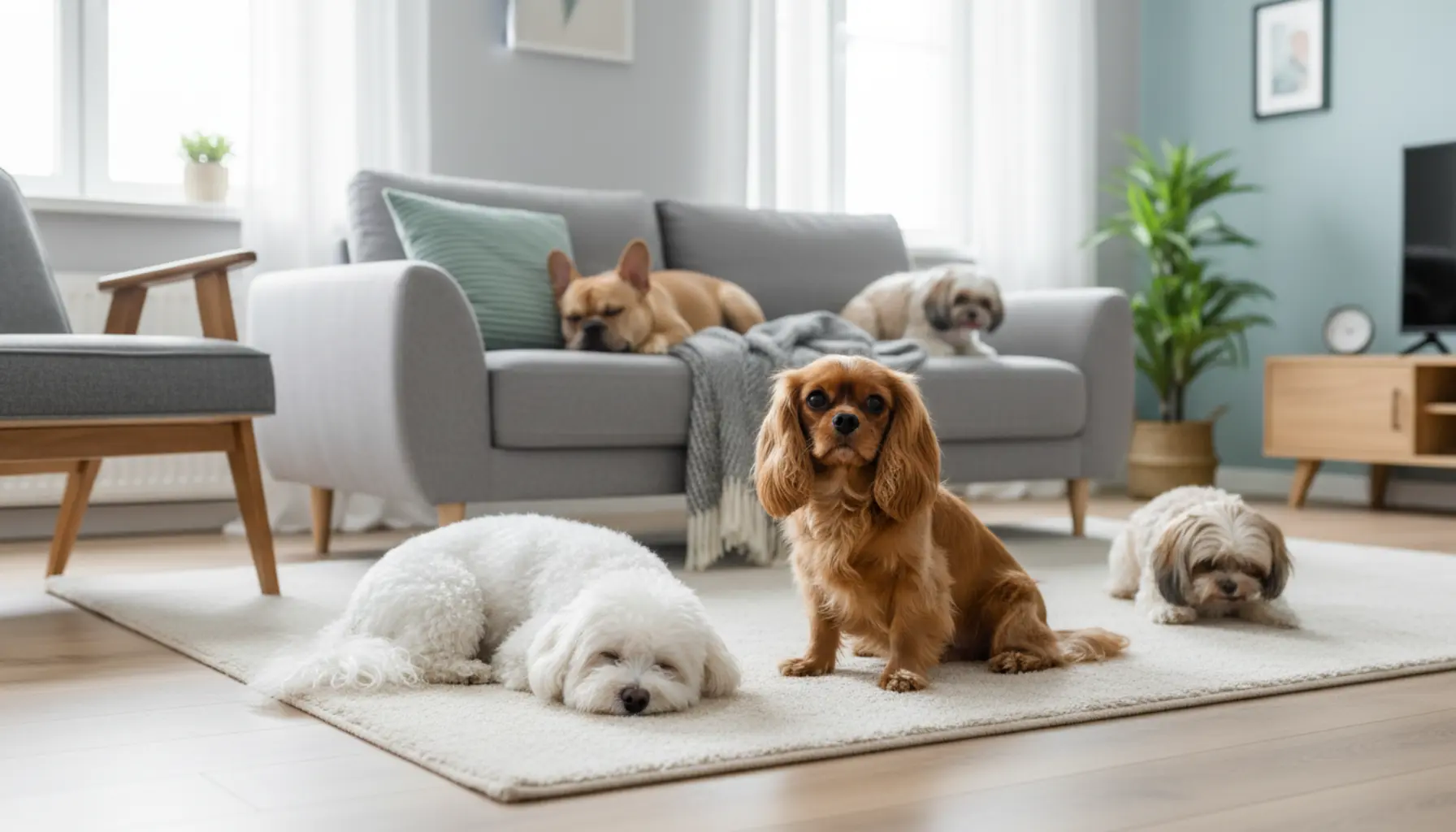
An important characteristic of quiet dogs is their approach to environmental stimuli typical for cities and apartment complexes. Dogs with a calm profile usually react less emotionally to city noise, the sound of shoes in the stairwell, or passing elevators. They learn quickly that these sounds are neutral background, not a sign of potential danger requiring alarm barking. This is seen in the process of habituation—the ability to get used to repetitive stimuli. Quiet dogs have high adaptability in this aspect: after a few weeks living in an apartment, they can sleep with the window open while street noise is audible or ignore louder hallway conversations. They also usually have a “softer” reaction to strangers—rather than barking defensively, they are curious or keep their distance, but without hysteria. At the same time, these dogs are often very sociable: they like people, are happy to greet guests, and in contacts with other dogs show a calm, balanced posture, which reduces the risk of conflicts on narrow sidewalks or in the elevator. Notably, noise is not their main way of regulating emotions—they “let off steam” more through movement, play, sniffing, or seeking contact with their handler than through barking. In many cases, quiet dogs have moderate exercise needs, but high need for closeness: they’re not loners, like to be “at the heart of the family,” lying where the family members are, and their sense of security increases when they can observe daily, repeatable household rituals. The predictability of the environment and daily schedule further calms them—a dog that knows when it will go for a walk, when it’s playtime, and when to sleep is less frustrated and vocalizes less. Quiet dogs also respond well to positive training: they learn commands like “quiet,” “go to bed,” can relax on their bed even when things are happening at home, and their relationship with their owner is based on trust and clear communication rather than tension and constant excitement. As a result, their daily functioning in apartment blocks is nondisruptive for neighbors and very comfortable for both dog and family.
The Calmest Dog Breeds – What Should You Know?
The calmest dog breeds share a few common characteristics, making them better suited for apartment life than others, but it’s worth remembering that “calm” does not equal no needs or boredom in the pet’s daily routine. First of all, dogs with a gentle temperament have lower reactivity—they react to stimuli such as stairwell noise, doorbells, or construction noises through the wall slower and less intensely. As such, they don’t enter a permanent state of arousal, bark less often, and more easily recover after stressful situations. Typical quiet breeds like the Pug, French Bulldog, Cavalier King Charles Spaniel, Shih Tzu, or Bichon Frise are known for their cheerfulness and relatively low exercise needs, but they’re also very people-oriented. Their calm nature at home largely stems from the fact that being close to their owner is most important, not going on extreme adventures every walk. Some larger, phlegmatic breeds, like the English Bulldog, Bernese Mountain Dog, Newfoundland, or Leonberger, naturally move and think at a slower pace, which results in calm home behavior—after a sufficiently long walk, they can sleep for most of the day, not demanding constant attention. It’s essential, however, for the owner not to confuse calmness with laziness or illness—even the quietest dog needs daily walks, scent stimuli, age- and condition-appropriate play, and social contact; otherwise, they can become apathetic, frustrated, or develop problem behaviors like destructive chewing or excessive paw licking. When choosing a calm breed for an apartment, also keep age in mind—young dogs (especially up to around 2–3 years old) are naturally livelier, get excited more easily and require more training effort. Adults and seniors usually calm down more easily, sleep longer, and are less impulsive, even among breeds regarded as energetic.
Though typical calm breed lists often include mostly small and medium dogs like the discussed Pugs or Cavaliers, it’s wise to look more broadly, considering the breed’s original purpose and the specific character of a given dog. Breeds designed for close human companionship and as pets such as the Maltese, Pekingese, or Lhasa Apso, usually need less intense physical and mental work, thus can more easily adapt to their owners’ routine. On the other hand, dogs bred for guarding or herding (e.g., shepherds, terriers, most hunting breeds) may naturally be more alert and inclined to bark at any unfamiliar sound, though balanced individuals that adapt very well to city life are also found among them. Here, the key is a conscious selection of the breeding line—in popular breeds (like the Labrador, Golden Retriever, Border Collie), there are sport- and work-oriented lines with more aroused and demanding dogs, as well as “family” lines where the focus is on a gentle, stable character and ease of living at home. Before making a decision, it’s worth visiting several breeders, talking to them about their dogs’ typical behavior, seeing the mother of the litter, and, if possible, other adult relatives—these often indicate how the puppy’s temperament might develop. Also, note that calm breeds are often more emotionally sensitive, bond strongly with people, and do not tolerate long periods of solitude; dogs such as Pugs, French Bulldogs, Cavaliers, or Bichons do not do well when left alone in an apartment for hours without company, which can lead to separation anxiety, howling, or destruction despite an otherwise “quiet” nature. For this reason, potential owners should realistically assess their lifestyle, the time they can devote to walks and play, and their readiness for training—since even the gentlest breed, if not socialized (contact with people, dogs, elevators, city noise) and trained in basics (alone time, recall, not barking at sounds behind the door), can turn out problematic in an apartment block. Mixed-breeds should not be overlooked, either: many shelter dogs, especially those with calm dispositions and moderate energy levels, are excellent quiet flatmates, and volunteers or behaviorists working with shelters can accurately assess which animals are truly suited for apartment life, irrespective of their origins or appearance.
How to Choose the Perfect Apartment Dog?
Choosing the ideal dog for an apartment should start with an honest assessment of your lifestyle and living conditions, rather than just browsing cute puppy photos online. Key factors are: the time you have, the activity level you can provide, and your building’s and neighbors’ tolerance for possible noise. People working from home, often present in their flat, can afford a more sensitive and people-dependent dog, while someone who spends many hours away from home should look for a breed that is more emotionally independent and better able to handle solitude (while ensuring walks and activity before and after work). It’s also vital to consider how many walks you can realistically provide each day and how long they can be—a quiet apartment dog doesn’t have to be a “couch potato,” but a breed with too much energy and too little exercise will quickly become bored and start barking, destroying things, or acting hyperactive. Next, consider the size of your apartment and building: in a studio with thin walls, small and medium dogs with low vocal tendencies work best, while in a larger flat with thick walls and tolerant neighbors, you can also consider a larger breed—provided you ensure plenty of outdoor activity. Also think about the presence of children, seniors, or other pets in the house—a patient, gentle, stable dog is a better choice for families, while seniors may need an easy-going, docile, non-pulling, gentle dog without excessive excitement outdoors. Draw up a priority list: is being very quiet most important, or sociability? Do you want a dog for long, calm walks or one satisfied with shorter, regular activity? Such a “map of expectations” will greatly help when talking to breeders or shelter staff.
The second step is consciously reviewing the temperament and traits of particular breeds as well as recognizing individual differences between dogs. A quiet apartment dog is usually one with low reactivity, not easily startled by every noise through the wall, elevator ding, or stairs footsteps. Look for breed descriptions like “balanced,” “calm at home,” “not very vocal,” “easy to handle,” or “tolerates solitude well,” but remember these are general traits and individuals may differ. Before making a final decision, try to meet real-life dogs of the breed: visit a show, breed enthusiast meeting, or breeder to observe adult dogs in a natural home environment and see how they react to strangers, noise, or other dogs. Also, consider the age—puppies are adorable but require lots of training and groundwork, frequent outings, housetraining, and persistent teaching of quiet behaviors at home; adults, especially after some socialization and basic training, are often calmer and adapt faster to the rhythm of apartment life. Consider adopting a mixed-breed—shelter and foundation workers often know their animals well and can assess whether a given dog likes people, copes with solitude, and how urban stimuli affect it, making it easier to match a pet to your real situation. Regardless of whether you choose a purebred from a breeder or a shelter dog, check where the dog comes from and its background—dogs from illegal backyard breeders or that were neglected may have fearfulness, hyperactivity, and excessive barking problems. Before the final decision, ask for several trial meetings, walks, and observations of the dog in different situations (stairwell, elevator, busy street) to see if its behavior matches your expectations of a quiet, sociable apartment mate. Consult a behaviorist or experienced trainer, especially if you lack experience with dogs—such support even at the selection phase helps prevent later problems with barking, separation anxiety, or urban adjustment.
Small, Sociable Dogs for Apartments
Small, sociable dogs are often the first choice for apartment dwellers due to their compact size, easy maintenance, and high need for human closeness. Contrary to appearances, not every small breed is suited for residing in a tenement or modern apartment block—many miniature breeds, such as some terriers, have high energy and strong guarding instincts, making them prone to bark at any noise outside the door. Therefore, when choosing a small apartment dog, focus on breeds with gentle, stable temperament, lower tendency toward separation anxiety, and moderate exercise demands. Among the most recommended quiet and sociable “city dwellers” are the Pug, French Bulldog, Cavalier King Charles Spaniel, Maltese, Shih Tzu, Pekingese, and miniature or toy Poodles. These breeds are mainly people-oriented, love spending time on the couch together, but will also enjoy calm walks around the neighborhood. Typically, their exercise needs can be met with several shorter walks a day, complemented by indoor play, which matches well with the schedule of home-based or hybrid employees. Remember, “small” does not mean “problem-free”—even the most peaceable Pug or Maltese requires consistent upbringing, socialization with people, children, and other dogs, and teaching relaxation to avoid nervousness at every stimulus. Character fit is also important: calm, gentle Cavaliers may feel overwhelmed in a very loud, chaotic house, while the more confident French Bulldog adapts better to guests and children. Single people working from home may find ideal companions in Shih Tzus or Pekingese—strongly attached to their owner, happy to nap nearby, and not requiring intense sport, although they’ll enjoy scent games and obedience exercises. Families with children often choose Miniature Poodles or Cavaliers for their gentle temperament and easy trainability; Poodles also have hair similar to human, making them more allergy-friendly (though not allergy-proof). Seniors often prefer Maltese or Shih Tzu—these dogs like routine, moderate activity and fit well in a relaxed daily rhythm, but require systematic coat care, including brushing and cutting.
Practical issues are also crucial when choosing a small, sociable apartment dog, as they directly affect everyday comfort. Some brachycephalic (short-muzzled) breeds, such as the Pug or French Bulldog, tend not to bark excessively, but may snore loudly and struggle to breathe during heat or intense effort. This makes them great calm companions for the couch but means they need special attention to health, weight control, good quality food, and careful exercise—especially in summer. On the other hand, long-haired dogs—Maltese, Shih Tzu, Pekingese—are usually quiet and strongly family-bonded, but keeping them requires regular trips to the groomer or learning self-grooming; neglected coats may cause matting, skin irritation, and discomfort, leading to nervousness. In apartment settings, it’s vital from the start to teach the dog independence—small companion breeds easily develop separation anxiety, manifested by nuisance barking or howling when the owner leaves for work. Gradually accustoming the dog to short absences, creating a safe resting space (e.g., a bed in a quiet corner), providing downtime after walks instead of constant stimulation, and environmental enrichment through chew toys and scent mats help minimize this risk. Small dogs are often carried or overly babied, which can foster nervousness and yappiness—allow them to explore the world on a leash, discover new places, elevators, stairs, and local sounds in a controlled way. Regardless of breed, a small apartment dog should master basic commands: walking on a loose leash, recall, “bed” or “place” command, and the ability to pass people and dogs calmly on narrow sidewalks. It is also good practice to teach a “quiet” command and reward calm behavior after a stimulus like a doorbell. This way, even the lively French Bulldog or energetic Miniature Poodle can live in an apartment without disturbing residents or neighbors, yet still meet social and emotional needs.
Pros and Cons of Individual Breeds
When considering breeds regarded as quiet and sociable, it’s worth reviewing their pros and cons in terms of apartment living, not just general character descriptions. The Pug is usually gentle, sociable, and not very vocal—an advantage in an apartment. They get along well with children and guests and require only moderate exercise, so regular easy-going walks suffice. However, Pugs are a brachycephalic breed, prone to breathing problems, overheating, and obesity, requiring mindful diet, limits on intensive activity in hot weather, and regular vet checks. Similarly, the French Bulldog—very sociable and rarely excessively vocal—thrives in small spaces and is very loyal to its owner. Its downside is also the brachycephalic build, with resultant breathing difficulties, possible snoring, heat intolerance, and a tendency toward skin allergies and spine issues. This is not a dog for lovers of long, arduous runs, but an ideal companion for homebodies ready for potentially higher healthcare costs. Cavalier King Charles Spaniel is an extremely affectionate, quiet, and calm breed, perfect for families including children and seniors. Strengths include gentleness, willingness to train, and relatively little nuisance barking. The drawback is again the health—Cavaliers are unfortunately known for heart defects (mainly mitral valve) and neurological problems; responsible breeding and regular health checks are essential. Miniature and toy Poodles are highly intelligent, easy to train, and shed little, which is a plus for allergy sufferers and tidy people. When properly socialized, they are not usually too vocal, and their activity is manageable in a city context. However, a lively Poodle mind can be a drawback if the owner neglects mental stimulation—they may start barking, destroying things, or compulsively demand attention out of boredom. Regular professional coat care is essential, leading to ongoing costs and the need to accustom the dog to grooming from puppyhood.
Among medium and large breeds that may adapt to apartments, the Whippet is considered one of the quietest dogs—at home, it is usually calm, even “couch potato”-like, and not bothersome for neighbors, very gentle with people and other dogs. Its huge advantage is the ability to calm down quickly after exercise and a low tendency to bark for no reason. Its disadvantage is a strong prey drive—as a sighthound, the Whippet may chase cats, birds, or running objects, so it requires walks on a leash or in well-fenced areas. It’s also sensitive to cold, necessitating clothing and shorter walks in bad weather. The English Bulldog, though larger, is calm, not very active, and generally quiet, thus often seen as a good “apartment couch dog.” It’s affectionate, very people-oriented, often a great family companion, but among breeds with the most health problems—breathing issues, joint issues, allergies, overheating, and low exercise tolerance. Owners should expect high care expenses and need to closely monitor weight and temperature comfort. Golden Retrievers and Labradors are larger breeds but often adapt perfectly to apartment life, provided they get enough physical and mental activity. Their big pluses are a friendly, stable character, easy socialization with people and dogs, and comparatively little unnecessary barking if not left idle. The downside is the need for intense daily walks and mental stimulation—lack of activity causes destruction, hyperactivity, or frustration barking. Both breeds also tend to gain weight, so apartment owners need to control diet and ensure exercise. Mixed-breeds from shelters deserve mention, too—their main advantage is matching individual dogs to specific conditions and expectations, as shelter workers usually know their behavior in various situations. A balanced, medium-sized, quiet mixed-breed may prove a far better fit than a trendy, pedigree dog with many health problems. Among shortcomings, sometimes unknown ancestry means less predictable behavior or tendencies to certain anxieties. The key is that, with proper socialization, training, and needs fulfillment, mixed-breeds—like purebreds—can live quietly and calmly in apartments, and their individual advantages and disadvantages depend more on character than on pure pedigree.
Summary
In summary, choosing a dog for apartment living requires considering several factors. Quiet, small, and sociable breeds such as Pugs, Maltese, or Cocker Spaniels make excellent city companions. It’s important to match the choice to your lifestyle and provide your dog with proper care and activity. By considering temperament, exercise needs, and sociability, you can find the perfect apartment dog who will bring joy and harmony to your everyday life.

