

Table of Contents
- Bullmastiff – Origin and Breed History
- Appearance and Characteristic Features of the Bullmastiff
- Bullmastiff: Character and Temperament
- Bullmastiff: Grooming and Health Needs
- Who is the Bullmastiff the Ideal Dog For?
- Price, Breeding, and Tips for Choosing a Bullmastiff
Bullmastiff – Origin and Breed History
The bullmastiff, despite its imposing appearance, is a relatively young breed whose beginnings date back to 19th-century England. It was created by crossing the English mastiff with the English bulldog – traits were carefully selected over decades to obtain a dog both powerful and fearless, yet balanced and loyal. The bullmastiff’s history is directly linked to the needs of British landowners and aristocracy, who at the time struggled with the plague of poaching on their vast estates. Mastiffs, though mighty, were relatively slow and lacked the speed for dynamic pursuits, while bulldogs earned recognition for their bravery, intelligence, and perseverance. The combination of these two breeds aimed to create a guard dog capable not only of catching an intruder easily but also of subduing him without killing – a very important principle, as British law forbade owners from using excessive force against poachers. The first references to planned crossing appeared around 1860, but the stabilization of traits and standardized appearance occurred in the early 20th century, when the bullmastiff began to appear regularly at shows and received its first official breed standards.
Officially recognized by the British Kennel Club as a separate breed in 1924, this was a breakthrough moment for the bullmastiff’s development. The breed quickly gained popularity not only in the British Isles but also abroad – by the 1930s, these dogs arrived in the United States and other European countries. Interestingly, while today bullmastiffs are mainly family companions and property guard dogs, their original role as “forest guards” remains ingrained in English culture and tradition. The breed’s success resulted from an excellent balance of traits inherited from ancestors – the strength, massiveness, and courage of the mastiff and the agility, alertness, and determination of the bulldog. Thanks to thoughtful selection over decades, bullmastiffs became dogs with a stable psyche, resistance to stress, and remarkable loyalty to their handler. The modern bullmastiff remains a living legend of the canine world, never forgetting its history and heritage; it stands as a symbol of responsible breeding work, where the focus was not only on appearance but also on character and adaptability to various living conditions. Today, although no longer chasing poachers, the breed continues to fascinate with its poise, distinction, and majesty, inspiring dog enthusiasts and large breed breeders worldwide.
Appearance and Characteristic Features of the Bullmastiff
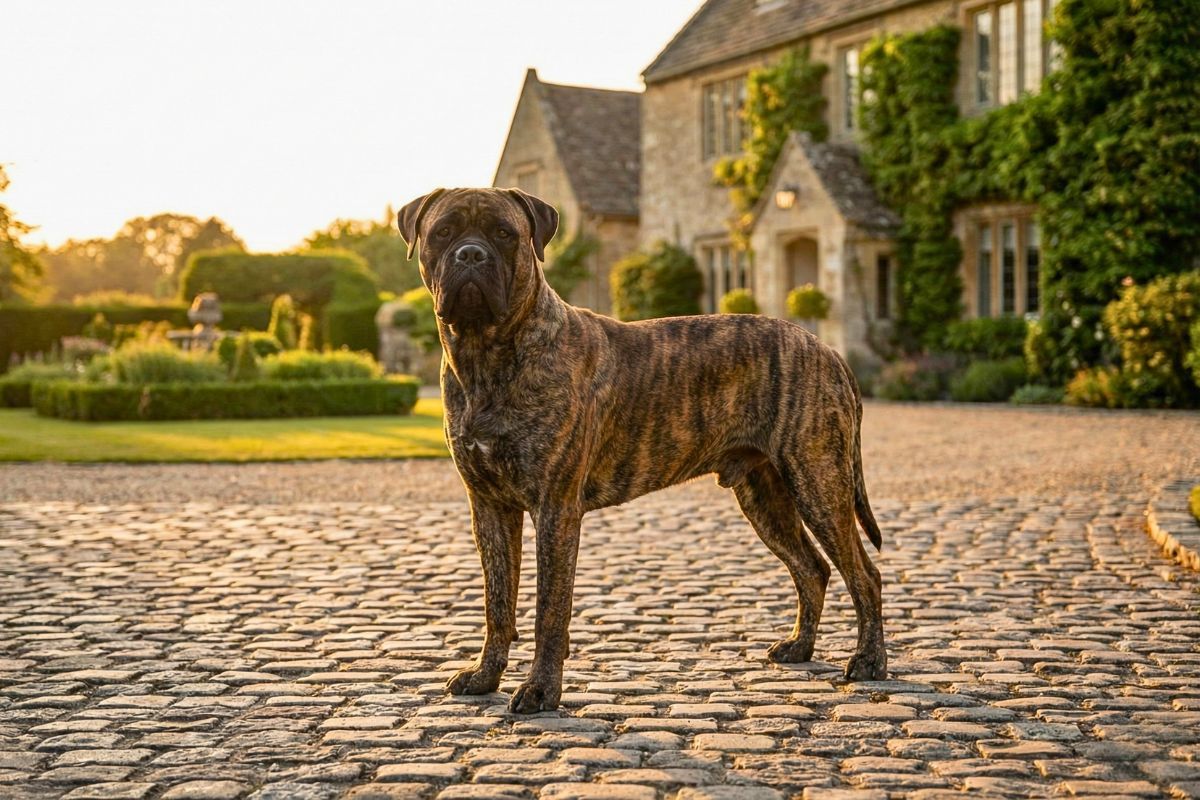
The bullmastiff is an impressive giant breed that stands out due to its massive silhouette, harmonious proportions, and natural grace. Males typically stand 61 to 68.5 cm at the withers, being larger and heavier than females. The adult bullmastiff’s weight ranges between 50–60 kg, making it one of the largest and most muscular guarding breeds. The bullmastiff has a square build, with a level topline. The head is the breed’s most distinctive feature – broad, deep, with a pronounced stop and a typical slightly wrinkled forehead, becoming even more characteristic when focused. The muzzle is short, broad, and blunt-ended, with strong but not overly loose flews, setting the bullmastiff apart from some other molossers. The nose is always black with open nostrils, while the bite can be undershot or scissor, but never asymmetrical or wry. The eyes are dark brown or hazel, widely set, adding alertness and calmness to the expression. Ears are medium-sized, V-shaped, set high on the head, usually lying close to the cheeks and highlighting the dog’s intelligent look. The skin is elastic, fitting well, with the breed’s typical moderate wrinkling on the head. The coat is short, hard, close-fitting, providing protection against harsh weather – coat colors include brindle, red, or fawn, and a black mask is mandatory. The tail is thick at the base, straight or slightly curved, usually reaching the hock joint.
Despite its powerful appearance, the bullmastiff has an exceptionally balanced temperament, earning it the nickname “gentle giant” among many dog lovers. The bullmastiff characteristically combines exceptional courage with natural loyalty toward its caretakers. These dogs are cheerful, calm, and reserved with strangers, but show affection, patience, and deep attachment to family. The bullmastiff tends to be wary of strangers, making it an excellent guardian: it observes its surroundings carefully, doesn’t react impulsively, and when intervention is needed – acts decisively and with control, in line with its ingrained protective instincts. The bullmastiff’s wolfish nature doesn’t equate to submissiveness – this is a self-assured dog with a strong sense of territory, requiring an experienced handler and early socialization for full psychological development. Nevertheless, it craves human closeness, is friendly to children, and thanks to its patient and gentle nature, often fits well in families with young kids. An important trait is its high arousal threshold – even in stressful situations, it rarely shows aggression without clear cause. Because of this, it remains calm in urban bustle or during meetings with other animals. The bullmastiff’s intelligence, combined with stubbornness, requires the right educational approach – this breed expects clear rules, consistency, and positive motivational stimuli, which in turn yield not only trust but also boundless attachment to the owner. It is a dog that remains forever loyal to its family, and its characteristic appearance goes hand in hand with an unforgettable personality – calm, resolute, and full of majesty.
Bullmastiff: Character and Temperament
The bullmastiff is a breed that impresses not only with its appearance but, above all, with its extraordinary and complex character. These giant dogs have a stable mentality, and their temperament blends qualities of both a guardian and a loyal family companion. A bullmastiff’s innate courage does not mean mindless aggression – most of them are calm, patient, and able to adjust quickly to changing domestic situations. In daily life, bullmastiffs are tranquil, stress-resistant, and unmoved by regular stimuli, allowing them to function harmoniously even in homes full of children, animals, or guests. Their wariness with strangers results in a guarded stance – the bullmastiff will never attack without reason and always assesses a situation first. These dogs are highly responsive to their owner’s moods and can empathetically react to emotions – they sense when quiet or care is needed at home. A strong bond with family often manifests as the need for close contact – the bullmastiff likes to be wherever its people are, often following a chosen owner from room to room, demanding attention and presence. Their gentleness with household members, especially children, is legendary, making them exceptional family dogs. However, their guardian instincts remain very strong – a bullmastiff will naturally protect its territory and caretakers, acting as a vigilant observer. This combination of bravery and psychological stability means the bullmastiff doesn’t panic in tough situations but keeps its cool and assesses threats thoughtfully. The consistency, calmness, and self-control of these dogs make them rarely impulsive – but when necessary, they can be firm and resolute. Another advantage is their low tendency to bark, reducing issues with neighbors and making the breed attractive for those living in detached homes or quiet neighborhoods.
In relationships with their caretakers, bullmastiffs exhibit immense loyalty, almost attachment, approaching the ideal of the canine companion. These aren’t independent dogs – bullmastiffs expect leadership, clear rules, and daily routines to feel secure. Within the family circle, they are gentle, affectionate, and extremely caring, while maintaining a certain distance from strangers, favoring observation and analysis over rash action. Their ability to adapt quickly to new situations is a key breed trait – bullmastiffs do well in homes with gardens or even in larger apartments, provided they get enough activity and human contact. Prospective owners must be aware that these dogs require a balanced approach – harshness, excessive sternness, or shouting can lead to the dog withdrawing or developing anxiety. The bullmastiff responds best to a calm, consistent upbringing based on positive reinforcement, clear rules, and patient work. In proportion to their size, bullmastiffs have significant emotional needs, may not handle long-term loneliness well, and require the building of a lasting, stable bond with their owner. It’s worth noting that their intelligence and perceptiveness result in quick command learning, though at times they may be stubborn or independent in decision-making if commands seem pointless. Still, it is precisely their self-confidence, patience, and emotional control that make bullmastiffs ideal candidates for watchdogs, therapy, and even canine-assisted therapy – provided they end up with responsible, consistent handlers aware of the breed’s specifics. Properly socialized and raised, the bullmastiff becomes an irreplaceable family friend, ready to defend, but above all, to love and be devoted for years.
Bullmastiff: Grooming and Health Needs
Although the bullmastiff has a short, relatively easy-to-maintain coat, it requires regular and mindful grooming, which not only affects its appearance but also contributes to the dog’s comfort and helps prevent numerous health issues. The bullmastiff’s close-fitting, hard coat doesn’t mat, so grooming appointments aren’t necessary; home care includes brushing two to three times a week with a rubber brush or glove. During shedding periods – usually in spring and autumn – it’s worth increasing brushing frequency to remove dead hair and stimulate skin regeneration. It’s extremely important to regularly check the skin for irritation, redness, or alarming changes, as bullmastiffs, like most short-haired breeds with wrinkled facial skin, may be prone to skin infections. Cleaning the facial folds and keeping this area dry and clean reduces the risk of yeast or bacterial growth, especially during hot days or after outdoor activity. Bathing should not be frequent – a few times a year using a mild dog shampoo that doesn’t disrupt the skin’s natural protective barrier is enough. Ear condition is also important – although small and close to the head, ears can harbor moisture and debris; regular checks and cleaning with specialized solutions help prevent infections. Claw trimming should be done as needed, usually every few weeks, to avoid painful cracks and paw deformities. Oral hygiene – tooth brushing or chew toys – is an essential daily routine, preventing tartar buildup and bad breath. Daily observation of a dog’s appearance and behavior helps catch warning signs such as itching, rashes, appetite changes, lameness, or lethargy, which indicate possible illness and require veterinary consultation.
In addition to daily grooming, bullmastiffs have particular health needs that demand conscious monitoring and preventive care. Due to their massive build and genetic heritage, the breed is predisposed to certain orthopedic and musculoskeletal conditions. The highest risks are hip and elbow dysplasia, which can appear at a young age. This makes controlling body weight, avoiding obesity, and adjusting physical activity crucial – young bullmastiffs shouldn’t be exposed to intense running or jumping, especially while growing. Preventive orthopedic examinations during development are recommended, as well as high-quality food rich in protein, fats, vitamin groups D and E, and minerals like calcium and phosphorus in optimal proportions. Like many giant breeds, bullmastiffs can also be prone to gastric torsion – a life-threatening condition that most commonly occurs after quickly eating a large meal or intensive activity shortly after feeding. Thus, it’s very important to offer several small meals a day, provide a calm feeding environment, and avoid activity immediately after meals. Regular vet visits – at least once a year – and complete vaccinations, deworming, and external parasite protection are essential for the bullmastiff’s lifelong health. The breed may also be at risk for heart conditions (cardiomyopathies), tumors, hypothyroidism, as well as food and contact allergies, requiring vigilance from caretakers. The environment is significant – bullmastiffs do not tolerate heat well, can overheat easily, so shouldn’t spend long periods in the sun; on hot days, walks should be limited to mornings/evenings and provide constant access to fresh water and a cool resting spot. Diligent adherence to grooming routines, health monitoring, and rapid response to any changes allow bullmastiffs to enjoy well-being for many years and help owners avoid serious problems and costly veterinary interventions.
Who is the Bullmastiff the Ideal Dog For?
The bullmastiff is a breed that requires both responsibility and a deep understanding of its needs and character specifics. Primarily, the bullmastiff thrives with people who have previous experience with large dog breeds or in general with animals requiring firmness and consistency in training. Its balanced temperament and strong protective instincts make it an excellent choice for families seeking a faithful guardian and devoted companion, but readiness to strictly adhere to training and socialization requirements is just as vital. The bullmastiff is not a dog for everyone – not recommended for owners seeking an easy-to-handle dog or for people without experience with strong-willed animals. The breed needs a self-confident, calm leader able to build a relationship based on authority, but without violence or excessive severity, as bullmastiffs – while extremely devoted – can become stubborn or withdrawn if mistreated. It fits well in homes with children provided it is socialized early and taught proper behaviors, making it suitable for well-established families who value harmony, routine, and are ready to actively participate in the dog’s upbringing. Due to a predisposition to separation anxiety, the bullmastiff isn’t a good choice for people working long hours outside the home or unable to provide ongoing companionship. Its need for closeness and attachment makes it ideal for people who spend plenty of time at home, work remotely, or have flexible schedules.
Bullmastiffs feel best in spacious homes with a garden where they can move freely, but they are not suited to living outside permanently – they should be treated as full family members with daily, close contact. Due to their size and weight, bullmastiffs are not ideal for small city center apartments, though their calmness and low excitability mean they can adapt to smaller spaces if provided appropriate activity and a place to rest. It’s important to emphasize their moderate activity needs – they’re not fit for intensive training, but require regular, gentle walks and mental stimulation, making them perfect for those who enjoy daily strolls and family recreation, though not necessarily for athletes seeking a high-performance dog. The ideal owner is also someone willing to invest time and funds in veterinary care and high-quality food, as bullmastiffs are susceptible to orthopedic issues and gastric torsion, and their upkeep costs are higher than smaller breeds. The right home for a bullmastiff is at least one with a small yard for play – with a peaceful atmosphere and clear rules, where human presence and close relationships are priorities. The breed is recommended for those who value safety, loyalty, and the majestic presence of a dog that, despite its strength and size, can be a gentle, patient companion for a harmonized family ready for the challenges of owning a giant dog.
Price, Breeding, and Tips for Choosing a Bullmastiff
When deciding to purchase a bullmastiff, one fundamental consideration is the puppy’s price and the choice of a responsible breeder. The cost of a bullmastiff from a legal, reputable kennel in Poland typically ranges from 6,000 to even 12,000 PLN, depending on multiple factors. Place in the pedigree, show achievements of the parents, breeder’s reputation, traits of a specific litter, and the dog’s unique looks all play key roles in price formation. Only dogs registered with the Polish Kennel Club (ZKwP) or another FCI-recognized organization guarantee breed conformity, health, and proper origins. Buyers should avoid illicit puppy mills and offers lacking full documentation – though tempting with lower prices (even around 4,000 PLN or less), in practice, these pose serious risks of genetic defects, health issues, and behavioral challenges. A professional bullmastiff kennel means current parental health test results (e.g., hip dysplasia, possible heart or eye conditions), proper socialization of puppies from birth, and specialist care. Information about living conditions is crucial – the breed needs stability and emotional balance, so visiting the kennel in person, seeing the mother and the environment where puppies are raised, is advised. Puppy documentation should include pedigree, health booklet, vaccination and deworming records. A good breeder not only attends to genetic potential but also advises at the selection stage and during the puppy’s first months at home, providing information on diet, training, and health issues. Ongoing upkeep costs are significant for the breed – a large dog also means greater expenses on high-quality food (300-400 PLN monthly), regular veterinary care, supplements, waterproof bedding, durable toys, and larger accessories, which translates into annual costs of 5,000–8,000 PLN, considering unforeseen health-related expenses.
An extremely important aspect in deciding on a bullmastiff should be the future owner’s lifestyle and the conditions they can provide for the dog. Bullmastiffs need presence and human contact – leaving the dog alone for many hours daily leads to behavioral problems and stress. Therefore, before finalizing a purchase, it’s worth considering one’s availability, daily routine, and whether it’s possible to provide the dog with enough attention and mental and physical exercise. Proper selection of a puppy within a litter is possible if you engage in dialogue with the breeder, who helps assess the puppy’s temperament and potential for specific environments (multi-generational family, home with children, other pets). The choice of gender is also important – male bullmastiffs are often larger and more independent, females can be gentler and more subtle. The future owner should also think about whether they plan exhibition participation, training, or working activities with the dog. From the first days at home, it’s essential to create a calming adaptation environment – prepare a large, comfortable bed in a quiet spot, secure stairs and hazardous areas, and reinforce clear, consistent home rules from the start. Socialization, leash training, learning basic commands, and patient adaptation to new stimuli form the basis of a healthy bond with this breed. Bullmastiffs are sensitive to stress from a lack of routine or improper handling, so consistency, gentle but firm tone, and positive training are crucial in the first weeks. It’s recommended to attend puppy kindergarten classes run by specialists working with large molosser breeds. Before making a final decision, it’s worth consulting the plan with a veterinarian and behaviorist, who will present both the potential benefits and challenges – helping to determine whether this majestic breed truly matches the family’s expectations and capabilities. A comprehensive approach to puppy and breeder selection helps avoid disappointment and provides a solid foundation for a long, successful life with the unique companion that is the bullmastiff.
Summary
The bullmastiff is an exceptional guardian dog of strong build and a big heart, admired for its courage, calmness, and loyalty. Thanks to a combination of stamina and balanced temperament, it can be a faithful companion and protector of the home, but requires proper training and socialization. For families looking for a calm, vigilant, and caring dog, the bullmastiff is an ideal choice. Remember to ensure proper grooming, attentive health care, and to choose a reputable breeder, so life with this gentle giant is safe and full of joy.

