

Are you wondering how to properly prepare your home for welcoming a puppy and provide a safe, peaceful start? This practical guide will walk you through every important topic: from securing your home, a puppy starter kit checklist, safe adaptation, to the first night, basic care, and building a bond with your new pet.
Find out how to prepare your home for a puppy. Tips, essentials, safety, first nights, adaptation, and building a bond – a practical guide.
Table of Contents
- How to prepare your home for a puppy?
- Essential puppy starter kit – checklist
- Puppy safety and comfort in a new home
- First day and night – what to expect?
- Care, feeding and puppy’s first walks
- Adaptation, play and building a relationship with your pet
How to prepare your home for a puppy?
Preparing your home for a puppy should start by looking at the space from his perspective – literally “from the floor level”. A puppy is a curious explorer who will chew, pull, sniff, and test everything in his path, so the first step is to secure any potential hazards. Tidy up loose cables and wires – ideally run them behind furniture, hide them in cable managers or special covers so your pup can’t chew through them. Care for chemicals and detergents: cleaning agents, floor cleaners, dishwasher tablets, laundry powders, or garden fertilizers should go in lockable cabinets, up high or behind security latches, just like rodent or insect poisons if you use them. Remove poisonous houseplants from your puppy’s reach, such as dieffenbachia, peace lily, philodendron, some varieties of ficus, or the popular poinsettia – it’s best to replace them with pet-safe plants or place them out of reach. Pay attention to small items: toy blocks, hair ties, socks, coins, batteries, jewelry, even coffee capsules can be swallowed and cause serious health issues, so developing the habit of keeping things “off the floor” is one of the most important elements of preparing your home. Next, check windows, balconies, and stairs – ensure the balcony railing is dense enough or install a net so your puppy doesn’t fall or get stuck between the bars, and consider installing a safety gate by the stairs if you don’t want your puppy running there unsupervised. Pay attention to entrance doors – many puppies try to sneak out into the hall or yard, so it’s good to have a lockable door or extra barrier. Also secure garbage bins, ideally with a lid and stable base, because food scraps are magnetic to puppies and eating spoiled food or plastic can lead to a vet visit. Take a look at home textiles – long curtains may need to be tied up or pinned higher, and rugs should be prevented from sliding, since a young dog will run, brake, and turn sharply, which can lead to slips. It’s important from the start to set rules: which rooms will be accessible, which won’t; whether he can go on the couch or bed – this determines where you’ll put his bed, gates, and how you’ll guide his first steps in your home. If you live in a house with a garden, inspect the area carefully before your puppy arrives: check the fence for holes or spots where he could squeeze through or dig under, remove sharp objects, glass, wire, and also secure any pond or pool. Garden plants can also be toxic – popular ones include thuja, yew, some rhododendrons, or lilies of the valley – try to limit access to these areas, or at least don’t encourage play there. It’s a good practice to create a “puppy zone” where he can safely stay alone – with access to water, a bed, and toys, but no cables, plants, or valuables. This could be a kitchen, hallway, or part of the living room separated by a gate, which will help teach independence and prevent damage when you can’t supervise.
The second pillar of preparation is creating a comfortable and predictable environment, where your puppy can easily orient himself and feel safe. Think about where you’ll place his bed – it should be somewhere peaceful, but still allow him to observe household life; puppies usually don’t handle complete isolation well, so avoid shutting them in an infrequently used room. The bed shouldn’t be next to a radiator, in a draft, or right by the entrance; ideally, it should have partial “cover” on one side – a wall, furniture, or even a kennel crate, which many dogs treat as a safe den if introduced properly and never used as punishment. Next to the bed, plan a spot for the water bowl, which should be always accessible – avoid placing it directly by balcony doors or in passages where it’s easily tipped over. Choose stable, non-slip bowls of appropriate size, and put a mat underneath to protect the floor from splashes. Also allocate a place for food bowls and create a feeding area – regularity and consistent location introduce predictability, which helps with adaptation. Support your puppy behaviorally too: prepare a variety of safe toys – chew toys from soft but durable rubber, dog-safe plushies, simple sniffing toys or snuffle mats; avoid small, breakable items and cheap toys with sharp edges. Prepare accessories that help with toilet training, e.g., puppy pads, to place where you plan an emergency toilet, ensuring it’s not next to the bed or bowls. If your puppy comes from a breeder or foster home, ask for a blanket or cloth with the mother and littermates’ scent – put this in the bed for the first few days to aid in settling. For highly sensitive dogs, adaptation pheromones in a plug-in diffuser can help – install it a few days before arrival so the scent disperses. Also plan a space for walk accessories (leash, harness, poop bags, paw towel) near the exit, making the exit ritual simple and orderly. Prepare a basic “dog first aid kit”, stored out of reach, containing sterile gauze, bandages, saline solution, alcohol-free disinfectant, tick tweezers, and the number of the nearest 24-hour veterinary clinic. Finally – remember your household: establish common puppy-contact rules (no feeding from the table, calm greetings, don’t wake him while he sleeps), show kids how to gently pet the dog and when to leave him alone, and let visitors know first visits should be brief and calm. This way, your home will not only be physically safe, but also emotionally predictable, which is crucial for a puppy’s proper adaptation.
Essential puppy starter kit – checklist
When compiling a puppy starter kit, approach it as an investment in his health, sense of safety, and proper socialization. The basics are feeding accessories: two bowls – one for water, one for food, best if stable, non-slip, and made of stainless steel or ceramic for hygiene and easy cleaning. Before your puppy arrives, buy high-quality food – ideally the same as what he had with his breeder or shelter, to avoid sudden dietary changes and stomach upsets; any diet transition should be gradual. A measuring cup or kitchen scale is handy for portioning, especially during intense growth, as are small training treats for rewarding basic commands and house rules. The next category is sleeping arrangements – the bed should match the dog’s current size, with a little grow room, made from washable materials, non-slip bottom, and higher sides for a “nest” feeling. Some owners opt for a kennel crate, which, if introduced correctly, becomes a safe hideout and helps with toilet training and sleeping through the night – in this case, get the right size (so the dog can stand, turn around, and lie down comfortably) and a soft mat or dedicated pad for inside. The starter kit should also include a blanket or towel with a scent from the previous home (ask the breeder/caregiver if possible), easing the first days of separation and adaptation stress.
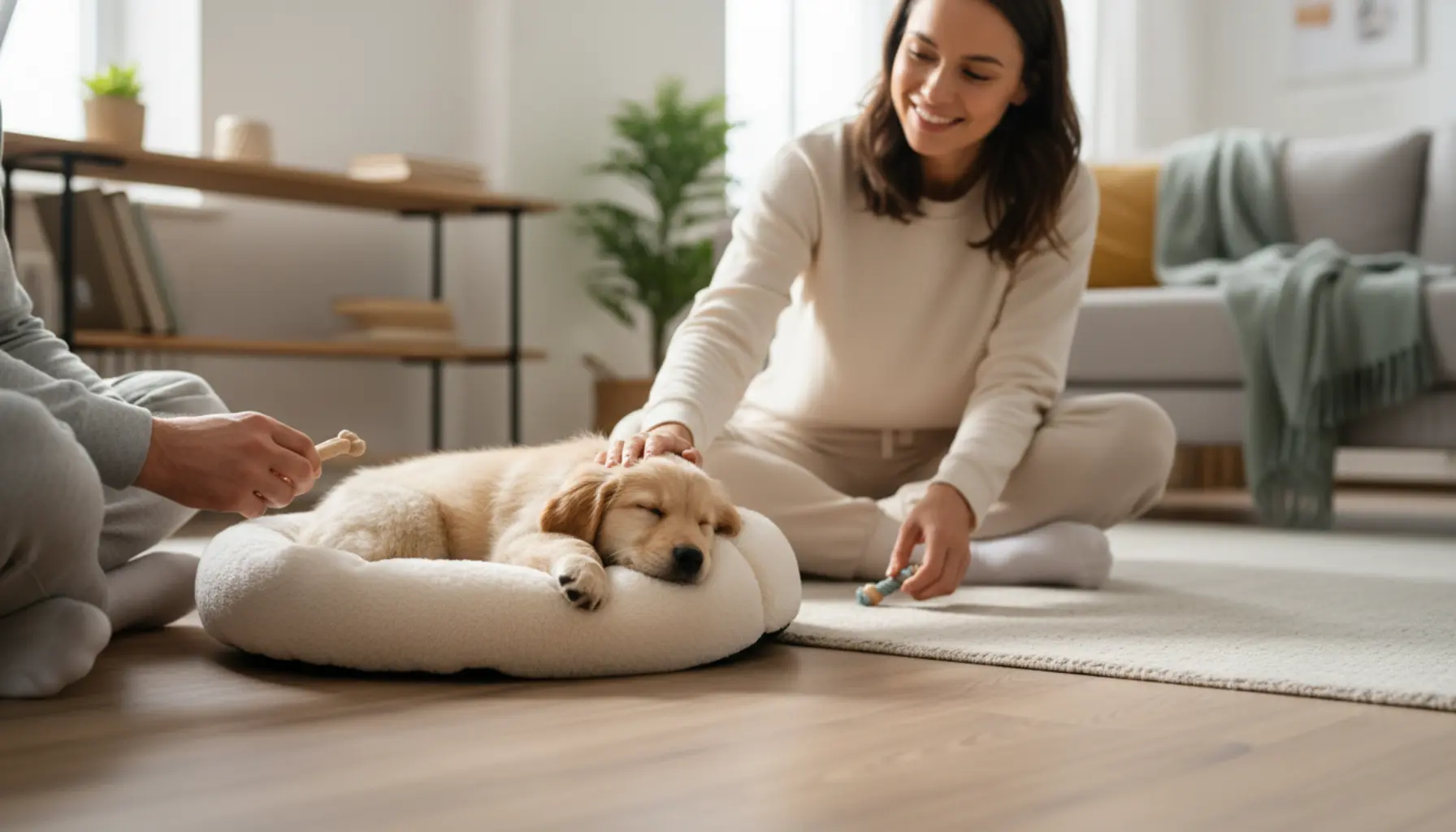
Equally important are walk and training accessories. An adjustable collar or well-fitting harness (for many puppies a “Y” harness is more comfortable and healthier for the spine) and a light leash 2–3 meters long are must-haves. For recall training, a long training line (5–10 meters) is useful so your puppy can explore while staying under control. Also mandatory: a tag with your puppy’s name and your phone number, and in the same category – prior microchipping and entry into the registry, which should be discussed with your breeder or vet. At home, toys are essential – several types: chews made from safe, non-toxic material for teething; interactive toys like “treat balls” or snuffle mats for scent games, stimulating the mind and teaching independent calming; plush toys without easily detachable parts (eyes, buttons) that could be swallowed. In the grooming and hygiene category, you’ll need a brush or comb suited to the coat type, gentle puppy shampoo, towel (preferably quick-dry), wipes or liquid for ear cleaning, eye care agent (if required by the breed), and scissors or nail clippers – although in many cases a groomer or vet does nail trims, it’s good to have them at home. For toilet training: puppy training pads, spare poop bags, and a good enzymatic cleaner for urine stains and odor to reduce the risk of repeat accidents. Also, a basic first aid kit: thermometer, sterile gauze and bandages, saline solution, alcohol-free disinfectant, tick tweezers, number of the 24-hour vet, and possible probiotics or vet-recommended products. Consider a car carrier or safety harness and protective seat mat for travel – safe transport from day one is not only a legal requirement but essential for building positive travel associations. Make sure your kit is ready and set up before arrival – so from the first moments at home, your puppy finds an orderly, readable world: a bed, clear eating place, toys allowed for play, and walk accessories for future pleasant outdoor trips.
Puppy safety and comfort in a new home
Puppy safety starts by consciously viewing the environment from his perspective. Puppies explore the world with their mouths, which means all cables, chargers, extension cords, and small items (rubber bands, blocks, clips, batteries, medications) should be out of reach or hidden in locked cabinets. Go around your house “on all fours” and check what’s at puppy nose level – a simple way to spot hazards. Chemical agents (cleaners, bleaches, toilet detergents), rodent/insect poisons, and button batteries are especially dangerous – all should be closed tightly, up high. Plants are also important – many popular varieties, like dieffenbachia, zamioculcas, peace lily, philodendron, or poinsettia are toxic for dogs. If unsure about a plant, remove it from the accessible area or put it high up. Next, windows, balconies, and stairs – install window locks, balcony nets, and safety gates to prevent falls from heights and unplanned escapes. In multi-level homes, restrict stair access until your puppy is confident and coordinated enough. Stabilize furniture and items: wobbly tables, standing lamps, tall plants in light pots can be knocked over during play. Check for sharp edges, protruding nails, or loose boards where a paw could get stuck. Extra gates and barriers can temporarily section off a “safe zone” like a living room with a designated sleeping/relaxing area. This helps with house rules and puppy control, especially in the early weeks when curiosity is high and awareness of danger is low.
Comfort for your puppy is about physical safety, predictability, and closeness to the owner. The bed is the heart – it should be in a quiet corner away from heavy traffic, doors, and drafts, yet allow observation of household life. Many pups do well with kennel crates if introduced positively: left open, lined with a blanket and chew toy, sometimes covered to create a “den” effect. Never use it as punishment, only as a refuge where the dog can rest undisturbed (especially from children). Keeping a consistent daily rhythm has a huge impact on comfort: regular feeding, walk, play, and sleep times help the puppy calm down and learn what to expect. During the first days, reduce stimuli – fewer guests, loud noises, or lengthy visits with children or new places. Keep initial walks short and calm, expanding new experiences slowly to avoid emotional overload. The night can be especially tough; it’s good to place the bed or crate in your bedroom or nearby so your puppy feels your presence. You can also use a blanket with the previous home’s scent or products with pheromones. Key to comfort is gentle, predictable interaction – calm tone, clear reactions, and simple rules (don’t disturb the dog when sleeping or eating) lower stress. Teach children gentle petting and play, and when to leave the puppy alone. Provide the right amount of mental and physical stimulation: simple scent games, lick mats, chew toys, and brief training sessions using positive reinforcement help channel energy constructively and avoid destructive boredom. Sleep quality is vital – puppies may sleep 18–20 hours a day; ensure they have frequent, undisturbed rest and are not “overstimulated” with distractions. Good conditions (no drafts, chance to curl up warm or cool off when hot), fresh water, and a clean environment complete the comfort picture. Combining physical safety with emotional comfort leads to faster adaptation, a more cooperative puppy, and a trusting, healthy relationship with you and your home.
First day and night – what to expect?
A puppy’s first day in a new home is a massive change – new smells, sounds, people, and rules. Expect your puppy to be both curious and uncertain, so calm and predictability are key. Ideally, minimal people collect your puppy with no “welcome committee”; the journey home should be peaceful. Use a soft blanket (preferably with the scent of his previous home) in the carrier or on your lap (secured with a seatbelt) to reduce stress. After entering the house, don’t overwhelm your puppy – let him explore his immediate space at his own pace, but don’t give him instant access to the whole house. First, show the prepared area: bed, eating spot, water bowls, toys. Some puppies explore, others freeze, huddle, or seek a hiding spot; all these reactions are natural, so don’t force contact, petting, or play. Ask family to crouch sideways and gently call the puppy, but accept his decision to withdraw. In the first hours, eating may be unpredictable – some puppies devour their bowl, others don’t eat at all. Start with the same food and portions as before; transition only after a few days. Offer the first meals as mini-training: hand-feed some kibble to build positive associations with new people. Provide bathroom opportunities – if not going outside yet, show the pee pads and often set him there after sleep, food, or play; if permitted for outside, take a brief, calm walk to a quiet area with few dogs and people. Expect some accidents – peeing indoors, vomiting, stress diarrhea, or trembling; if the puppy is lively and responsive, these are usually transient adjustment symptoms, but observe his condition and consult a vet if worried. Avoid overstimulation: restrict guests, postpone long children play sessions, and don’t bring your pup to busy places right away. The day should follow short explorations – sleep – small meals – gentle play – more sleep. Many owners are surprised by how much puppies sleep (up to 18–20 hours daily) – don’t wake the pup or encourage more play if he seeks his bed. Start introducing simple routines from the beginning: gentle paw/ear/mouth touches, acclimating to a collar or harness, short barriers stays to teach that being alone is not a disaster. Keeping a simple diary of feeding, sleeping, playing, and potty times will help to establish a comfortable routine and spot any irregularities.
The biggest challenge for new owners is often the first night, which rarely looks like an ad – more like a marathon of wake-ups, whining, and anxiety. Remember, your puppy slept with his mother and litter yesterday, surrounded by their warmth and scent; now, he wakes in a foreign place, often alone, which naturally causes separation anxiety. Avoid confining your pup to the kitchen or corridor alone from day one – a much softer solution is to set up a bed or crate in your bedroom, or to sleep nearby in his target room for a few nights. This way, you can respond to his needs, soothe him with your voice or touch through the crate, and gradually build a sense of safety. Expect night wakeups every 2–3 hours – for both elimination and contact needs. Be ready for nighttime outings to the yard or to the puppy pad; if he goes in the right place, calmly praise and offer a small treat. Don’t get angry or punish for night accidents – a puppy has a tiny bladder and house training takes weeks, not a day. Whining, whimpering, or barking at night may occur; while exhausting, try to distinguish between real need (restlessness, circling, trying to leave the bed) and protest against falling asleep alone. If it’s a real need, help with a walk or trip to the pad; if it’s just protest, soothe primarily with your voice, don’t pick him up or let him in your bed unless you want this habit to continue. Additional comfort aids can help: a thick blanket forming a “nest”, a hot water bottle or special heated pad wrapped safely (be careful of overheating and electrical safety), a plushie or toy with a ticking clock inside, or pheromone mats. Soft, monotonous background noise – a fan, white noise, or calm music – can mask sudden home or outside sounds. Don’t expect a full restful night at first, but remember crying and uneasiness aren’t manipulation: they are normal reactions to big change and separation. Keep calm, stick to simple rules (night is for sleep, not for intense fun), and respond to physiological needs; each night will get easier. It’s wise to pre-arrange family night shifts to reduce frustration and exhaustion, and remember this phase is temporary – associations formed now about nighttime and solitude will affect your dog’s future behavior for months to come.
Care, feeding and puppy’s first walks
Proper puppy care in the first weeks at home is based on a predictable routine tailored to age, health, and temperament. The day should be structured: sleep – short play – food – potty – rest. Such order helps the puppy understand house rules and owners monitor wellbeing more easily. Young puppies sleep 18–20 hours a day and shouldn’t be woken for play or forced into long activities when they need rest. Monitor behavior closely, especially at first: sudden lethargy, diarrhea, vomiting, intense scratching, cough or a strong lack of appetite may require a prompt vet visit. A key care element is the preventive health record – puppy’s health book should list past vaccines, dewormings, and possible tests; from this, the vet will plan the next vaccination schedule and internal/ external parasite protection. After arriving, wait 2–3 days before the first vet check to allow minimal adaptation, unless health is worrying. Begin gentle grooming routines early: daily quick paw/ear/mouth checks, gentle brushing (if needed for the coat), and rewards for calm behavior. These quick micro-sessions (seconds) build positive associations and ease later grooming or vet visits. Keep beds vacuumed and washed, bowls cleaned after each meal, and potty areas sanitized with enzyme cleaners to minimize bacteria and discourage repeat pottying in the same spot. Always provide fresh water, changing it several times a day, especially in warmth or with active puppies – don’t restrict water at night as this can cause dehydration or health issues. Emotional care involves short calm contact – petting, quiet talk, lying by the bed – which restores a sense of safety after separation from mother and litter; also, teach short, gradually lengthening periods of solitude to prevent strong separation anxiety.
Feeding should be consistent and age-appropriate. In the first days, stick to the same food your puppy received at his breeder’s or foster home, transitioning after adaptation only by gradually mixing old and new food over 7–10 days to avoid GI upset. Choose food formulated for puppies, and for large or giant breeds – those kinds, to control growth pace and lower orthopedic risk. Young dogs generally eat 3–4 smaller meals a day, at regular times; this can be adapted to breeder/vet advice but avoid “buffet” style, as constant food access makes it harder to monitor intake, house training, and spot health issues (loss of appetite is often the first illness sign). Measure portions with a scoop or kitchen scale following producer’s chart and your puppy’s weight; monitor body shape – ribs should be easily felt but not seen. Training treats are useful, but keep them to 10% of daily calories – part of the daily food ration can be used as treats to avoid overfeeding. Avoid table scraps, seasoned meats, cold cuts, poultry bones, chocolate, xylitol, onion, garlic, grapes/raisins, and fatty, hard-to-digest foods. The timing of first walks depends on vaccinations: until the course is complete, vets suggest limiting exposure to places with many dogs (like parks, dog runs), but that doesn’t mean isolation. Brief walks in quiet, clean areas, avoiding puddles, feces, and unknown dogs, are possible in many cases – always consult your vet, recommendations may differ by region and infection risk. Begin building positive associations from the first outings: go out after play or naps, give your puppy time to sniff, reward with treats and a calm voice when toileting outside, and don’t extend walks beyond your puppy’s capabilities – frequent but short excursions are best. Introduce collars, harnesses, and leashes gently at home: let your puppy wear them briefly, then include short training sessions of walking with you and reward eye contact. Gradually introduce different stimuli (cars, bikes, city sounds) in small, puppy-tolerated doses with a retreat to a quiet spot if needed. First walks aren’t for intense running or long hikes, but for learning recall, name response, walking on a loose leash, and calm, controlled meetings with friendly, vaccinated dogs that aid healthy socialization without emotional or physical overload.
Adaptation, play and building a relationship with your pet
Puppy adaptation to a new home does not end on day one – it takes several weeks or even months. During this time, your dog learns new rules, daily routine, sounds, smells, and household habits. The key is predictability and calm: a repetitive daily plan (feeding, walking, play, sleep times) gives a sense of security. Limit new stimuli at first – avoid big gatherings, crowded places, or too much interaction with unfamiliar dogs. Help adaptation with gentle introduction to new situations: first the house, then surroundings (stairwell, garden, quiet street), later more challenging places. Puppies may react with stress – whining, hiding, hyperarousal, mouthing everything, or the opposite: apathy. Instead of punishing, help your puppy “let off steam” with gentle play in a familiar place, cuddles (if he seeks them), or rest. Learning independence is vital: teach your puppy to occasionally stay alone in a room, at first with the door open and something nice (chew toy, snuffle mat). Gradually lengthen these moments to reduce future risk of separation anxiety. Calming rituals also help, e.g., brief training before bed, a repeating evening routine, quiet commands and calm voice. Puppies who know what to expect calm down faster and are more willing to cooperate, which directly builds the bond with the owner. Remember, the puppy socialization period lasts approximately 12–16 weeks – it’s a “window of opportunity” when dogs easily form lasting associations. At this time, positively and in a controlled manner, introduce different situations: people of various ages, differently looking dogs, noises (vacuum, traffic), environments (forest, city, village). Each new experience should be short, not too intense, and end with something pleasant: a treat, play, or calm rest with the caretaker. Avoiding overstimulation is as important as the exposure itself – an overloaded puppy may become fearful instead of inquisitive.
Play is not just entertainment but one of the most important ways to build a bond and teach your dog desirable behaviors. Through play, the puppy releases excess energy, learns self-control, discovers his body and capabilities, and exercises his mind. Mix activity types: short scent work sessions (hide treats at home, snuffle mats), movement games (fetch, chase with rope toy, tug-of-war with rules), as well as chew toys which satisfy the drive to gnaw and help with teething. Every play session should have a clear start and end – introduce commands like “start” and “end” so the puppy learns to calm down after excitement. Avoid tugging hands, feet, or clothing – it may be “cute” now, but can develop into problematic behavior later. Always offer an appropriate toy, and reward/praise choosing the right item. Training based on positive reinforcement is great for both bonding and teaching: short (3–5 minute) sessions several times daily, teaching simple commands: name, “come”, “sit”, “bed”, “drop it”. Use kibble and small treats as rewards, but also verbal praise and social contact (petting, cheerful voice). This “fun learning” helps your puppy understand expectations and reinforces you as a predictable, kind guide. Building a relationship is also about reading signals – yawning, lip licking, turning the head, leaving, or body tension are often signs of discomfort or overstimulation. Respect these signals by stopping play if your puppy has had enough and giving him space, showing him he can trust you. Touch is a core part of this bond: daily, gently get your puppy used to having feet, ears, mouth, and tail handled, pairing it with rewards and only as much contact as your puppy tolerates. This prepares him for grooming and vet checks while creating positive associations with human closeness. Also important is setting boundaries kindly: instead of physical punishment or shouting, use management (gates, controlled access), redirection to permitted behaviors, and consistency (if being on the couch is forbidden today, don’t make exceptions tomorrow). Puppies who get affection, play, teaching, and clear rules develop a deep, safe bond with their owner, based on trust instead of fear – the best foundation for future life, training, and daily cooperation.
Summary
The puppy’s first days at home are both a huge challenge and an amazing joy. Properly preparing your home, assembling a starter kit, and providing safety and comfort will help your puppy adapt quickly and stress-free to his new environment. Regular care, feeding, the first walks, and time spent playing and bonding are also key. By approaching the process mindfully from day one, you will make your pet’s start easier, and your bond will grow stronger each day.

