

Separation anxiety is a serious problem that an increasing number of dog caregivers face. Learn how to recognize the symptoms, implement effective support methods, and which accessories and rituals can help your dog cope better during separation. Check practical recommendations and learn about the role of specialists in treating separation anxiety.
Table of contents
- What is separation anxiety in a dog?
- Most common symptoms and diagnosis of anxiety
- Effective methods for coping with separation anxiety
- The role of accessories and toys in therapy
- Support from a behaviorist in fighting anxiety
- Prevention of separation anxiety and daily rituals
What is separation anxiety in a dog?
Separation anxiety in a dog is an emotional disorder in which the animal experiences intense stress and distress at the mere thought of being separated from its caregiver or left alone. This is not ordinary missing someone or temporary barking after household members leave, but an intense fear that triggers a dog’s “fight or flight” response. In practice, it means the dog is unable to cope emotionally with being alone and makes desperate attempts to reduce the distance—e.g., scratching at doors, howling, destroying objects, or eliminating in the house despite normally being housetrained. It is important to emphasize that separation anxiety is not the result of the animal’s “malice” or lack of obedience, but a real, very strong psychological suffering comparable to panic attacks in humans. Such a condition can develop gradually, for example after a series of stressful experiences, or appear suddenly—after moving house, a change in the caregiver’s work routine, the arrival of a new household member, or a traumatic event such as a stay in a shelter or a long separation. In some dogs, separation anxiety has a genetic basis or results from incorrect socialization in early puppyhood—a puppy that never learned to be left alone may, as an adult, perceive solitude as extremely threatening. Behavioral literature also describes “excessive attachment,” where the dog treats the caregiver as the only source of safety and cannot function without them—such a dog literally “lives in the owner’s shadow,” follows them around the house step by step, has difficulty relaxing when the caregiver moves away, and collapses during separation. Understanding that separation anxiety is an anxiety disorder, not a training problem, is crucial to choosing the right approach. During diagnosis, a behavioral specialist will pay attention not only to the dog’s behavior during the owner’s absence but also to its overall emotionality: daily arousal level, ease of calming down, reactions to frustration or novel stimuli. It often turns out that separation anxiety co-occurs with other issues—generalized anxiety, hyperactivity, impulse control disorders—which further complicates the dog’s ability to cope with separation.
To better understand what separation anxiety is, it is worth distinguishing it from a dog’s normal “displeasure” at the owner’s leaving. A dog with well-developed emotional resilience may bark a bit in the first minutes after you leave, walk around the apartment, then simply lie down, yawn, lick a paw and fall asleep—its body transitions from arousal to calm. In a dog with separation anxiety this process does not occur: instead of gradual calming, there is escalating distress, increased heart rate and breathing, constant listening and vigilance. Such a dog may pace around the apartment for a long time, whine, tremble, start and stop activities like eating or playing, and eventually fall into compulsive behaviors: persistent scratching at doors, chewing window frames, continuous howling for long minutes, salivating, licking, self-injury (e.g., licking paws until bleeding). In some dogs anxiety manifests more as withdrawal than explosion—they may hide in the bathroom or under the bed, lose appetite, appear “frozen” in stillness. This is why recordings from a camera left at home are so important in recognizing separation anxiety—many dogs appear calm when you return, but experience severe stress during your absence, the only traces of which may be enlarged pupils, damp fur from drooling, or scratched doors. Psychologically, separation anxiety is a disrupted ability to regulate emotions in a situation of separation from the “safe base” that is the caregiver. The dog cannot “maintain” the sense of security internally when its person disappears physically—as if closing the door caused the disappearance of the whole predictable environment. Often this is accompanied by a negative association with the routine of leaving: the dog begins to show anxiety already when you reach for your keys, put on shoes or a coat. For the dog, these small signals become a foreshadowing of an inevitable, unbearable state of loneliness, so anxiety may actually appear long before the actual departure. Unlike ordinary boredom or lack of exercise, which can result in mischief, separation anxiety is a disorder that requires conscious, gradual emotional training, often with a specialist’s support and—in difficult cases—also a veterinarian. Understanding that this is not ‘bad character’ but panic the dog cannot stop on its own opens the way to a more empathetic and effective approach to the situation.
Most common symptoms and diagnosis of anxiety
Separation anxiety can take many forms, which is why many caregivers do not realize for a long time that their dog’s problem is not “malice” but an anxiety disorder. The most common symptoms include destructive behaviors that appear mainly during the absence of household members or right after they leave. The dog may intensely scratch the front door, chew door frames, baseboards or handles, destroy furniture, shoes and other items, often concentrating around the exit from the apartment. Vocalizations are also typical—long howling, barking, whining—that can persist for a large part of the caregiver’s absence and lead to complaints from neighbors. Another common symptom is loss of housetraining: a dog that normally controls its physiological needs may urinate in the house when alone, relieve itself where the caregiver usually lies, or even have stress-related diarrhea. Many dogs also show somatic symptoms indicating high emotional arousal—excessive yawning, drooling, accelerated breathing and pulse, body trembling, licking, yawning when not tired, or nervous pacing around the apartment without finding a place to settle. Sometimes compulsive behaviors are observed such as persistent licking of paws or flanks, hair pulling, self-harm, as well as loss of appetite if the caregiver is not home. Pay attention to so-called anticipatory signs that appear during preparations to leave: the dog becomes anxious when the caregiver reaches for keys, puts on shoes or a coat, may follow step by step, whine, block the exit, or even hide or try to “stop” the person by gently biting clothing or grabbing a sleeve. In some animals the picture is dominated by withdrawal—the dog stiffens, hides in a secluded place, avoids eye contact, appears “frozen,” which is often misinterpreted as calm but in reality is a response to severe stress. An important signal is the difficulty of resting independently: a dog with separation anxiety often sleeps only when the caregiver is nearby, and when alone remains in constant tension, vigilance and readiness to react. The longer symptoms are ignored, the greater the risk of the disorder worsening, so early observation of daily behavior and spotting the first signs of stress is crucial.
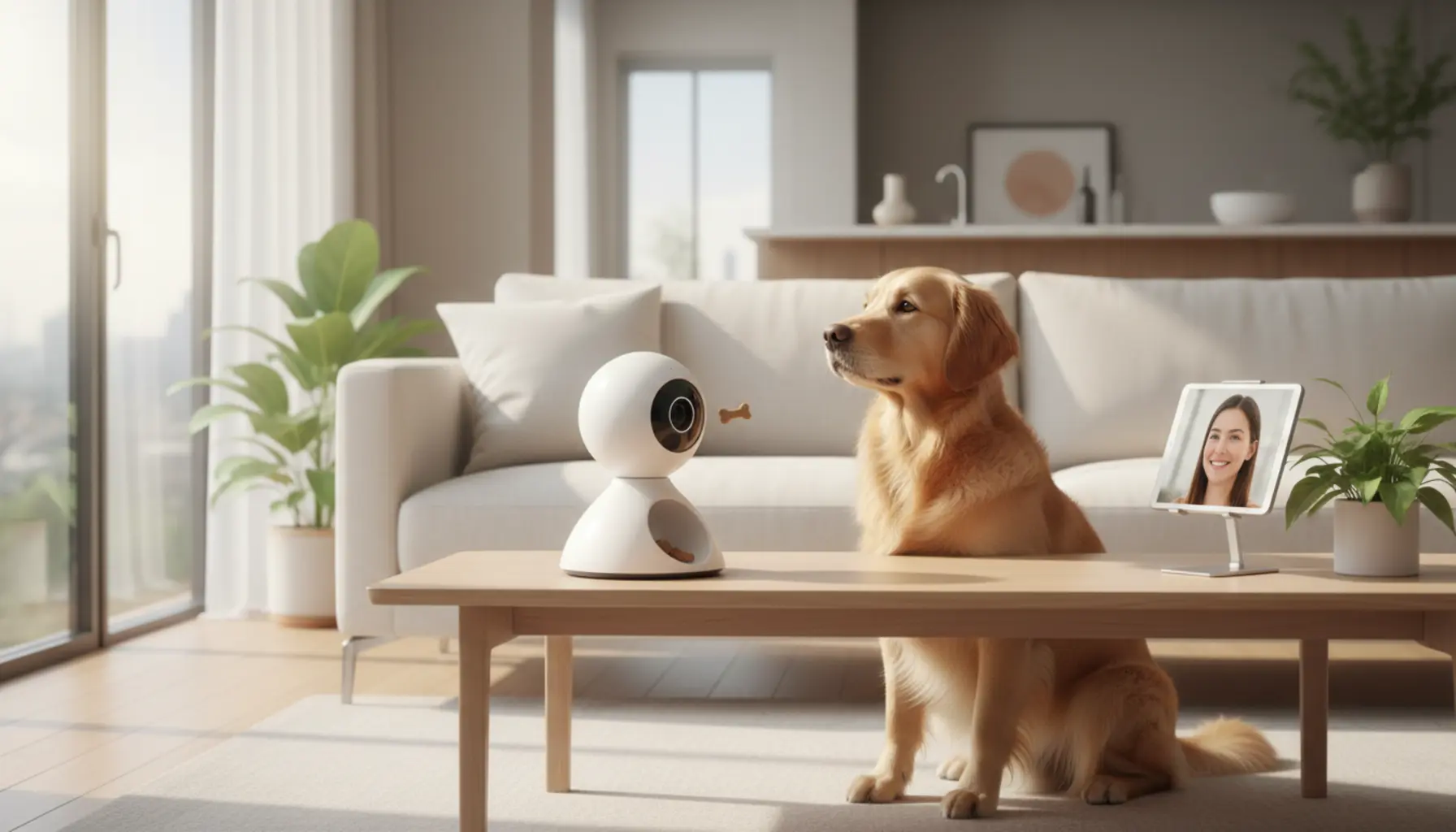
Diagnosis of separation anxiety is primarily based on a thorough interview with the caregiver and observation of the dog’s behavior in various situations, especially during departures and returns. A good starting point is recording the dog left alone in the apartment—even with a phone or a simple camera—which allows assessment of when symptoms appear, their intensity, and whether they increase with the length of absence. A dog with classic separation anxiety usually begins to show distress almost immediately after the door closes, and problematic behaviors persist with varying intensity for much of the separation. A behavioral specialist also analyzes the broader context of the animal’s functioning: how the dog reacts to other stressors (noise, strangers, other dogs), how it sleeps, eats and rests, whether it can stay alone even in another room when household members are present, and its overall daily arousal level. It is crucial to distinguish separation anxiety from other problems that may look similar but require a different approach. For example, a young energetic dog may destroy items out of boredom or lack of appropriate physical and mental stimulation—in such cases the destruction is usually more spread out over time, and recordings do not show typical signs of panic. Vocalizations can be reactions to external stimuli (staircase noise, doorbell, neighbors), not to separation from the caregiver. Some dogs have medical issues affecting housetraining (e.g., urinary tract infections, kidney disease, hormonal disorders), so a veterinary examination— including blood count, blood biochemistry, urine test and, if necessary, additional tests—is often required before making a diagnosis. A veterinarian can also assess whether chronic pain (e.g., joints, spine) is present, which increases stress and promotes the development of anxiety disorders. It is important not to rely on a single symptom but on the overall pattern of behavior and context: a brief howl after the owner leaves or occasional chewing of an object does not necessarily indicate separation anxiety. Behavioral diagnosis therefore combines information from interviews, video recordings, direct observation of the dog (e.g., during a home visit) and exclusion of medical causes. Only such a comprehensive approach allows determination of whether the issue is separation anxiety, a milder form of it, or another disorder (e.g., frustration, hyperactivity, compulsive disorders), which is the foundation for developing an effective plan to work with the dog.
Effective methods for coping with separation anxiety
Effective coping with separation anxiety in a dog is primarily based on systematic emotional training and changing the associations related to separation. The basis is the so-called gradual desensitization training, i.e., accustoming the dog to being alone in small steps. It starts with very short departures—even a few or a dozen seconds—during which the dog does not have time to escalate into panic. It is crucial to return while the animal is still relatively calm, not at the peak of panic, so as not to reinforce hysterical behavior. Over time, the absence is gradually extended, remembering that each dog has an individual pace—progress may occur within a few weeks for one dog, while for another the process may take months. It is also important to “desensitize” the dog to the signals that announce leaving, such as reaching for keys, putting on shoes or a coat. Practically this means performing these actions many times a day without actually leaving so that they stop being unambiguous predictors of being left alone. Consistency across the household is extremely important—everyone should follow the same rules, e.g., avoid excessive goodbyes and overly emotional greetings, which only emphasize the “drama” of separation. Instead, introduce a neutral, calm routine for leaving and returning: a short verbal cue, no excitement, waiting until the dog calms down before petting. It is also helpful to reinforce the dog’s independence in daily situations—for example, encouraging it to rest in another room while the caregiver is at home instead of constantly following. This can be supported by building positive associations with a bed, offering chew toys or food-stuffed toys there, and using commands like “place” that help the dog learn to stay in one spot even when the caregiver moves away. For some dogs, introducing a predictable daily schedule helps: fixed times for walks, feeding and rest. Predictability gives the dog a greater sense of security and reduces overall tension, which in turn facilitates work on separation. Also ensure an appropriate level of physical and mental activity—a well-exercised, mentally tired dog (nosework, obedience training, snuffle mats, treat-finding games) is more likely to relax at home. Be careful not to overstimulate the dog with too intense activity, especially if it tends to be overly aroused; more frequent, calmer and varied walks are better than single extremely intense running sessions.
Appropriately chosen accessories and environmental support also play a big role in coping with separation anxiety. For many dogs it helps to provide a safe, cozy place—a bed, a kennel crate (if a positive association has been previously built), or a special “calm corner” where only pleasant things happen. There you can give long-lasting chews, Kongs filled with food, or interactive toys that require mouth and brain work, helping the dog focus on a task instead of anxiety. Some dogs benefit from calming pheromones (e.g., in diffuser form or as a collar), pressure vests or weighted blankets that provide a sensation of being “hugged.” Consider introducing background noise—soft radio, relaxation music for dogs or white noise—which can mask stimuli from the stairwell or yard that further stimulate the dog when alone. It is crucial, however, that no accessory is treated as a miraculous standalone “cure” for the problem; they are supportive tools accompanying proper training. In cases of severe separation anxiety, work with a behaviorist or trainer specializing in anxiety disorders is often necessary. A specialist will help choose the pace and structure of training, recognize overload moments and identify additional stressors in the dog’s life—from improper household communication, conflicts with other animals, to lack of proper rest. Sometimes with very severe symptoms, a veterinarian experienced in behavior may propose pharmacological support, e.g., anti-anxiety medications or calming supplements. These are not a substitute for training but complement it: they lower anxiety enough for the dog to be able to learn new responses and consolidate positive experiences related to being alone. Also remember to limit situations where the dog is left beyond its current capabilities—during intensive therapy it helps to have help from family, neighbors, a petsitter or a doggy daycare so as to avoid long panic episodes that reverse progress. Constant monitoring of the dog’s behavior (e.g., by camera) allows better assessment of the effectiveness of measures taken, noticing small signs of improvement or worsening and modifying the plan proactively before the problem escalates again.
The role of accessories and toys in therapy
Appropriately selected accessories and toys can become an important pillar of separation anxiety therapy, provided they are used consciously and in combination with behavioral training. Their main role is not only to “occupy the dog while you leave,” but primarily to build a sense of security, create positive associations with being alone and support independent emotional coping. The first group of highly helpful items are beds and so-called safe zones. A well-chosen, soft bed placed in a calm, predictable spot (away from noisy windows or high-traffic areas) can serve as a “base” the dog willingly returns to calm down. Sometimes a kennel crate is worth considering, but only if introduced gradually and positively—never as punishment. A crate, covered with a blanket and equipped with favorite toys and a snuffle mat, can become a private refuge for some dogs, while for others it will be an additional stressor, so always observe the animal’s reactions. Important elements of the safe zone are blankets and cushions with the caregiver’s scent—a shirt, scarf or pillowcase the dog likes to lie on can support it especially in the initial stages of working on anxiety when separation is particularly difficult. Complementing these are calming pheromones (e.g., diffusers or pheromone collars), which do not solve the problem by themselves but can reduce overall tension and facilitate the dog’s learning of new associations. Another category includes products that support calming, such as pressure vests that apply gentle, constant pressure resembling a hug. For some animals these are soothing during the caregiver’s presence and in moments before leaving, but their effectiveness varies by individual and should be introduced gradually while observing the dog’s body language. Cooling and orthopedic mats are useful too—if anxiety strongly manifests as physical arousal, discomfort or overheating can further increase distress, so improving thermal and physical comfort matters. Animal cameras or home video recorders are also very useful—they are not directly “for the dog,” but allow the caregiver to monitor the pet live or via recordings, which helps tailor and modify accessories and toys so they truly support therapy rather than just giving the impression of doing so. All these elements should be introduced with great attention to the needs of the specific dog—if a new accessory increases discomfort, it should be removed and an alternative tried, and selection is best consulted with a behaviorist or veterinarian specializing in anxiety disorders.
Even more important in practical coping are interactive toys and scent-activity accessories that allow the dog to release tension and occupy its mind constructively. Popular toys like Kongs, which can be filled with wet food, dog pâté or a mixture of dry food with natural yogurt, are especially useful because they utilize the natural need for licking and chewing—self-soothing activities. It is important, however, to use them also when the caregiver is at home; if a Kong appears only at departure times it may become a signal announcing separation and increase anxiety instead of reducing it. Similar functions are served by various treat-dispensing toys, balls and cubes with hidden food compartments or interactive slow-feed bowls—they engage the dog mentally, prolong mealtime and help redirect attention from anxiety to a task. Snuffle mats and simple scent games indoors, e.g., searching for treats hidden in towels, boxes or under plastic cups, are excellent therapeutic tools. Nose work lowers arousal, and the mental fatigue after such tasks is comparable to a long walk, while not overloading the dog with excessive stimuli, which is especially important for anxious animals. It is good for the dog to be able to perform some of these activities independently—tasks should not be too difficult to avoid frustration. Chew accessories, such as natural chews adapted to the dog’s health and capabilities or safe rubber toys, also play a key role in reducing tension. Chewing is instinctive and naturally relaxing for a dog, but products must be high quality, appropriately sized and durable, and the dog should be supervised, especially initially. Therapy for separation anxiety increasingly uses noise-emitting toys or soothing-sound toys and plush toys that mimic a heartbeat—they can help especially puppies or dogs newly brought into a home when loneliness is a completely new experience. However, it is extremely important that no accessory or toy is used in isolation from an individualized training plan. Their role is to support the gradual accustoming process, not to “buy off” the dog or mask the problem. Therefore toys and accessories should be integrated into the daily schedule: some appear in neutral situations, some are used during short-departure exercises, and some are left to the dog only when its anxiety level is low enough that it can actually use them. Systematic observation, noting the dog’s reactions to different items and flexibly modifying the accessory set allows you to gradually build a repertoire of tools that support the animal’s self-regulation and help it learn that being alone can be not only bearable but predictable and safe.
Support from a behaviorist in fighting anxiety
Support from an experienced behaviorist is one of the most effective ways to overcome separation anxiety, especially when solo attempts do not produce the expected results or symptoms are very severe. The specialist helps primarily by correctly interpreting the dog’s behaviors—many stress signals are subtle or mistaken for “malice,” which leads the caregiver to inappropriate reactions such as scolding or ignoring the problem. The behaviorist conducts a detailed interview, taking into account the dog’s history (origin, past traumas, changes at home, illnesses), previous training methods, levels of physical and mental activity and the specific course of situations in which anxiety intensifies. They often request video recordings of the dog’s behavior during the household’s absence to reliably assess the onset time, dynamics and intensity of symptoms. Based on this, they create a personalized therapy plan instead of using universal “tricks.” Professional support is also important because separation anxiety rarely occurs in isolation—it may coexist with hyperactivity, emotion regulation problems or frustration-related aggression. The behaviorist helps distinguish what stems from anxiety and what from other deficits so symptoms are not masked but the true cause is addressed. During cooperation the specialist does more than hand over a “list of exercises”—they teach the caregiver how to support the dog daily: how to react to clingy attempts, when to initiate contact and when to encourage independence, how to manage resources (attention, food, play) to strengthen a sense of security instead of dependence. Emphasis is placed on changing household habits—from the way of leaving and returning, through space organization, to the quality of the dog’s rest. A key element is educating the human: understanding the role of stress hormones, the need to gradually increase difficulty, and allowing the dog time to recover after challenging training. The behaviorist explains why “throwing the dog into the deep end” and suddenly leaving it alone for long periods can significantly worsen its emotional state, even if some behaviors temporarily subside.
The therapy plan developed by the behaviorist usually covers several complementary areas: emotional training related to separation, learning self-regulation skills (rest, calming down), smart use of accessories (crate, bed, interactive toys, pheromones), and modification of daily routine. The specialist details with the caregiver how micro-sessions of accustoming to solitude should look—when exactly to leave the apartment, how long to remain outside the door at a given stage, when to extend absence, and what to do in case of a “step back” when the dog again reacts with strong anxiety. Clear progress criteria are set together, e.g., arousal level, amount and type of vocalization, the dog’s ability to occupy itself. This gives the caregiver confidence that pushing the boundary is safe, not random. The behaviorist often supports contact with the veterinarian when pharmacotherapy is needed—describing observed symptoms, indicating the risk of anxiety worsening without pharmacological support and helping to choose the moment when medication should assist rather than replace training. An important part of the process is regular evaluation: in follow-up sessions recordings are discussed, difficult situations analyzed, mistakes corrected (e.g., increasing difficulty too quickly, irregular exercises, unintentionally reinforcing anxious behaviors). A good specialist can also realistically assess the family’s capabilities and resources: they advise how to distribute duties among household members, what to let go of to avoid overloading oneself and the dog, and when to use additional support forms, e.g., pet sitters or trusted family members who can temporarily take care in critical moments. Working with a behaviorist is a process that requires commitment and patience, but it gives the caregiver more than a “recipe for exercises”—it provides tools to understand the dog, read its stress signals and build a relationship based on safety rather than control. Thanks to this, the dog gradually learns that the caregiver’s absence is not a threat but a predictable part of life it can handle.
Prevention of separation anxiety and daily rituals
Prevention of separation anxiety really begins from the first days of living with a dog—both for a puppy and an adopted adult. Key is gradually teaching independence instead of constantly “gluing” the dog to the human. Practically this means consciously introducing short, controlled moments of separation while you are still at home: closing the bathroom door for a few dozen seconds, walking to another room without calling the dog, lying on the couch without letting the pet on your lap every time it wants. These small signals show that proximity to the person is available but not demanded on every call, and the dog learns it can be alone for a while without anything bad happening. In prevention it is also crucial to avoid sudden contrasts—if you initially spend the whole day with the dog (e.g., working from home), do not suddenly leave it for eight hours without preparation. Introduce short outings in advance and gradually lengthen them while observing the dog’s reactions. Equally important is the quality of shared time: excessive overstimulation—constant play, training, trips—can make the dog lose the ability to rest and create dependence on continuous attractions provided by the human. Therefore prevention balances activity with learning to calm down: after a walk encourage the dog to rest in its bed, reward calm lying down rather than only exciting behaviors. Early building of positive associations with the place where the dog stays alone is also essential—it can be a bed, a crate or a designated zone in the apartment. Accompany it with pleasant experiences: calm chewing of a chew, licking a KONG filled with food, sleeping with soft music or background noise. In the long term consistent behavior from all household members is also very important: if you sometimes allow the dog to sleep in bed and other times ban it, you create uncertainty that can increase the overall sense of unpredictability—which in turn favors development of anxiety disorders.
Daily rituals act as a “safety map” for the dog—the more predictable the day, the easier it is for the dog to cope with moments of being left alone. It is not about a minute-by-minute schedule, but about a stable structure: similar times for feeding, walks, play and rest, and a consistent way for the caregiver to leave and return. Introduce a neutral leaving ritual: a few minutes before leaving calm interactions with the dog, do not start new play, do not escalate emotions. Put on a collar or harness, take the keys, but do it calmly, without nervous rushing or prolonged farewells to the pet. From the prevention perspective dramatic goodbyes (“I’ll miss you, my dear!” combined with hugging) teach the dog that something big and potentially threatening is happening. It is much better when leaving is a normal part of the day and the dog has something pleasant and absorbing at that time—e.g., a snuffle mat with food or a chew. The same principle applies to returns: avoid frantic greetings, jumping and squeals of joy—instead enter calmly, put things away, and greet the dog only after it has calmed down somewhat. In daily preventive rituals it is also worth consciously introducing micro-separations even if you currently spend most of the time with the dog: close the door to a room for a few minutes, go out to take out the trash without the dog, go downstairs to pick up a package leaving it alone in the apartment. This way solitude is not associated only with rare, long and difficult separations but becomes something familiar and tamed. Complement daily rituals with constant calming elements such as gentle brushing, massaging, relaxation exercises (e.g., teaching the “place” command combined with rewarding calm lying), or introducing a signal that announces rest—this could be playing a specific quiet playlist or turning on a small lamp. Over time the dog begins to associate this “scenario” with safety and predictability, which significantly reduces the risk that its emotions will go out of control during a real separation. Prevention is also supported by caring for the dog’s overall well-being—regular, needs-appropriate exercise, scent work, opportunities for exploration, and calm uninterrupted sleep. A well-cared-for, well-rested, appropriately stimulated but not overstimulated dog has much greater resources to cope with stress and not respond with anxiety to every environmental change, including temporary absence of the caregiver.
Summary
Separation anxiety in a dog is an increasingly common problem that requires attention and a conscious approach. Key is recognizing symptoms, applying effective methods and using appropriate accessories that help the pet cope while the caregiver is absent. Support from a behaviorist can be invaluable, and regular prevention and daily rituals help build the dog’s sense of security. With consistent actions it is possible to minimize stress and improve the quality of life for the whole family.

