

Meet the extraordinary Bloodhound breed – the most famous tracking dog, a master of scent, and devoted family companion. Discover the advantages and challenges associated with its care and daily upbringing.
Table of Contents
- Characteristics of the Bloodhound Breed
- Unique Tracking Abilities
- The Bloodhound as a Family Dog
- Bloodhound Health and Diseases
- History and Origin of the Breed
- How to Care for a Bloodhound Daily
Characteristics of the Bloodhound Breed
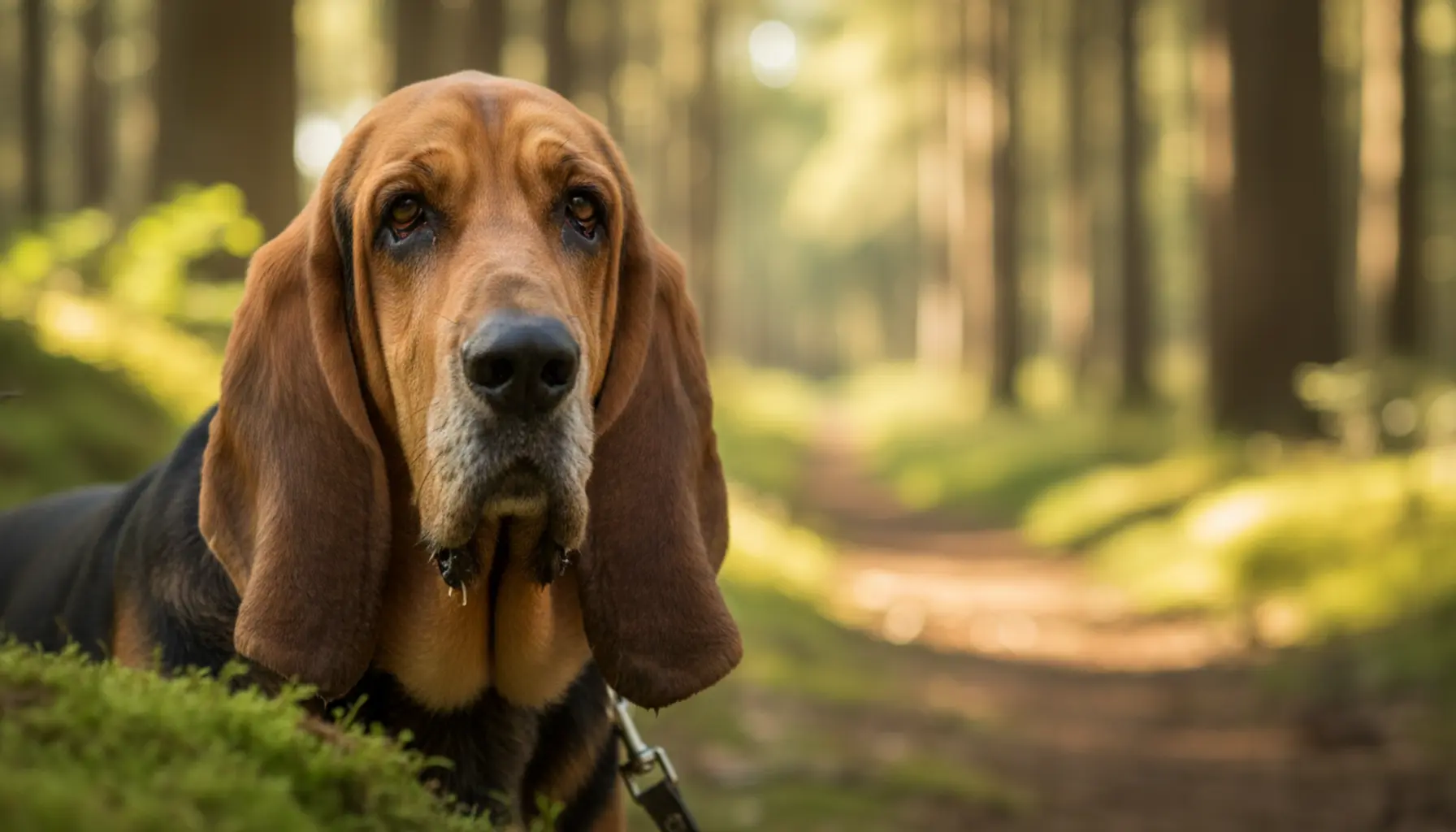
The Bloodhound is a breed that is recognized at first glance thanks to its impressive build and distinctive long skin folds. This is a large, heavily muscled dog, yet elegant and proportionate. Males usually reach a height at the withers of 64–72 cm, females 58–66 cm, and a weight from 40 up to even 54 kg, making the Bloodhound one of the largest scent hounds. The body is somewhat elongated, with a deep chest and straight, strong back, ensuring endurance and stability during prolonged tracking. The head is long and narrow, very distinctive: abundant skin folds on the forehead and cheeks create a “surprised” or serious expression, and the long, soft ears reach below the muzzle line. The skin all over the body is loose, most noticeably on the neck, where it forms a pronounced dewlap – not just an aesthetic detail, but, together with the muzzle and ears, it helps to “catch” and hold scents. The Bloodhound’s eyes are medium-sized, often a bit deep-set, usually in shades of brown – from light to dark; their gaze is often described as gentle, sad, or thoughtful, adding to the breed’s unique charm. The nose is large, with widely opened nostrils, black or dark brown, and the sense of smell is among the absolute best in the entire animal kingdom – it is estimated that the Bloodhound can distinguish and remember scents with precision unattainable for other breeds. The coat is short, dense, and close-lying, relatively easy to care for, but with abundant seasonal shedding; the most common colorations are black and tan, liver and tan, and solid red, with possible small white markings on the chest, paws, or tail. The tail is long, strong at the base, slightly curved like a saber, and carried high when working in the field – it acts as a kind of “signal mast”, allowing the handler to watch the dog in thickets and tall grass. The entire build of the Bloodhound is adapted to the function of a tracker: a long stride, persistence in following a trail, excellent fitness, and the ability to work for hours in difficult terrain make this breed exceptionally effective in searching for people, both lost and hiding.
Regarding character, the Bloodhound combines two seemingly contradictory natures: on the one hand, it is an extremely gentle, affectionate, and family-attached dog, and on the other – a passionate tracking worker who, in the field, can “disconnect” from the environment and focus solely on the scent trail. At home, it is usually calm, often even phlegmatic, enjoys long naps and close contact with its guardian; it is often described as a dog with a “soft” character, sensitive to the tone of voice and family atmosphere. Harsh training methods do not suit it – a shout or punishment may result in withdrawal, stubbornness, or complete disregard of commands. At the same time, the Bloodhound is very intellectually independent: it has a strong tracking instinct, and once it catches an interesting scent, it can become “deaf” to commands, which requires consistent training, patience, and anticipating situations by the owner, e.g., using a leash in unfenced areas. This is not a “soldier” type dog that will execute every command without reflection – rather, it’s an intelligent, stubborn specialist who needs motivation, interest, and guidance to willingly cooperate. With people, the Bloodhound is usually friendly and open, rarely showing aggression, although its substantial size and deep voice can impress strangers; in reality, it is more likely to want to sniff someone than to scare them off. It usually gets along very well with children, is patient and tolerant, but due to its size and sometimes overly enthusiastic behavior, adult supervision is recommended, especially with young children. With other dogs, the Bloodhound is usually gentle and social, but males may show some dominance towards other males – as with most large breeds, early and well-managed socialization is important. It is also important to remember about its intense sense of smell: daily life with a Bloodhound is not only about long walks but also constant engagement of the nose, e.g., through scent games, recreational tracking, or training with utility work elements. Boredom and lack of activities can lead to behavioral problems – howling, running off after scents, destruction of objects, or compulsive exploration of the surroundings. Additionally, the breed is known for fairly loud vocalizations (notably its characteristic, deep “howling”), tendency to drool, and a specific “dog-stable” skin odor, which should be considered before choosing this breed. For a responsible caretaker ready for active walks, scent work, and calm, consistent upbringing, the Bloodhound returns the favor with exceptional loyalty, affection, and a fascinating, somewhat “detective-like” character, reminding every day that you are dealing with the king of canine scent.
Unique Tracking Abilities
For centuries, the Bloodhound has been regarded as the ultimate record-holder in the dog scent world, with its tracking abilities often called a “wonder of nature.” It is estimated that the number of scent receptors in this breed exceeds 300 million, while the average dog has about 150–200 million, and humans only a few million. In practice, this means that the Bloodhound can detect a scent trail that is completely undetectable for other breeds, even after many hours or sometimes days after a person or animal has passed by. What’s more, its long, soft ears, and the loose skin on its muzzle and neck that forms characteristic folds, are not just a matter of looks – while working, they “sweep” the air and direct scent particles straight to the nostrils. When tracking, the Bloodhound lowers its head to the ground, takes long, steady breaths, and consistently follows the chosen scent note, ignoring most external stimuli. Its concentration is so strong, it often appears “deaf” to its handler’s call, perfectly illustrating just how dominated it is by its sense of smell. It is its ability to differentiate hundreds of scent layers that enables the Bloodhound to “pick out” the smell of a particular person in crowded places such as stations, markets, or busy streets. The breed can recognize and follow a single person even when 24–48 hours have passed since they were in a given place, and the trail has been disrupted by other smells, rain, or wind. Importantly, Bloodhounds are very good not only at tracking on the ground (so-called “ground scenting”) but also at picking up scent particles floating in the air, so in favorable conditions, they can “find” a direction from a distance, even before arriving at the proper trail. Their sense of smell is so precise that there are reports of them tracking trails through crowded cities, bridges, building corridors, and even places where a person got into a car — the Bloodhound could continue working from the point where the person exited the vehicle several kilometers further. These extraordinary abilities go hand in hand with perseverance: a properly trained Bloodhound can work a single trail for several hours without losing motivation, even if to an observer its slow, focused moves appear unspectacular. In reality, every step is a painstaking analysis of scents which are well beyond the human sense of smell.
The Bloodhound’s exceptional tracking talent has found use in many fields – from classic hunting, through search and rescue operations, to work for police and special services. Historically, the breed was used mainly for tracking large game, such as deer or wild boar, not to attack the quarry but to locate it and lead the hunter to their target. Nowadays, the Bloodhound is primarily associated with searching for missing persons and tracking suspects, and its scent indications in some countries are considered important evidence in court proceedings, of course together with other evidence. Many police and border guard units worldwide maintain teams consisting of a handler and a Bloodhound, called in for the toughest cases – especially when a trail needs to be found after a long time or over a large area. In rescue operations, Bloodhounds may be used to search forests, mountainous or suburban areas, where using a scent sample (such as from clothing, bedding, or a missing person’s toothbrush), they can “catch” an individual scent profile and distinguish it from other people present in the terrain. Moreover, this breed excels in so-called mantrailing, i.e., tracking an individual human in real urban and forest conditions – an activity that has become a popular canine sport, also accessible to non-working pet owners. For the Bloodhound, this is not just training but a great pleasure, as it gets to use its natural instinct and scent abilities while building a strong bond with the handler. Mantrailing also demonstrates the importance of human-dog cooperation: the owner’s task is not to lead, but to skillfully “read” the signals given by the dog – changes in pace, direction, leash tension, and breathing. Despite its tremendous talent, a Bloodhound is not born an expert – it requires systematic, well-planned training to teach it to focus on a single, selected scent, ignore distractions (other people, animals, noise), and work in varied terrains and weather. Thanks to patience and consistency, one can achieve a dog who on the one hand is a gentle family companion, and on the other – an invaluable tracking partner, able to find those who would otherwise never be located. These exceptional scent abilities also come with everyday consequences: the Bloodhound sniffs almost constantly, often stopping to “read” scents during walks, and if it catches an alluring trail, may try to follow it with surprising persistence – so the owner needs to keep the dog well secured (solid leash, fencing) and provide regular scent activities to fulfill its natural need to track.
The Bloodhound as a Family Dog
Despite its reputation as a working and tracking dog, with the right people the Bloodhound can be a wonderful family dog, but it’s not for everyone. At home, it usually presents as a gentle, even phlegmatic giant, who loves lounging on the sofa and being close to its humans. It has a great need for contact with people, so it feels best in families where someone is at home most of the day or can give it lots of time. Left alone for hours, a Bloodhound can become frustrated, and in such a large and strong breed this quickly turns into destruction of objects, howling, or persistent barking. Its great advantage is its gentle, friendly character – rarely aggressive, usually very patient and tolerant, even with children whose movements are somewhat awkward. For this reason, it does well in families with school-aged children, as long as the children are taught how to handle the dog respectfully: not pulling its ears, not climbing on it, and not disturbing it while eating or sleeping. Because of its body mass and somewhat clumsy motor skills, it may, however, accidentally knock over a young child, so adult supervision and clear rules for both the dog and children are recommended. The Bloodhound bonds very closely with its family, tends to be affectionate, but is not a typical “lap dog” – it prefers to lie beside you and enjoy your presence. With strangers, it is usually polite and balanced, though it may show a little reserve; it rarely works as a guard dog, as it does not have a strongly developed protective instinct. Its role in the family is more companion and friend than alarm or protection dog, although its deep, loud bark often does a good job of letting one know guests are arriving. It is worth noting that the breed’s specific scent, profuse drooling, and tendency for loud vocalization (howling, “singing” barking) can be a challenge for some household members and neighbors – before choosing a Bloodhound, you should honestly assess your own tolerance for these traits and the living conditions where the dog will reside.
Living with a Bloodhound in the family also requires organizing daily life and the environment properly. Although usually calm at home, outside, the born tracker within awakens and its nose takes over – so it is not an ideal dog to run free without a leash in unfenced areas. Family owners should provide a safe, well-fenced yard (tall, stable fencing with no “holes” in the mesh), because a Bloodhound on a trail can easily wander far, completely ignoring the owner’s calls. Walking this breed also requires proper physical strength and work on walking on a leash – a dog that has picked up a trail can pull with immense force, which may be dangerous for smaller family members. This is a key argument why a Bloodhound should not be the “children’s dog” or entrusted for walks to those not strong enough to control it. At the same time, to be a balanced family dog, it needs not only exercise but also mental work – joint training in recreational scent work, hobby mantrailing, or simple tracking games in the backyard or at home (finding treats, toys, or family members) are perfect for this. Such activity helps discharge the dog’s mental energy and makes it much calmer indoors. With other dogs, the Bloodhound is usually friendly, often even indifferent and avoids conflicts, supporting life in a multi-dog household – but bear in mind its size and temperament can overwhelm more delicate breeds. Early, consistent socialization is crucial: introducing a puppy to a variety of sounds, people, animals, and life situations minimizes the risk of fearfulness or excessive reactivity later in life. For many families, a plus is that the Bloodhound does not belong to breeds demanding in terms of sports intensity – it does not need to run beside a bike or do long marathons, regular, calm, but varied walks during which it can sniff and explore are far more important. On the downside, there is a tendency toward overweight if there is too little movement and a poorly chosen diet, which, combined with the large body mass, burdens the joints and heart, so the family must be ready for responsible feeding and regular vet check-ups. Deciding on a Bloodhound as a family dog means accepting it as a full-fledged member of the household pack, requiring not just affection but also a smart daily structure, well-planned space, and an informed approach to its powerful instincts and special needs.
Bloodhound Health and Diseases
The Bloodhound is relatively hardy, but like most large, massive dogs with specific body structure, it is predisposed to certain health problems, which any prospective owner should be aware of when planning to buy a puppy. The average lifespan of a Bloodhound is usually around 8–11 years, with genetics, responsible breeding, nutrition, veterinary prophylaxis, and suitable physical activity having a huge impact on length and quality of life. One of the most serious conditions to which Bloodhounds are susceptible is gastric torsion (GDV – gastric dilatation and volvulus). This is a life-threatening state, in which the stomach fills with gas and then twists, cutting off blood flow. Symptoms include severe anxiety, unsuccessful attempts to vomit, bloated and hard abdomen, drooling, and rapid breathing. This requires immediate surgical intervention, so preventive recommendations are splitting daily food into 2–3 smaller meals, avoiding intense effort before or after feeding, using bowls at proper height (as advised by a vet), and keeping weight under control, since overweight increases the risk. As a large, relatively heavy dog, the breed is also at risk for orthopedic diseases such as hip and elbow dysplasia, as well as early joint degeneration. Dysplasia results from abnormal joint development and has both genetic and environmental causes – unchecked jumping in young age, slippery surfaces, excessive weight, and over-exercise during growth can intensify the issue. A responsible breeder will do x-ray testing of breeding parents and only allow mating of individuals with good results. At home, owners should ensure moderate, regular activity: longer, calm walks, scent work, but avoid stressing the young dog’s joints with running beside a bike or intensive jumping sports. With age, Bloodhounds may develop joint degeneration (osteoarthritis), showing as stiffness, reluctance to move, or difficulty climbing stairs; in such cases, consultation with a veterinarian is necessary to introduce pain therapy, chondroprotective supplements, and possibly physiotherapy.
Due to their unique body structure Bloodhounds are also predisposed to dermatological and ophthalmological issues. Loose, abundant skin, folds on the neck and head and heavy lips favor accumulation of moisture, dirt, and bacteria, leading to skin inflammation, chafing, fungal infections, or unpleasant odor. Regular care for skin folds is necessary: gentle drying after walks in the rain, checking that no discharge accumulates in the folds, and in case of redness, oozing, or strong odor – a quick visit to the vet. The breed is also prone to skin allergies (food or contact), showing as itchiness, scratching, paw-chewing, and skin redness. In such cases diagnostics (often elimination diets) and close cooperation with a vet are necessary. Bloodhound eyes, with a tendency for slightly drooping eyelids and exposed conjunctivae, are particularly sensitive to irritation, conjunctivitis, and anatomical defects such as entropion (inward rolling eyelid) or ectropion (excessive outward rolling eyelid). Symptoms include redness, tearing, squinting, paw rubbing, or purulent discharge. Some problems can be controlled pharmacologically, but some defects require surgical correction. Regular eye checks, gently cleaning them with preparations for dogs, and rapid response to any worrying changes considerably reduce the risk of complications. Because of their huge, long ears, Bloodhounds are also prone to ear canal inflammation – the inside of the ear is warm and poorly ventilated, which favors the multiplication of yeasts and bacteria. Prevention means regular ear inspection, use of appropriate (vet-recommended) cleaning solutions, and avoiding inserting sticks deep into the ear canal. Drooling and abundant secretion from the mouth may irritate the skin around the lips and chin – it is worth gently drying the area, especially after meals and drinking. Keeping a Bloodhound healthy requires a balanced diet (premium food for large breeds, suited to age and activity is often recommended), weight control, regular vaccinations, deworming, anti-tick and flea protection, and prophylactic blood tests including internal organ checks in older dogs. Also, talk with the breeder about genetic testing performed in the kennel and require documentation confirming the parents were screened for typical breed diseases – this increases the chance your Bloodhound will enjoy the best possible health and fitness for years to come.
History and Origin of the Breed
The Bloodhound is one of the oldest hunting dog breeds in the world, with a story going back to the Middle Ages and Western European monastic traditions. The cradle of the breed is considered to be present-day Belgium, specifically the monasteries in the Ardennes, where monks, especially at the Abbey of St. Hubert, spent centuries selecting dogs with extraordinary noses and endurance. The breed’s link to St. Hubert, patron of hunters, led to the moniker “St. Hubert’s Hound” often found in historic sources as an ancestor of today’s Bloodhound. The breed was widely used for tracking big game, especially deer and boar, and for following wounded animals by the blood trail. The name “bloodhound” is sometimes mistakenly linked with “dog of blood”, suggesting aggression, but historically it meant “blooded hound,” emphasizing noble, pure-blooded origins and the painstaking monastic selection. From the Ardennes monasteries, these dogs reached royal courts in France, England, and other countries, highly valued as extremely effective aides during par force hunts and for tracking missing persons of high status. Their reputation for infallible scent spread quickly, with many chronicles from the 15th–17th centuries detailing scenes where Bloodhounds led owners on human or animal trails for hours and dozens of kilometers, often in very tough terrain. Over time the breed was shaped under noticeable British influence, where in the late Middle Ages and early modern times it was honed primarily as a working scent dog.
In the 19th century, with the advent of cynology as a science and the first dog shows, a process of formal breed standardization began. The breed was especially developed in Great Britain, where dogs with the best noses, endurance, and typical loose skin forming characteristic folds on the head and neck were bred. At this time, Bloodhounds were increasingly used less in classic hunting, but became valued working dogs – for tracking fugitives, searching for missing persons, and work for police and the courts. Already in the 19th century, there are reports of Bloodhound work being admitted as evidence in court, building the legend of their infallible nose and enhancing belief in the scientific value of their scent work. With the expansion of the British Empire and population migration, the breed spread to the United States, Canada, and elsewhere, quickly appreciated for finding fugitives, escapees, and missing persons in vast, sparsely populated areas. In the USA, Bloodhounds were used by sheriffs, prison wardens, and state services; they appeared on plantations, in forests, and mountain areas, where no other breed could match them in old trail tracking. In the 20th century, the breed experienced ups and downs – the two World Wars threatened its European population, but thanks to breeders in Britain, Belgium, France, and the US, enough genetic pool was preserved for revival. Today, the Bloodhound is valued both as a working and family dog, though hunting roles have shrunk in favor of search, rescue, and sport functions. The development of mantrailing, a sport based on tracking an individual by scent, gave the breed’s historical purpose a modern outlet. The present Bloodhound standard, recognized by the FCI and kennel organizations worldwide, still reflects its original mission: long ears, abundant skin folds, powerful chest, and strong limbs are not just decorative, but the result of centuries of selection for a dog able to work tirelessly for hours tracking by nose. In Poland, the breed appeared relatively late and is still not numerous, but growing interest in working dog sports, scent work, and rescue means that Bloodhounds are slowly gaining a group of practical enthusiasts drawn not only by their impressive history, but also their exceptional abilities in today’s circumstances.
How to Care for a Bloodhound Daily
Daily Bloodhound care requires a conscious approach and a good daily plan, as this is a dog with specific physical and mental needs. The basis is the right amount of exercise – these are not “marathoners,” but definitely not couch potatoes either. An adult Bloodhound should go for at least 2–3 longer walks a day, with at least one being a calm, unhurried pace allowing for intensive sniffing. This is a breed made to work with its nose, so part of each walk should be devoted to free tracking on a long line, exploring new routes, scents, and areas. Short “pee outside the block” walks are not enough – a Bloodhound without proper exercise and satisfaction may start destroying household objects, howling, or digging in the garden. Given their body mass and risk for joint problems, avoid running beside bikes, jumping stairs (especially with puppies), or strenuous training on hard surfaces. A daily routine for a Bloodhound should combine moderate physical activity with intensive scent work – simple hide-and-seek games, scent trails in the forest, scent mats, or scattering food in the grass instead of feeding only from a bowl, work well. Structure and consistency are also crucial: fixed meal times, walks, and rest help the dog feel secure and reduce stress. This is an intelligent but stubborn breed; daily, short training sessions based on positive reinforcement (treats, praise, play) are far more effective than rare, long, demanding exercises. It’s especially important to solidify recall, stay, and calm leash-walking commands, because a Bloodhound on a scent trail can completely “disconnect” from its surroundings. In daily life, a long lead (10–15 m) to allow safe sniffing and well-fitting harnesses on its broad chest are helpful. Given the breed’s physical strength, it’s also key to accustom the dog as a puppy to calmly putting on harnesses, leash, and tolerating paw and ear checks – this will make grooming and vet visits easier later. The Bloodhound’s environment should be safe and stimulating: a well-fenced garden, secure gates, no possibility of getting onto the street, and inside, access to a comfortable, soft bed away from drafts. This dog is not suited to living outside in a kennel – it needs contact with people and to live at home as a full family member. Take into account the breed’s specific “practical appearance”: profuse drooling (especially after eating or drinking) makes towels or cloths in strategic places useful, as well as a conscious approach to keeping the house clean.
Bloodhound feeding is crucial for its health and daily well-being. It’s a big dog, whose joints and digestive system are sensitive to dietary mistakes, so it’s worth investing in a complete food for large breeds, tailored to age (puppy, adult, senior) and activity level. For large breed puppies, it’s crucial not to accelerate their growth with a high-calorie diet – too-fast growth increases the risk of dysplasia and other orthopedic issues. Adult Bloodhounds are better fed 2–3 smaller meals daily rather than one big one, to help reduce the risk of gastric torsion; after eating, ensure at least an hour of rest without running, jumping, or intensive play. Bowls should be placed on a stable stand at an appropriate height, away from busy areas, so the dog can eat in peace. Weight control is absolutely crucial – excess kilos strain the joints, spine, and heart. Regular weighing, assessing body shape (palpable ribs, waistline) and limiting human snacks are key elements of everyday prevention. Complementary to a proper diet is routine grooming. The Bloodhound requires systematic care of skin folds on the muzzle and neck – they should be gently dried and cleaned (e.g., with special wipes or vet-recommended solutions) to prevent inflammations, skin maceration, and unpleasant odor. The ears are long, heavy and poorly ventilated, which promotes infection – they should be checked and aired out 1–2 times weekly and cleaned with proper dog ear solutions; for redness, bad smell, or excessive wax, see a vet quickly. The eyes, due to loose skin around the lids, also need monitoring; gently wiping the corners with a saline-soaked cotton pad maintains hygiene and helps catch worrisome changes. The Bloodhound’s coat is short but dense – weekly brushing with a rubber glove or grooming mitt removes dead hairs and stimulates skin circulation, and during shedding periods brush more often. Baths should be done as needed with gentle shampoos, thoroughly drying skin folds. Regular hygienic procedures, such as nail trimming (if not naturally worn down), dental care (dental chews, canine toothpaste and brushes) and anti-tick prevention and deworming as recommended by the vet, are absolutely necessary. Plan for annual health checks, including clinical examination, weight check, and for older dogs also blood and urine tests – this allows early detection and faster treatment of issues. Daily care for a Bloodhound is a combination of activity, thoughtful nutrition, grooming, and relationship work, in which the dog receives not just physical care, but also a sense of security, clear rules, and systematic use of its remarkable sense of smell.
Summary
The Bloodhound is an amazing hunting breed, known for its extraordinary sense of smell and loyal character. Its unique tracking abilities make it an ideal companion for hunters. Bloodhounds are also excellent family dogs, getting along well with children and other animals. However, keep in mind they can suffer from health issues typical for the breed, requiring regular veterinary checkups. Grooming is not complicated, but it does require consistency. The history of the Bloodhound dates back to ancient times, making them even more fascinating.

