
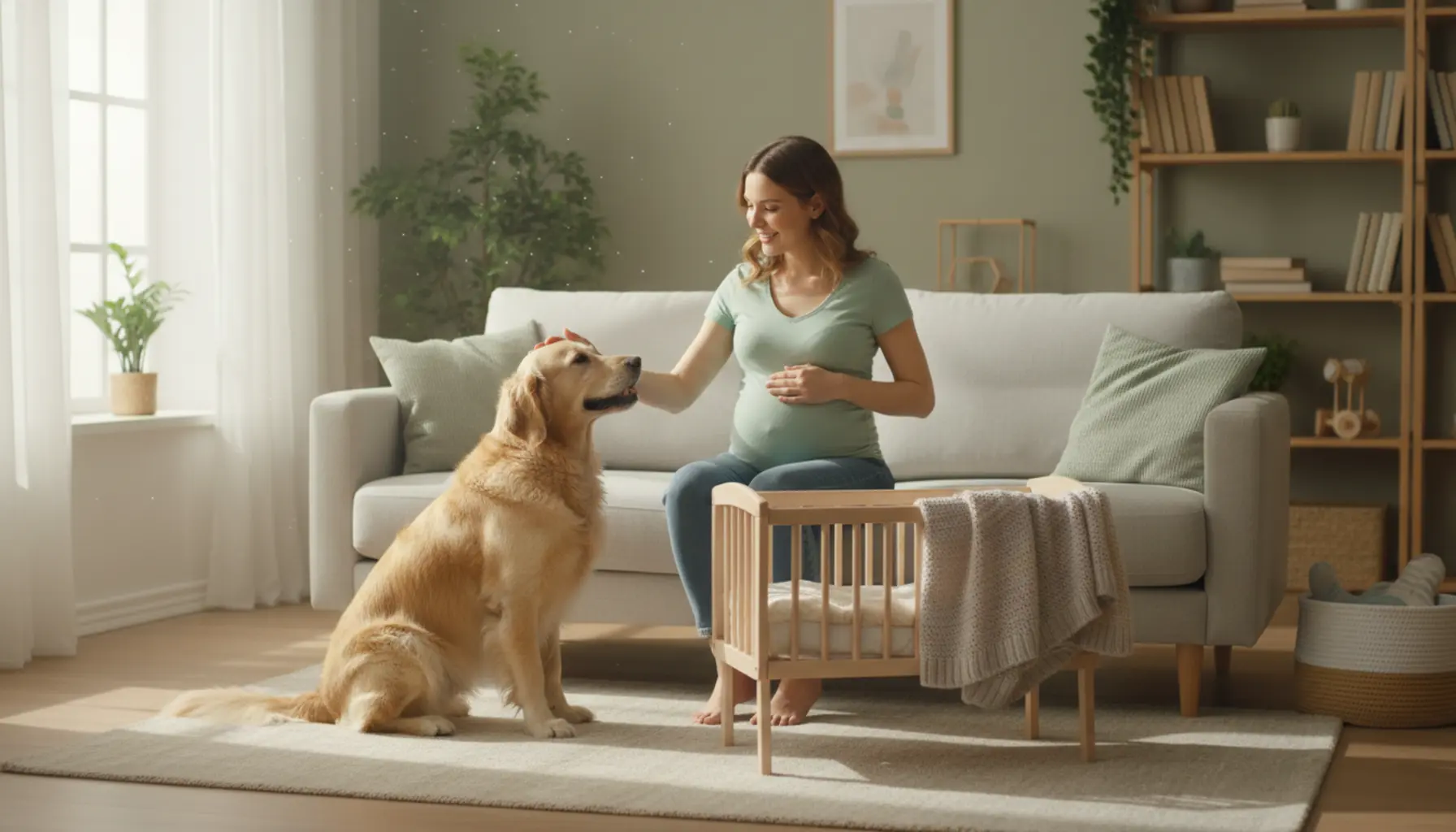
Preparing your dog for the arrival of a baby at home is key to family harmony. The ability to recognize and meet your dog’s needs limits stress and strengthens the sense of security for everyone in the household. Thoughtful, early implementation of changes helps build a positive relationship between the dog and the new family member.
Table of Contents
- Understanding Dog Behaviors
- Building a Relationship with the Child
- Preparing the Dog’s Routine
- The Dog’s First Meeting with the Baby
- Home Safety Rules
- Spending Time Together: Dog and Child
Understanding Dog Behaviors
Before you begin the practical preparations for the baby’s arrival at home, it’s crucial to understand how your dog perceives the world and what his daily behaviors truly mean. Dogs function primarily using their senses—smell, hearing, and sight—and through learned associations. Any novelty in the environment can arouse curiosity, excitement, but also anxiety or fear. Therefore, it’s important that you can recognize subtle signs of tension, fatigue, or stress before they turn into barking, growling, hiding, or even aggressive behaviors. Early warning signs include, among others, licking the nose without a clear cause, turning the head away, yawning in calm situations, tensing the body, tucking the tail, stiffening the figure, sudden shaking off, or avoiding contact. A dog that feels unsure about changes at home may also start scratching more often, excessively licking its paws, following its owner everywhere, or conversely, isolating itself in remote places. Understanding that these are often manifestations of stress—not “spite” or “stubbornness”—lets you respond with empathy instead of anger. This is especially important during pregnancy and preparations for the birth, when household tension naturally rises and the dog, highly sensitive to human emotions, may display behavioral changes resulting from the atmosphere, not actual “jealousy” or “rivalry.” You should also learn to read the positive signals sent by your dog: a soft, relaxed body posture, a freely wagging, relaxed tail, “smiling” mouth, willingness to interact, calmly following the caretaker, or gentle interest in new objects at home (like a baby stroller, crib, or toys). If at this stage you notice your dog responds with increased excitement, excessive barking at sounds, or acts chaotically in new situations, it’s a good idea to plan gradual training in calming and self-control before the baby arrives. Also remember, many behaviors people see as “dominance” (like climbing onto furniture, leaning on legs, lying in pathways) are often simply attempts to seek closeness, comfort, or a better vantage point. Misinterpreting these signals as a “power struggle” can lead to unnecessary conflicts and punishments, undermining your dog’s trust in you—and this trust will be the foundation for safety after the baby arrives. Instead of focusing on mythical “hierarchies,” look at your dog’s behavior in terms of emotions, needs (movement, rest, social contact, exploration opportunities), and habits that you may unknowingly reinforce through your daily responses.
Understanding your dog’s behaviors is particularly valuable in predicting how he’ll react to the baby and elements surrounding it. A baby brings with it new noises (crying, babbling, electronic devices), smells (cosmetics, milk, diapers), and items (strollers, bouncers, play mats), and changes the daily rhythm of the caretakers. A dog who doesn’t understand where these stimuli come from or why the rules suddenly change (less attention, different walk times, restricted access to rooms) may feel lost, frustrated, or pushed aside. In practice, before the baby arrives, analyze how your dog currently responds to stimuli: is he anxious about baby cries from outside or TV, does he jump on guests with excitement, does he tend to guard resources (bowls, toys, resting area), is he fearful of fast-moving objects like strollers or bikes? Observing these reactions helps you plan specific exercises to minimize the risk of problems post-birth. For example, a dog that is vigilant around its bed may require training to calmly leave the spot on command and accept human presence near “resources,” while an overly stimulated dog by sounds would need gradual desensitization, i.e., exposure to recordings of baby crying at very low volumes. It’s also important to remember that not all growling or withdrawing from the baby signals a “bad temperament”—it’s often a natural way of communicating discomfort and an attempt to increase distance. Growling is a sign that a line has been crossed; punishing the dog may make him stop warning and react immediately with more severe responses. In the context of child safety, the goal is to create conditions and habits so that the dog is not put in situations where he must choose between “enduring” and warning, with a safe space to retreat to without risk of the child reaching him there. When analyzing your dog’s behavior, notice his arousal threshold—how quickly does he go from calm to excited, how long does he take to calm down, what excites him most. A dog with a low arousal threshold may especially need consistent routines, self-control exercises (such as ‘sit’ and ‘stay’ in busy situations), and well-planned physical and mental effort, so the baby’s entry into the home isn’t met with an “explosion” of pent-up energy. Understanding the individual temperament, history, and experiences of your dog allows for realistic preparation—you’ll know which areas are your dog’s strengths (patience, confidence, gentleness) and which need support before the baby is born, often in cooperation with an experienced behaviorist or trainer specializing in working with families with young children.
Building a Relationship with the Child
Building a positive relationship between your dog and your child starts long before their first direct contact and should occur in stages, respecting both parties’ boundaries. It’s vital that the dog associates the baby’s presence with something calm, predictable, and as pleasant as possible, not with sudden loss of attention from guardians. Within the first weeks after birth, start with so-called controlled familiarization: allow the dog to be in the same room as the baby, but at a safe distance, under adult supervision and on a leash if necessary. The handler should reward the dog for calm behaviors—looking, sniffing from a distance, sitting, or lying down—using treats, a gentle voice, and soft petting, strengthening the idea that calmness “pays off” around the baby. Also important is helping your dog learn that the baby’s cries, movements, or other sounds are just a normal part of home life: play recorded baby sounds, gradually increasing the volume and rewarding a calm response each time. Building the relationship isn’t just about getting your dog used to stimuli, but also about integrating him into the daily routine with the baby—so he stops seeing the baby as “competition” for attention and instead as a natural part of the family.
Safety must be the foundation of all dog-child interactions, so all contact must always be supervised by adults, with no exceptions. The first introductions should be brief and controlled: an adult holds the baby, while another manages the dog on a leash or harness, allowing a short sniff of the baby’s feet or clothing, then rewarding calmness and immediately ending contact before excitement builds. This “end while it’s good” strategy prevents overwhelming the dog and avoids situations where excess emotion may lead to rough reactions. Also introduce clear zones at home: areas only for the baby (such as crib, changing table) off-limits for the dog, and a “dog-only” zone where the baby won’t reach—bed in a quiet spot where your dog can rest in peace. As the child develops, sitting up, crawling, and reaching the dog, it’s essential to teach gentle touch and respect for the animal’s space: guide your child’s hand to touch the dog on the sides, avoiding the tail, ears, and legs, and promptly stop any attempt to pull fur or climb on the dog. Modeling the child’s behavior is just as important as training the dog. At the same time, adults should still spend a bit of exclusive time with the dog every day—a calm walk, scent games, or a short training session—to minimize feelings of neglect and jealousy. Over time, as the dog learns that the baby’s presence doesn’t mean loss of attention (and may even bring more treats and positive experiences), the relationship naturally strengthens. Ultimately, the dog may become a vigilant companion for the child, linking the child’s presence with safety and stability, not unpredictable chaos or frustration—the basis of a harmonious, long-term bond over many years together.
Preparing the Dog’s Routine
A change in routine is one of the biggest stressors for most dogs, so preparations for a baby’s arrival at home should begin as early as possible—ideally in the first half of pregnancy. The goal is not to turn your dog’s life upside-down, but to gradually adapt his day so the new schedule after the baby’s birth is as predictable and unsurprising as possible. Start by analyzing the current routine: walk times, feeding schedules, play, training, and rest. Many people naturally devote most attention to their dog after work, in the evening, when care for an infant will later take much of this time. Therefore, before birth, introduce small adjustments such as shifting walk times to earlier hours or moving some activities to the morning, so your dog gets used to guardians not always being available. Also key is gradually introducing more flexibility—feeding not precisely at 6:00 p.m. but in a range from 5:30–6:30, so when the baby comes, the dog isn’t frustrated about the bowl being late. Plan ahead about who will have time for walks and play in the first weeks after birth; if this will increasingly be the role of another guardian, involve that person more in daily care so your dog isn’t surprised by a sudden “main person” switch. For sensitive dogs or those with strong separation distress, practice independence—start with short periods when the dog stays in another room or with someone else, gradually extending these, to build security not reliant on constant presence of one person.
Another essential aspect is consciously managing the level of physical and mental activity. Before the baby is born, work with your dog on a model day that provides sufficient exercise and stimulation (such as scent games, training), but also teaches calm rest when nothing is happening. Dogs used to very intense, long walks at set times often cope worse when activity is limited afterward, so during pregnancy start introducing calming exercises, learning to rest on a bed, and quieter activities that can be kept up with a baby around (such as scent mats, searching for treats indoors, short training sessions). It’s also a good idea to teach your dog that specific cues—like laying down a blanket or a particular word—mean it’s time to settle and stay in place; this will help manage space when you’re busy feeding or putting the baby to sleep. By this stage, set up a “safe zone” for your dog: a bed in a quiet corner, a crate with an open door, or part of a room; the dog should always be able to withdraw there when overwhelmed, and you must consistently respect this space, later teaching your child it’s “just for the dog.” Preparing the routine also means gradually familiarizing your dog with baby-related stimuli—playing baby cry recordings during housework, bringing in new equipment (stroller, crib, changing table) and getting the dog used to them as part of daily life rather than introducing everything at once. Simultaneously, introduce the principle that contact with the dog will sometimes be unpredictable—short, spontaneous play or petting, interrupted by periods when you’re busy and the dog learns to wait calmly. This way, after the birth, your dog won’t see reduced attention as unfair, but as something familiar from the earlier months. Consistency and calm from caretakers are key during this process—the more predictable (yet flexible) your dog’s pre-baby days are, the more smoothly he’ll adjust to the natural chaos a new family member brings.
The Dog’s First Meeting with the Baby
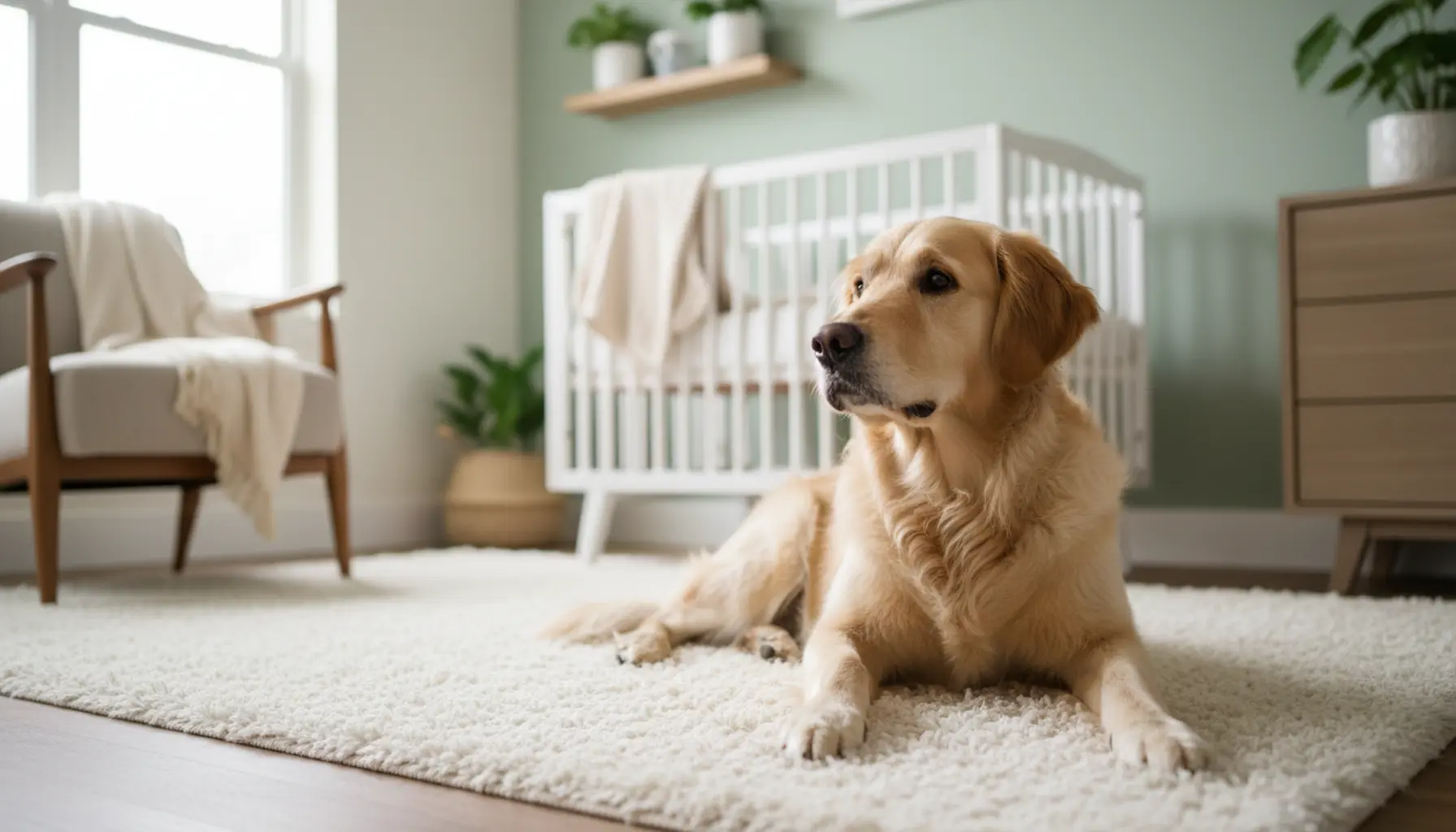
The moment your dog meets your baby for the first time should be carefully planned, calm, and free from time pressure. Ideally, this happens when the house is peaceful, and the dog’s basic needs are satisfied—has exercised, been fed (not right before the introduction), and is mildly physically tired. The first entry of the baby should proceed in stages: one person (e.g., dad) greets the dog alone first, calming its excitement after the separation, then brings in the person holding the baby. Before your dog gets close, let it sniff a baby blanket, cloth diaper, or item of clothing with the baby’s scent. This helps connect new stimuli (appearance and sounds of the baby) with a scent the dog already knows from earlier, e.g., while mum and baby were still at the hospital. Adults should remain calm, use a soft, friendly tone, and avoid sudden gestures that could increase the dog’s arousal. The dog should wear a leash (preferably long, adjustable), held loosely—not to tighten or restrain, but to correct movement or increase distance if needed. Set up the space well: the baby may be on a caretaker’s lap on the couch or chair, allowing the dog to approach from the side, not “head on,” which is less confrontational for most dogs. Don’t force the dog to come closer or hold him by the baby—let him choose how close he wants to get and how long to stay, rewarding every sign of calm, controlled behavior. The first few minutes should be short and positive, i.e., finished while the dog is still curious but not overexcited or stressed. Then call him away in a friendly way, invite him to his bed, offer a chew toy or scent mat—teaching him that after contact, something pleasant and relaxing follows.
During the first meeting, watch your dog’s body language carefully to assess if he’s comfortable or stress is increasing. Positive signs: relaxed posture, soft facial expression, gentle tail wag at mid-height, no muscle stiffness, willingness to come and go. Yawning, licking lips, turning the head away, tucked tail, flat ears, stiff gait, staring, growling, or whole-body tension can signal discomfort or growing stress. At the first subtle sign of anxiety, increase distance from the baby and offer a calming activity—moving to his bed, sniff games, licking a mat, or chewing a safe toy. Don’t punish growling or other warning signals; treat it as valuable information that your dog needs more space. Punished dogs may stop warning and next time react more abruptly. The infant’s first contact with the dog shouldn’t be physical—the baby can’t control its movements, and sudden waving arms or grabbing fur may shock the dog. Start by keeping the baby at a distance where the dog stays calm, rewarding with treats, a gentle voice, or brief petting for remaining relaxed. After several such short sessions a day, gradually decrease the distance, ensuring the dog always has the option to walk away. Never force the baby over the dog, preventing the dog from retreating. A good practice is to use simple commands the dog already knows—”bed,” “stay,” “gentle,” “go away”—during the introduction. That way, the whole event is predictable for him, and known verbal cues have a calming effect. If your dog is highly anxious, overexcited, or hard to control, limit the first contact to short, managed moments and consult a behaviorist to plan the next adaptation steps. This way, the dog’s first encounter with the baby isn’t a one-off “big event,” but the beginning of a calm, well-managed process that builds trust and a sense of security on both sides.
Home Safety Rules
Child safety in a home with a dog relies on prevention, consistent rules, and vigilant adult supervision. The first step is thoughtful arrangement of space—mark clear zones: areas for the baby only (crib, changing table, play corner) and a safe “base” for the dog, inaccessible to the child. Place the dog’s bed in a quieter part of the house and reinforce that it’s a spot where no one disturbs him, even when the baby starts crawling and curiously following the animal. Also use barriers, playpens, or baby gates to restrict contact when needed (e.g., if the dog is tired or overexcited). Maintain order and keep the dog away from the child’s items—pacifiers, teethers, stuffed toys—as these may become competition objects or dangerous chews, risking swallowing small parts. From the start, teach your dog that the baby’s toys are off limits, offering his own attractive chew toys and balls so he doesn’t feel deprived of resources. The key safety rule is ongoing supervision during all dog-child interactions—never leave an infant or young child alone with the dog, even if he’s gentle and “has never done anything.” Even subtle stress signs like yawning, lip licking, averting gaze, body stiffening, or side-eye glances should prompt you to end the interaction and let the dog withdraw to his zone. It helps to teach several safety commands, such as “bed,” “leave it,” “go away,” “wait,” or “no”—these allow you to manage behavior calmly when the child is near, touching dog gear, or suddenly changing position (for example, falling toward the dog). Commands should be well practiced before the baby arrives so they’re automatic later, without anxiety or shouting that just raises everyone’s tension. Entrance and exit rituals are also important—when returning home with the baby after outings, introduce a calm greeting routine: start with a short pause so the dog can sniff your clothes, then move closer to the baby, always under adult control.
The next group of safety rules concerns touch and interaction—applied equally to the dog and the child (as the child’s awareness grows). The adult always acts as a “translator” between species: protecting the dog from too intense or clumsy touches, and teaching the child not to pull on ears, tail, fur, or poke the dog’s eyes or mouth. Even if the infant can’t yet understand words, consistently repeat rules in a gentle voice (“gently,” “no pulling,” “leave him be”) and physically guide the child’s hand so that touch is soft and brief. Over time, the child learns these patterns and the dog learns that the caretakers intervene for his protection, which increases the sense of security and reduces frustration. At the same time, the dog should not be allowed overly intrusive behavior toward the child: jumping, licking the face, sniffing without limits, or trying to play with a paw can be uncomfortable or unsafe for the infant. In these cases, use practiced commands and gently redirect the dog, rewarding calm withdrawal instead of harsh discipline. Hygiene is also critical—regular deworming, vaccinations, grooming, and nail trimming reduce the risk of infection or accidental scratches, which is especially important in the child’s first months. Special attention should be paid to highly valued resources such as food bowls, favorite chew toys, or the dog’s bed—areas where many dogs are sensitive. The baby shouldn’t have access to the bowl or bed, and adults must respect a dog’s need for more space in such situations. Feed the dog in a quiet place, away from the child, not allowing scenarios where the child approaches or touches the food. Similarly, during intense play like fetch or tug, the child should not come between the dog and the toy to avoid accidental hand bites. Lastly, emotional state of adults is one of the pillars of safety: shouting, tension, sudden movements, and chaos increase the dog’s arousal and lower the threshold for reactions. The more calm, predictable routines at home, the easier it is for the dog to keep balance, and for caretakers to spot subtle signals indicating the dog needs a break. If you notice frequent warning signs (growling, “freezing,” guarding toys from the child, hiding, avoiding contact) despite safety rules, consult a behaviorist or trainer before tension escalates into a serious incident.
Spending Time Together: Dog and Child
Time spent together by dog and child greatly impacts their relationship, so it should be planned consciously, considering the child’s developmental stage and the animal’s temperament. Early on, interactions will be mostly passive—the child watches the dog from a safe distance, and the adult ensures the dog’s association with the child involves pleasant experiences such as calm petting, treats, or shared quiet time on the couch or on the floor near the dog’s bed. As the child develops, move to more active joint time, but always prioritize safety and comfort for both. This means every shared activity should have clear guidelines—an adult manages the space, starts the play, decides when it begins and ends, and makes sure the dog can withdraw to its rest area when needed. Joint time often begins with simple, daily routines: the child “accompanies” the dog’s feeding (e.g., the child sits by while the parent fills the bowl), during short brushing or grooming sessions where the parent names the dog’s body parts out loud, showing the child how to touch the dog gently and with respect. These repetitive actions build the child’s habit for gentle gestures and teach the dog predictability and security. Progress to interactive exercises where the child is a passive participant while the adult acts as the active partner—e.g., simple trick training, where the child gives treats on the parent’s signal or throws a ball a short distance while the adult holds the dog on a leash to control excitement. Scent games are especially beneficial—hide treats in scent mats or boxes, the child helps “find” the place, and the dog searches for the food. Such activities lower tension, calm the dog, and show the child that the animal needs more than just hugs or “squeezing” but has natural needs and tasks. You can also organize joint rituals: initially, the child is in a stroller or carrier, the dog walks on a leash with the adult, getting rewards for calmly passing triggers; later, when the child walks, he can hold the leash with the adult (the adult maintains full control), which allows the child to participate and teaches the dog calm movement beside a small person. It’s also valuable to include the dog and child in daily calming moments—reading together on the carpet with the dog nearby, listening to soft music, child’s nap by the dog’s bed, if the dog is comfortable and shows no signs of distress. The more the dog experiences predictable, calm, and pleasant events while the child is present, the more likely he’ll seek contact himself, building a strong bond.
When organizing joint time, pay special attention to the types of games and activities; not all popular ones are appropriate for this duo. Never engage in high-excitement games like intense tug-of-war or running around the house with a small child present, especially if your dog has trouble “winding down.” Safer choices are structured games with clear rules: fetch in a limited space, sitting and waiting on command, simple obstacle courses made of pillows or tunnels for the dog to go through as the child watches or goes separately, never pushing each other. Teach the child: don’t run or shout around the dog, don’t pull tails, ears, or fur, don’t disturb during eating, sleeping, or when the dog is in his “base.” As you spend time together, narrate and comment on behaviors (“See, the dog is moving away—he needs a rest, let’s not pet now,” “The dog sits because we asked; now you can throw the ball”) so the child learns to read dog body language and understand he’s a feeling being, not a toy. Use short, planned “sessions” of joint time—5–10 minutes of focused play, followed by a break to calm the dog and a change of activity for the child. This prevents overstimulation, which can lead to nipping, barking, or overexcitement. As the child grows, let them take on simple dog duties—pouring food into the bowl (with supervision), dropping treats into a kong toy, bringing the dog a blanket, handing over a brush. These “responsibilities” give the child a sense of positive involvement in the dog’s life, and let the dog see that the child brings positive, predictable results. Also, remember your dog’s individual preferences—not all want intense physical contact; many prefer just being near people or quietly exploring. Forcing the dog to cuddle or pose for photos with the child despite clear discomfort signals (turning head, nose licking, yawning, stiffening) builds frustration and defensive risk. The adult must serve as the “translator” between dog and child, ensuring that shared time reflects voluntary contact from the dog, gentleness from the child, and clear rules set by the caretaker. That way, daily, ordinary moments—offering a treat, a relaxed walk, watching the dog play, sitting on the carpet together—gradually become a natural, safe ritual of coexistence, where both dog and child feel at ease.
Summary
Preparing your dog for the arrival of a baby at home is crucial for building harmonious relationships among all family members. Understanding canine behaviors makes it easier to adapt the dog’s routine to the new situation. Introducing safety rules and ensuring your dog is actively involved in family life will result in a lasting relationship with your child. Remember to introduce changes gradually and pay special attention to the first encounters with the baby to ensure everyone’s comfort. In the end, shared moments between child and dog will nurture mutual trust and friendship.

