

Understanding the most frequent mistakes in communicating with your dog is the key to building trust and a better relationship. Effective dog communication relies on reading signals, avoiding emotional chaos, and consistency; the idea of “common communication mistakes with your dog” is foundational for a healthy bond. Discover which daily slip-ups lead to misunderstandings, and learn expert tips for maintaining a genuine relationship with your pet.
Table of Contents
- Misunderstandings in Dog Communication: Where Do They Come From?
- Uncontrolled Emotions and Their Impact on Your Dog
- The Role of Voice Tone in Dog–Human Relationships
- Why Ignoring Your Dog’s Signals Is Destructive
- The Power of Consistency in Strengthening the Relationship
- How to Repair a Damaged Bond: Practical Steps
Misunderstandings in Dog Communication: Where Do They Come From?
Misunderstandings with dogs often happen because humans and dogs “speak” completely different languages, and we tend to project human motives or emotions onto them. While people communicate mainly with words, dogs use their whole bodies—muscle tension, ear and tail position, facial expression, movement, scent, and personal space. When an owner only focuses on verbal commands (“sit,” “come,” “leave it”) and ignores the subtleties their dog’s body communicates, it’s easy to misread their mood or willingness to cooperate. For example, a dog licking its nose, yawning, turning its head, or pulling away from a reaching hand is usually saying “I’m unsure, I need space,” but many owners see these as stubbornness or disobedience. Likewise, tail wagging is often assumed to mean happiness, but can also signal excitement, tension, or readiness to defend, depending on the context. Problems also result from over-humanizing dog behaviors: believing a dog “knows they did wrong,” “is being spiteful,” or “acts out of revenge.” In reality, dogs respond to immediate emotions, past associations, and consequences they’ve actually learned. A classic scenario? Scolding your dog for something it did minutes or hours before—you’re referring to the past, but your dog connects your reaction to what is happening right now (your homecoming, or simply your approach), leading to confusion and anxiety, not learning. Another source of tension is inconsistency. Sometimes you allow your dog on the couch, other times you scold; one day you encourage them to greet strangers, the next you’re annoyed they pull toward people. Mixed signals confuse your dog—they don’t know the rules, so they might experiment or withdraw, which leads to so-called “bad” behaviors that are really attempts to cope with a chaotic human-made environment.
Many misunderstandings stem from human–canine differences in perceiving the world, and from communicating in ways that don’t fit a dog’s abilities. Dogs live “in the now,” respond to what’s around them, and process the world primarily through their nose, ears, and ability to notice movement—while people plan ahead and analyze consequences. When owners try to “explain” long-winded instructions or expect dogs to guess what we think they “should” do, it leaves a communication void. Dogs then fall back on past associations or instincts. If previous experience includes yelling, leash jerks, or punishment for growling or after the fact, your dog mainly learns to avoid conflict with you, not cooperate. Without conscious rewarding for good behavior or clear signals before each command, your dog doesn’t see a reason to respond—there’s no clarity between rewards and consequences. Just as often, owners don’t account for a dog’s emotional state when issuing commands, trying to get perfect focus on a crowded street, around other dogs, cyclists, or playful kids. A dog flooded with emotion or fear might literally be incapable of responding to a command, even if “they know” it from calmer contexts. Owners mistake this for stubbornness, ignore stress signals (licking, tense tail, rapid breathing, cowering or lunging forward), and escalate to anger, raised voice or physical force. Over time, your presence becomes linked to unpredictability, which increases mistrust and emotional distance. Confusing nonverbal cues also worsen the problem: leaning over, staring directly in a dog’s eyes, hugging or head-patting (which dogs often interpret as pressure or threat) but which humans mean as affection. If a dog pulls away, turns their head, or stiffens, their request for space is ignored. In extreme cases this leads to growling, snapping, or biting. From a human viewpoint a dog “attacked without warning” but really, a series of warnings was ignored. The result is a vicious cycle: humans lose trust in dogs, dogs trust humans less, and each fresh misunderstanding deepens the rift between you.
Uncontrolled Emotions and Their Impact on Your Dog
Uncontrolled emotions—sudden anger, shouting, nervous tone, or even hysterical laughter—directly affect how your dog feels about you, and how they interpret your actions. Dogs are invaluable mood-readers, picking up on your body language, muscle tension, sweat scent, or breathing rate—often before you’ve even realized you’re wound up. When your moods are dramatic, unpredictable, or don’t match your words, your dog sees the world as less safe and less understandable. They might avoid contact, “freeze” (stand motionless, stiff tail, turn away), or become overexcited—jumping, barking, mouthing, or struggling to settle after you arrive home. To your dog, a human in high emotions stops being a reliable reference point. If today the dog is yelled at for a behavior, and tomorrow you ignore it, their trust in your rules drops sharply. Your dog’s focus shifts from “what do you want?” to “what mood are you in?” Instead of learning “sit” means relaxation and reward, they learn it could actually signal the start of an unpleasant event, if you are frustrated. Even simple activities become emotionally draining—the dog’s body tenses, it licks its nose, yawns, shakes or scratches excessively. These classic stress signals are often misread as “goofiness” or “being difficult,” but are really attempts at stress relief. Overwrought emotions can even nullify rewards—a tense owner may offer a treat, but with rigid touch and shaky breathing, so the dog is too stressed to take food. Positive reinforcement loses its power, and training becomes linked to pressure. Shouting or yanking the leash when a dog is already overstimulated (e.g., barking at another dog out of fear) doesn’t teach new behavior, it just confirms the situation is as scary as it feels—if the human “blows up,” your dog thinks there truly is something to worry about. Emotional unpredictability fosters reactivity, fearfulness, and sometimes aggression, which is a last resort for a dog in overload. Often, so-called “aggression with no reason” is the outcome of chronic tension at home: loud arguments, raised voices and a lack of peaceful routine leave dogs on alert, robbing them of deep rest and reducing their frustration/fear threshold.
Practically, every emotional outburst from you—even a brief one—leaves a trace in your dog’s “emotional memory” and influences their future reactions. If you’ve yelled at your dog for coming back too slowly a few times, they begin to associate “coming to my person = sometimes unpleasantness.” This is a quick way to weaken your recall, one of the most important commands for safety. Similarly, if you regularly respond with irritation when your dog seeks your attention—pushing them away, huffing “go away,” or stiffening your body—your dog learns that seeking closeness risks emotional backlash. Sensitive dogs will withdraw, avoid petting, and pass by cautiously, with their head and tail down. Bolder ones will react tension for tension—frustration, barking, grabbing your clothes—because in their view only a loud response can get through your wall of chaotic emotions. Either way, your bond suffers: the dog stops seeing you as a calm, dependable partner and enters “caution” or “fight” mode. Mindful management of your own emotions thus becomes one of the most important parts of modern dog care. The goal isn’t to never feel anger or frustration, but not to “offload” them onto your pet. Pause before you respond—a deep breath, stepping back a meter, counting to ten—so you lower your arousal before communicating. Notice how your dog reacts to your tone and body language: do they lick their nose, turn their head, lower their ears, freeze when your voice rises? That’s a signal your feelings overwhelm them. If your dog gets even more wound up when you move or speak loudly, that’s a sign your tension is a trigger. Consciously lowering your reactivity, introducing calm routines (the same gentle phrase and gesture every time), and making a habit of separating your dog’s behavioral moments from your own frustrations will help your dog see you as a secure base. Emotional stability from you sets the foundation for clear, understandable communication—your dog can focus on your genuine message, not on reading your moods and guessing if you’ll be pleasant, neutral, or stressful this time.
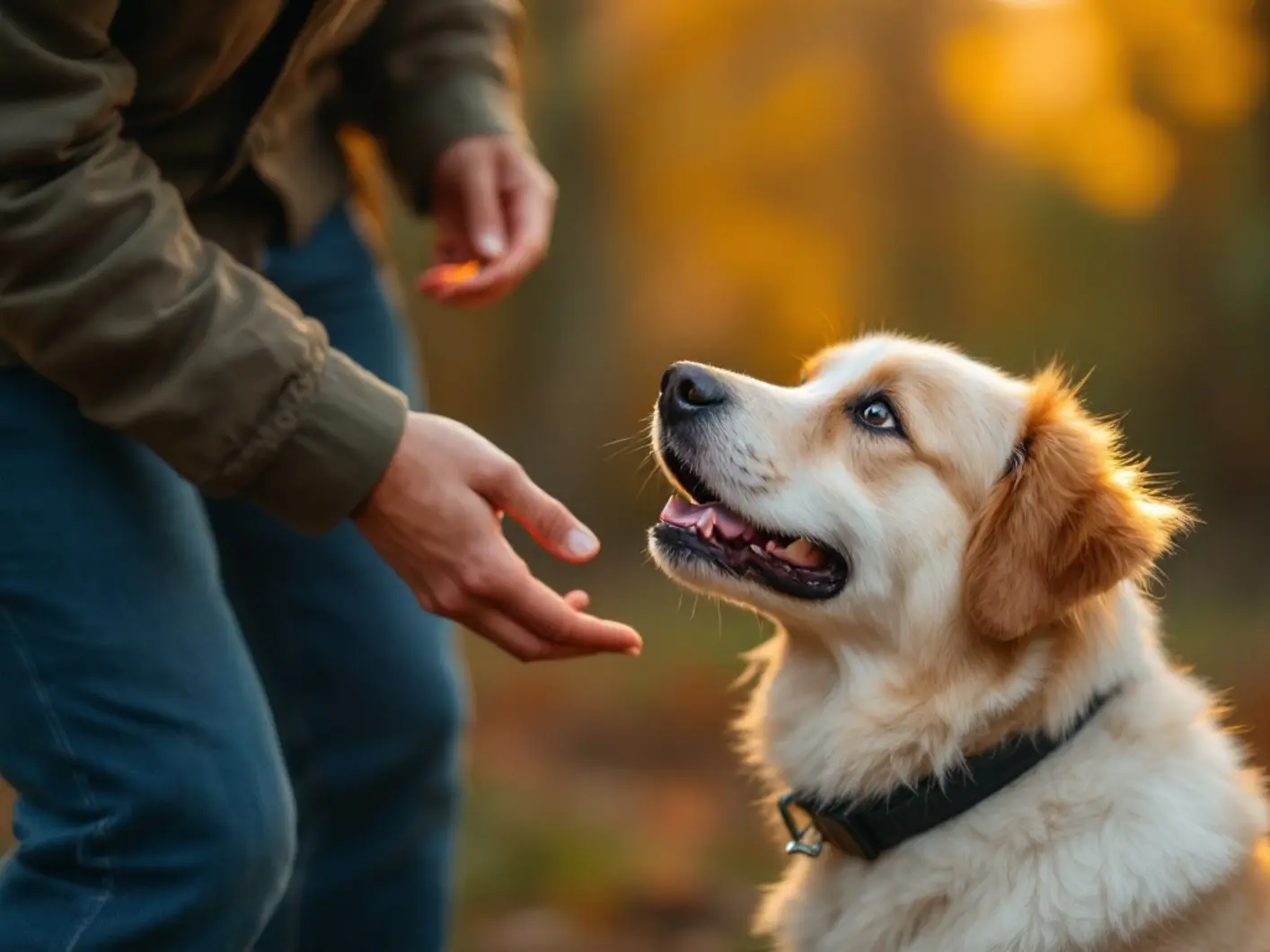
The Role of Voice Tone in Dog–Human Relationships
Voice tone is one of the most important yet overlooked elements of dog communication. For people, voice is mainly words; for dogs—it’s melody, rhythm, intensity, and emotional “coloring.” Your dog doesn’t need to understand the meaning of “leave it” or “come” as a human does—as long as they’ve associated the sound of that word, in a specific tone and context, with a certain outcome. That’s why the same word, said in a different tone, can mean something totally different to your dog. A raised or harsh voice is rarely heard as “more authority,” and more often as tension or a threat, which breeds avoidance or defensive behaviors. A soft, predictable intonation inspires safety, focus, and cooperation. The effectiveness of a command depends not on its “loudness” but on its consistent melody and harmony with your body language. If you speak gently but stand over your dog, tense and staring, they’ll find your visual cues overwhelming. Your tone of voice should always match your body posture, facial expression, and movement. Conflict between tone and content is common: praising with the words “good dog!” in a shrill, anxious tone signals tension, not reward. This creates confusion: is the person happy or angry, is this safe or risky? Some dogs “freeze,” others become excitable. Over time, this chaos makes your dog less sure about what you want. Dogs’ sensitivity to tone varies: nervous or trauma-affected dogs (or certain breeds) can react strongly to even small changes, while bolder or more excitable dogs might get even more wound up. This means raising your voice doesn’t guarantee cooperation—what matters is how your particular dog reacts, so observe and adapt instead of just getting louder in hopes of obedience.
Practical use of tone in communication relies on three “modes”: neutral/informational, encouraging, and calming—while limiting shouting and dramatic volume shifts. An informational tone is for everyday commands—neutral, steady and clear. Dogs learn that “sit,” “stay,” “come,” or “go to your place” said in this tone are simple, matter-of-fact cues—nothing to get worried or excited about. Predictable tone builds a sense of safety, as the dog always knows what to expect. An encouraging tone is lighter, more melodic and “smiling”—perfect for praise or inviting your dog to play or interact. Used sparingly, it becomes a built-in reward—provided you avoid over-exciting your dog if you want calm focus. A calming tone is deeper, slower, and steady, helpful for stressful moments—like when the doorbell rings, during storms or when meeting triggers outside. Harsh commands or raised voices in these situations add anxiety; a slow, low “it’s okay” with relaxed body language is far more effective in helping your dog calm down. Predictability is everything—dogs learn that a certain tone reliably means a certain situation. One of the biggest mistakes is bouncing between soft and harsh tones while using the same commands. Your dog won’t know your true intent and starts to lose trust in your words. Another common problem is using shouting as the default “correction” tool. Shouting doesn’t teach your dog what to do instead; it just raises their stress and makes you seem unpredictable. Even if your dog “freezes” or instantly stops—they haven’t learned, they’re just trying to get through the unpleasant episode. Chronic shouting builds mistrust, avoidance of recall, and in severe cases, defensive responses. Mindful tone work—talking softer, slower, with more control, and even recording/playing back your voice to check how you sound to your dog—is a simple way to transform your communication. A dog that hears a stable, predictable voice can relax, collaborate more easily, and learn new behaviors faster—because they feel your emotions are safe and consistent.
Why Ignoring Your Dog’s Signals Is Destructive
Overlooking your dog’s signals is one of the most serious communication errors, undermining safety and their sense of being “heard.” Dogs can’t tell you with words that they’re tired, stressed, overwhelmed, or in pain—instead, they “speak” through body language: turning their head, licking their nose, yawning at odd moments, stiffening, tucking their tail, growling, moving away, or hiding behind you. If you repeatedly miss these signs—whether from lack of knowledge or thinking “the dog’s exaggerating”—your dog learns their communication doesn’t matter. This is the first step to lost trust: now, your dog sees you as someone who ignores or heightens their discomfort. Over time, dogs can “mute” their signals—skipping the subtle cues and jumping straight to drastic behaviors like barking, lunging, or biting. People often find this “sudden” or “for no reason,” but in reality, it’s the final step in a process where softer signals have been ignored or even punished. When owners force their dogs into situations where they’re clearly uncomfortable (dragging them toward strangers, ignoring their withdrawal from a pushy child, or pushing them to accept touch), your message is: “Your boundaries and feelings don’t matter.” This not only breaks trust but sabotages future training—dogs who don’t feel heard are less willing to cooperate and more likely to shut down or avoid you. Many owners see this as stubbornness, but the real issue is chronically ignored emotional communication.
The consequences of overlooking your dog’s signals are obvious in daily life—higher general tension, trouble relaxing, hypervigilance, sleep troubles, and even health problems related to stress. Dogs whose cues are ignored become “on guard,” barking at every hallway sound, anxiously scanning for threats outside, and acting cautious with strangers because their safety falls entirely on themselves. They may begin to avoid petting, touch, or activities they once loved, because they can’t trust their “enough” will be respected. The relationship becomes one-sided—people choose when dogs play, eat, greet visitors or tolerate handling, without regard for what the dog’s body is “saying.” From a bonding perspective this is especially harmful, eroding the sense of partnership and replacing it with mere survival. Overlooking signals also risks missing the earliest signs of bigger issues—both behavioral and medical. Subtle changes in movement, reluctance with certain exercises, sensitivity to touch, or suddenly avoiding other dogs are often early cries for help. Ignoring these can mean missing the window for a simple fix—like a vet or behaviorist consult, tweaking routines, or softer training. Careful attention to dog body language—and responding—shows respect, but is also a real investment in quality of life. The more your dog experiences being listened to, the more likely they are to express their needs early and subtly, making your partnership calmer, more predictable, and grounded in earnest trust—not anxiety about what will happen next.
The Power of Consistency in Strengthening the Relationship
Consistency in your communication with your dog doesn’t mean being harsh or rigid—it means creating clear, predictable patterns. For your dog, the world is safe when they can predict consequences: if today being on the couch leads to praise and cuddling, but tomorrow the same thing triggers scolding, you send mixed messages, leading to anxiety and confusion. In practice, consistency covers three zones: house rules (what’s allowed), reactions to different behaviors, and commands you use. Set rules about sleeping spots, asking for attention, or feeding routines help your dog know what’s expected. Inconsistency weakens your authority and unsettles your dog—because they’re confused about boundaries, not because they want to “dominate.” A dog who sometimes hears “no jumping” for greeting people, and other times is warmly petted for the same, learns their actions have unreliable results. This can make a dog either pushier or withdrawn, since their attempts at interaction don’t yield steady results. Consistency matters for your emotional responses too: if you sometimes ignore barking at the door, and other times snap “enough!,” your dog has no way to know which action is upsetting for you. This drives a spiral of confusing behaviors. A calm owner who responds similarly in identical situations and sticks to the house rules is a “lighthouse” for your dog—a stable anchor in a world of swirling distractions. That predictability is not just safer, it also quickens learning: your dog links “this behavior = always this outcome.”
Consistency is also vital with words and gestures. It’s a common error to swap command words: sometimes “come,” sometimes “here,” sometimes “hurry up,” but expect the same reaction. To your dog, these are separate signals, said in different tones and settings. Using consistent, simple cues (always with the same tone and gesture) makes them easier for your dog to link with the desired action. Consistency with rewards matters too: if you sometimes treat and praise your dog for recall, but other times ignore them for “coming too late,” your dog will see recall as unpredictable, and choose more rewarding distractions instead. Consistency doesn’t mean ignoring a dog’s emotions—you can adapt difficulty to your dog’s current capacity—but the “rules” must stay clear: if your dog can’t follow through today, make things easier, but don’t change your standards (don’t reward jumping on guests “because they like dogs”). In social scenarios, letting your dog say hi to other dogs on leash one day but snapping at pulling the next causes more leash reactivity and even fear aggression, because the “rules” never make sense. Unified house rules—at home and outside—allow your dog to feel safe, cooperate, and stop “testing” what works or triggers you next. Solid, consistent communication is the only way to nurture real trust and harmony.
How to Repair a Damaged Bond: Practical Steps
Restoring a relationship with your dog where there is tension, fear, or mistrust starts with self-reflection and a review of your own behaviors. Accept that your dog isn’t trying to make you angry, but is responding to past experiences, emotions, and the way you interact. Before “fixing” anything, spend several days observing your dog: when do they stiffen, turn away, lick their nose, yawn, walk away, growl, or get overexcited? Take note to spot patterns—this helps you identify what causes stress versus what brings calm. At this stage, say less and watch more: reduce commands to the basics and observe if your dog can focus near you at all. If they avoid contact, don’t force closeness—sit side-on, avoid making eye contact, and allow your dog to choose if and when to approach. Rebuilding your bond means restoring a sense of safety. This means your dog should have the right to refuse interaction when they’re overloaded. Alongside this, structure your day: set mealtimes, walks, play, and rest periods. Dogs love routine—it tells them the world is predictable and safe. Create simple daily rituals: a short, calm “greeting” when you come home (no wild excitement or shouting), a consistent meal spot, a predictable bedtime walk routine. In those moments, keep your tone gentle and your movements soft—don’t loom or roughly pat your dog, use a calmer, lower voice, and slower movements. If your history has involved yelling or leash yanking, consciously avoid these— even under stress, pause a moment, breathe, and ask “what is my dog feeling?” rather than “what did they do wrong?” Try a “three-second rule”: count to three before responding, and only then act—this curbs impulsive reactions.
There are three pillars to rebuilding trust: calm presence, shared activity, and clear rules. Calm presence means intentional moments where you don’t demand anything from your dog, just share space—lying together in a room, gentle petting where your dog chooses, quietly gazing outside or sitting in the park. If your dog has been overwhelmed in the past, cut back on intense games or rowdy places—prefer quiet walks or sniffari walks where they can sniff as long as they wish, which melts stress and builds trust. The second pillar is finding activities your dog truly enjoys—not just those you think are fun. If your dog loves hunting out treats, set up simple scent games inside: scatter treats on a mat, in the grass, or in boxes, so you can cooperate without pressure. For insecure dogs, positive reinforcement games are powerfully bonding: “touch” (nose to hand), “look” (eye contact), or “come” rewarded for every step your dog makes towards you. Rewards must reliably follow the right behaviors—otherwise, your dog starts to see you as unpredictable. The third pillar is clear rules. If your dog is allowed on the couch one day and punished for it the next, they’ll always be confused and tense. Decide what truly matters to you and stick to these simple house rules. Make sure everyone in the family follows them—the same words, the same expectations. When under stress, skip yelling and manage space instead: remove your dog from situations that overwhelm, give them a safe spot (a bed or crate, provided it’s gently introduced) where nobody will bother them. If, despite your best, gentle efforts, your dog still shows fear, aggression, or withdrawal, consider consulting a behaviorist specializing in positive, emotion-based methods—professional insight can spot subtle errors and tailor a recovery plan to your dog’s unique story.
Summary
Building a strong bond with your dog starts with clear communication. Avoiding mistakes such as ignoring signals, uncontrolled emotions, or inconsistency will lead to a harmonious relationship. The key is to understand your dog’s needs and to send clear messages, which encourages trust and better mutual understanding. Mindful attention to communication habits will strengthen your friendship and create a truly special bond with your four-legged companion.

