
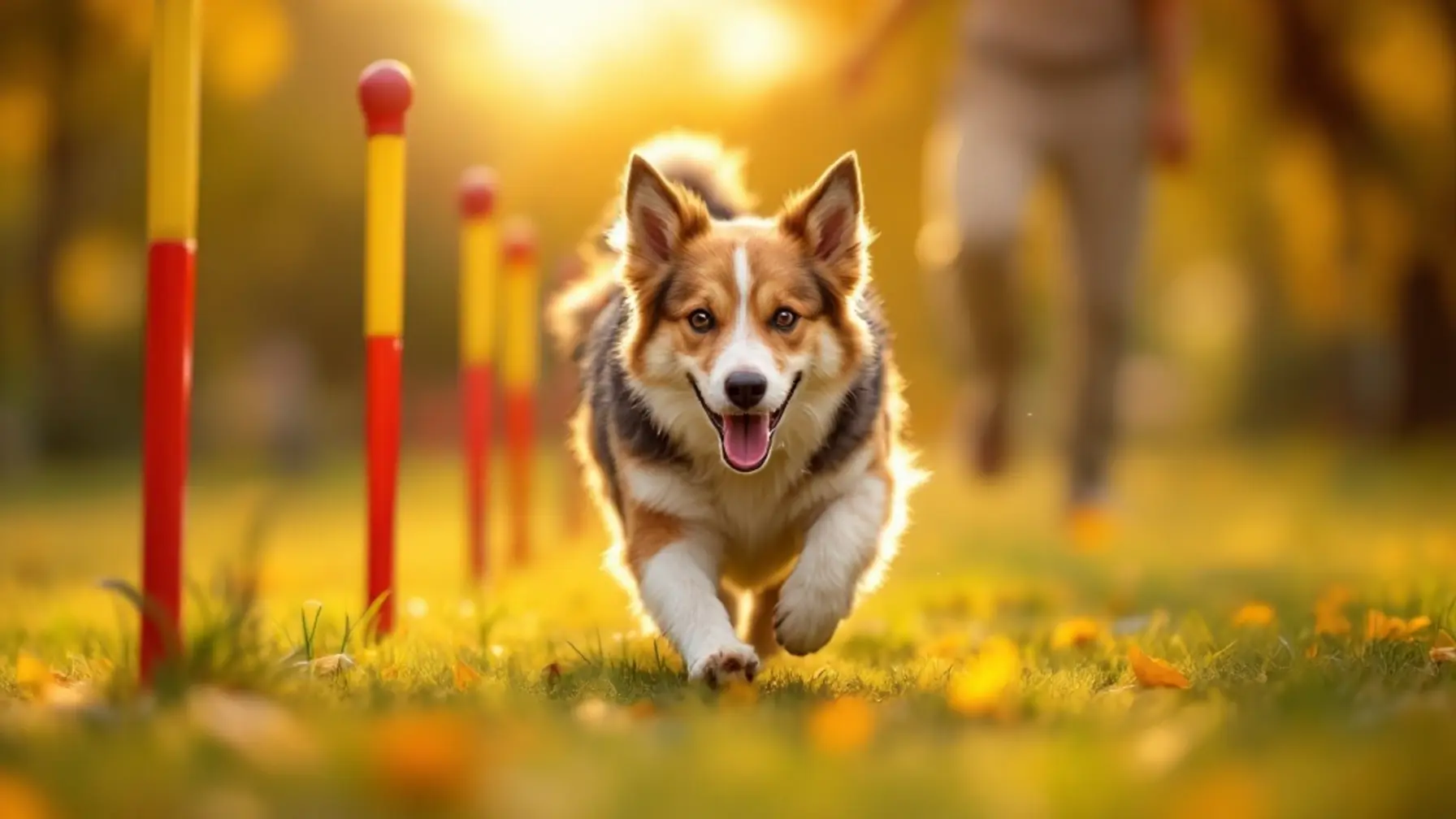
Preparing your dog to tackle obstacle courses requires consistency, patience, and familiarity with proven training techniques. The key is to ensure obstacle course training is safe and engages both your dog’s body and mind, in line with modern canine training principles. Discover how training on an agility course shapes your dog’s development, which equipment to choose, and what mistakes to avoid.
Table of Contents
- Why Train Your Dog on an Obstacle Course?
- Step by Step: Foundations of Obstacle Training for Dogs
- Essential Equipment and Accessories for Training
- Maintaining Safety During Training
- Theory into Practice: How to Motivate Your Dog to Cooperate
- Most Common Mistakes in Obstacle Training
Why Train Your Dog on an Obstacle Course?
Obstacle course training for dogs is much more than a series of fun tricks—it’s a comprehensive activity that develops both your dog’s body and mind, strengthens your bond, and enhances everyday quality of life. Running through tunnels, weaving, traversing ramps, and jumping over bars offers controlled, high-energy exercise to help your dog burn excess energy, build muscle, refine coordination, and improve overall agility. For high-energy dogs that tend to destroy furniture, bark from boredom, or pull on walks, the obstacle course provides a positive outlet—redirecting their energy into focused movement. These activities engage different muscle groups and develop balance: traversing ramps improves body control, jumps increase strength and resilience, and weaving through slalom poles helps with flexibility and quick changes in direction. This is especially beneficial for young adult dogs needing challenges, but also keeps mature dogs fit and content—provided equipment height and difficulty match their age and health. Obstacle training also helps manage weight; paired with diet, it can prevent obesity, joint issues, or metabolic diseases. It boosts heart and circulatory health and is easily adjustable in intensity and exercise selection. Fine motor skills improve too—your dog learns precision with paw placement and distance judgment, all reducing injury risk even outside the course, like during play or running on uneven terrain.
The benefits of obstacle training go well beyond physical fitness—it’s also a fantastic tool for building trust, obedience, and self-control. On the course, your dog must observe you, respond to hand signals and voice, wait patiently for the start cue, and manage impulses, like rushing forward or avoiding harder obstacles. This becomes a lesson in focus and trust: following your directions leads to reward, translating into better recall, calmer behavior around distractions, and easier introduction of new rules at home. Agility work also boosts self-confidence, especially as your dog becomes comfortable with tunnels, wobbly surfaces, or heights—helping to overcome fear and create a sense that difficult things can be achieved with your support. For anxious or insecure dogs, well-managed obstacle training can be pivotal in behavioral therapy, if introduced gently and without pressure. Overactive or impulsive dogs learn to channel energy, because progress on the course requires not just speed, but precision—developing self-control naturally. Plus, mental stimulation from new course setups, rearranged obstacles, and added cues requires your dog to analyze and remember—acting as a mental workout. This reduces boredom, curbs behavior issues linked to under-stimulation, and gives a sense of accomplishment after each task. Finally, the obstacle course is ideal for socialization: in a controlled environment your dog can get used to other dogs, people, sounds, and movement, learning to focus despite distractions—a valuable urban life skill.
Step by Step: Foundations of Obstacle Training for Dogs
Preparing your dog for obstacles should begin with strong foundations, before introducing jumps or tunnels. The first step is mastering basic commands and “heeling”—your dog should focus on you, respond to their name, and understand “sit,” “stay,” “come,” and “leave it.” These form the “language” you’ll use together on the course. Start training in a calm, familiar space with minimal distractions, rewarding eye contact and progressively building up with “look” or “come” cues to reinforce engagement. Early focus isn’t on jumping—it’s about building your dog’s confidence, trust, and positive association with training. Use high-value treats and keep sessions brief, dynamic (3–5 minutes), and end with play, so your dog links learning with rewards and fun. Another fundamental element is exposure to varied surfaces and environments. let your dog walk on mats, rugs, boards, slightly wobbly platforms, or small steps—teaching conscious paw placement and removing fear of new textures. Introduce simple proprioception exercises, such as walking slowly over poles on the ground (no jumping yet) or placing front paws on low platforms—this fosters body awareness, leading to safer, more precise obstacle work. Simultaneously, practice self-control using exercises like “stay” at open doors, waiting for food, or calmly accepting treats—being able to “pause and think” is critical for the start line and more complex course sequences.
Once your dog has these basics, can focus, and handles novel stimuli well, you can start adding the simplest course elements. Begin with safe, “easy wins” for motivation and confidence, such as low bars to step over or jump—start with a pole on the ground or a minimally elevated stick. Never force your dog to jump—use treats, toys, and cheerful encouragement, and if your dog is hesitant, lower the difficulty. The next step is getting used to tunnels or low bands. To start, use a short, see-through (e.g. mesh) tunnel, and stand at the exit with a reward so your dog knows where they’re heading. If your dog hesitates, let them sniff the tunnel, go in partway with them, and reward every small success—even just putting their head in. Progress difficulty gradually: when your dog confidently passes through a short tunnel, extend it incrementally; when a low bar is easy, raise it a few centimeters, always watching for comfort. Connect only two obstacles at first, like a tunnel and a low jump, so your dog learns to chain tasks without being overwhelmed. As your dog improves, add turns, direction changes, and distance work, signaling with your voice or hand. Sessions should end with your dog still eager to work—avoid exhaustion and frustration. Mix “sporty” trainings with play, scent games, or calm walks around the course for variety and to keep the course associated with fun—not just strenuous effort. Always reward bravery, focus, and correct actions, and be patient with mistakes—this thoughtful approach helps your dog see obstacle training as an exciting, but safe adventure.
Essential Equipment and Accessories for Training
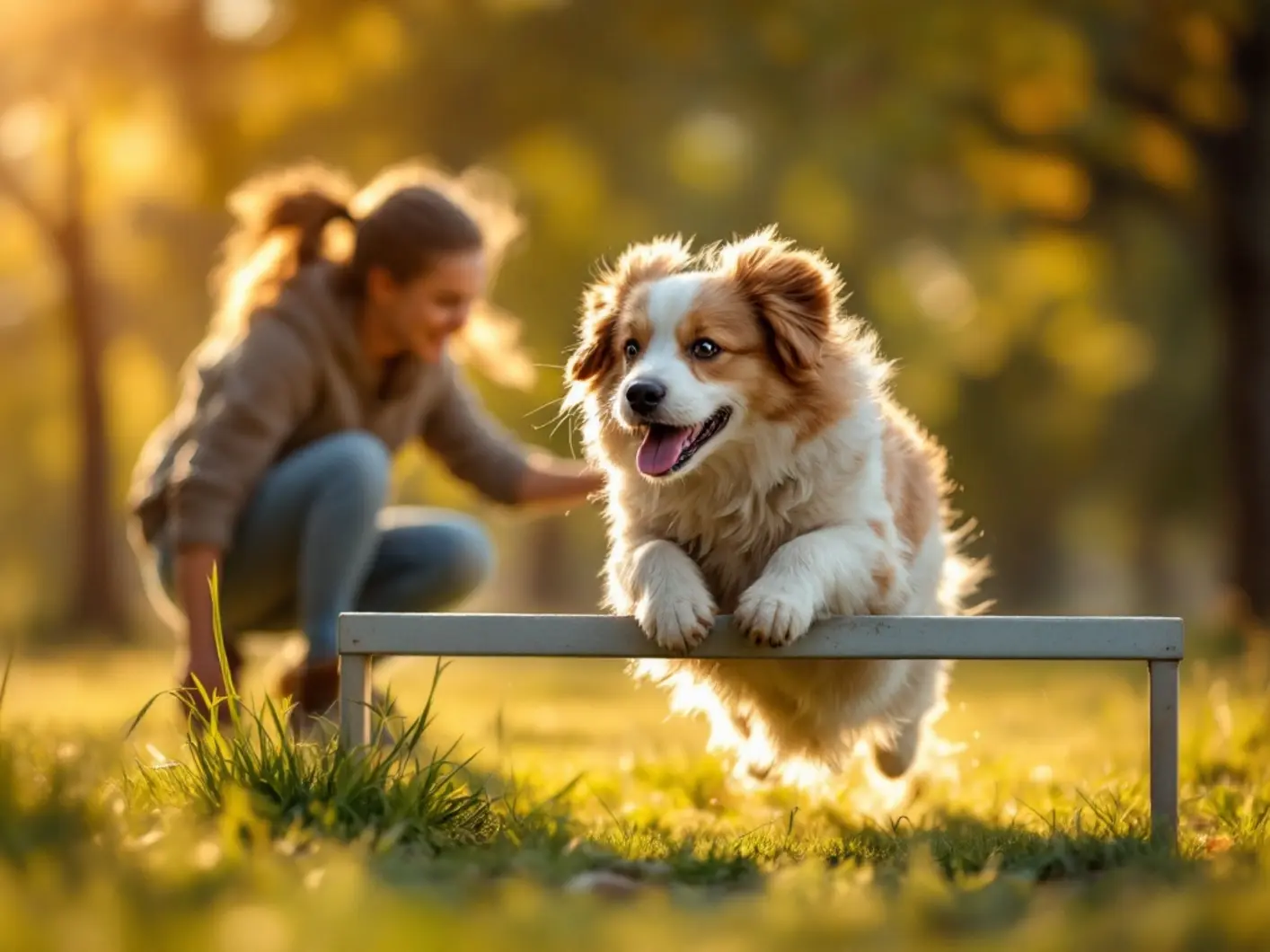
Choosing the right equipment is crucial for safe, effective dog agility training. At the start, you don’t need a professional agility course—many items can be improvised or made with DIY solutions, but it’s useful to know standard obstacles and requirements. Classic elements include various jumps and hurdles. For beginners, choose low, stable obstacles with adjustable heights and crossbars that fall easily if touched—reducing injury risk and boosting confidence. Lightweight plastic rods or soft foam bars and stands with wide bases are best; in your backyard, you can use brooms, walking sticks, or PVC pipes on low supports, as long as everything is stable and has no sharp edges. Tunnels are another key element—a beginner dog benefits from a wide, short tunnel made of light material that does not collapse under weight. The tunnel walls should be semi-rigid to keep the entry open, and the interior surface non-slip. Kids’ play tunnels can work at first, lengthening and curving them as your dog progresses. Ramps, platforms, and planks offer practical balance and body awareness challenges. Use wide boards on the ground or slightly raised for initial balance training. If you build a ramp, use a non-slip surface (rubber mat or short-fiber rug), and gentle slopes so your dog never approaches a “cliff” edge. Training tables—stable platforms for “stop,” “sit,” or “stay” commands—can be substituted at home with a stable stool or crate, as long as it’s large, does not wobble, and will not move during use.
Besides obstacles, supportive accessories are vital for control and safety. Well-fitted harnesses or collars are basic—guard harnesses are often recommended for active dogs as they don’t restrict the shoulders or compress the neck. Make sure the harness fits, isn’t too tight, and has smooth seams to prevent chafing. Use a simple 2–3m leash en route to the training ground, then unclip for obstacle work; for new dogs, a light training line helps keep control in distracting situations. High-value, bite-sized treats and favorite toys (rope balls, tuggers, plushies) are rewarding tools. Carry a treat pouch for instant rewards. Clickers help mark desired behaviors for advanced work. Mind the training surface: non-slip mats, grass, or level ground reduce landing injuries after jumps—simple cones or training discs can mark paths, start/landing zones, and running direction. Have water and provide shade on warm days; during longer trainings, ensure breaks and provide a blanket your dog can rest on. As your dog’s skills improve, introduce more professional obstacles, like a weave, tire jump, or seesaw, but only when your dog is physically and mentally ready and the equipment is stable, properly certified, and fits your dog’s size and weight.
Maintaining Safety During Training
Your dog’s safety must be the priority from their first session to advanced courses. Always check your dog’s health before training: regular vet checkups, joint, heart, and overall fitness evaluations are vital, especially for young, senior, or breed-prone dogs. Never train a dog that is limping, coughing, has diarrhea, is lethargic, or hyper—if symptoms occur, skip the session and consult a vet. Warm-ups are equally important: before entering the course, spend 5–10 minutes calmly walking on leash, varying directions, adding gentle turns and a few basic obedience exercises (“sit,” “down,” “circle around”) to prepare muscles and joints. Hydrate your dog—keep fresh water available, but not just before strenuous exercise to avoid stomach discomfort. Surfaces matter: only use level, non-slip grounds, free from sharp rocks or holes; avoid hard asphalt or rough terrain outdoors, and avoid hard tiles or slippery floors indoors. Grass, rubber mats, or specialist sports surfaces are ideal. Inspect equipment before each session for stability, no loose screws, sharp edges, cracks, or broken parts. Crossbars should easily fall if brushed. All obstacles should suit your dog’s size and ability—too high jumps or too-narrow tunnels risk both stress and injury. Avoid overexertion: young dogs with growing bones must not do intense or repetitive jumps, while adults should only increase training load gradually and watch for signs of fatigue—panting, slowing down, loss of interest, or hesitant movement—signal it’s time to rest or end the session. Opt for frequent, short, regular trainings over exhausting, marathon sessions. Note the weather: avoid overheating on hot days by training in mornings/evenings and take shade breaks; cold or wet weather calls for extra attention to slippery ground and possible muscle chills—consider a light coat for thin-coated dogs waiting their turn in cool weather.
Safety also means mindful work, communication, and properly-paced progression. Your dog needs to feel in control—never force them into a tunnel, drag them onto a ramp, or “throw” them at new or frightening obstacles. This can trigger long-term fear, lose your dog’s trust, and cause avoidance of the course altogether. Allow your dog to sniff, walk around, and approach the obstacle at their own pace, rewarding any small progress. Rewards—treats, toys, praise—should be well-suited but always calm and controlled; too much excitement can make the dog over-stimulated and impulsive. Use clear body language and consistent commands, maintain steady rules during exercises, and avoid mid-session changes, which can confuse your dog. Emotional safety matters, too: if your dog is clearly afraid—growling, backing off, freezing—lower the difficulty, shorten or widen the obstacle, or swap it for something easier, never force it. Proper equipment is essential: harnesses should fit and not press on shoulders, leash should never tangle during jumps; depending on your dog’s recall and the safety of your area, practice off-leash only when your dog is reliably responsive. In groups, keep sufficient distance between teams to avoid collisions and “side-by-side” competition, as this can increase stress and risk of conflict. For reactive or nervous dogs, choose individual sessions or train at quieter times with fewer distractions. Sessions should always end with a cooldown—basic commands, a calm walk, and controlled stretches with treats, helping the muscles recover and reducing post-exercise injury risk. After training, observe your dog for any lameness, reluctance to jump, tenderness on paws or spine, and respond quickly to minor injuries before they worsen.
Theory into Practice: How to Motivate Your Dog to Cooperate
Effective obstacle training starts before ever reaching the course—with building your dog’s motivation to work with you. A motivated dog learns new tasks faster, follows cues with more confidence, and recovers better after stressful situations. Key to motivation is understanding what truly excites your dog. For some, it’s high-value treats (e.g. bits of meat or cheese); others thrive on tug toys, balls, or simply the chance to run with their person. Test rewards by offering various options in a neutral space—what your dog prefers is your top training “fuel,” especially for new or difficult exercises. Next, create clear communication: use short, consistent voice commands (“come,” “sit,” “stop,” “tunnel,” “jump”), always meaning the same thing, and pair them with simple gestures—point to a hurdle, move toward the tunnel, or lean forward to encourage a start. Dogs learn through associations, so timely rewards immediately after the right behaviors speed up learning. Voice tone is important: soft and encouraging when teaching, more energetic with familiar exercises to add enthusiasm. Practice this communication in everyday situations: recall at home, focusing on you on walks, or maintaining eye contact briefly. Reward every moment your dog glances at you, approaches, or waits for a signal—reinforcing that you are the source of fun and rewards. When introducing first “course tasks” (like stepping over a pole or standing on a low platform), ensure almost certain success. Even the tiniest initiative near the obstacle should earn praise and a treat—helping your dog grow curious and eager, rather than anxious or pressured. Always let your dog choose, never drag or push. If hesitant, simplify the task: lower the bar, shorten the tunnel, move closer, use a cheerful voice, or show a treat on the other side. A dog that feels they have a choice and receive support is much more likely to cooperate eagerly. Plan short sessions—three 5–7 minute rounds a day are better than a single tiring session. Always finish while your dog is still interested, never when they’re already tired or discouraged—so they’ll look forward to the next session.
On the course, apply the “easy–hard–easy” principle: sandwich unfamiliar tasks (like a longer tunnel or higher jump) between simple, well-known exercises. For example, a few steps of walking in focus, then a low bar (the new challenge), followed by quick play or a treat for a “sit.” This gives your dog a sense of achievement before and after a tough element, building trust in your cues. Sometimes, let your dog “win”—not just with treats, but by letting them independently approach or sniff an obstacle or step onto a platform. Reward any step closer—this “offering behaviors” approach helps your dog solve problems rather than wait passively for direction. As your dog gains confidence, build quick obstacle sequences that require following your movement—run alongside the jumps, signal the next obstacle, and celebrate successes together. Your movement is a critical signal—many dogs are more likely to try obstacles when you run beside them versus standing still and giving voice-only commands. Managing your emotions matters, too: dogs sense tension, anger, or frustration. If you feel upset because your dog is hesitant or distracted, take a break—breathe, do a few scent games, or go for a calm walk. Return to training with a clear mind and reduced difficulty. Calm, consistent responses make your dog feel safe and eager to follow your lead, even in new or stressful situations like crowded courses, new dogs, or loud competition venues. That’s when your prior work—trust, clear signals, and positive memories—really pay off.
Most Common Mistakes in Obstacle Training
Certain mistakes crop up repeatedly in obstacle training—they may seem minor but can slow progress, lower your dog’s motivation, and even lead to injury or fear. One major error is raising the bar—literally and figuratively—too quickly. Eager handlers often aim for quick results: dramatic jumps, long tunnel runs, or full complex sequences, skipping crucial basics like careful approach, familiarity with an obstacle, safe ascent/descent, and allowing your dog to explore. Starting with high jumps, long tunnels, tight weaves, or full courses can physically challenge your dog, but mentally overwhelm them. Your dog may then avoid obstacles, freeze, tuck their tail, look for escape routes, or simply refuse to continue. Another common mistake is ignoring stress or exhaustion signals: if your dog pants heavily, shakes off, yawns, avoids eye contact, or circles the obstacles or abruptly “has to sniff the grass”—it’s not “stubbornness,” but usually a sign the task is too tough or confusing. Many handlers, instead of taking a break or simplifying things, push harder and repeat the task until it works—undermining trust and joy in training. Other errors include skipping warm-up and cool-down—jumping right into hard work (big jumps, sharp turns, repetitions) with cold muscles increases injury risk. Skipping a cool-down (gentle walk, static exercises, massage, water) slows recovery, so your dog may be sore the next day, lose enthusiasm, and become more susceptible to overuse injuries. Inconsistent cues are also a problem: using “jump” sometimes, “hop” at others, varying hand signals or delay timing. A dog who doesn’t know what’s expected will guess, and if mistakenly punished (by tone, gesture, or leash jerk), loses confidence. Never punish mistakes: yelling, jerking the leash, sulking, or ending play makes the course a source of tension, not learning. Your dog learns that trying may end unpleasantly, and chooses to avoid—sometimes even “shutting down” from overload. Poor or poorly-timed rewards (too late, not enticing enough, or only for perfection) also demotivate—your dog doesn’t know which behaviors get rewarded, so training becomes a series of failed attempts, not an exciting game.
Other frequent mistakes involve technical guidance and training environment. Over-reliance on the leash or manually guiding the dog over obstacles, instead of teaching them to follow cues, means your dog performs “mechanically” and may flounder when off-leash. Human movement is also key: running too close to obstacles, sudden direction changes, looming overhead, or blocking entry can stress your dog and disrupt their flow. Training on unsuitable surfaces—slippery tiles, wet grass, uneven or hard ground—raises risk of slips and strains. Moving straight to demanding surfaces, like deep sand or snow, strains muscles and tendons; avoid this until your dog is ready. Failing to consider your dog’s age and physicality is another issue—young dogs with still-developing bones shouldn’t jump high or execute sharp turns, while older or overweight dogs need extra caution, focus on balance, coordination, and low obstacles. Lack of a training plan leads to chaos—either too many or too few repetitions, with no progression or fallback strategy, so sessions are unpredictable and gains are random. Some handlers train too rarely (each session feels new), others too long or too often, leading to fatigue and disinterest. Overlooking the emotional component is common too: dogs who fear people, other dogs, noises, or new places are sometimes taken straight to crowded courses or group classes, overwhelming their senses. Instead of gradual adaptation, the dog is “thrown in the deep end”—leading to fear-based associations, not enjoyment. Comparing your dog to others is a final trap: expecting instant competition-level speed and accuracy leads to pressure, disappointment, and lost patience. Instead of appreciating your dog’s individual pace, handlers try to “keep up,” skipping vital learning stages. This can turn obstacle training from a confidence-building adventure into a confusing, off-putting experience that your dog soon learns to avoid.
Summary
Getting your dog ready for obstacle courses is a process that requires patience and a methodical approach. Start with fundamental commands, provide suitable equipment, and prioritize safety for the best results. Motivating your dog with toys and treats, avoiding the most common pitfalls, and consistently reinforcing good behavior will help you achieve your goal. With the right preparation and owner engagement, your dog can not only enjoy agility activities, but also gain plenty of health and happiness benefits.

